


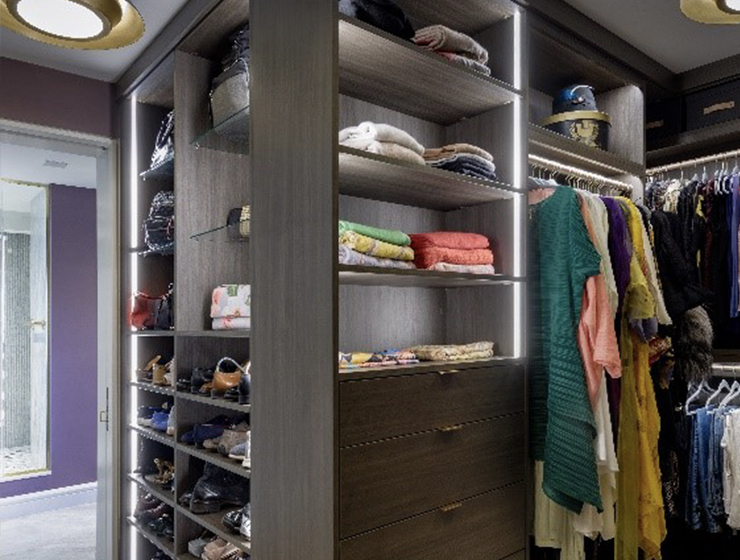
California Closets share its professional tips and tricks.

As a convenient spot to store everything from sheets, to sneakers, to sheath dresses, a closet’s value lies in its pragmatism; however, it is seldom one-note. “A closet is made for the person who’s using it,” says Brian Ogle, designer at California Closets. “While it’s amazing to have a bespoke custom piece, it’s important to have a setup that you personally use every single day and makes you happy.
Since its founding in 1978, California Closets has masterfully designed an array of personalized, well-appointed storage solutions to cater to an array of sizes, styles, and inventory. A customizable closet may seem aspirational—an amenity only a select few can enjoy—Ogle argues it’s far more attainable than one might think. “A great closet is a functional product everyone can enjoy,” he says. “That said, you should always seek professional advice on how to organize them and design a space that is the most functional and usable.” To help create a personalized, high-performing place, Ogle shares his top closet tips and takeaways.
Streamline Your Style
Just because a closet is one of the more private areas of the home doesn’t mean it can’t be stylish. In fact, Ogle argues that it can seamlessly fit into the rest of your space. “I really try to start from the overall style in a client’s home,” he shares. “Is it modern? Is it transitional? Is it traditional? I work backwards from there [because] the functionality of it is always gonna remain the same. We can swap the style from Shaker cabinets to flat faces and illuminate all of those spaces accordingly.” Ogle looks to Element’s back-painted glass and mirrors for a glam effect, while leather-wrapped shelves and countertops can usher in a more refined look.

Know Your Flow
When asked about how to store specific clothing items, Ogle doesn’t have hard-and-fast organizing rules. Instead, it all boils down to a client’s specific preferences. “If I walk into a closet and I notice that they have a ton of shirts being folded right on the shelving and not so much hanging,my first question is going to be if they enjoy folding all of those clothes,” he explains. “Or would [they] prefer to have some more hanging rod space? I am going to flush out the issues that I’m noticing inside of a closet.” A well-organized closet tends to be easy to maintain, so it’s important to create a setup that’s most conducive with your daily routine.
Be Strategic About Shoes
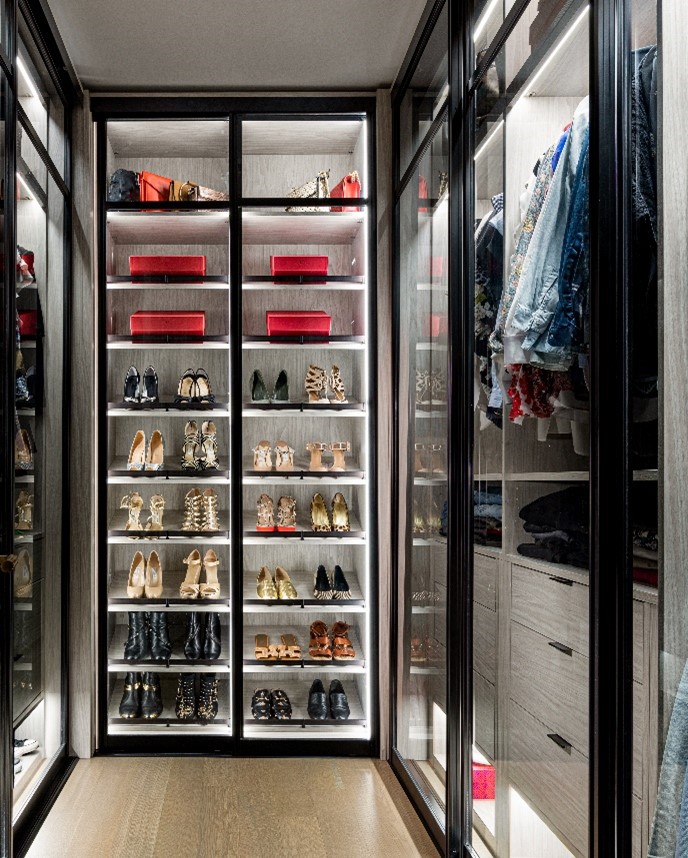
With square footage at a premium, it’s important to make every inch of your closet count. For Ogle, that means being smart about your shoe storage. “People just tend to put their shoes on the floor, but it is really unfunctional,” he says. “When I move some of my clients’ shoes onto a shelf, they realize how much easier it is to get dressed and use their space.” Of course, they don’t have to be displayed or placed on a shelf. “You just really want to maximize functionality,” he says. Ogle says casual shoes like flip flops or sneakers can be stored in a basket; slide-out shoe racks are fitting for flats; and proper shelves can be conducive with high heels or boots. “If you like these a little fancier, you can slant them,” he adds.
Play With Proportions
Just like a perfectly tailored suit or dress, the right measurements are everything. When it comes to a closet’s clothing rack, Ogle always measures the height from the top of the hanger to the bottom of a garment “Women’s clothing is typically going to hang less high than men’s clothing,” he explains. “But when organizing a space, I do try to delineate the difference.” However, should clients want to opt for a standard hanging height, Ogle recommends 38 to 40 inches for double hanging.

Cover Your Ground
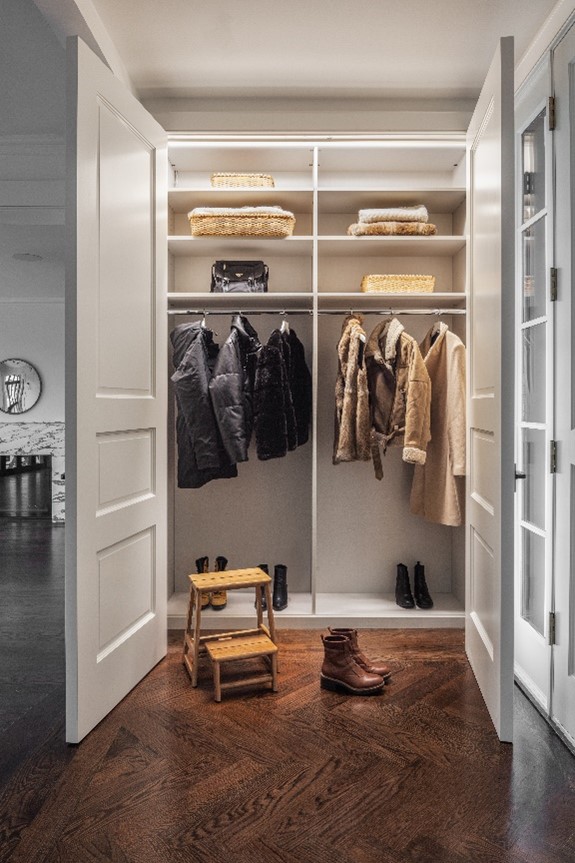
When it comes to customizing a closet, most people will envision the one that lives in their primary suite. But with so many storage areas under one roof—from a linen closet to that miscellaneous space—Ogle says all zones deserve a personal touch. If you’re looking for an accessible place to start, Ogle recommends the coat closet. He says: “It’s usually smaller and not utilized well.”
Like what you see? Get it first with a subscription to aspire design and home magazine.