


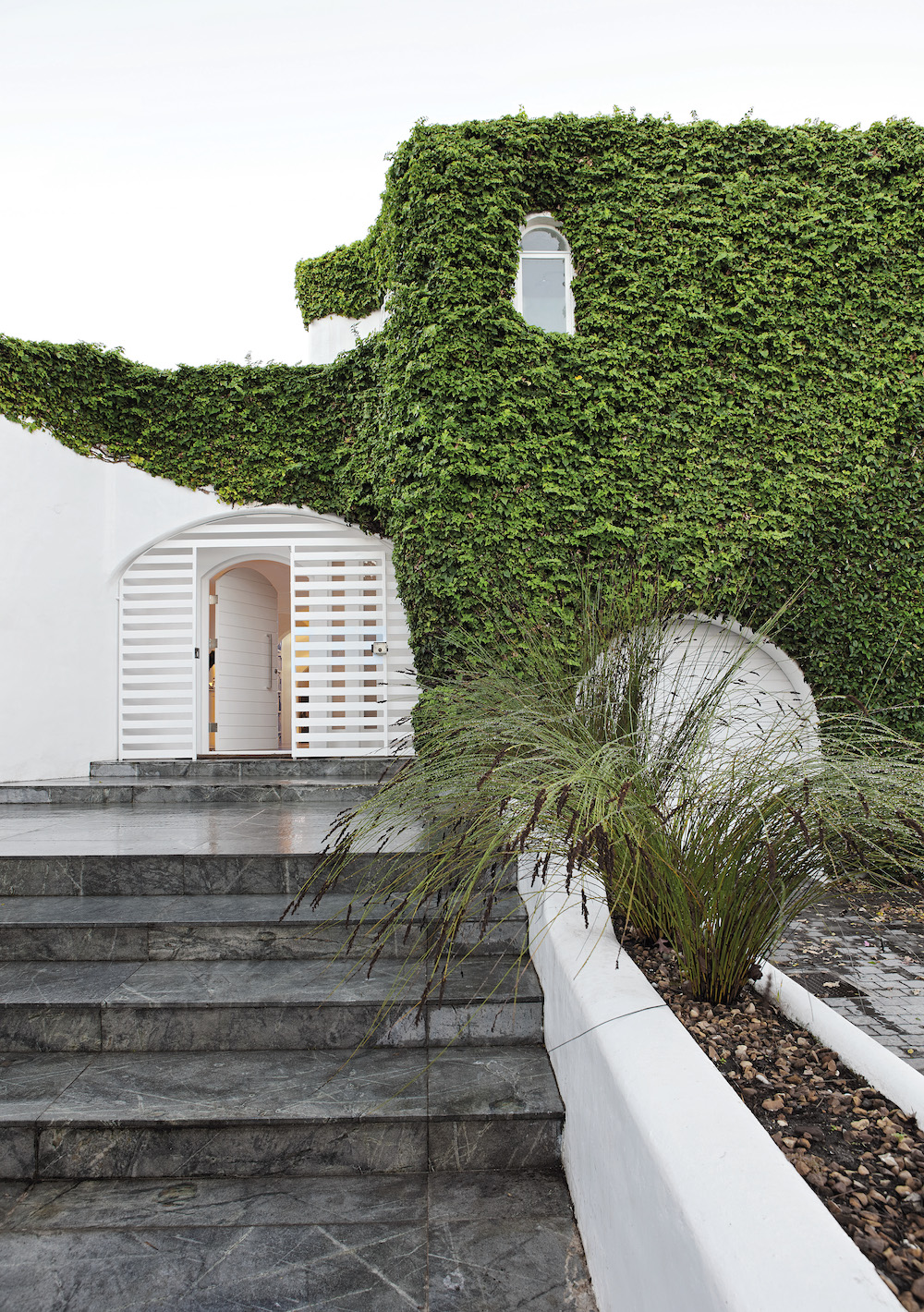

The family home of film producer Anna Mira D’Ercole strikes an incongruent pose in the Newlands neighborhood of Cape Town, where genteel Victorian homesteads, faux Georgian mansions and Cape Dutch hybrids abound. With its curvy white walls and exaggerated arches, the house, set back from the road with a boulevard-style entrance, has a decidedly contemporary charm.
D’Ercole’s husband, award-winning film director Jorge Rubia, bought the house, designed and built by architect Peter Robson in 1970, more for the extravagance of its spaces than for aesthetic reasons. “I could indulge my love and practice of the arts,” explains Rubia, who, inspired by Frida Kahlo’s house in Mexico, painted the walls deep blue and layered them with his collections of Art Deco furniture, old cameras, African art, books and acoustic guitars.
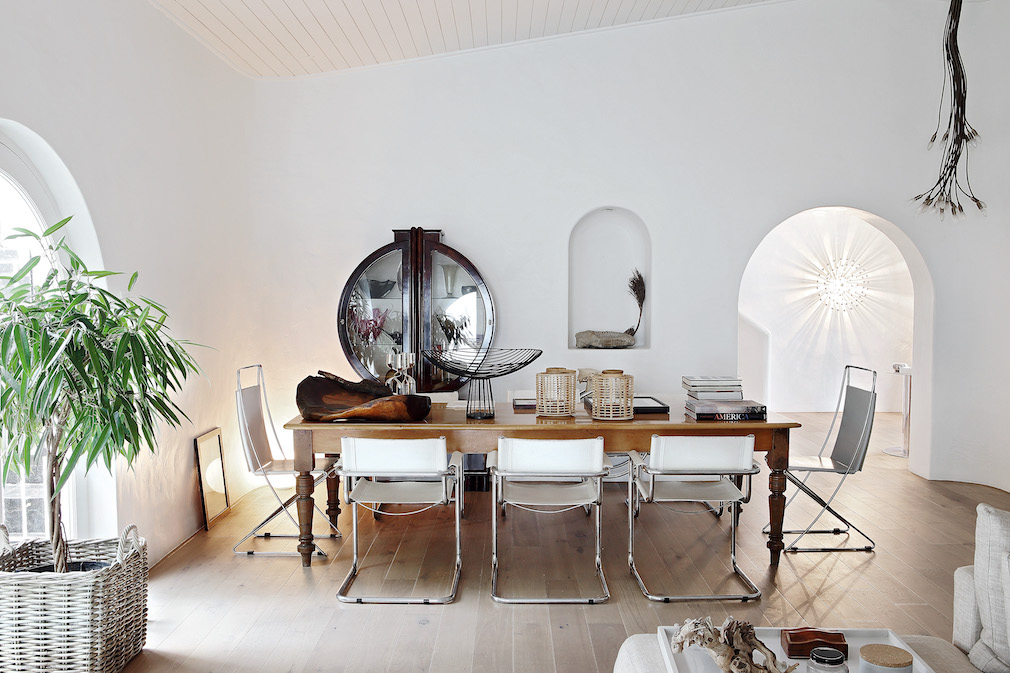

D’Ercole grew up on Italy’s Lake Como, studied set design at the Brera Academy in Milan, and is possessed of an ordered, style-driven aesthetic that is in total contrast to Rubia’s love of chaos and clutter. “When we met, our styles were worlds apart,” she describes with a laugh. “But while the house’s interiors didn’t resonate with me, the generosity of space it offered did, particularly when compared to what I was used to living with in Italy.” With time, D’Ercole toned down Rubia’s penchant for color, opting for a clean palette of white and gray.
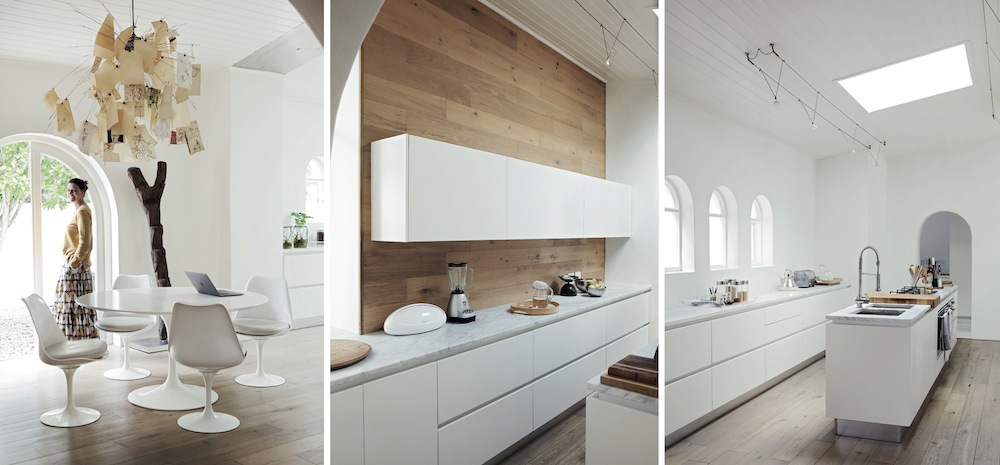

The next few years were a busy time for this creative couple, with the renovation occurring in phases. “Our twin daughters were born in 2007, and so it was important that I could have a professional setup at home that allowed me to be close to them too,” notes D’Ercole. Another renovation in 2012 opened up the spaces to let in light and create more of a connection to the garden. “We initially toyed with changing the house substantially, but it would have meant demolishing it and blowing our budget.” In the end they made very few structural changes, removing just three walls to open up the living spaces and upgrading the electrical and plumbing. For the rest, they let the curvy structure of the house dictate what they could and couldn’t do.
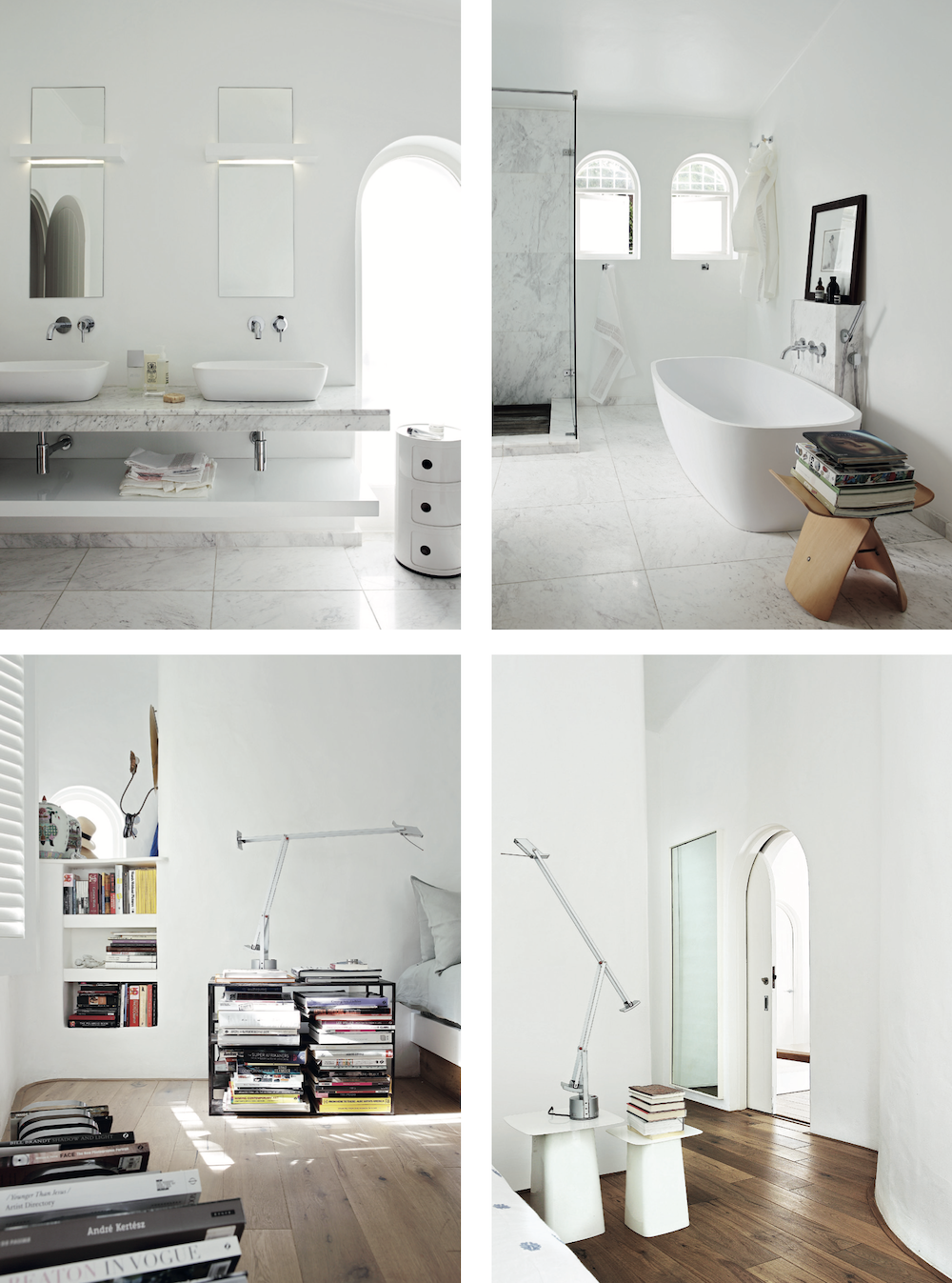

Today the house is a clever contrast of organic lines with modern design that enhances the beauty of the interior spaces. Of course, it helps that D’Ercole shipped the entire contents of her Milan apartment to Cape Town, thus ensuring that names such as Cappellini, Le Corbusier, Gio Ponti, Marcel Breuer and Achille Castiglioni add a certain gravitas to the whimsical yet solid nature of the architecture. Rubia’s collections still remain (although now cleverly regrouped by D’Ercole in cabinets or as a focal point in one area). “I learned from my friend Charlotte Mello Teggia, a fantastic interior designer, who taught me how to mix things,” explains D’Ercole. “I didn’t want a super minimalist space filled with designer furniture, but rather a collection of disparate things we absolutely love that, when put together, work as a canvas for our life.”
That has been perfectly achieved, for this house is nothing short of a bravura display of D’Ercole and Rubia’s considerable creative clout.
Photography by Elsa Young.
For more like this Mediterranean Villa, be sure to check out this Cape Town pied-á-terre brimming with artisanal antiques.
Like what you see? Get it first with a subscription to aspire design and home magazine.