
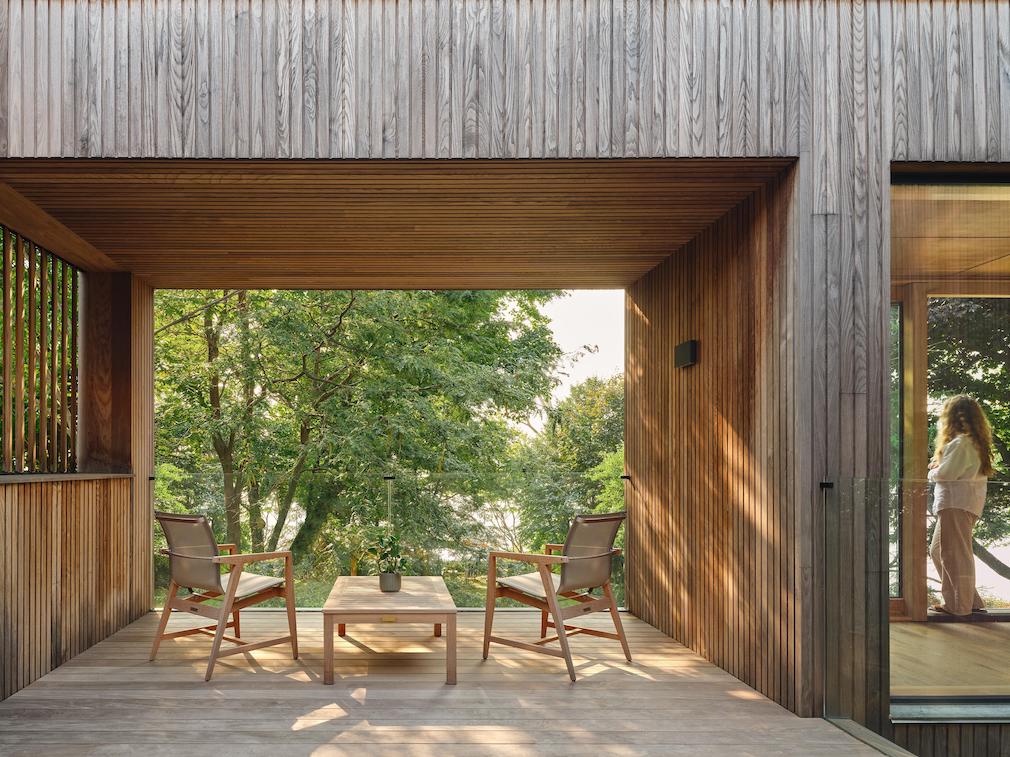
Overlooking Lake Ontario, the House of Monitors is a home that captures and choreographs light while highlighting the materials of production. Developed by Williamson Williamson Inc. in close collaboration with the owners — the Resident Scenic Artist for the National Ballet of Canada, and a shoring engineer with expertise in complex ground conditions — the project designed opportunities to engage materials through framed views, sectional cuts, and layered spatial connections that support understanding of the building’s construction. Carving light through the structure is not only a daylighting strategy, but a way to intertwine interior and exterior, revealing the house as a calibrated sequence of volumes, textures, and luminous atmospheres.
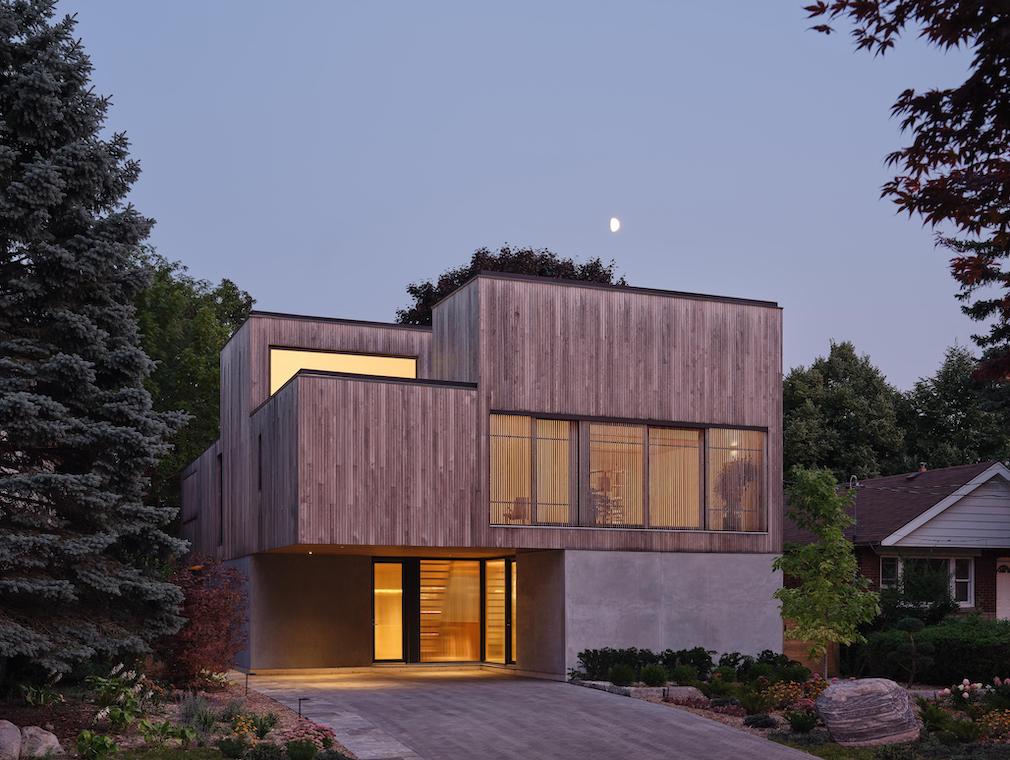
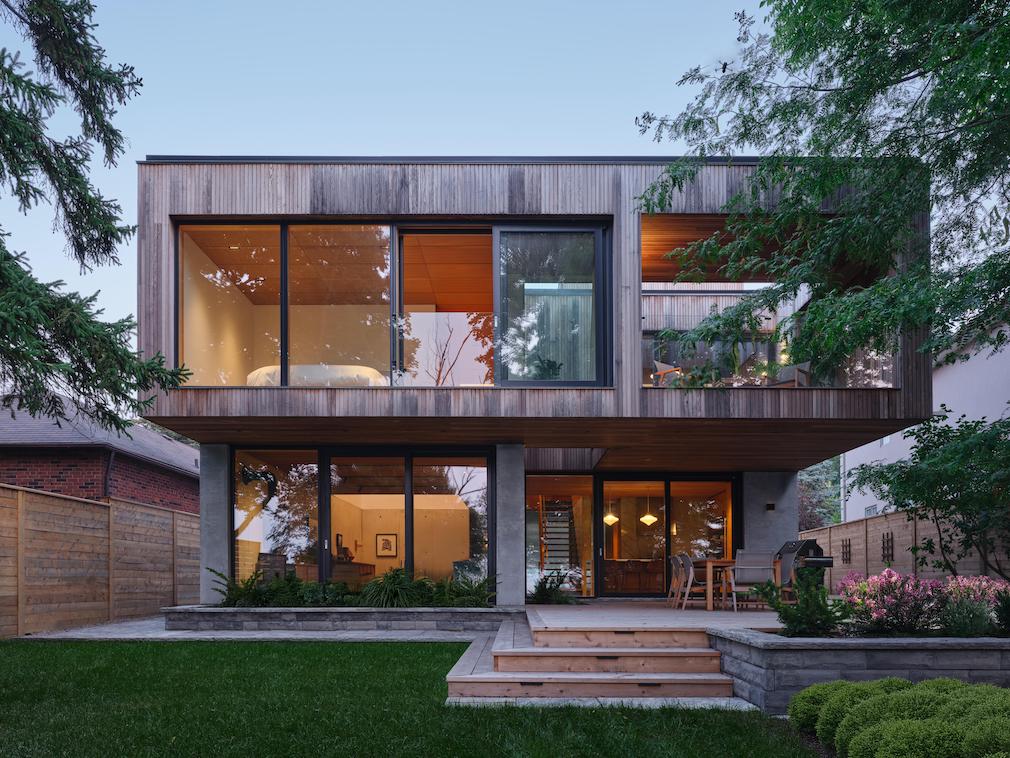
From the sandy soils of the bluff, concrete volumes emerge as inhabitable shoring, forming the structural and spatial framework of the house, while responding directly to unstable soil conditions and minimizing disturbance to the escarpment. Above, a wood volume is cantilevered toward both the street and the lake. Intersections and subtractions between these elements generate sectional depth, cross-views, and a calibrated distribution of light. A centrally located painting studio was developed collaboratively with the owner through iterative studies and virtual light simulations, resulting in a north-facing clerestory and a radiused ceiling that produces even, controlled daylight.
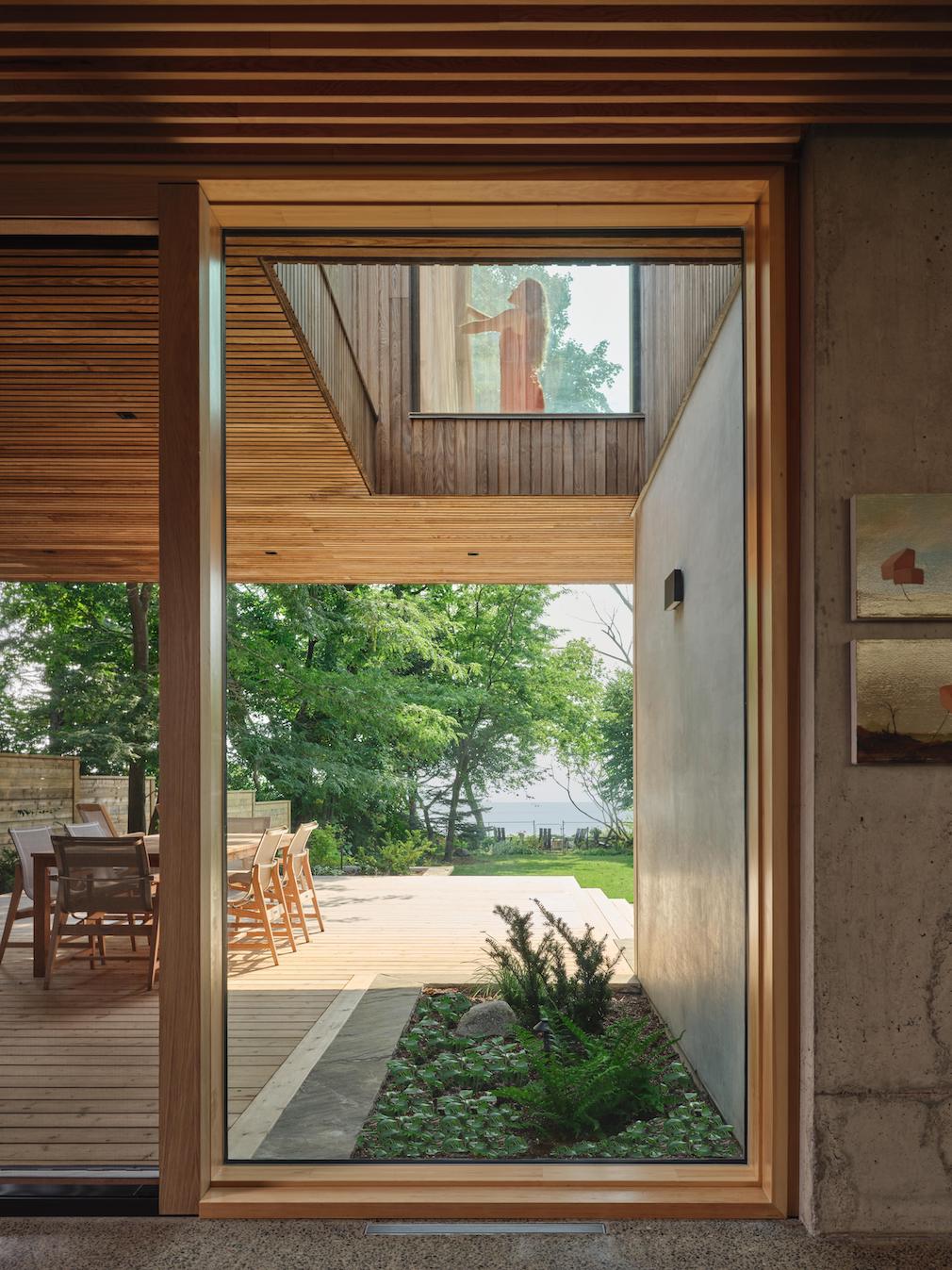
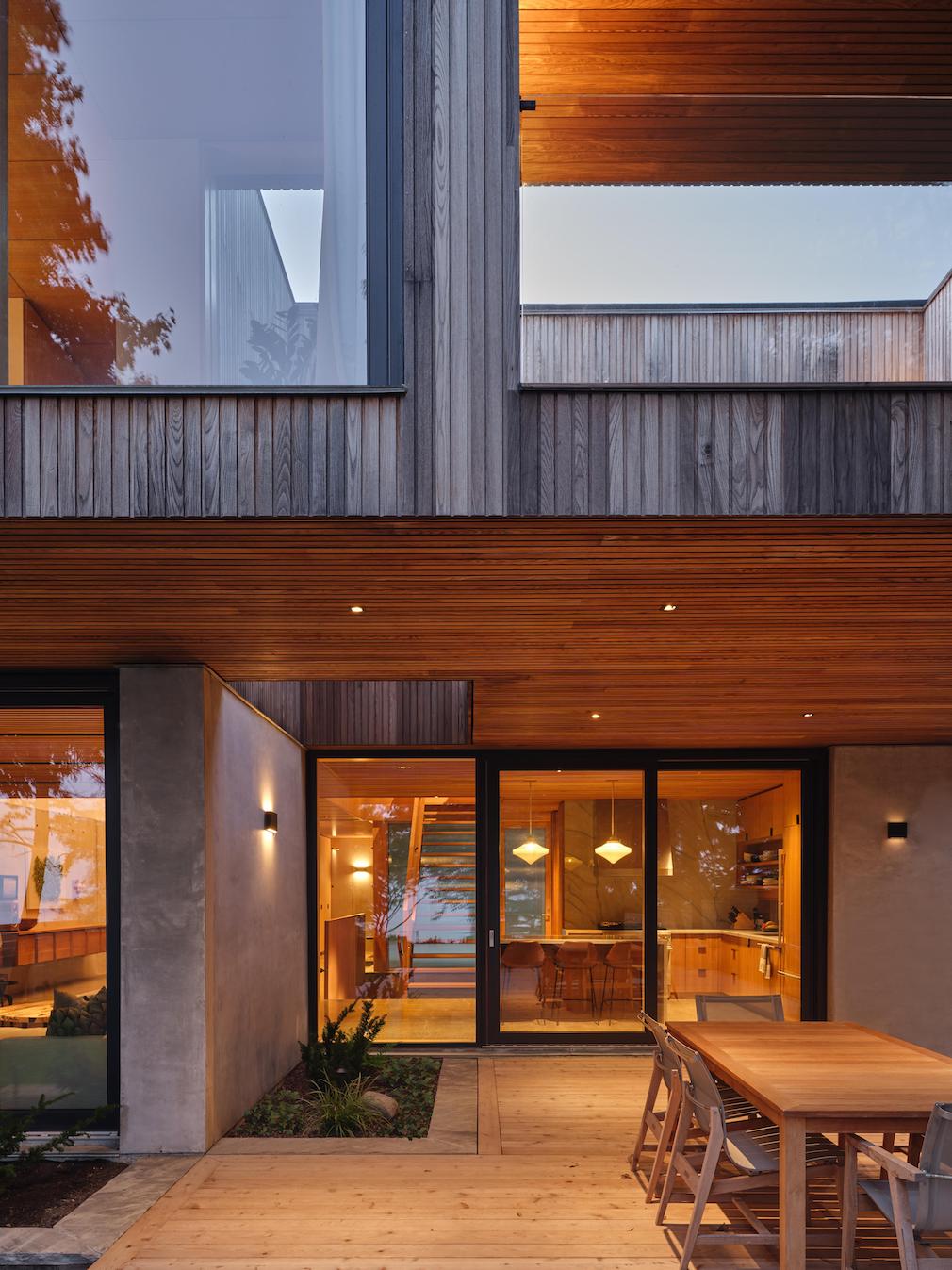
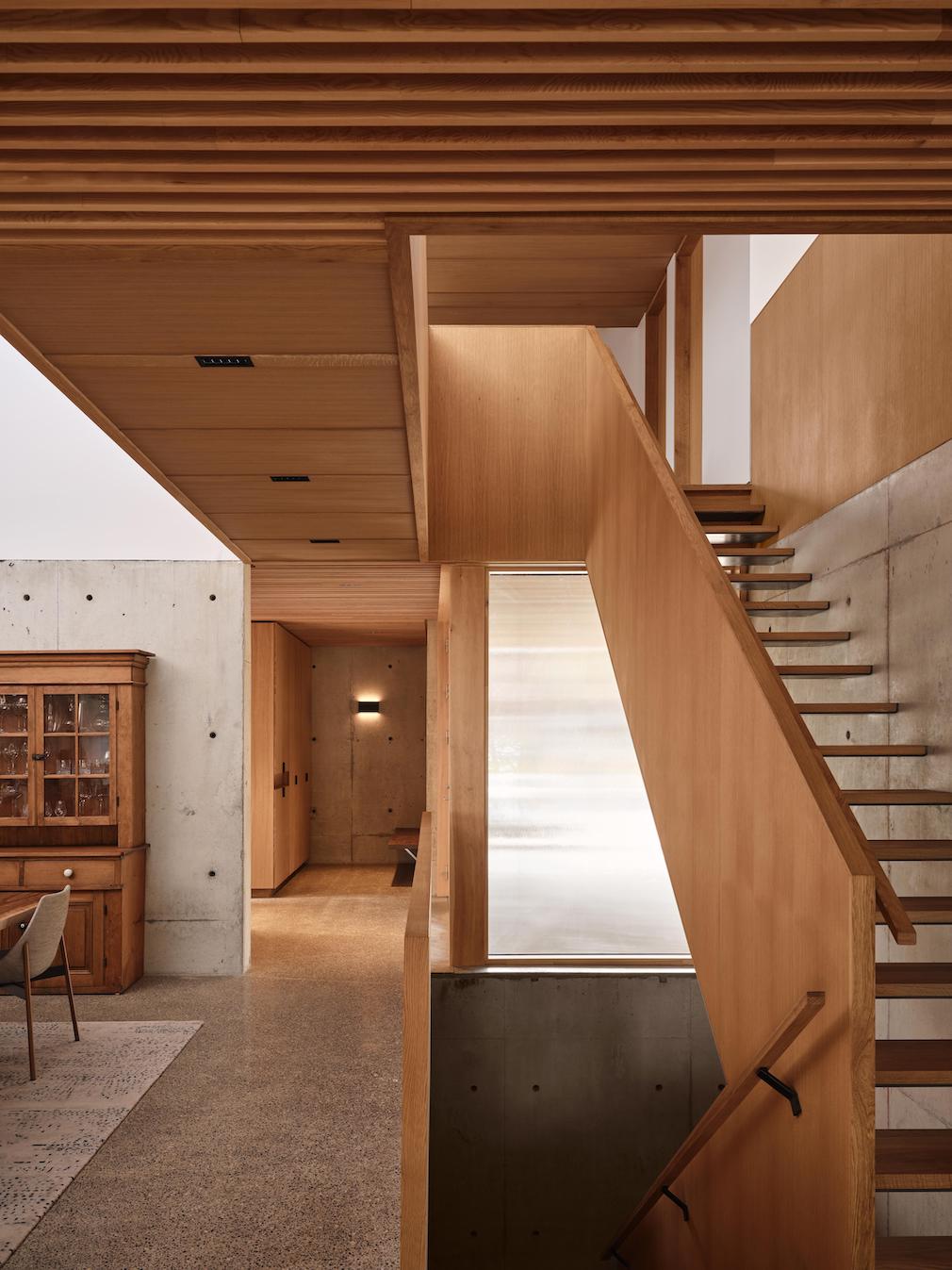
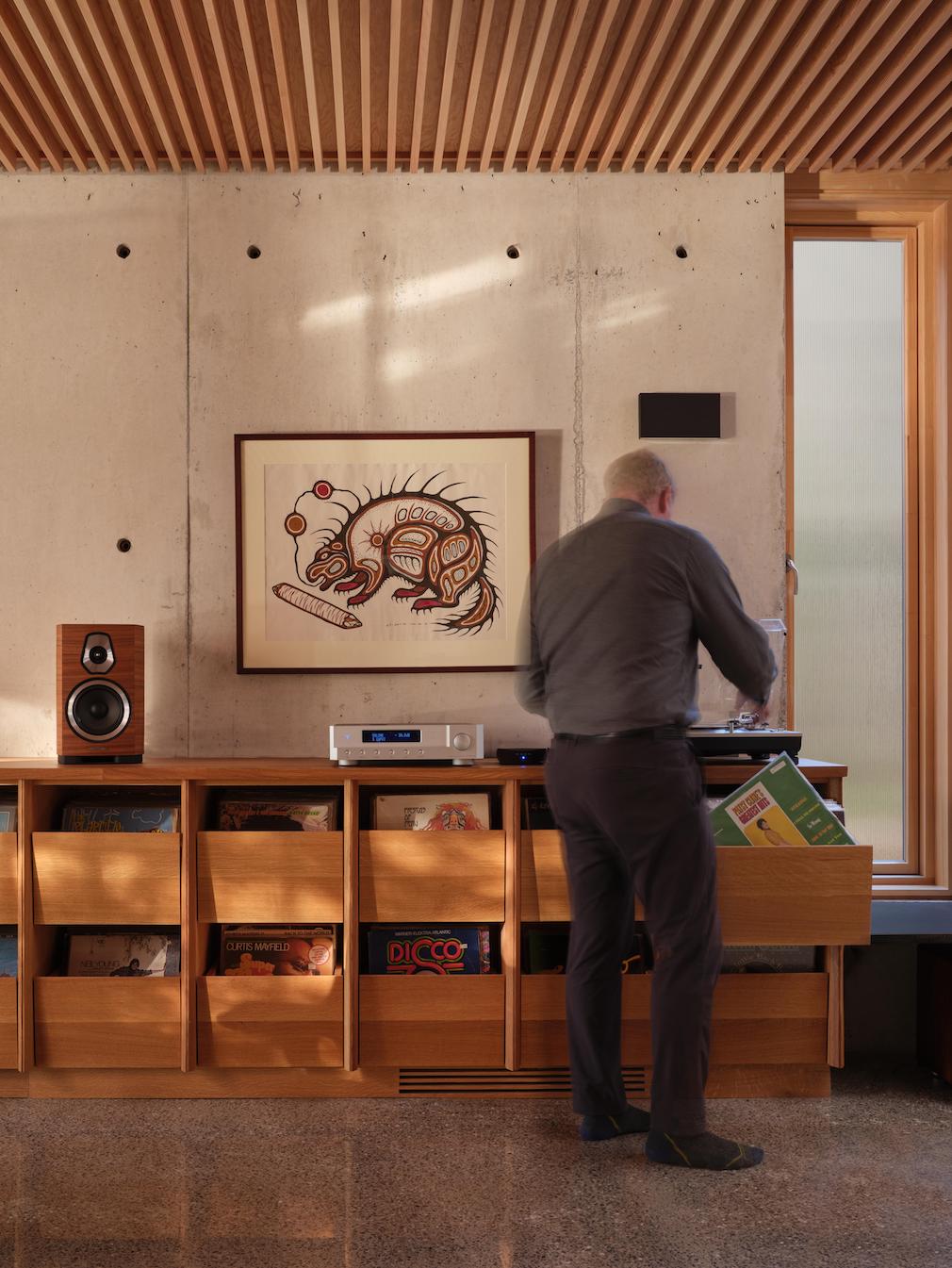
Entry occurs beneath the front cantilever through a reeded glass door, providing essential daylight while maintaining privacy along the closely spaced street edge. Concrete forms the service core of the house, anchoring it to the bluff and performing simultaneously as structure, shoring, and thermal mass. Circulation and primary rooms are lined with wood millwork, establishing a tactile counterpoint to the raw structure. Above, white painted light monitors amplify daylight deep into the plan, reducing reliance on artificial lighting. The elemental palette prioritizes durability, repairability, and long-term material performance.
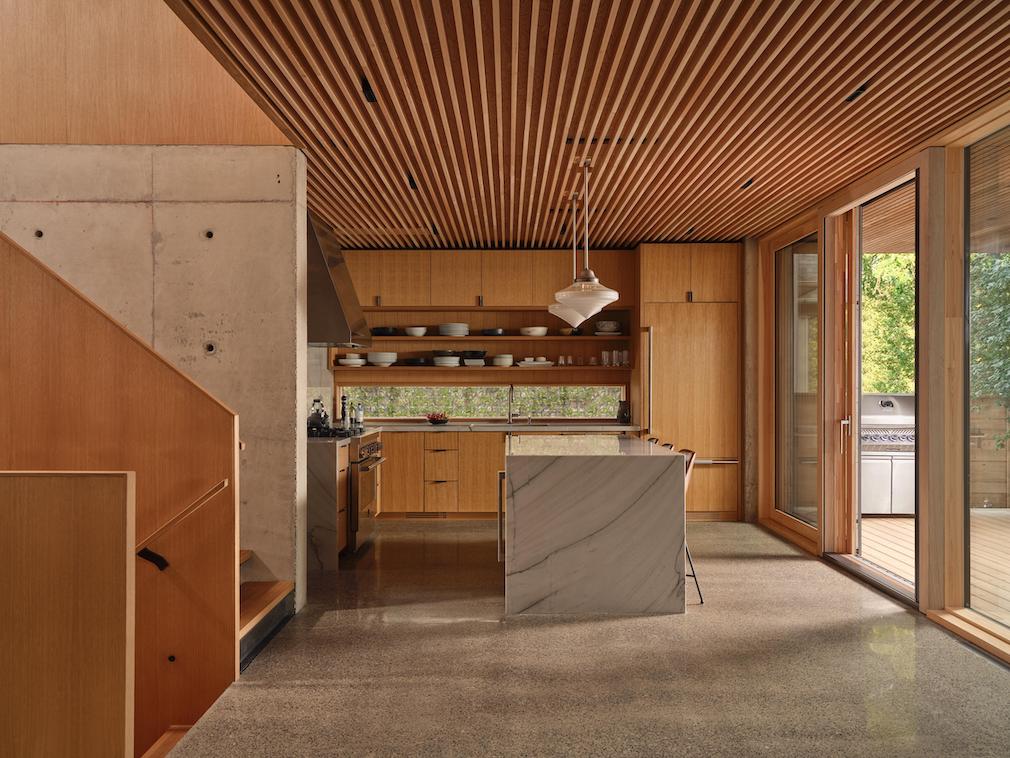
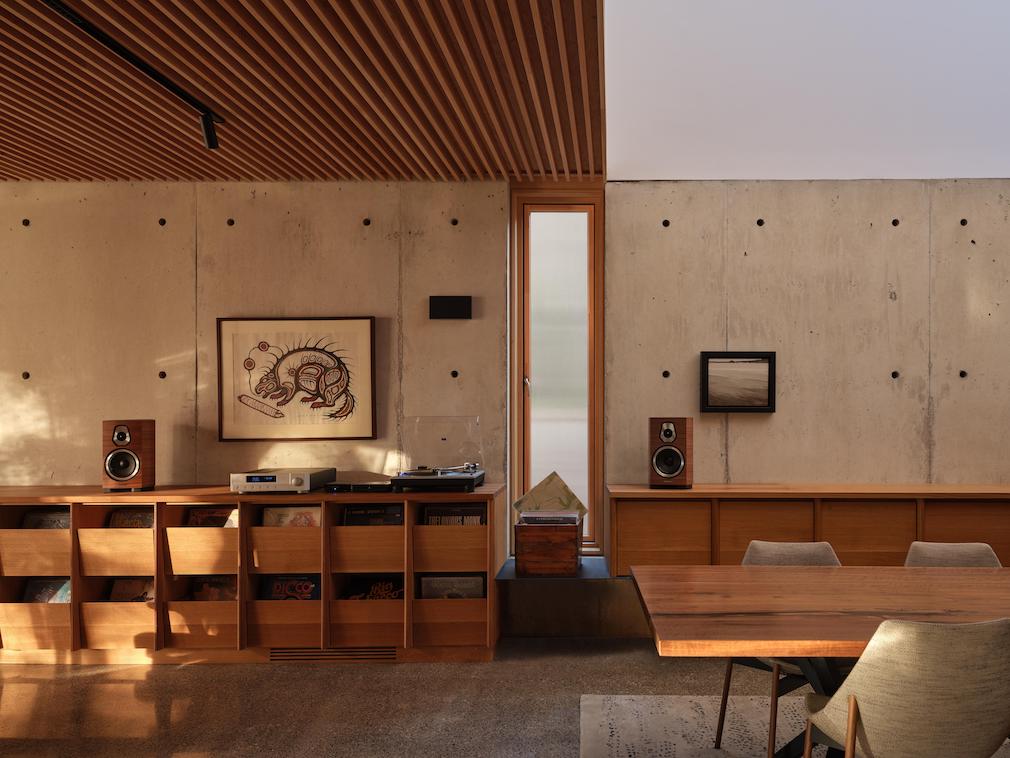
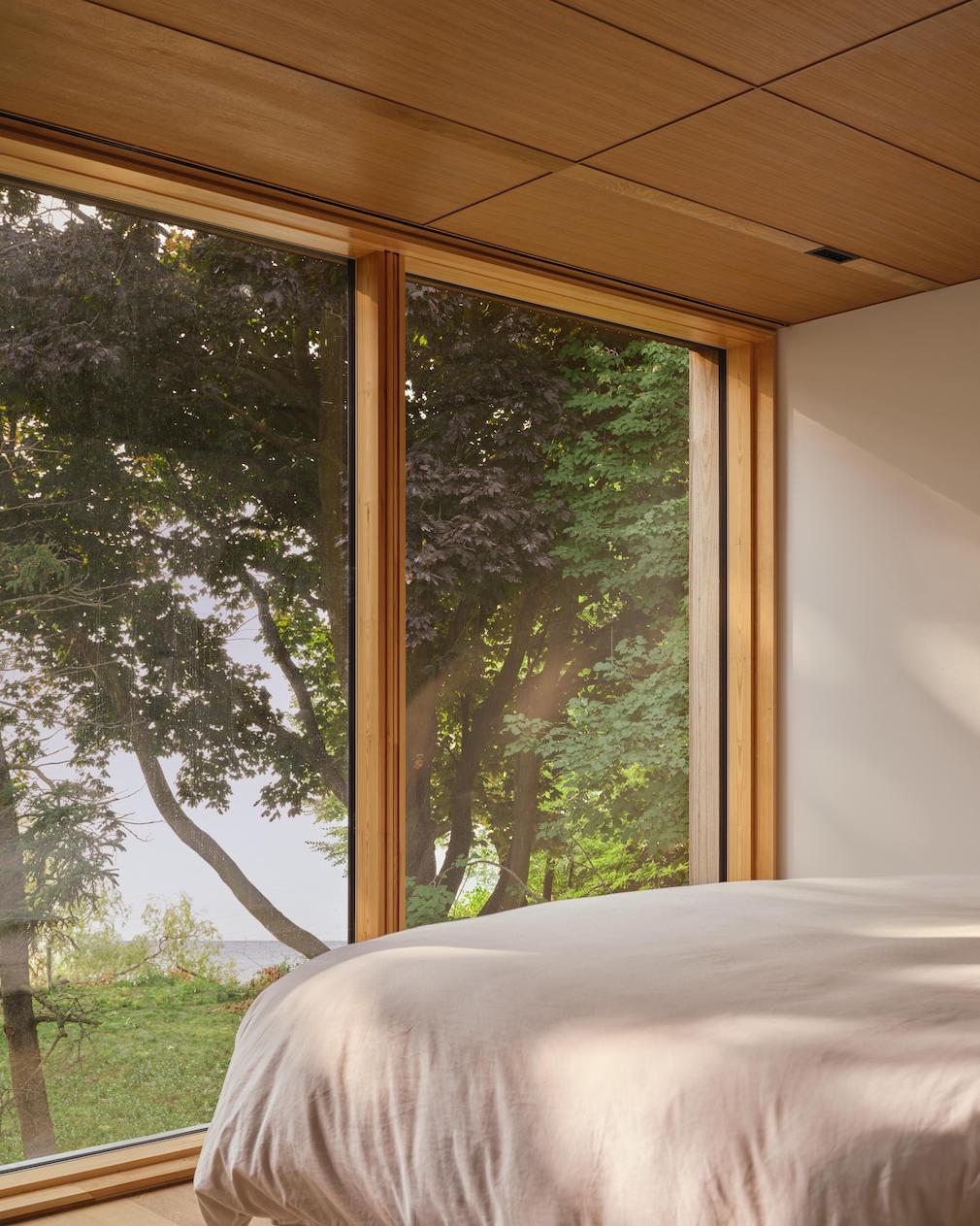
Flanking the stairs, dining, kitchen, and living open to the lake. Centrally, a 26-foot-tall light monitor creates a vertical volume defined by daylight rather than enclosure, achieving spatial generosity without increasing floor area. Above, bedrooms, office, and a living space open to one another, to spaces above and below, and to the exterior, sharing light and views. The primary bedroom and deck face the lake, while secondary rooms are screened from the street by a slatted façade, allowing spaces to adjust to changing privacy and use.
As a private residence on a sensitive site, the project establishes a model for architectural excellence grounded in restraint, durability, and clarity. It demonstrates how ambition, environmental responsibility, and site stewardship can coexist through careful design.
Photography by Doublespace Photography.
Like what you see? Get it first with a subscription to aspire design and home magazine.