
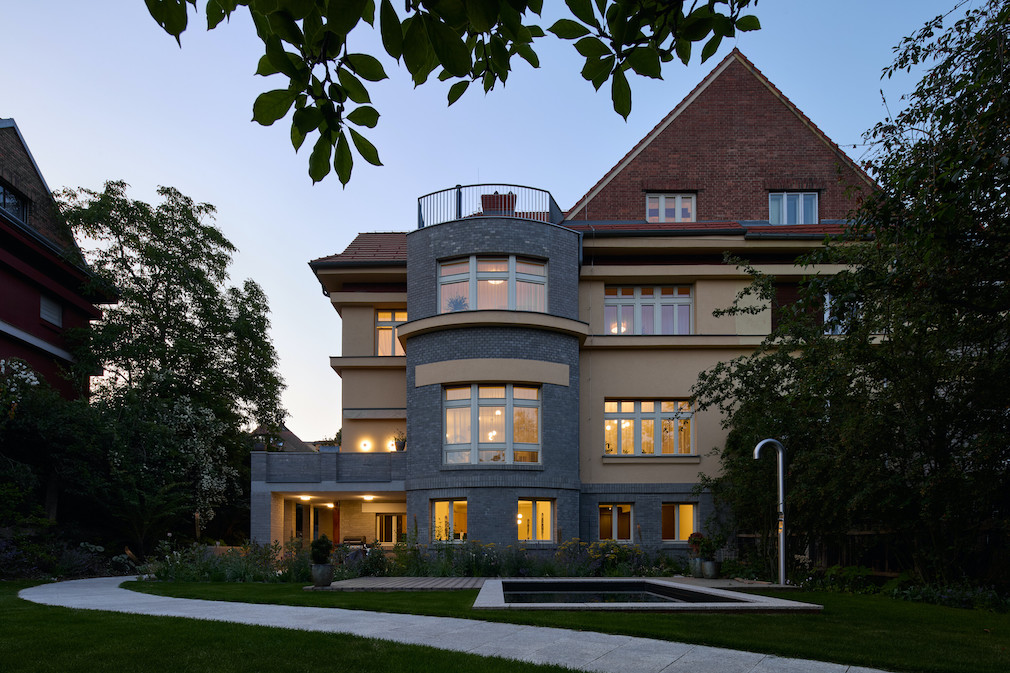
Set within a historic villa colony founded by the Building Cooperative of Prague Journalists and Writers, this renovation transforms a neglected 1930s semi-detached villa into a contemporary home with a carefully preserved architectural memory. The project, carried out by Atelier Hajný, balances restoration and reinterpretation: original proportions, materials, and selected elements — such as the wooden staircase and built-in cabinetry — are retained or faithfully reconstructed, while new extensions, layouts, and technologies respond to present-day standards of comfort. Interiors combine modern bespoke furniture with replicas of Czech modernist classics, framing the house as a layered dialogue between past and present. The result is not nostalgic reconstruction, but a precise reactivation of a historic structure for contemporary living.
From the Architect | In 2019, we were approached by a client who had purchased a villa at a beautiful address in Prague. From the beginning, it was clear that it would not be an easy task, as the property was in very poor condition and the client expected a high standard for their own living. This is when the story began. A story of the rebirth of a beautiful house that desperately needed rescue but barely met modern demands for layout, comfort, and technology.
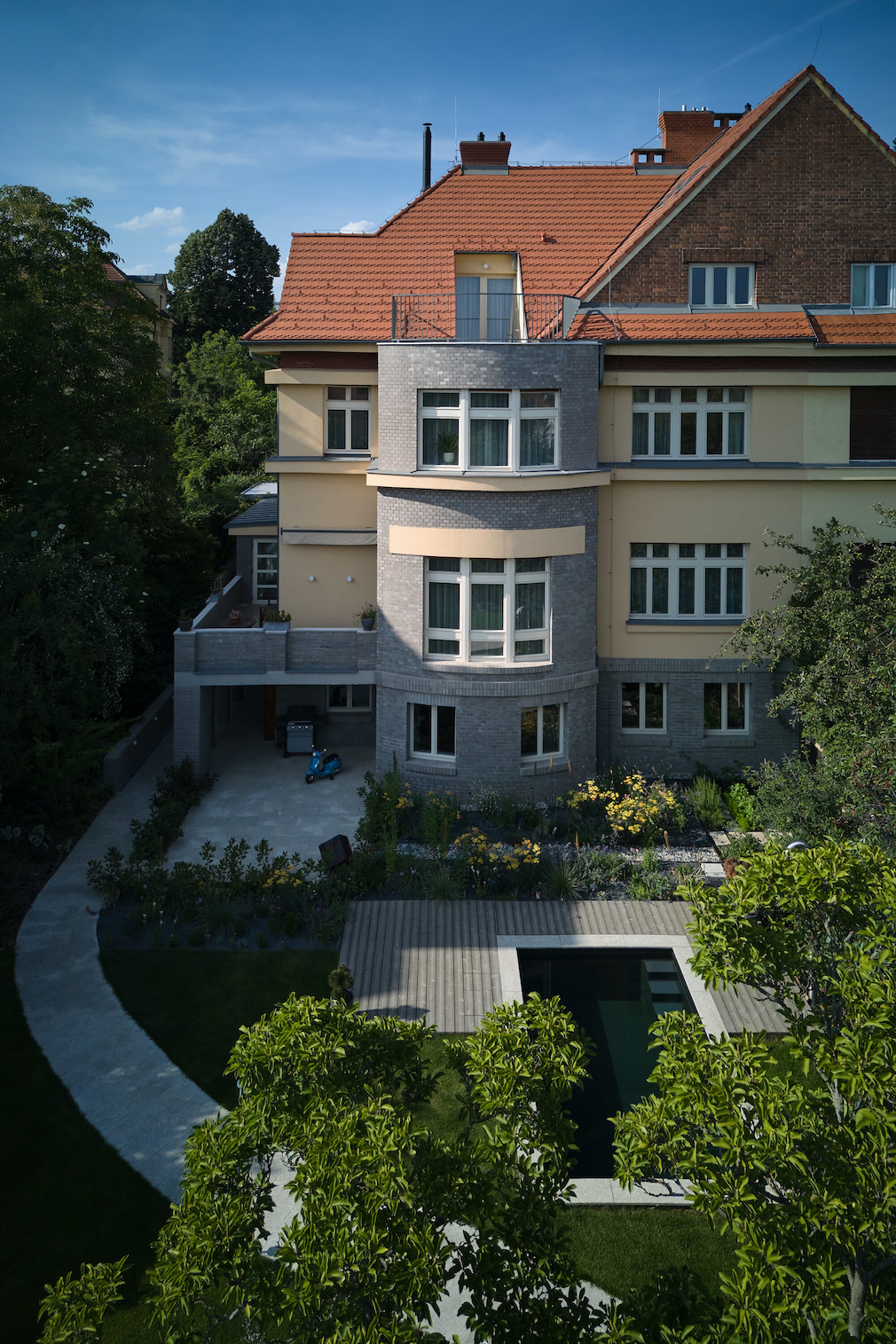
The exterior of the villa was characterized by exposed concrete brick surfaces, which were used for the entire façade of the new garage structure. On the villa itself, the original bricks were in very poor condition, and their restoration was impossible. In the past, large areas had been covered with some kind of paint that destroyed the bricks. After consultation with the conservation department, we covered the original bricks with a new, two-centimeter layer of brick slips cut on-site from full concrete bricks.
Other exterior materials also closely approximate the original appearance — be it rough ochre colored plaster or traditional “beaver tail” roof tiles.
Interior Transformation
Originally, the villa served one family, which was reflected in the functional arrangement of the four floors. The basement contained cellars, a laundry room, and a coal storage area; the ground floor and first floor held the apartment; and the attic was only minimally used.
The investor’s wish was to create separate apartments in the basement and the attic. Since the beautiful original wooden staircase only connects the ground floor and the first floor, we inserted a new, separate staircase into the northeastern corner of the house, leading only to the attic.
The basement apartment’s natural lighting got improved thanks to a new window well and the newly inserted windows connected to it. It is accessible directly from the southern garden and via a staircase from the northern garden at the ground floor level.
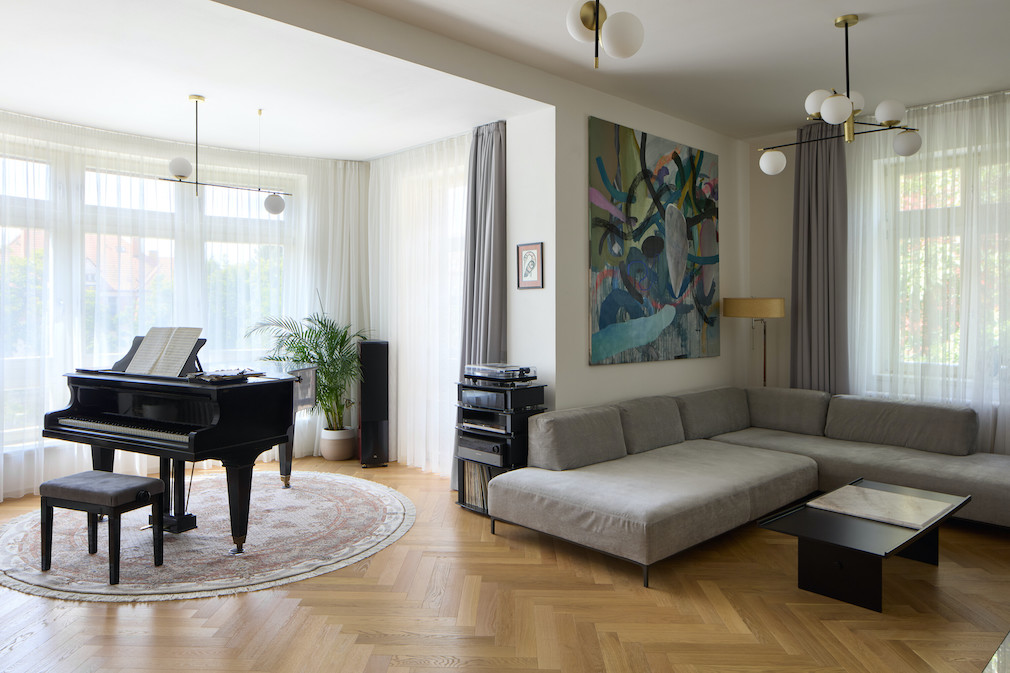
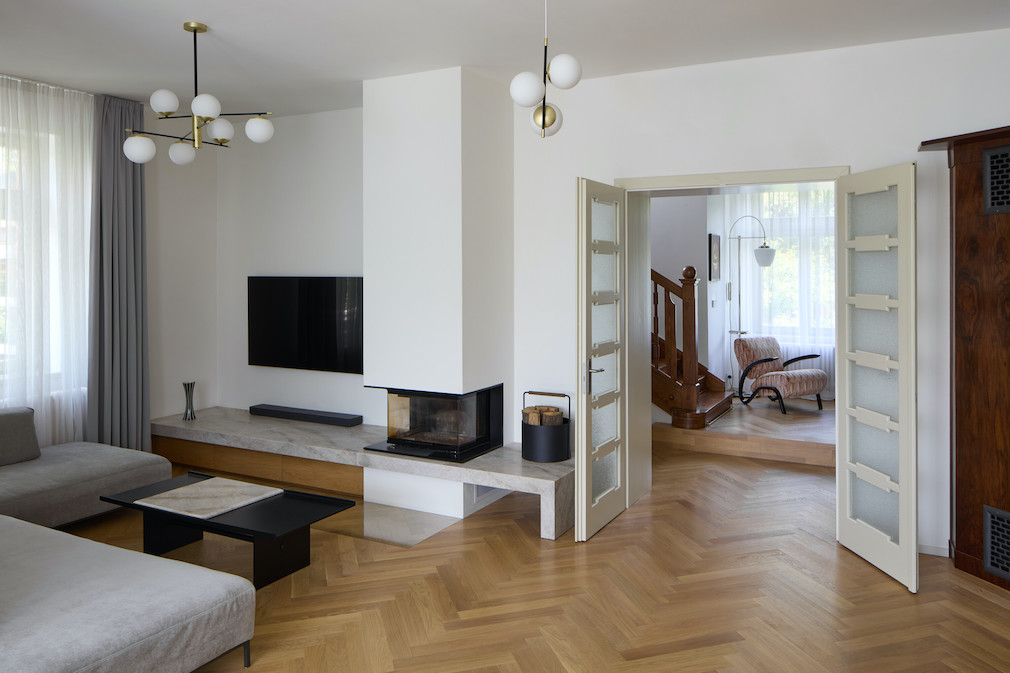
Unlike the basement and attic, where the layout changes were significant, the ground floor and first floor required fewer alterations. The number and size of rooms remained similar, with only the addition of bathrooms and utility areas.
The living room and kitchen of the main apartment are separated by a partition wall with original sliding doors, adjacent to a built-in cabinet with display cases. This entire assembly was preserved and underwent thorough renovation. We approached all the internal doors similarly; although they could not be restored, exact copies were made.
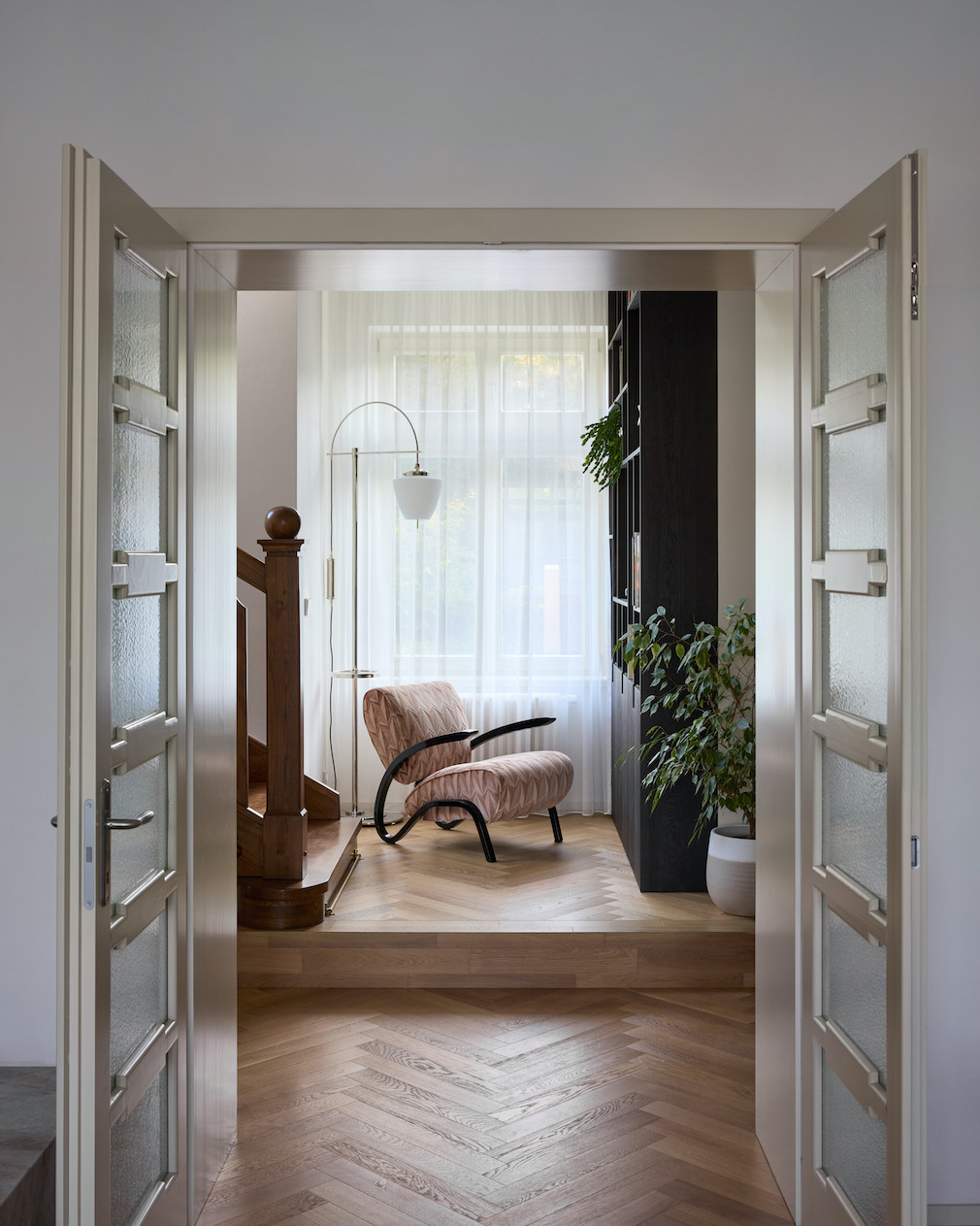
The internal staircase of the main apartment was treated for dry rot, renovated, and left in its place next to a two-story window, which faces the garden and brings beautiful western sunlight into the interior.
Dialogue Between Old and New
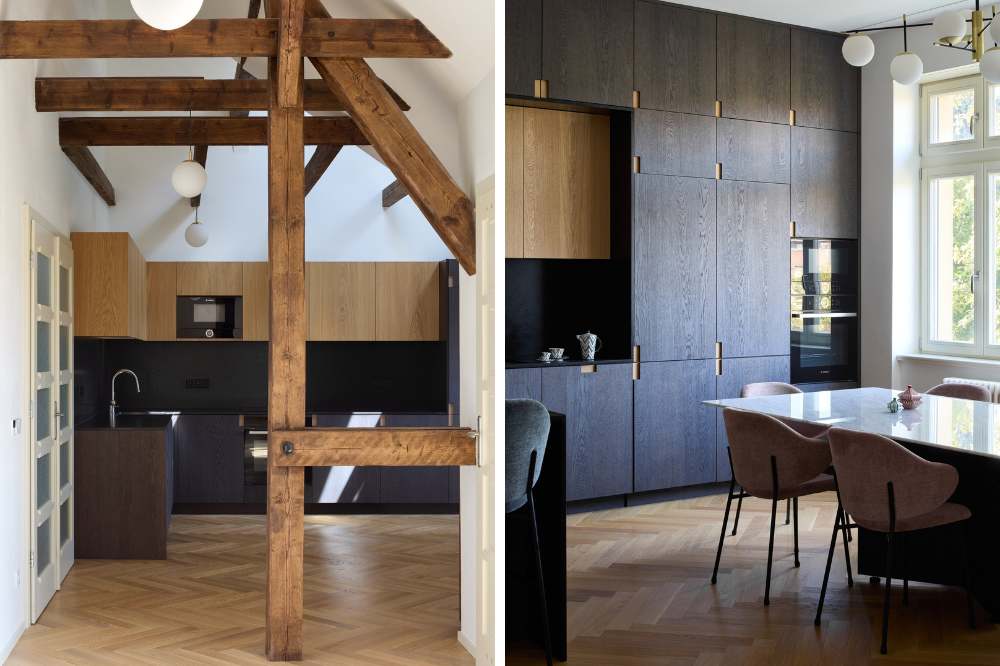
While studying the original condition and uncovering historical layers during demolition work, we were fascinated by the necessity of connecting old and new elements. The property was in such poor condition that only a minimum could be preserved in the interior — such as the staircase and the aforementioned cabinet between the kitchen and living room. This, however, also gave us broad opportunities for sensitive insertions of new elements. All built-in furniture was designed by our studio to look modern and timeless, but with a nod to the house’s history and honest craftsmanship. Dark surfaces are covered with stained oak veneer, handles are hand-finished solid oak plates.
The dialogue between old and new is reflected in many layers of the design — from the type of parquet flooring and historical window profiles with insulating glass, to the traditional ivory colour on the built-in furniture, and the concealment of underfloor water heating connected to a geothermal heat pump.
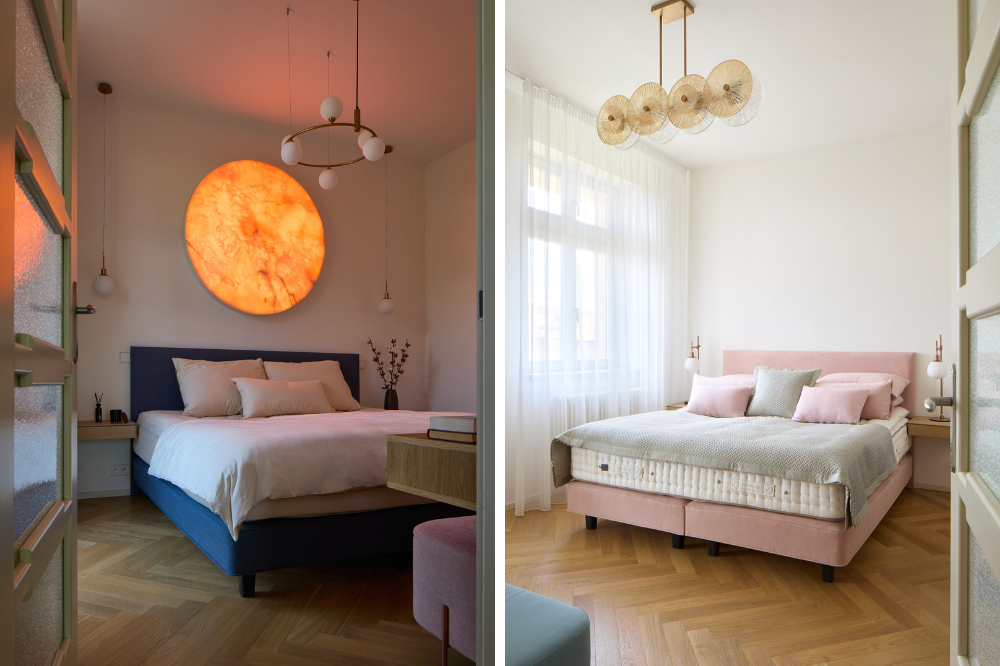
A significant part of the design was the selection of freestanding furniture from the company Modernista, which specializes in exact replicas of Czech Cubist, Functionalist, and Art Deco furniture. A few carefully selected and placed pieces complement other timeless solitaires, such as a dining table with a marble top or a minimalist sofa in the living room.
The goal was not to create a living museum of the 1930s; this would not have made sense in the context of the new layout anyway. Instead, we wanted to contrast the original and contemporary elements and let them lead a dialogue about the timelessness of Czech and European design.
Photography by Radek Úlehla.
Like what you see? Get it first with a subscription to aspire design and home magazine.