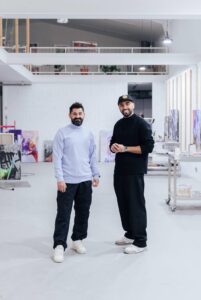
 PichiAvo is Juan Antonio and Álvaro, a duo of artists from Valencia, Spain. Recognized for their ability to merge painting and sculpture in urban environments, PichiAvo takes an innovative approach to their artistic fusion. A balanced combination of classical art and the most contemporary urban artistic expression can be identified in their work. From the outset, they rejected artistic individuality, instead joining forces to create a truly unique body of work that speaks a distinctly urban language — both in the streets and in the studio. Their international breakthrough came in 2015 with a large-scale mural at Belgium’s North West Walls Festival, leading to major projects at renowned sites like Wynwood Walls in Miami, the Houston-Bowery Wall in New York, and a monumental sculpture for Valencia’s Fallas festival. Their practice continued to expand with a collaboration alongside Vhils in Porto, a new studio in Valencia, and projects for the 2024 Paris Olympic Games, culminating in the release of Our Odyssey, an anthology documenting their artistic evolution and solidifying their place as leading figures in contemporary urban art. Learn more about the duo behind PichiAvo in today’s Maker Monday.
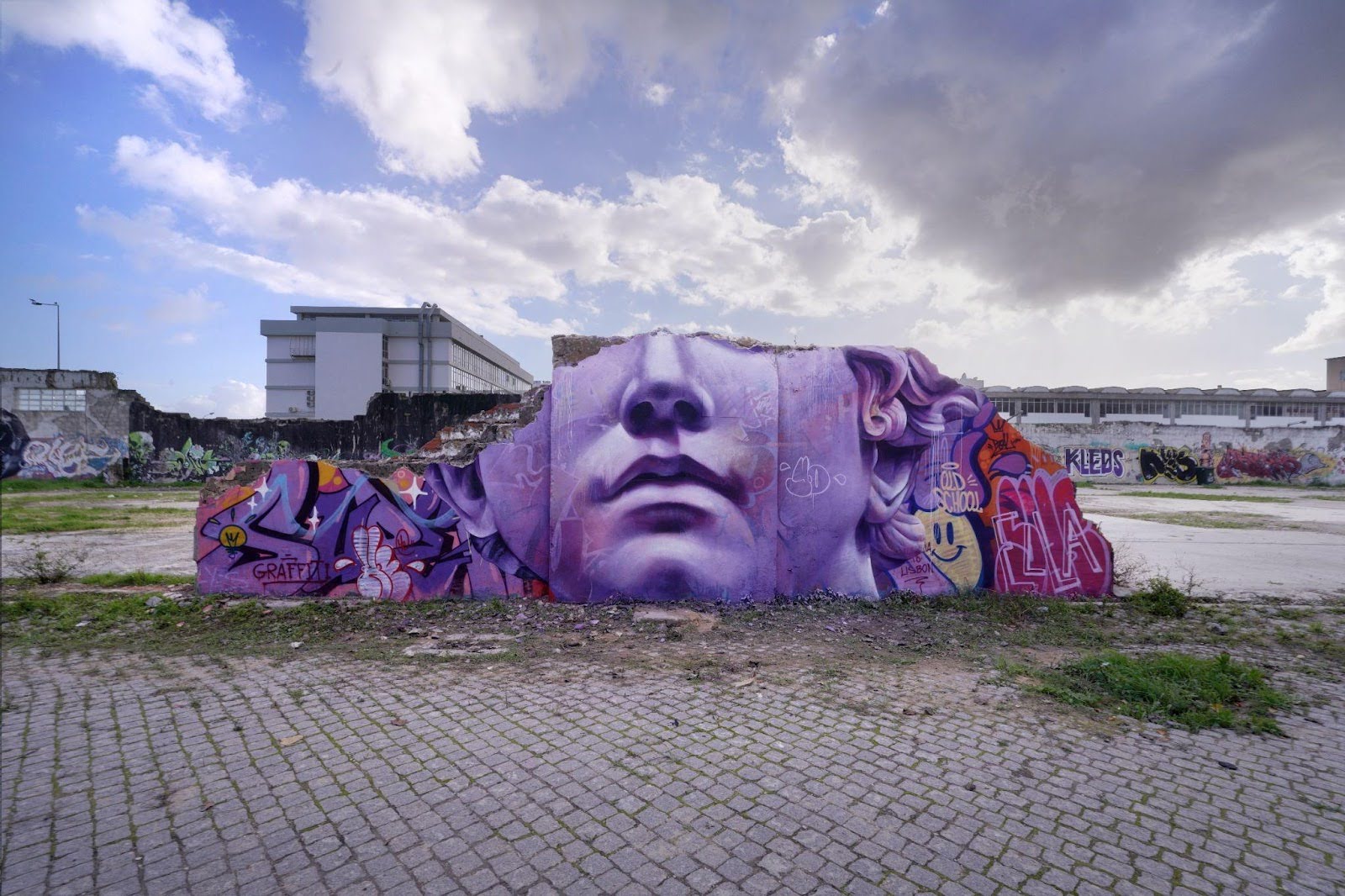
During their solo exhibition Used To Be at Underdogs Gallery in Lisbon, PichiAvo created “Diaspasis,” an artistic action in which the original material is broken down and the artwork is fragmented into multiple pieces.
What inspired you to become an artist?
The desire to leave a message that can transcend time inspired us to become artists. Art has always been a way for us to express ourselves and share a vision of the world, trying to contribute something different. Our education and our family also played an important role, they helped us understand that it was possible to live a life dedicated to art.
Can you describe your art/design philosophy in three words?
Classical art, graffiti and innovation.
Can you describe a project you’re particularly proud of?
It’s difficult to choose just one project, because each one becomes special for different reasons: the place, the moment, or the people involved. Some projects stand out because of their scale, others stand out because of the context. For example, painting the Houston Bowery Wall in New York was a very meaningful experience for us. It’s a historic wall in the street art scene, where many important artists have painted over the years, and being invited to work there felt like a recognition of our journey.
At the same time, we try to approach every project with the same intensity, whether it’s a mural, a sculpture, or a studio work.

PichiAvo’s Per ofrenar transformed a classical temple into a living artwork of graffiti, offerings, and public interaction — before completing its cycle in flames at Valencia’s La Cremà.
What’s the best piece of advice you’ve received as an artist?
One of the best pieces of advice we received as artists was to not be afraid and to truly believe in what we do, without worrying too much about criticism. Years ago, an artist close to us told us something that stayed with us: it’s okay to keep doing something that comes from your origins. In our case, that means staying connected to graffiti and not feeling the need to change our style or leave that part of our practice behind.
How do you stay creative and inspired?
Inspiration can come from anywhere. A lot of it comes from observing the world around us and constantly experimenting with new ideas, materials, and formats. We like to challenge ourselves by exploring different ways of presenting our work, whether in murals, paintings, sculptures, or installations.
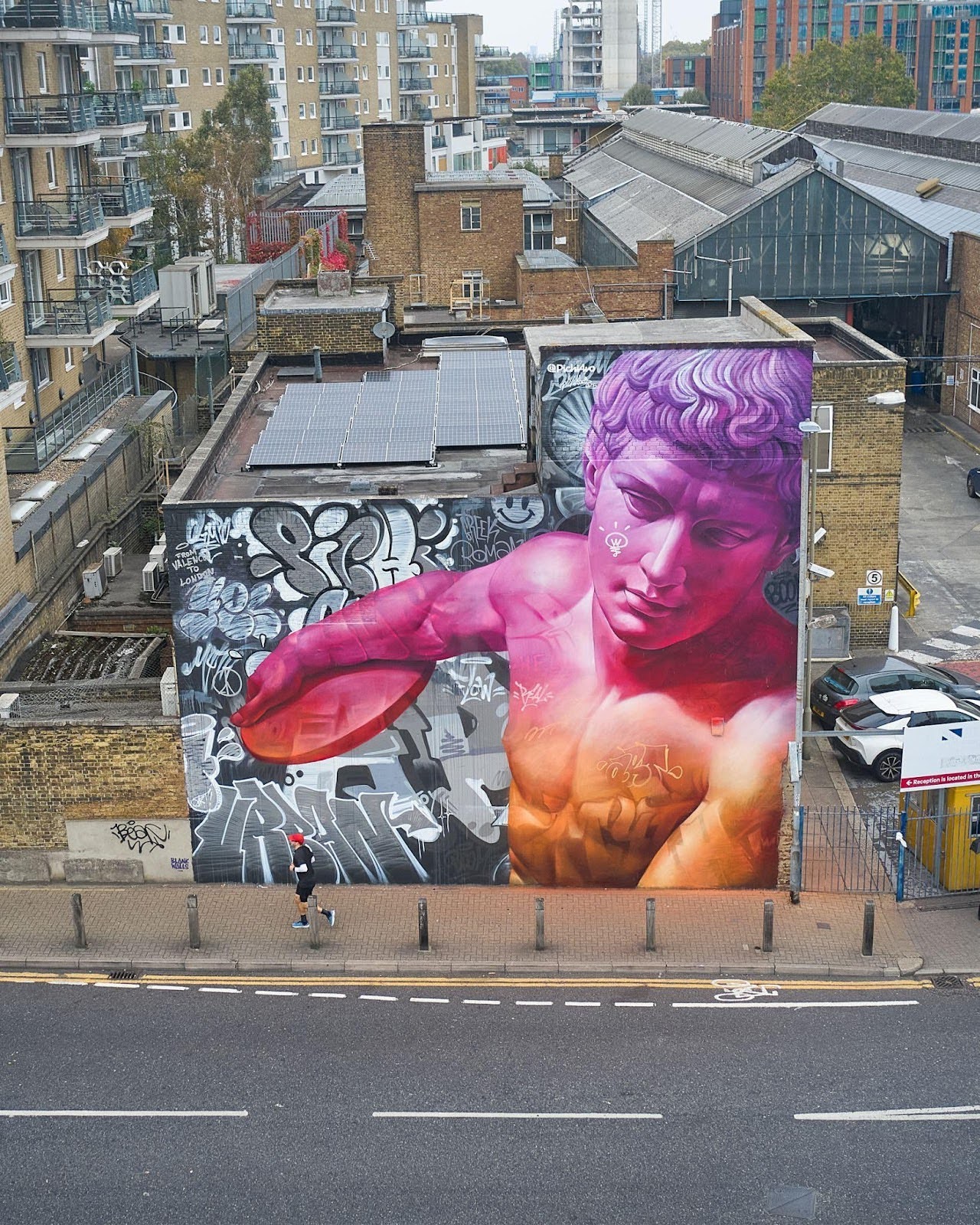
For the Chromata exhibition, PichiAvo introduced Discobolus Chromata in London in collaboration with StolenSpace Gallery, where a classical figure is brought to life through a bold color gradient against a monochrome backdrop.
What is your favorite place to find inspiration?
The street is definitely our main source of inspiration. It’s where we encounter different cultures and where urban experiences open unexpected doors. Everything there feeds our imagination: textures, colors, spaces, and the energy of contemporary culture.
At the same time, we also find a lot of inspiration in museums and institutional spaces. Visiting places where classical art is preserved allows us to reconnect with history and understand its language. Architecture, sculpture, and archaeology are constant references that inspire us to reinterpret the classical world through a contemporary urban perspective.
What is your favorite aspect of your job?
One of our favorite aspects of our job is the constant innovation and dynamism in what we do, every project is different. Traveling is also incredibly exciting for us, especially seeing how our work is received in different places and communities. We feel very fortunate to be able to work both in our studio and in the street, in many different parts of the world, almost equally. That balance makes our work truly exciting. And honestly, for any artist, being able to live as a professional artist is an incredibly fulfilling experience.
Like what you see? Get it first with a subscription to aspire design and home magazine.