
 Philip J. Consalvo, AIA, founded PJCArchitecture in 1998 with a vision grounded in creativity, collaboration, and responsibility. Believing that truly responsible architecture must enhance both the environment and the human experience, the firm embraces the three pillars of sustainability — environmental stewardship, social equity, and economic vitality — as guiding principles in every project. Under his leadership, PJCArchitecture has realized a diverse body of work encompassing residential, corporate, commercial, and non-profit projects, each approached with an unwavering attention to detail. Guided by the conviction that good design is for everyone, Philip centers each client’s goals within a thoughtful and responsive design process, bringing a sensitivity to the built environment that allows their spaces to endure, adapt, and grow alongside them. Learn more about how Philip and his teams build homes from the ground up in today’s Designer Friday.
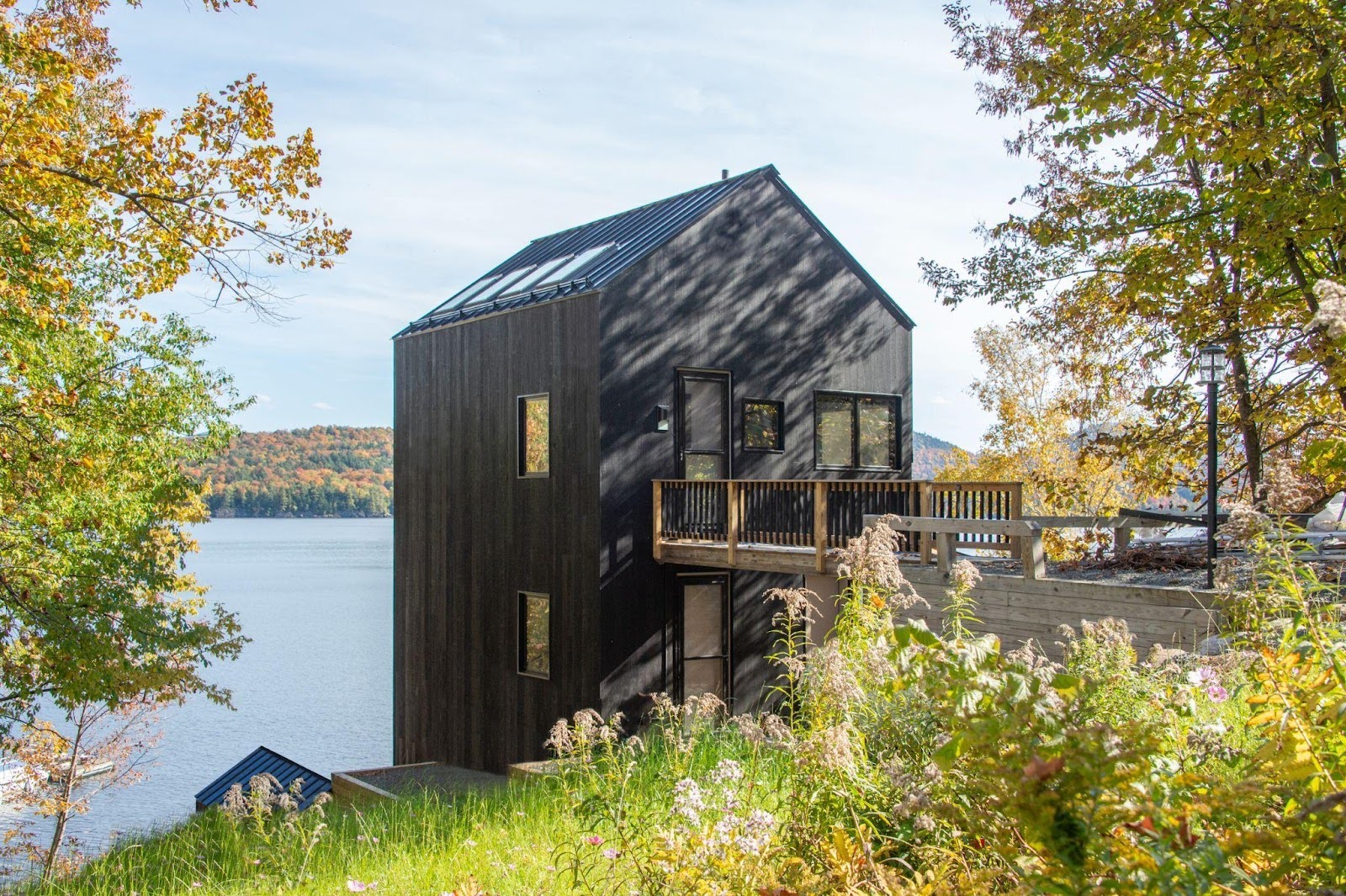
A minimalist material palette of dark-stained wood and metal roofing creates a quiet architectural language that defers to the surrounding Adirondack scenery.
Andrew Joseph: Can you describe your design philosophy in three words?
Philip J. Consalvo: Simplicity, functionality, and sustainability. I believe that less is more when it comes to architecture. Clean lines and timeless palettes define my approach because they allow the craftsmanship of the design to take center stage, creating a sense of calm, and leaving room for each homeowner’s personal style to shine through. Architecture should never be driven by a designer’s ego, but by the needs and aspirations of the client. We also prioritize eco-friendly materials and energy-efficient solutions that support both the well-being of the occupants and the health of the environment.
AJ: What is your favorite design-related quote?
PJC: “The details are not the details. They make the design.” — Charles Eames
This quote captures the essence of what great design is about. Each element — proportion, material, joinery, light, texture — contributes to the whole. Details are not decorative afterthoughts; they’re the structure, rhythm, and soul of the work.
As an architect, I’ve learned that meaning often resides in these moments of precision and care. When the details are right, the entire design feels effortless. Eames’s words remind me that beauty and integrity are built one detail at a time.
AJ: How do you stay creative and inspired?
PJC: I try to experience the arts in all forms, including visual arts, theatre, music, literature, and film. I believe that each one offers a different way of seeing and feeling. I also find enormous inspiration in travel; experiencing new places and cultures opens your mind to different ways of living and thinking.
Nature is another essential source of inspiration. Walking through it, observing its patterns, its light and silence, is endlessly renewing. I’m constantly looking at other architecture too. Studying how other architects create and solve problems is both humbling and motivating.
Perhaps most importantly, I listen to my clients. Taking the time to truly understand what they like, what they dislike, and what they genuinely need often leads to inspiration in unexpected ways. Deep listening can open design directions that might not have been obvious at the start. It reminds me that inspiration often begins with listening, and paying attention to what people value and how they respond.
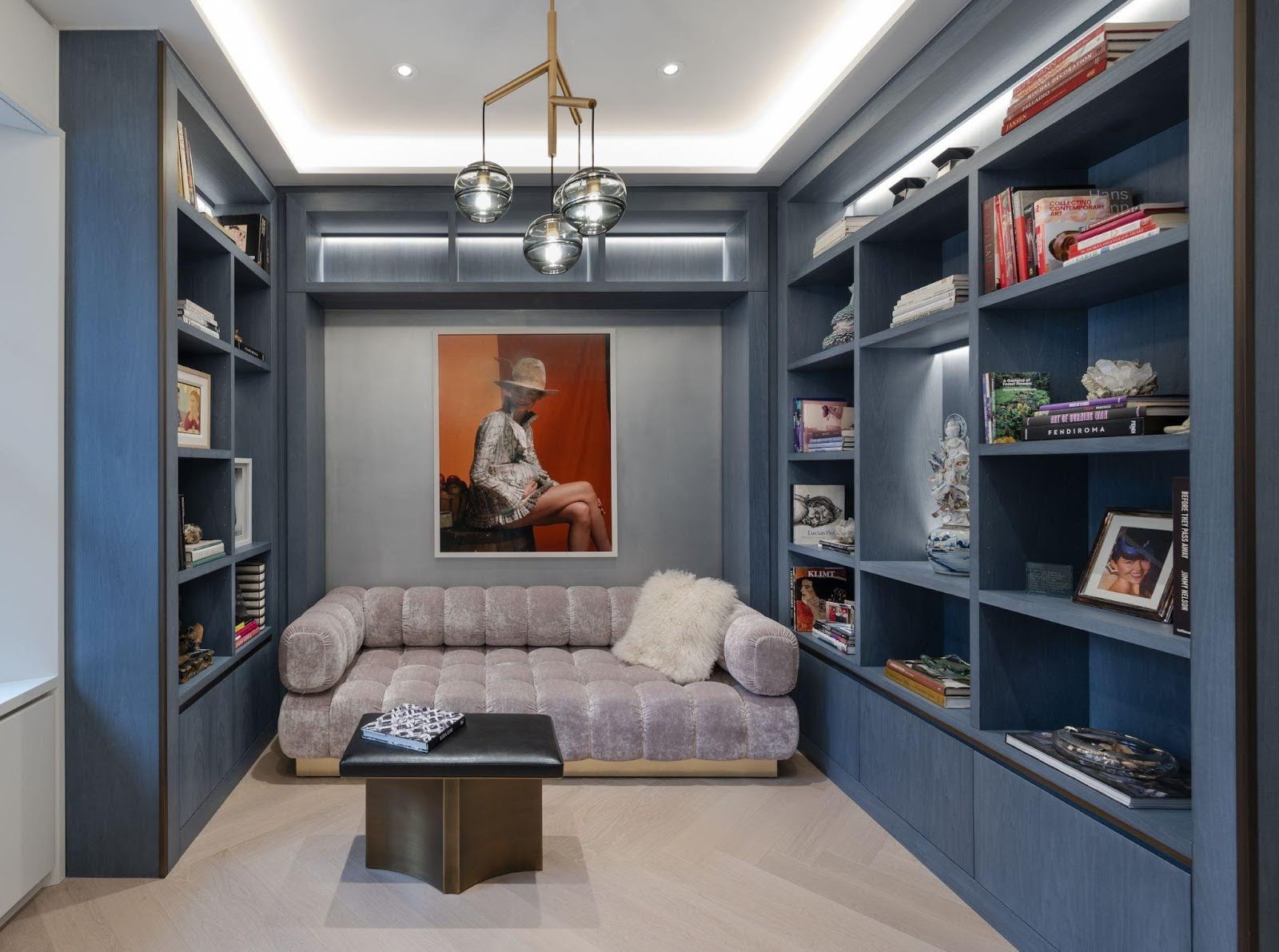
This reading nook leverages symmetry and built-in infrastructure to create a sense of permanence, as if the seating zone was carved directly from the architecture.
AJ: How do you approach designing for different types of clients?
PJC: A cornerstone of our approach at PJCArchitecture is the fundamental belief that our homes should serve as a source of respite and renewal. Of course, this definition is deeply personal for each and every client, which is why we begin each project with a thorough discovery process. We spend hours with our clients’ families walking through their day-to-day lives to understand their distinct needs, which often leads to us uncovering aspirations that they have not even articulated themselves.
Many of our clients have demanding, high-stress careers, and our goal as architects is to shape their homes into spaces of refuge that support their well-being and their passions. For example, we recently renovated an apartment on East 9th Street in Manhattan for a couple looking for a space to recoup from their fast-paced work life. Part of our design solution was to create custom cabinetry to store one partner’s photography equipment and a bespoke bar that spoke to the other’s interest in mixology.
AJ: Can you describe a project where you had to work with a limited space?
PJC: Something we excel at is engineering creative solutions to maximize available space. Many of our projects are in New York City, where every inch of space counts. For the apartment on East 9th Street, we developed a central core structure to serve as an anchor for the entire home, offering space for hidden storage while leaving the outer areas free to maximize views of the city. For another home on Cornelia Street, we were challenged to fit an ambitious program into an atypical triangular footprint, requiring a truly creative approach to layout and storage.
In almost every apartment project, there is some element that requires us to approach our design in an unconventional way — from built-in desks that conceal HVAC equipment to sliding doors in a kitchen that lead to an unexpected home office. I always encourage my teams to think outside of the box when approaching awkward or leftover spaces because they can be just the element that transforms the entire home.
AJ: Can you describe a project that you’re particularly proud of?
PJC: I am very passionate about exploring site-responsive residences that bring a fresh perspective to a region’s vernacular architecture. One recent project we worked on was a lake house in Indian Lake, New York. The design elements — pitched roofs, wood siding, and stone walls — speak to the surrounding architecture of the region while providing a fresh perspective on the familiar forms and materials. We chose to clad the home in “Shou Sugi Ban,” an eco-friendly, charred wood siding that both helps the home cohere with its surroundings and adds a contemporary element to the design.
Another recent project was a 700-square-foot tiny house in Napoles, Ecuador, that truly celebrates the region’s traditional architecture. For this design, we went “back to basics” and utilized four primary materials — locally sourced brick, steel, concrete, and glass — in simple and pure ways. All natural materials were sourced in the region, and the building crew was made up entirely of local laborers. In contrast to traditional building methods in the States, we developed ideas through on-site communication and shifting strategies based on the availability of construction materials, using techniques that have been used in Ecuador since the time of the Incas.
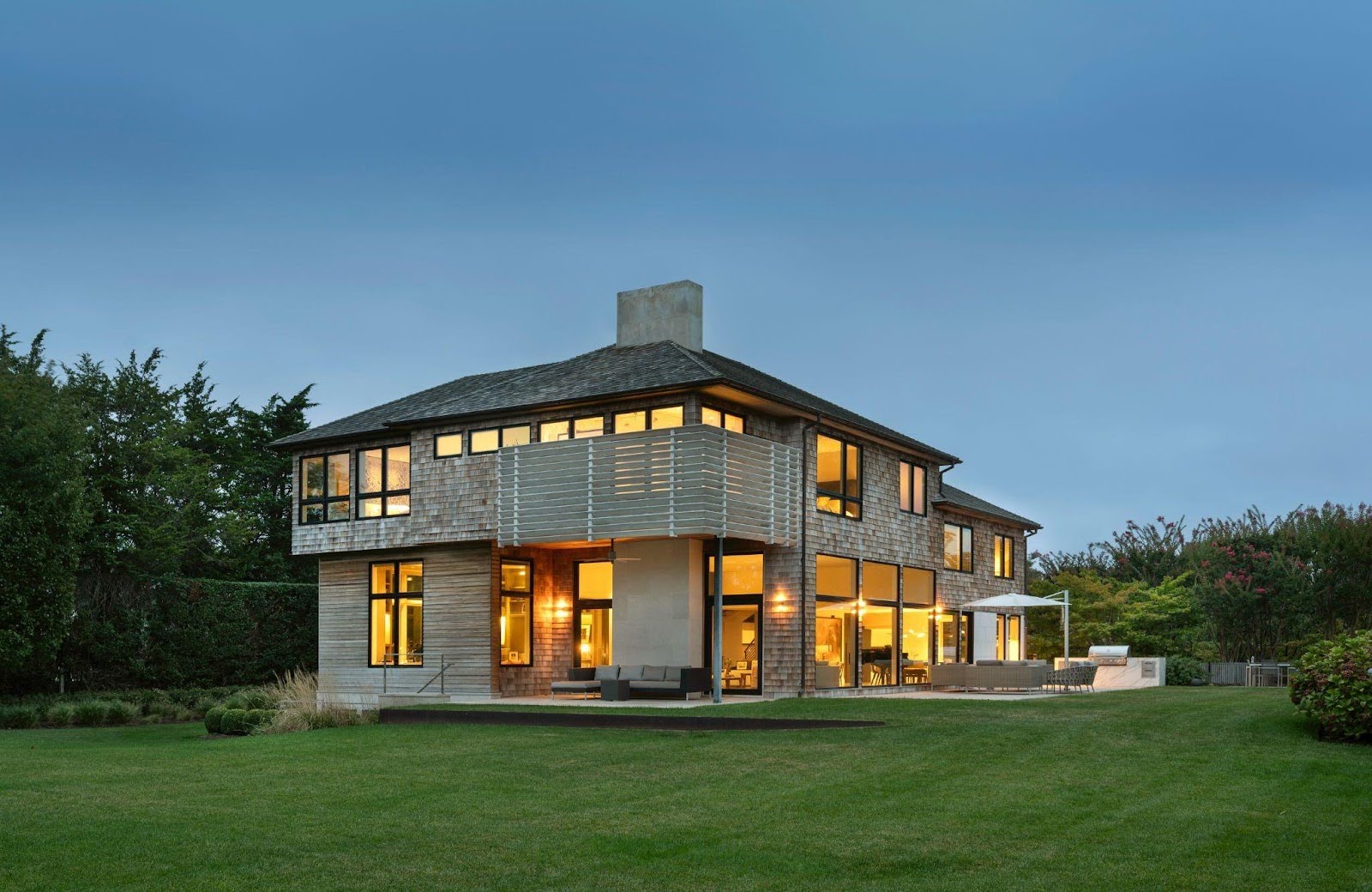
This Long Island home blends classic shingle style with large, modern windows that open the interior up to the yard and let in a ton of natural light.
AJ: How do you stay up to date on the latest technology in design?
PJC: By staying curious and continuously engaged. The field evolves quickly, so it’s essential to read widely, attend lectures, workshops, and conferences, and remain part of professional networks where new ideas circulate.
Equally important is hands-on exploration. Take the time to test new tools, materials, and digital platforms firsthand rather than relying solely on summaries or trends. Collaboration with consultants, engineers, and younger colleagues who may approach technology differently also keeps your perspective fresh. Staying current is less about chasing every innovation and more about understanding which technologies truly enhance the design process and elevate the built experience.
AJ: Best advice you’d give your teenage self?
PJC: Dream boldly about the future, but don’t rush past where you are right now. There’s so much to learn, enjoy, and appreciate in this moment. Even when life feels ordinary or routine, pay attention. Every experience, big or small, teaches you something that will matter later.
Remember that the person you had a major crush on in high school will eventually grow old, gain weight and drive you crazy with their annoying habits… so don’t be devastated when you break up after third period gym class. It might be the best thing to ever happen to you!!!
Lastly, don’t stress too much. The things that seem huge or all-important today usually won’t feel that way down the road. Stay curious, stay grounded, and enjoy the process of becoming who you’re meant to be.
Like what you see? Get it first with a subscription to aspire design and home magazine.