
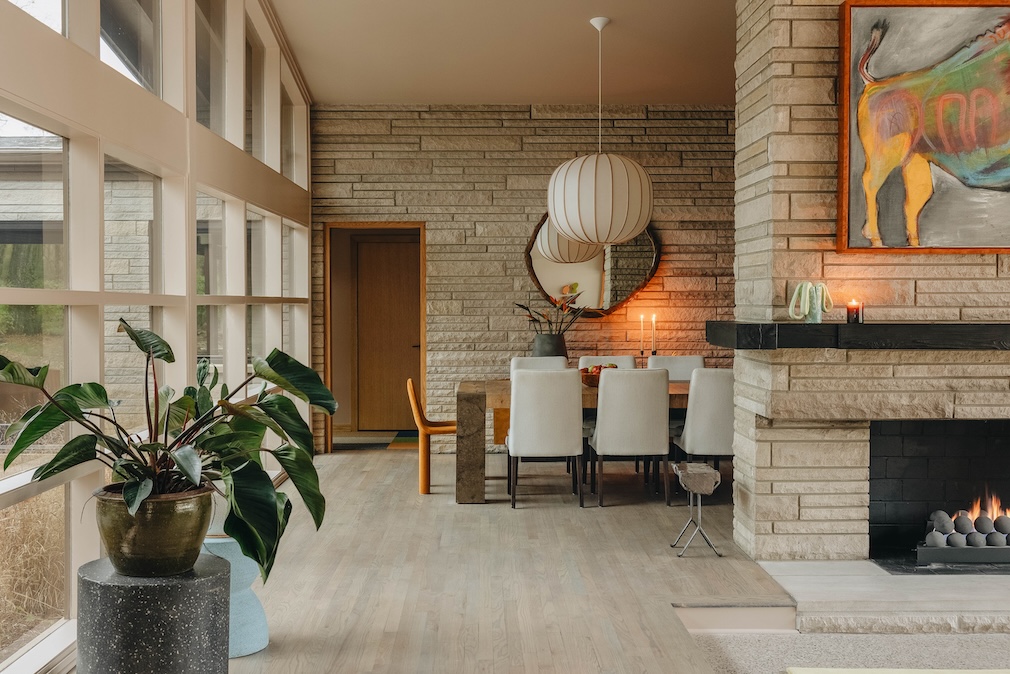
Natalie Officer is a good listener. As the principal of Natalie O Design, a full-service interior design firm in Kentucky, her job is to listen to her clients and their homes. Such was the case for this midcentury residence just outside of Louisville: Officer wanted to craft a spot for the home’s family to gather without overwriting its rich history.
“Oftentimes when someone has a midcentury home, there’s nothing eccentric inside,” the designer describes. “Once someone’s kind of taken out all the pieces, it’s quite sterile. So how do you bring character back into the house?”
For starters, Officer “softened” the property’s Brutalist materials, like Bradford stone and concrete, with a nature-inspired palette. “This biophilic concept brings people calm,” she explains. “We wanted to tilt that into modernity without hitting you over the head with it.”
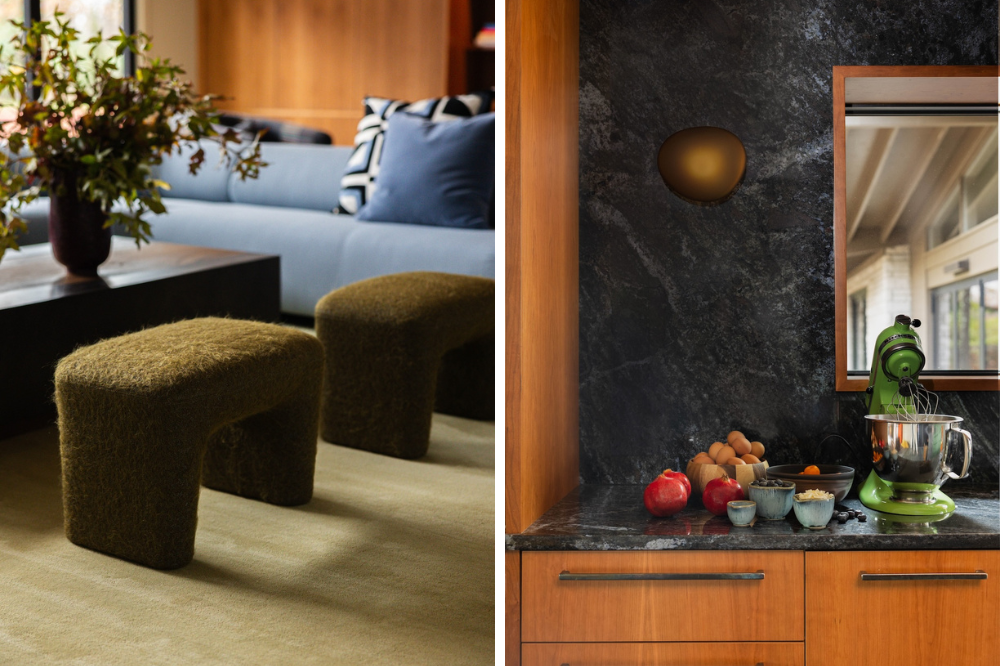
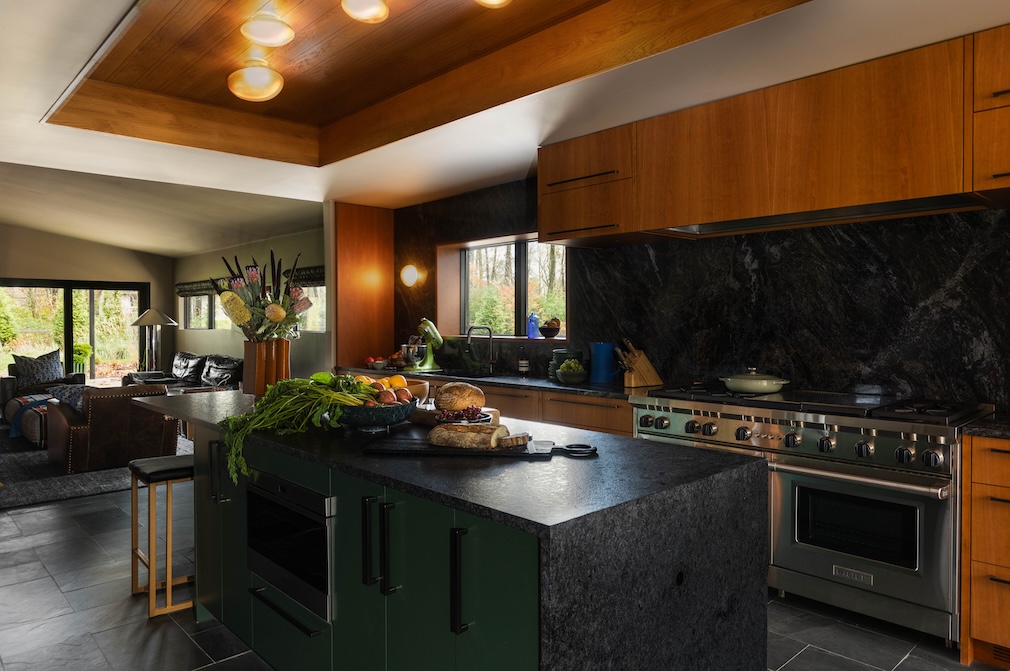
The home’s sunken living room and a sky-blue Gogan sofa by Patricia Urquiola invite guests to kick back and relax, while two ottomans covered in a tactile, moss-tinged fabric from Pierre Frey look plucked from the great outdoors. Verdant accents in the kitchen bring a bold touch to the room’s cherry cabinets and white oak tray ceilings. Outside, yellow cabinets flank the al fresco kitchen, bringing a hint of sunshine year-round.
Midcentury homes excel in bridging the gap between form and function, and this property is no exception. Though the living room’s custom millwork provides discreet, design-minded storage, the integrated bar from Daniel Chaffin offers a toast-worthy moment. In fact, Officer says that this bar served as the “ah-ha” moment for her and Chaffin to launch their joint design collective, Ora.House.
“We love that we were able to do what we call in Kentucky ‘the bourbon thing,’” she states of the bar. “You have all your libations there, but really when it’s closed, it’s a piece of art.”
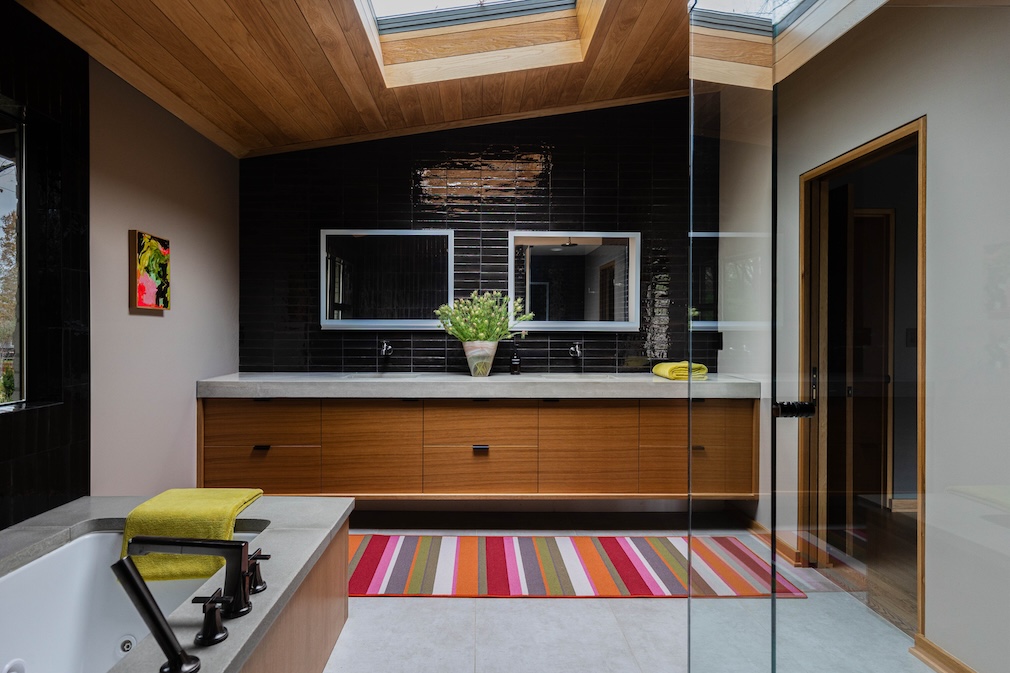
From thoughtful furnishings to intentional integrations, the home blurs the line between the great outdoors and indoors. “A seamless transition is the hallmark of organic architecture,” she notes. “The building dissolves into its surroundings; the boundary between shelter and environment disappears.”
Photography by Kate Leichhardt.
Like what you see? Get it first with a subscription to aspire design and home magazine.