Brad Sherman, co-founder of Float Studio, artfully designs spaces that resonate with brands and individuals, drawing from his background in Urban Design and a master’s in Sustainable Architecture from Philadelphia University. His early career at TerraCycle fostered an innovative approach to design, turning waste into captivating products. By 2012, he was deeply embedded in New York’s startup scene, aiding businesses like Food 52 in their evolution from co-working models to distinctive, creativity-inspiring spaces. Alongside him, Nina Etnier, also a co-founder of Float Studio, crafts spaces that merge elevated experiences with profound personal connections. With a Graduate Degree in Interior Spatial Design from Chelsea College in London and over 13 years in the industry, Nina intertwines visual media, psychology, and a rich artistic heritage to promote timeless and personalized design narratives in every project. Learn more about the founders of Float Studio in today’s Designer Friday.

Rich textures like the blue rug, wood paneling and lush greenery emphasize mental well-being at this financial office.
Andrew Joseph: What is something you hope to see trending in design in the future?
Both: Less fast furniture and design dupes and more tailor-made spaces. Social media has created a rapid trend cycle that results in waste and homes that do not feel personal. We hope to see customization take precedence moving forward, whether that be repurposing sentimental pieces or investing in timeless décor that speaks to your personal design style.
AJ: What’s your design pet peeve?
Nina: Overly matching interiors. We want to embolden our clients to step out of their comfort zones and become more experimental with color.
Brad: I have a running list of things that keep me up at night in my notes app on my phone. Among them is the location of power outlets – when they are misplaced, they can quickly become eyesores.
AJ: Do you get your eight hours a night? What is your schedule like?
Nina: We are both up at the crack of dawn, but I still do manage to get my eight hours of sleep each night. I think combined with work, having a toddler has finally helped me be able to fall asleep at a reasonable hour.
Brad: I wish. I’m usually up at 6 a.m. to make it to the gym by 7 a.m. I’ll meet up with friends for coffee before I head into work. By 6 p.m. my brain shuts off.
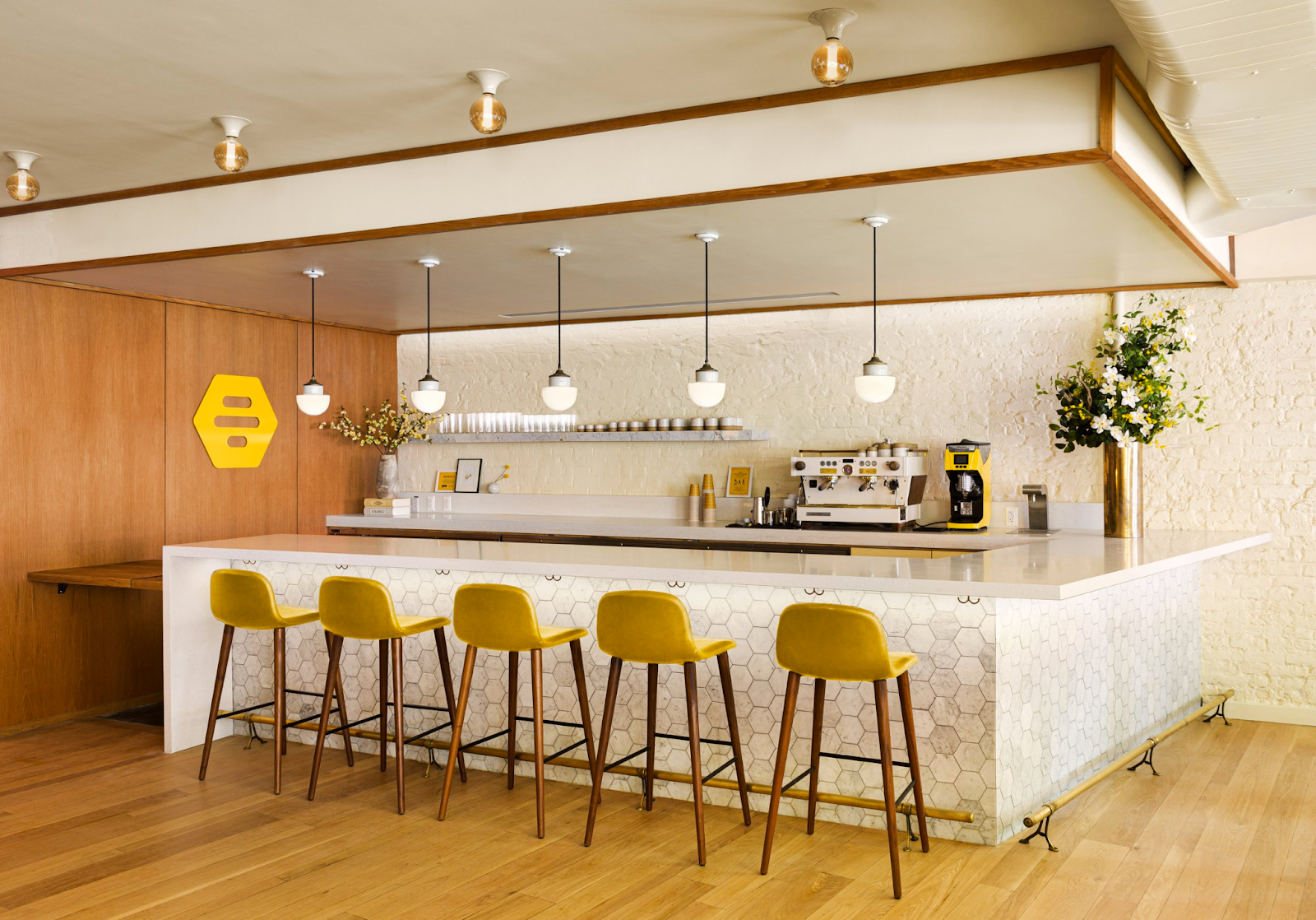
Bumble transitions from the virtual realm to tangible ambiance, introducing a warm, honey-hued café perfect for real-life dates. The signature hexagonal tiles beneath the counter echo Bumble’s iconic theme.
AJ: How would you describe your personal style?
Nina: Similar to my design approach, I prefer investing in well-tailored pieces that will stand the test of time as opposed to pursuing fast-fashion trends. By investing in quality items that speak to your individuality, you’re able to create a wardrobe capsule more tailored to your personal style which can ultimately lead to less waste and money spent.
Brad: I would equate my design style to J.F.K Junior, who has always been a style icon to me. Another interesting fact to share is that I do not own a single piece of black clothing – not even a tuxedo.
AJ: What would your dream project or dream client be right now?
Nina: I would love to design a home in the Pacific Northwest. Architecturally, it would be something completely different and unique from what we’re used to designing on the East Coast. Getting to experiment with more clean interior architectural details that speak to nature would be very inspiring.
Brad: I am going to go in the complete opposite direction and say I would love to design a nightclub or bar. There are so many ways that you could improve and build upon the traditional New York nightlife experience.
AJ: What might the design world look like in 10 years?
Nina: With the input of AI, more tools will be put into the hands of designers to create desirable spaces.
Brad: Materiality will shift toward using more sustainable and recycled materials. I also think vintage is going to become the ultimate luxury. Similar to the way artwork is coveted, people are going to desire vintage furniture due to the craftsmanship and unique nature of the products. I also see these trends taking precedence within the fashion industry, as well.
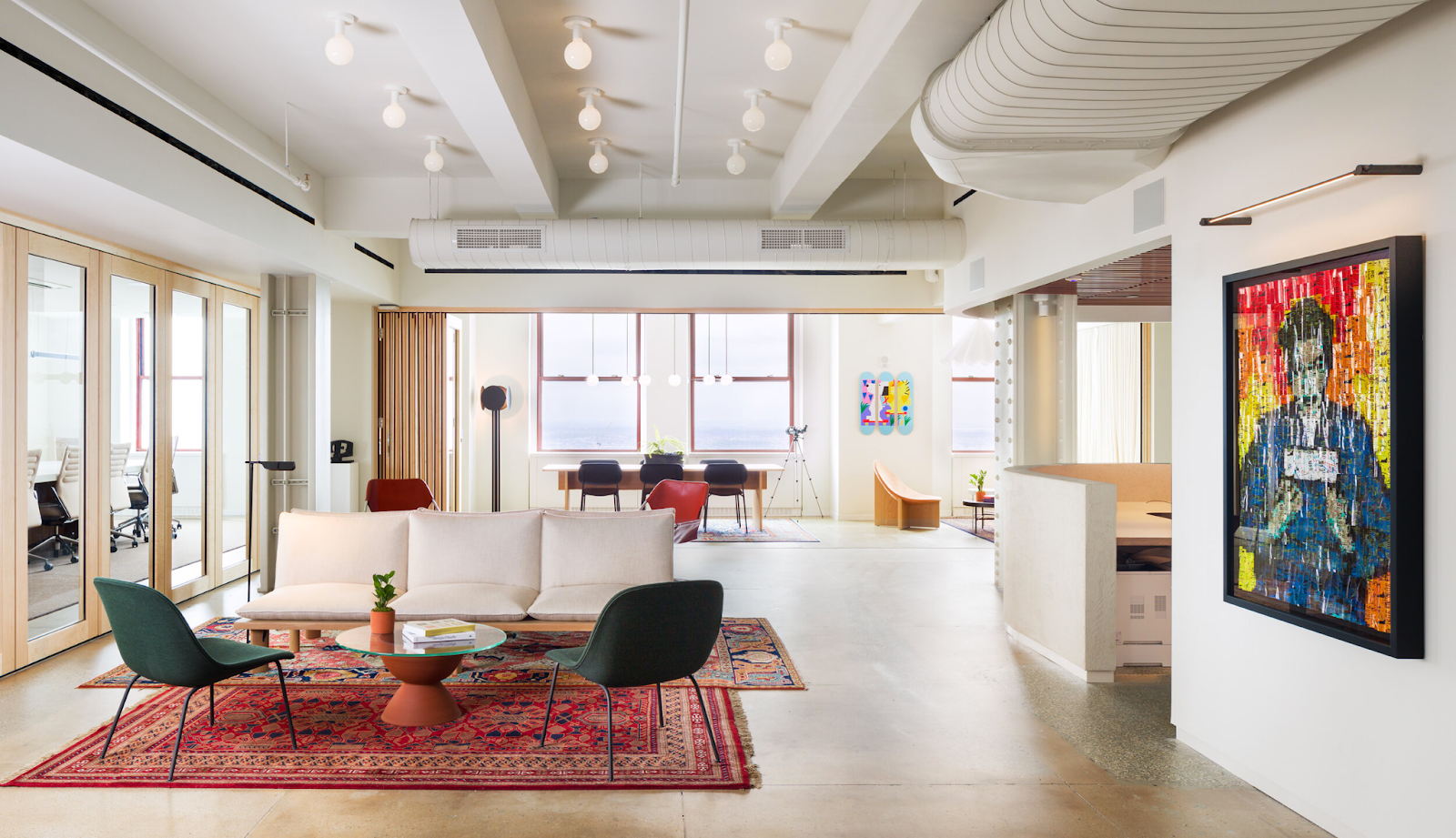
A playful and inviting law firm atop the Empire State Building offers panoramic views of New York City, blending rich colors and curated textiles for a homely ambiance.
AJ: If you had one more hour in the day what would you do with it?
Nina: With a young toddler at home, I’d love an extra hour in the day to visit the gym. I still make it occasionally but having that extra hour would make it easier.
Brad: I would pursue another creative hobby that lets me use my hands. I used to be a studio metalsmith, which would be fun to revisit. I’ve also considered painting, but there are not enough hours in the day.
AJ: What’s inspiring you in life (in the industry) right now?
Both: It’s been inspiring for both of us to see the next generation of young designers place such an emphasis on pursuing sustainable design solutions within projects.”
AJ: Best advice you’d give your teenage self?
Brad: Identify what you love and pursue it. It is easy to ignore your passions as a teenager in pursuit of what others think you should be doing. I spent so many years on a different path, and while I am proud of where I ended up, I wish I had not been so afraid to go after it sooner.
Nina: Not to second guess myself. I spent a lot of my teenage years rehearsing and feeling insecure about how I should communicate my perspective to people. As it does for many young people, it took time for me to feel confident with my own voice. This is why we as leaders now look for ways to empower our young designers to share their unique perspectives and solutions without fear of judgment.
 About the Designers | Float Studio is an established interior design firm known for crafting spaces that reflect clients’ unique brand identities. Founded in 2013 by Brad Sherman and Nina Etnier, the firm has become a leader in both workplace and residential design due to their innovative approach. Their expansive portfolio spans industries like residential, workplace, retail, and hospitality with clients such as Bombas and Casper. Apart from interiors, Float Studio also designs custom products, recently launching a hardware collection with Modern Matter, further cementing its mark in the design world.
Like what you see? Get it first with a subscription to aspire design and home magazine.