

“My mom was in a rock band in the 1980s, and she dragged us to her gigs,” relates Allison Ballmer, the senior biotech exec who lives in this turn-of-the-century Victorian home in San Francisco’s Eureka Valley. Which is to say that when it comes to design, timid she is not. Ballmer had fallen in love with the 2,500-square-foot painted lady because, she remembers, “It had a soul. It was 130 years old and weathered on the interior. I felt like this home had housed so many experiences.”
By the time she called designer Jeff Schlarb for help, she had already established a worldly-wise vibe in the hall and dining room, swathing walls in deep, inky tones that telegraphed an aura of demimondaine nightlife. “I wanted the dining room to have a speakeasy feel,” she explains. “A nod to other eras.”
Schlarb was more than game. “Something has to lead the dance,” he observes. “She had this cool wallpaper in the entry and this very moody color in the dining room. The house already had a voice.” Schlarb developed Ballmer’s unique timbre by layering it with nuance. His signature bold pattern mixing became a perfect reference for the same impulse seen in rock fashion, which delights in pairing, say, florals with plaid or velvet brocade with bold stripes.
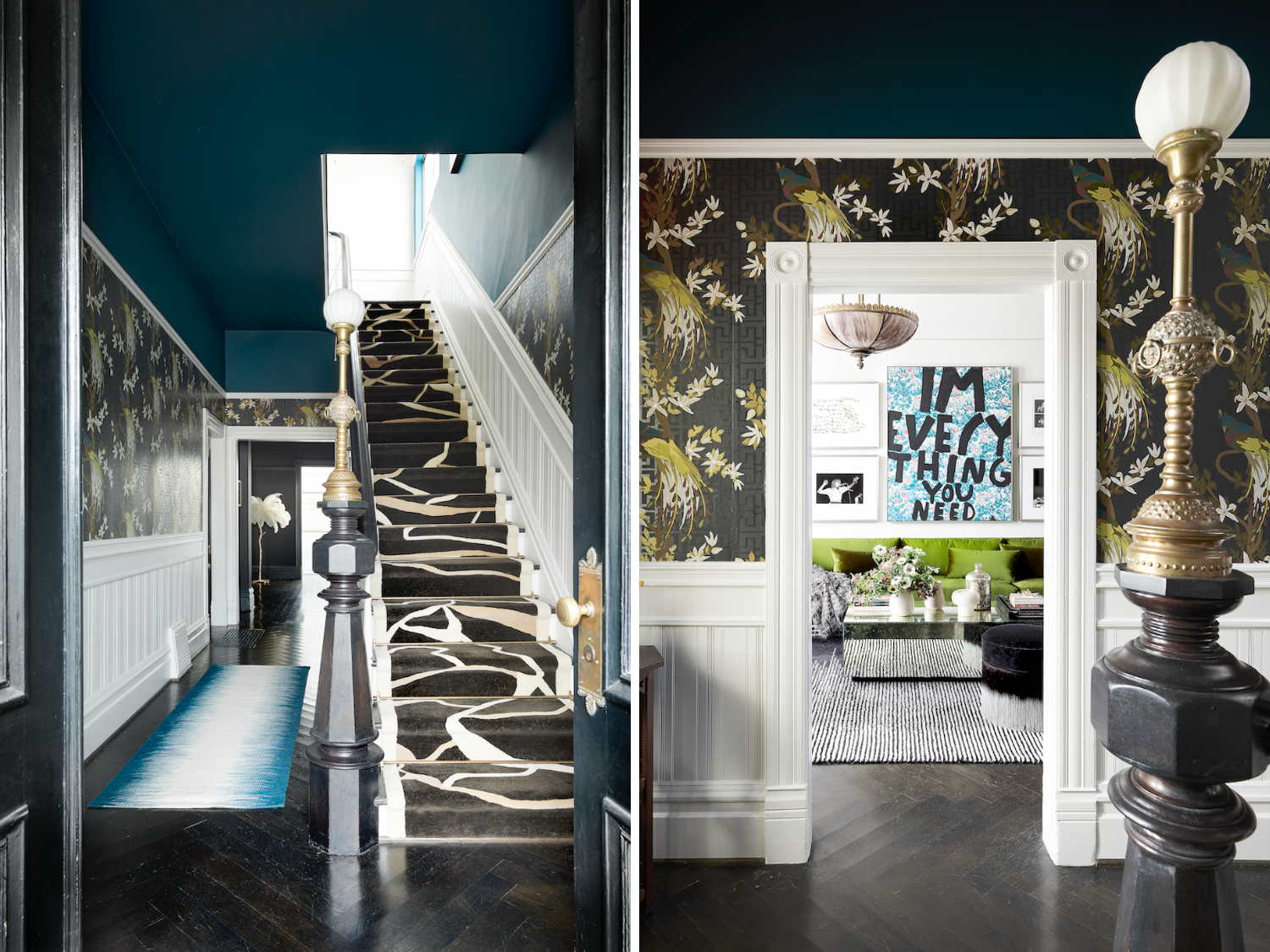
“[The house] had a soul. It was 130 years old and weathered on the interior. I felt like this home had housed so many experiences.”

His contrapposto to her wallpaper in the entry was a graphic, almost marble-like patterned stair runner, adding fearless over-scaled graphic flair to its delicate sprays of blossoms. In the dining room, he dressed windows in velvet drapes and linen shades, contrasted a chenille carpet with a patterned grass-cloth ceiling and accessorized the existing chandelier with custom Rubelli shades that emit a moody glow over Ballmer’s own table and chairs.

To create a sense of compression and expansion, Schlarb lightened up in the double parlor next to the dining room, a long, narrow white space in which he demarcated seating areas with bold moments of color. On one side is an emerald-green velvet sofa. “Green is kind of punchy and happy,” he notes. “It’s about having something vibrant and alive.” Above, hang concert photos of Ballmer’s music idols: Chrissie Hynde (“the baddest bad rock babe of all time,” she declares), Stevie Wonder and images from a 1969 concert featuring Tina Turner and Janis Joplin. In the middle is an Eric Stefanski work.
But, notes Schlarb, “You have to balance the green with deeper, more sophisticated colors. It’s a forever strategy” that keeps the room from feeling dated in a few years. So he upholstered a massive custom ottoman in indigo and a bespoke window seat in plum. More wallpaper overhead made the huge space feel cozier and more human scale. Schlarb also practiced the equivalent of pattern mixing by varying materials with abandon – a leather chair next to a bronze floor lamp, near a polished mirror coffee table and a marble side table. The whole thing feels like an extended guitar riff that comprises multiple rhythmic variations on a theme.
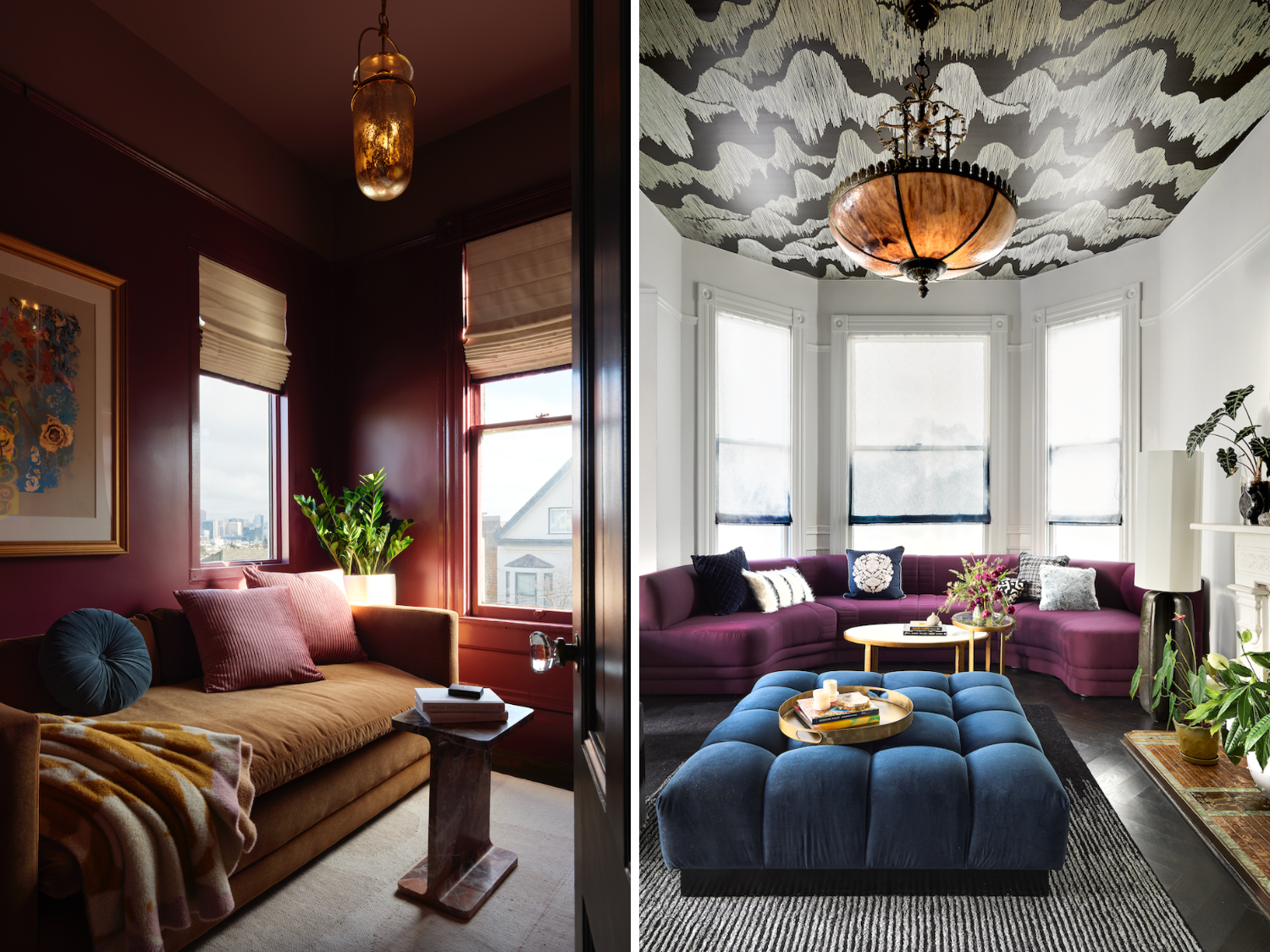
For Ballmer, art was part of the personal story she wanted to add to the home’s annals of memory. “The moods of the rooms were established early in the project,” she describes. “So when I looked for art, I was balancing where it would go in the home and what mood it would support, as well as my attraction to the art itself.” For the dining room, where she wanted “evocative images of women,” she acquired works by Brazilian-born California artist Silvia Poloto. Mixed in with the rock photos is a piece by a nonprofessional artist whom she worked with at a nonprofit adult daycare facility for people with disabilities.
“She wanted to feel people would come and see it was her,” shares Schlarb. “It picks up on all her curiosities, color and boldness. It’s not some placid, trendy place.”
Photography by Matthew Millman.
Like what you see? Get it first with a subscription to aspire design and home magazine.