
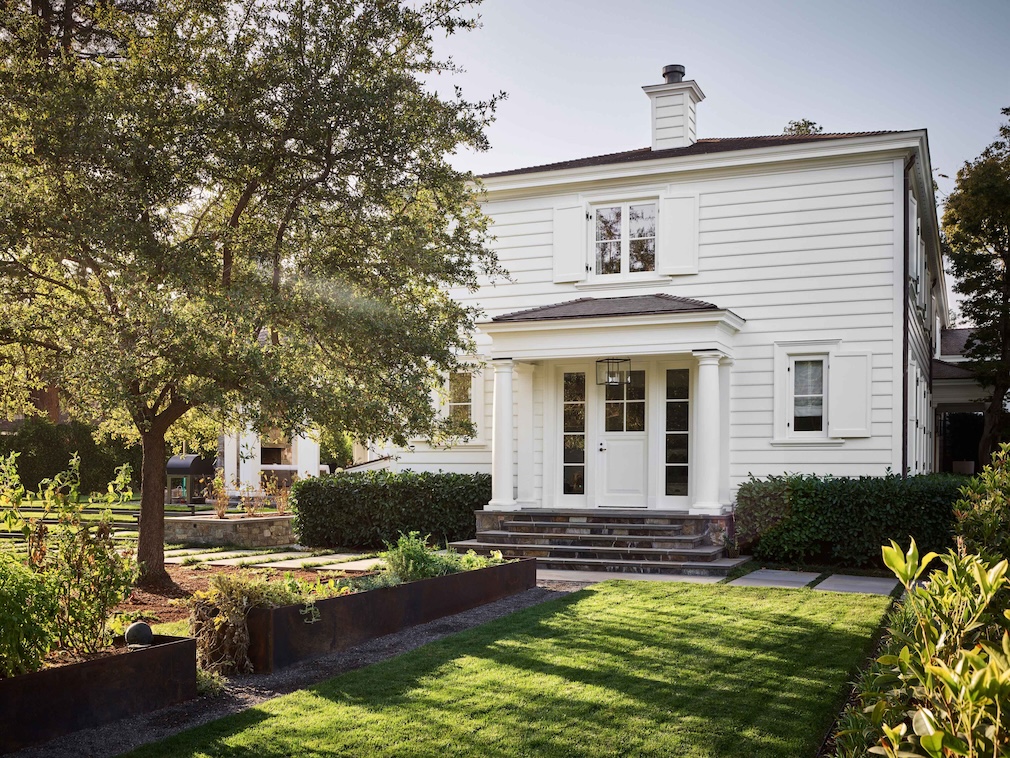
“When I approach a house, especially if it’s a remodel,” explains designer Jon de la Cruz, “I usually want to do exactly the opposite of what it tells me to do.” Exhibit A: This almost 6,900-square-foot, five-bedroom Colonial in Atherton, built in 1957, which had been purchased by a fifty-something veteran finance and tech executive for his wife and children.
In 2001, prominent architect Andrew Skurman had also worked on the residence, assuring its classical bona fides. White clapboard with Doric-order columns supporting pediments, a pergola by the pool and framing a bank of French doors out back, the house incited the contrarian in de la Cruz. “I wanted to shake up the tradition to make it young and fresh with the furnishings and the art. It had a lot of good classical elements, which we honored. We just knocked a lot of the 1980s ketchup and mustard out of it,” by which he means tropes that distinguished the era, like decorative wallpapers and chintzy fabrics.
That era would have called for glossy white trims around either pastel or brightly colored walls. Instead, de la Cruz stuck with white for both, merely varying the sheen by painting walls matte and sidestepping the glare of gloss with a satin finish on trims.
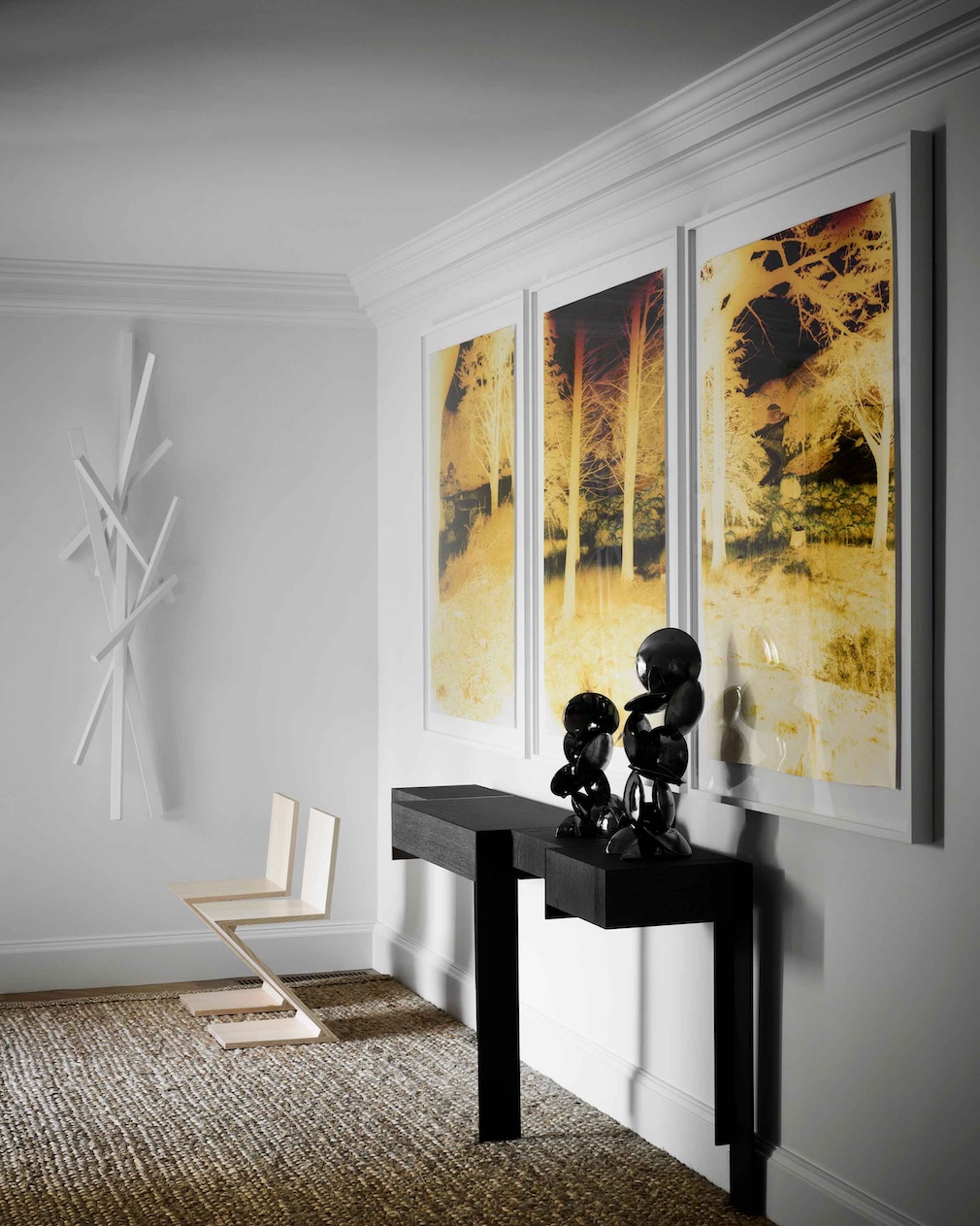
This treatment greets us in the entry hall. “It indicates we’re doing something a little unexpected but still comfortable and relatable,” de la Cruz shares. A natural fiber rug, something common in country or beach homes, is also counterintuitive to the style, which would have called for ornate Persian. The room functions as a glossary of the home’s new decorative strategies. A John Chiara photogram triptych taken on the site situates us within the property. Gerrit Rietveld Zig Zag chairs and a sculptural console juxtapose classic vintage and modern styles.
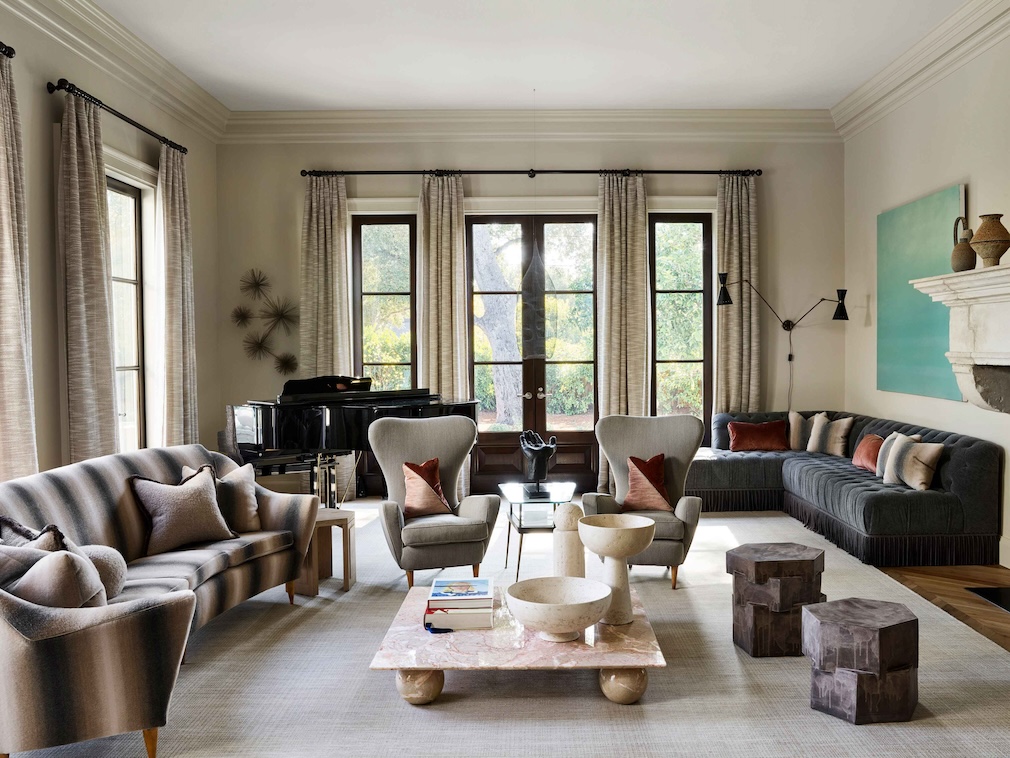
This formula threads throughout the house. Most rooms are appointed with a blend of custom furnishings and vintage finds, primarily from the 1940s and 50s. Décor is driven by what time of day the family uses the room. For instance, describes de la Cruz, “I see living rooms as nighttime spaces, so I wanted a dusky, foggy feeling in the palette.” The room, then, is awash in taupes, grays and beiges.
“The Pierre Frey striped fabric was our hero,” notes the designer, as it incorporated all the desired hues that he then accented with inflections of cinnamon (toss pillows) and pink (the marble coffee table, which complements the pink-veined marble surround of the fireplace). Seating spans eras, from a bespoke gray velvet corner sectional with bullion fringe, which skews classical, to 1940s chairs and a sofa, to contemporary cubist ceramic stools.
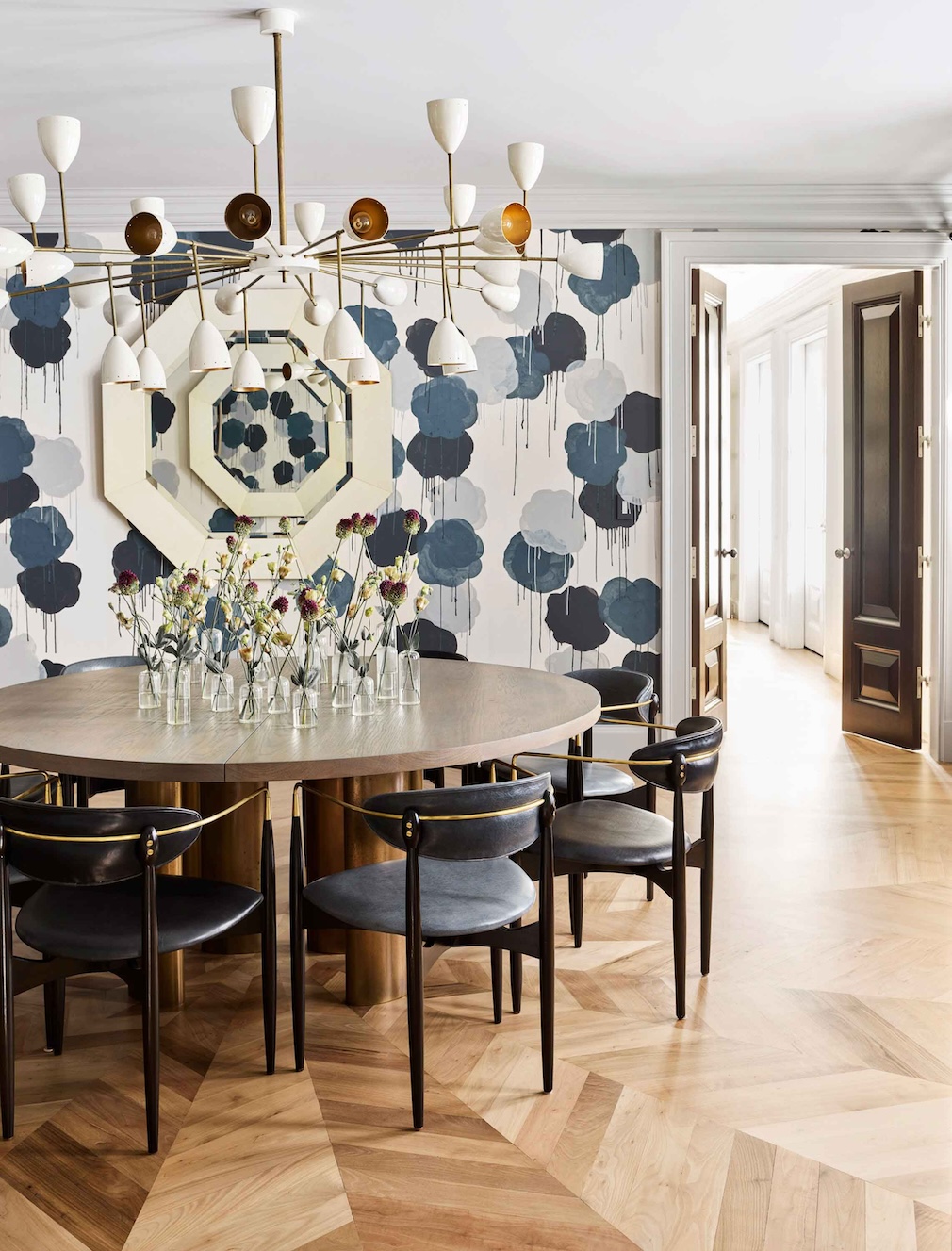
In the dining room, de la Cruz bleached the spectacular starburst-patterned walnut floor. “When you have guests for dinner, you want a statement,” he believes, often one accomplished with a hand-painted wallpaper. “If this were New York, it would be one of those de Gournay wallpapers,” he observes. True to form, he looked for a less expected alternative, landing on a Porter Teleo hand-painted graphic on mulberry paper. Then he upholstered a set of Dan Johnson 1950s Viscount dining chairs in shades drawn from the wallpaper.
Unusually, he also hung a spectacular Stilnovo chandelier the same circumference as the dining table. “It has lights that point down, up and to the sides,” de la Cruz explains, “so it doesn’t feel out of scale when you’re under it.” More importantly, when the table is extended with leaves, it doesn’t get lost as a smaller fixture would.
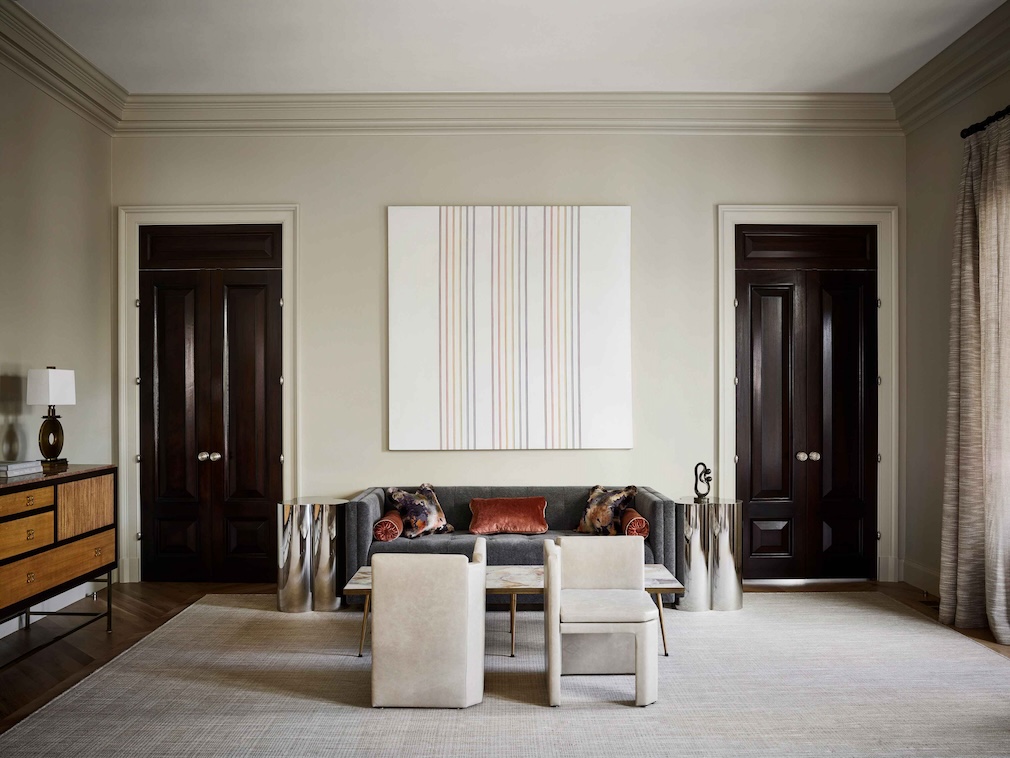
This all works because, though de la Cruz can’t resist turning tradition on its ear, he never jettisons it entirely. It’s a perfect balance that remains rooted in the classics but speaks a more appropriate contemporary language.
Photography by Douglas Friedman.
Like what you see? Get it first with a subscription to aspire design and home magazine.