
Isolation. Such a fearsome word. A sad, cold word, conjuring confinement, withdrawal, aloneness. All true, perhaps, when we’re talking about trials of the heart or shackling of the mind, but when we ponder the physical world, when we think of how things look – a solitary tree against a morning sky, Georgia O’Keeffe’s hands shot by Alfred Stieglitz – isolation is anything but.
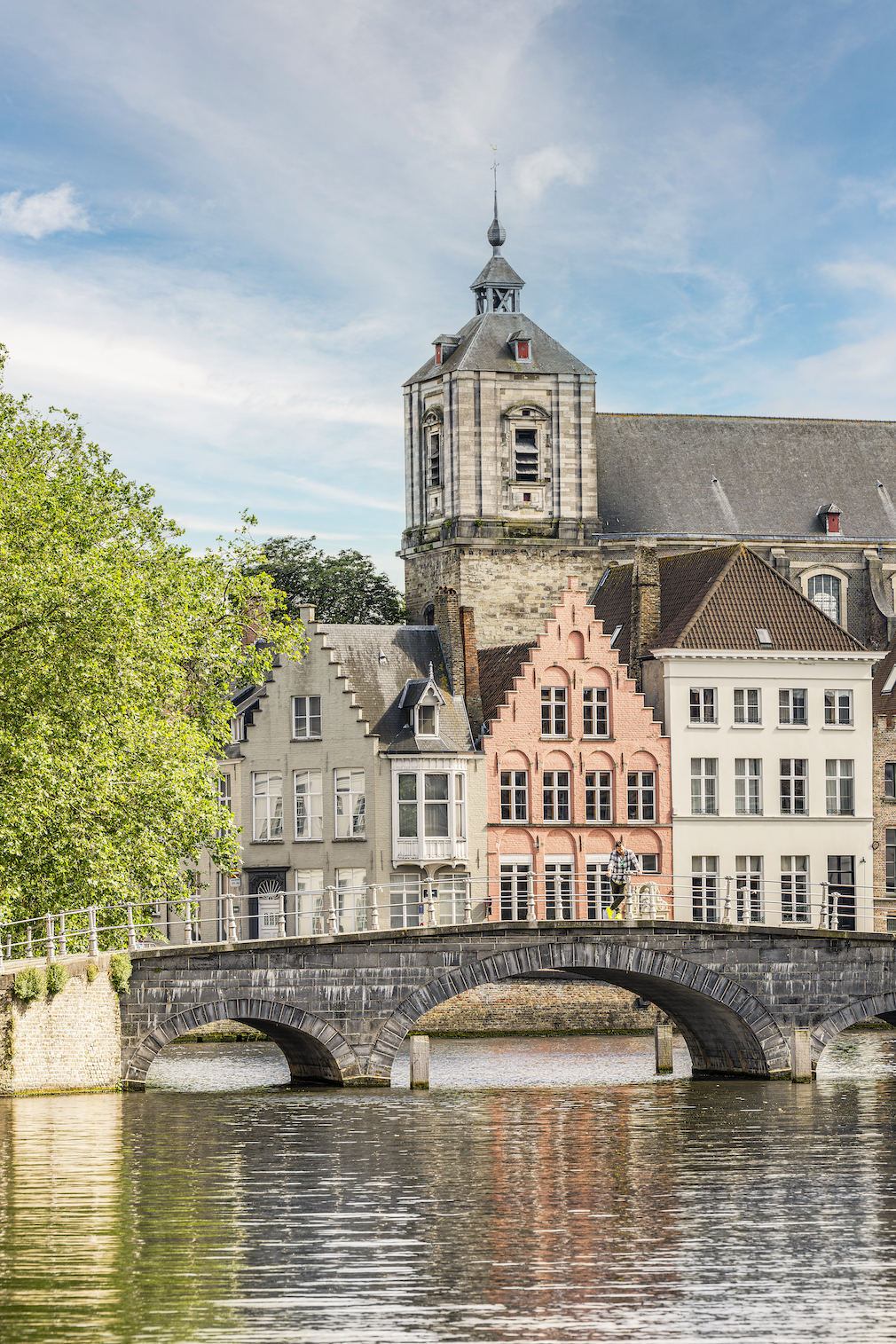
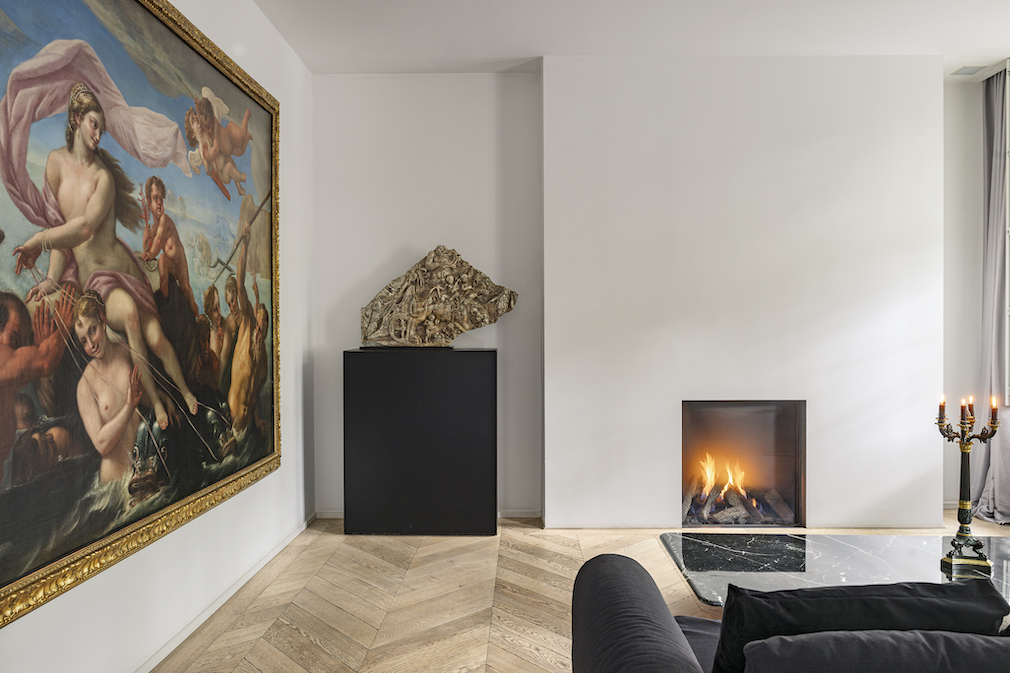
The canal-side home of Joël Buseyne and Gert Sturm in Bruges, Belgium, is an eye-stunning concatenation of singular vistas and tableaux, a finely calibrated environment in which a range of art and objects – an Orientalist image by 19th-century painter Nathaniel Sichel, a narwhal tusk, Rosenthal tableware from the 1970s – make for a minimalist cabinet of curiosities. Situated in the space with fine deliberation, they combine to create an uncommon sense of abundance.

Dating from the 17th century, the property had long ago morphed into something an old burgher would never recognize. Converted to a doctor’s home and office in the 1960s, it was ripe for renovation. “From the ground up, we replaced electrical and plumbing systems, installed new floors, and reimagined the flow of the house with a more logical layout,” describes Buseyne. “We also introduced custom-designed bathrooms and a new kitchen, all while staying true to the building’s essence. We were meticulous in our choice of materials, selecting only those that were timeless and of the highest quality. Every decision was guided by a respect for the home’s original era and its enduring character. This approach allowed us to blend modern comforts with historical integrity, creating a space that feels both contemporary and deeply rooted in history.”
Before taking up residence here, Buseyne lived in a 19th-century neo-Gothic mansion, while Sturm’s previous digs leaned toward Art Deco. “Despite these differences in style,” relates Buseyne, “we both shared a deep appreciation for thoughtful design and a belief in the importance of blending aesthetics with function.”
Interior designers and serious collectors with a love of art and history, the couple enveloped the home in muted hues, allowing their disparate possessions to occupy these rooms with assurance. “To create contrast,” notes Sturm, “we relied on textured elements rather than starkly contrasting walls. Complementary colors, carefully chosen for their warmth and depth, provide balance and harmony.”
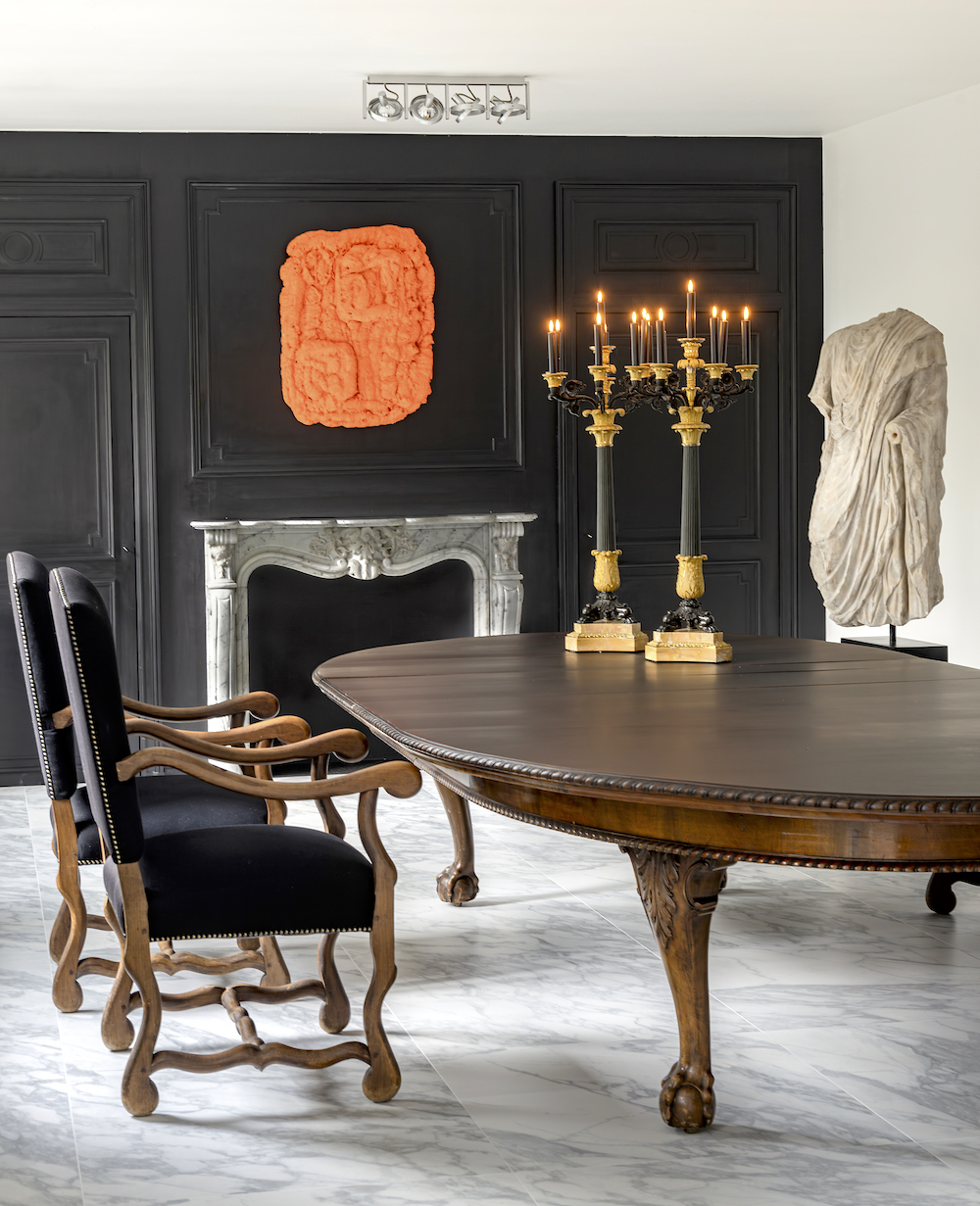
When it comes to orchestrating art and furnishings, their sense of balance and harmony is far from textbook. “We’ve developed a natural sense of what works in a space and what doesn’t,” observes Buseyne. “For instance, while symmetry often feels safe, asymmetry can create a more dynamic and engaging energy. We enjoy challenging traditional notions of style, juxtaposing objects from different periods – for example, pairing early Egyptian art with a modern masterpiece.”
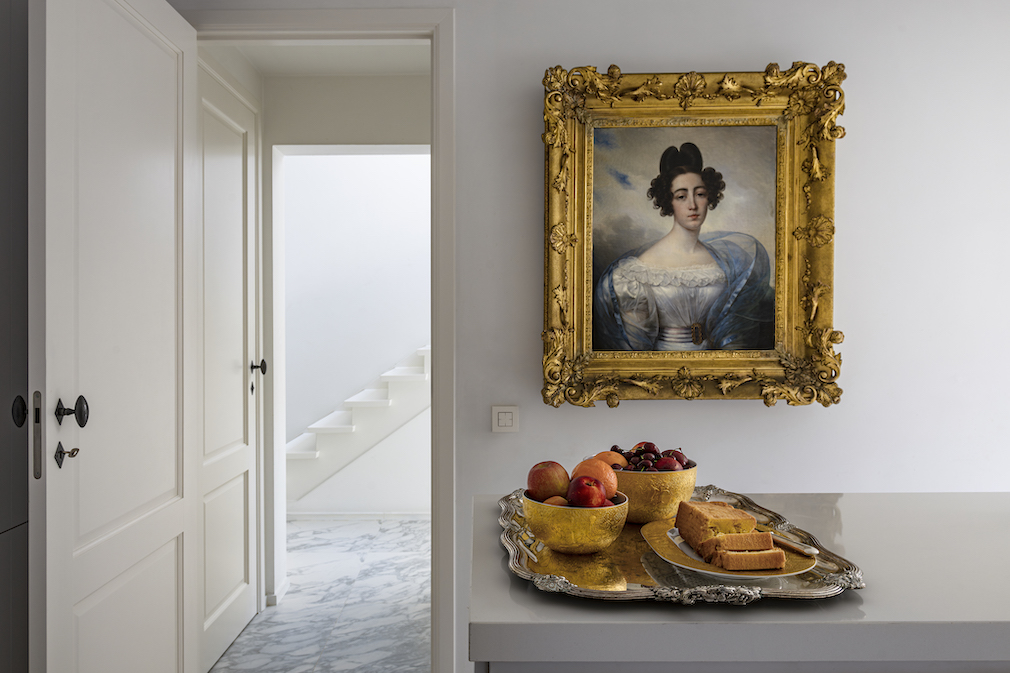
This approach makes for surprising, yet wholly engaging encounters. There’s a fine fellowship between the strict geometry of the balustrade- free stairway and the bulbous, prehistoric sandstone formation perched on a jet-black plinth at the first landing. In the dining room, a bright-orange wall piece by a local artist hangs on a black-lacquered wall, with a 1st-century AD Roman marble standing nearby. The honey hue of a Swedish Biedermeier chest, and the sepia tone of a canvas by 19th-century French classicist Édouard Joseph Dantan, warm up a bedroom. The no- nonsense kitchen, equipped with a reasonably scaled island, is graced with a portrait of a lady by François Kinsoen, the Bruges-born artist who became court painter to the Bonaparte family. The couple’s appreciation for contrast extends even to the primary bathroom, clad in marble, with emerald-green-lacquered walls and floor-to-ceiling mirrors.
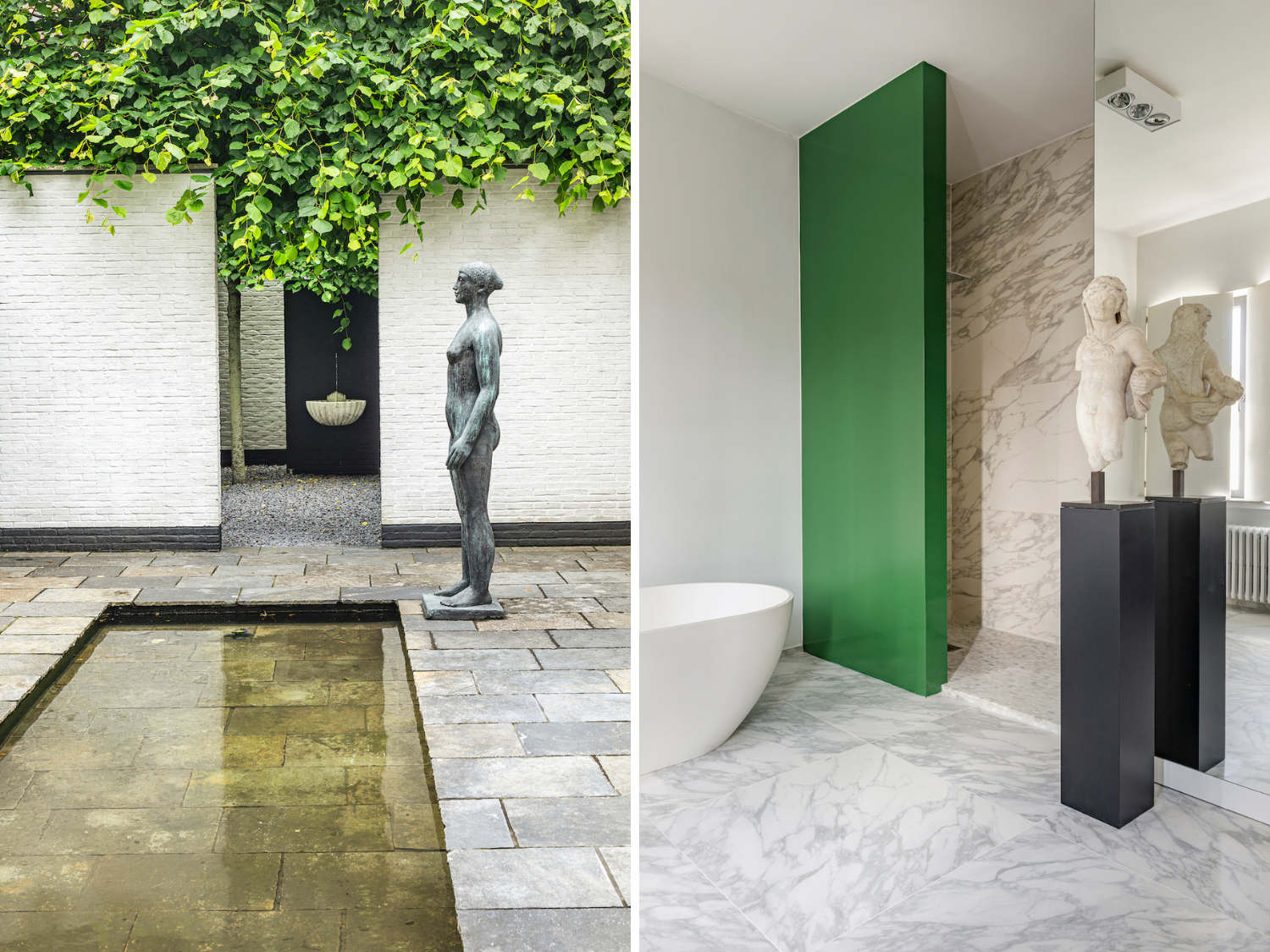
Exercising a respect for restraint with a reverence for the inherent qualities of choice materials, and guided by a sure vision for how to live with the things they love, Buseyne and Sturm have created a home that speaks eloquently to the past while standing unmistakably in the here and now.
Photography by Claude Smekens and Magda De Smet.
Like what you see? Get it first with a subscription to aspire design and home magazine.