
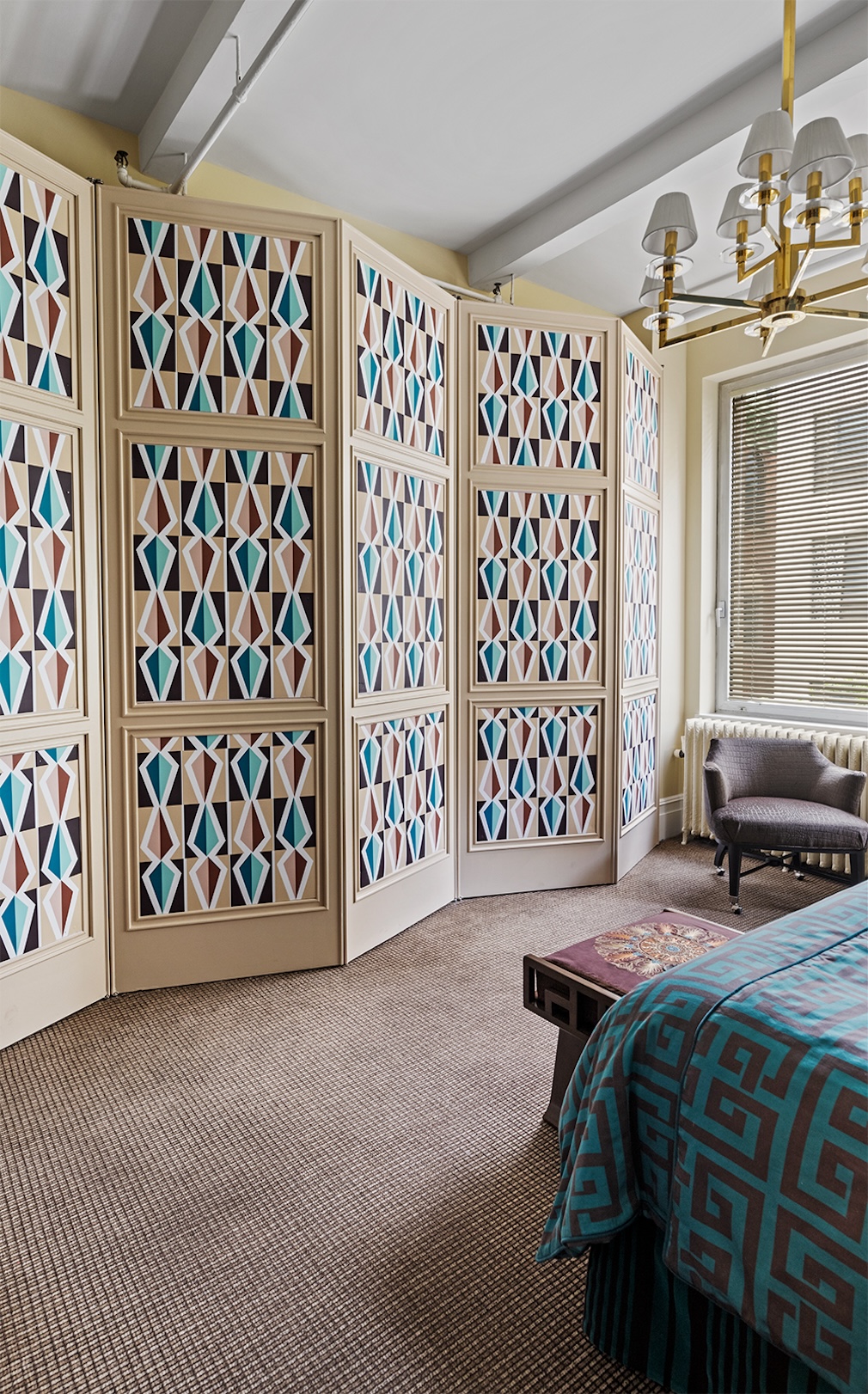
Those of us with a taste for the daring expect the extreme in literature and art. We prefer Thomas Pynchon to Tom Wolfe, and Marina Abramović to David Hockney. Yet when it comes to interiors, all but the most radically inclined will opt for the familiar over the avant-garde. But home design is not an either/or proposition – a choice between chintz and camelback sofas and the likes of, say, architect Paul Rudolph’s dizzying home on New York’s Beekman Place, with its 27 different floor levels. There is a middle – not middling – ground, where the talented and self-possessed show the rest of us what going your own way can look like.
The Chelsea loft of architect and designer Barry Goralnick and his husband, writer Keith Gordon, is the real deal. Forged from a masterful understanding of scale, proportion, mass and volume, and shot through with a kind of wonderful recklessness, it projects a powerful air of authenticity. Boldly self-assured, reveling in disparity, its life-embracing dynamism is a beauty that appears as much random as composed.
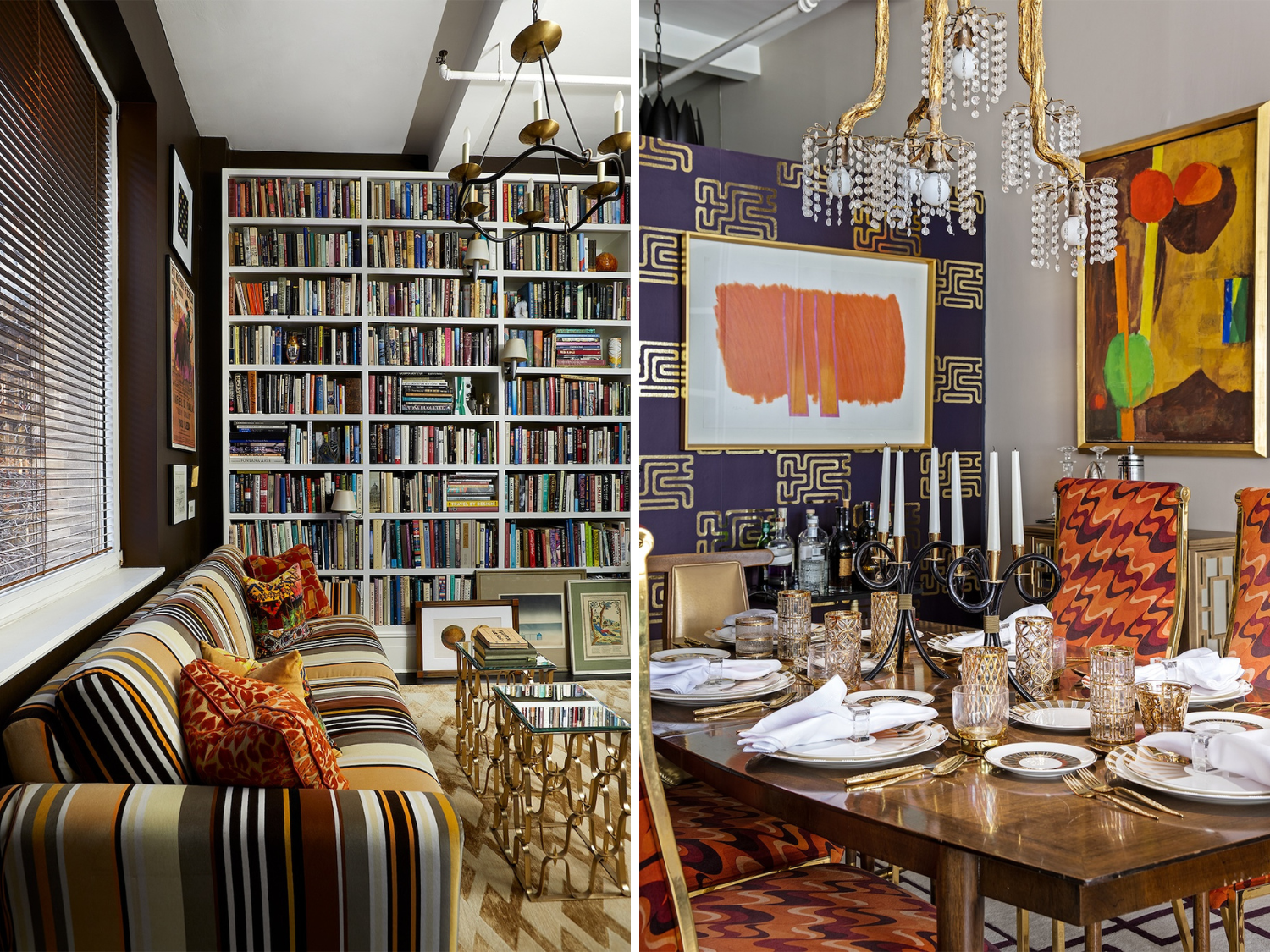
Vibrant hues and lively geometry play an especially keen role here. “I have a deep appreciation for both color and pattern, which have the power to enhance and draw attention to striking architectural elements,” declares Goralnick. “In designing our apartment, I aimed to balance the industrial feel of the loft with the warmth and intimacy of a cozy home. Each space has its own unique color story, yet they flow seamlessly together as you move from one room to the next. Pattern serves a dual purpose, highlighting the specific details of each space while unifying the overall design.”
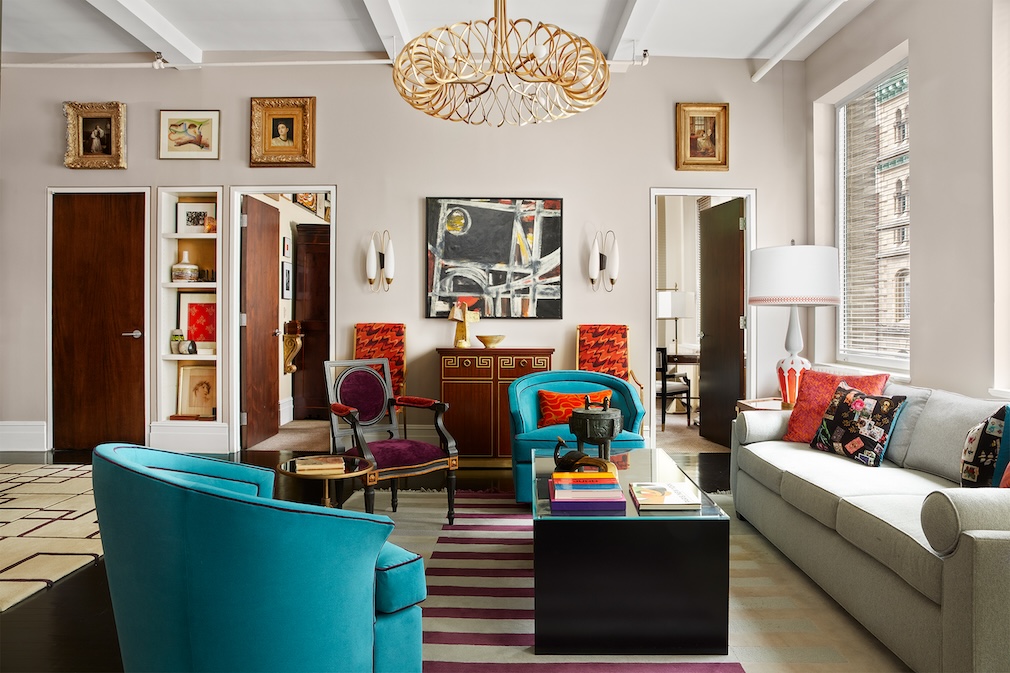
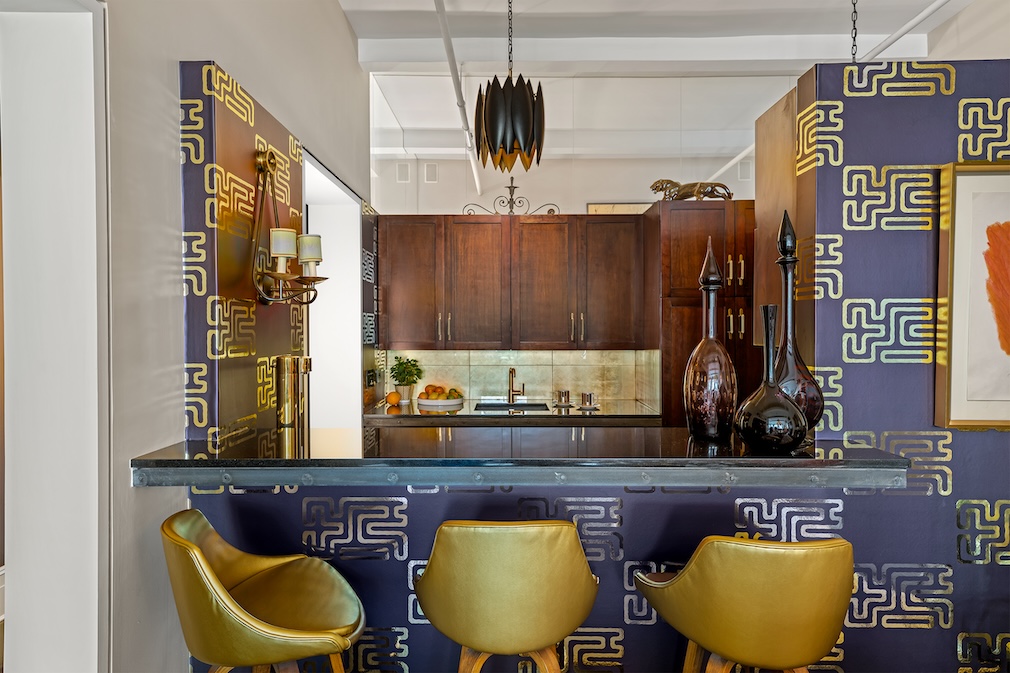
Goralnick’s fearless embrace of color and pattern is evident everywhere. The living room sports two of his own Greta Swivel Chairs in a searing shade of blue; brass-framed chairs from the 1970s, done up in a wavy undulating pattern against a bright-orange ground; and a 1940s Osvaldo Borsani armchair upholstered in purple velvet. A brown-and-orange palette evocative of the 1970s dominates the library. “The custom wallpaper I created between the kitchen and dining area is oversize, architecturally defining the open, floating kitchen, while artistically complementing the scale of the carpet beneath the dining table. The wallpaper’s gold accents add glamour to the visual dialogue, paying homage to the Tony Duquette chandelier.” The patterns on furniture, custom bedding and pillows range from classic designs inspired by fashion (think Christian Lacroix) to 1960s psychedelia and photo-printed pixels.
An art collector since his teens, Goralnick freely mixes a range of materials throughout the home. In the living room, you’ll find a valuable 19th-century portrait of an actor playing Hamlet by Antoine Goyers and a pretty but inexpensive classical painting purchased from a country antique shop. Goralnick follows a similar approach when it comes to furnishings. “No period dominates,” he asserts. “From French 40s and midcentury to neoclassical and modern, all create a dialogue. Guests often find themselves captivated by the layers of patterns and textures, discovering new details with each visit,” relates Goralnick. “My goal was to create a memorable, approachable space unlike any other – an apartment that feels alive with visual interest and personality, yet comfortable to live and entertain in.”
Photography by Alan Barry.
Like what you see? Get it first with a subscription to aspire design and home magazine.