
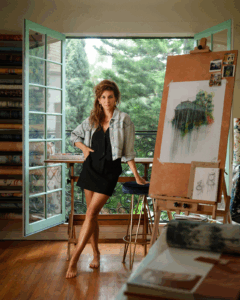
 Danica Andler Studio is a creative studio specializing in unique visual identities, most commonly in the hospitality sector. This includes branding, print collateral, digital content and packaging as well as spatial design, product design and decor. Her projects almost always include custom pattern designs. Danica’s work is rooted in the things she is most passionate about: art making, interior design, wellness and nutrition, food products and initiatives supporting animal and environmental welfare, and innovation in sustainable design. Danica has an eponymous brand of bespoke wallpaper made from her hand-drawn artwork, printed to order in the United States. A project that quite simply started with a desire to make more time for drawing practice, and in turn create unique surface designs that carried the nuance and gesture of drawings all over the walls. See how Danica blends art, wellness and design into every detail in today’s Maker Monday.
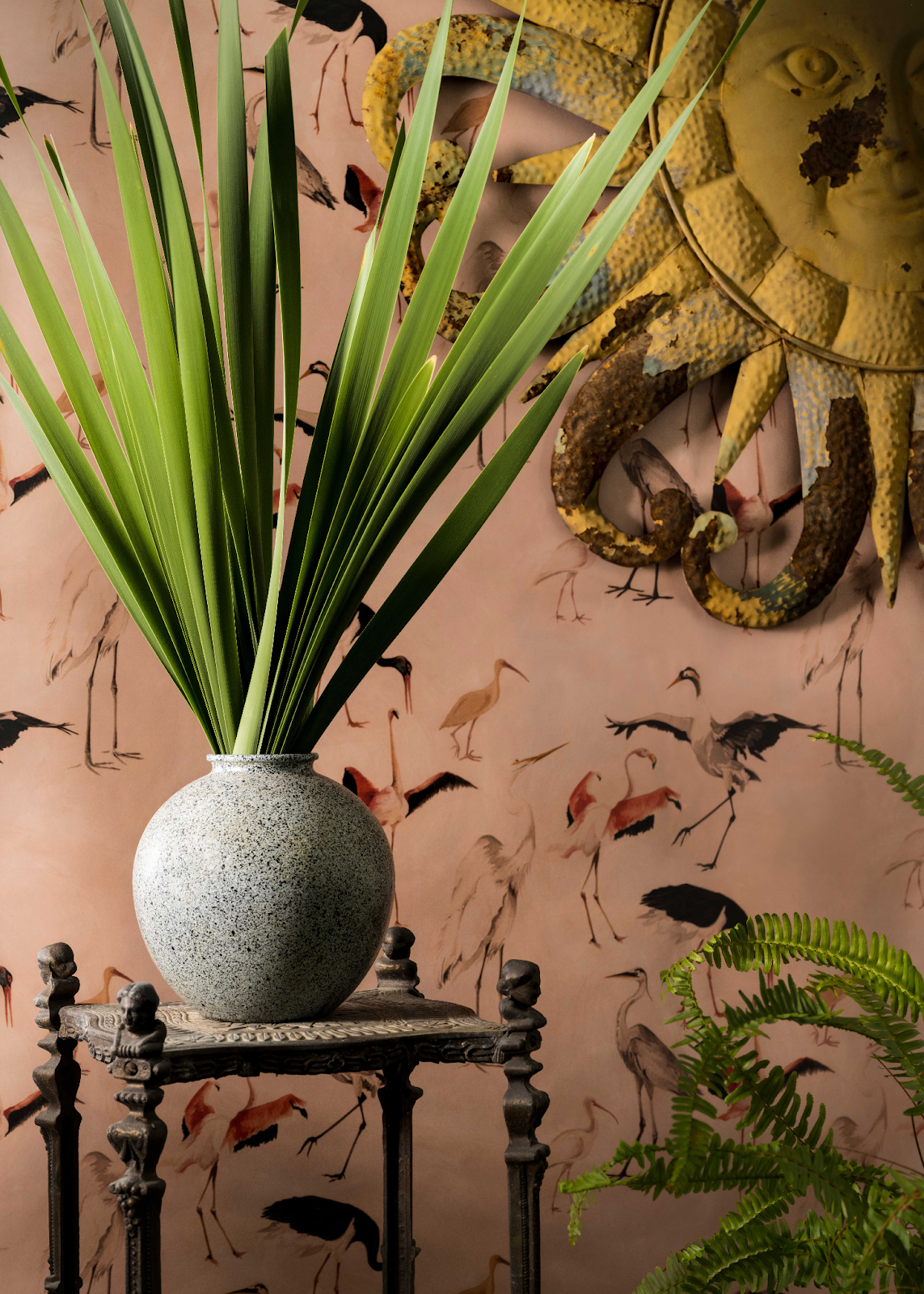
Bird Dance
Andrew Joseph: What inspired you to become a designer?
Danica Andler: I have always been interested in art-making and storytelling in every possible way. Books, art, music, movement, on repeat. Like a lot of creatives, as a young person, I had a taste level that was far beyond what I could obtain, define or articulate. This is ongoing, but the process of trying and falling short of my expectations as a maker, while also taking endless notes of the things around me that “just worked”, is where I discovered what design really IS and all that it can BE. The more I noted how much good design improved how we, quite literally, navigate our way through the world, the more I wanted to get involved in that level of creative problem-solving.
In my career, I’ve spent time in the fields of graphic design, set design and photo styling, event design and product design while always having a personal passion for interiors. As a young person, I don’t think I took interior design seriously, probably because at my house it was a fun and playful thing my mother was naturally so good at, and hanging new bathroom wallpaper was something she’d do herself on a Sunday afternoon. Our house was always full of flower arrangements, color and style and designing a beautiful, functional home was just a part of everyday life.
It wasn’t until recently that I’ve really let ALL the parts of design that I love to study and aim to better understand begin to overlap and define my work in a way that makes sense to me. Really, the big principles of hierarchy and composition, function and style, are the same for a poster as they are for a dining room.
AJ: What is your favorite design-related quote?
DA: I firmly live by “All you need is the audacity and a little delusion.”
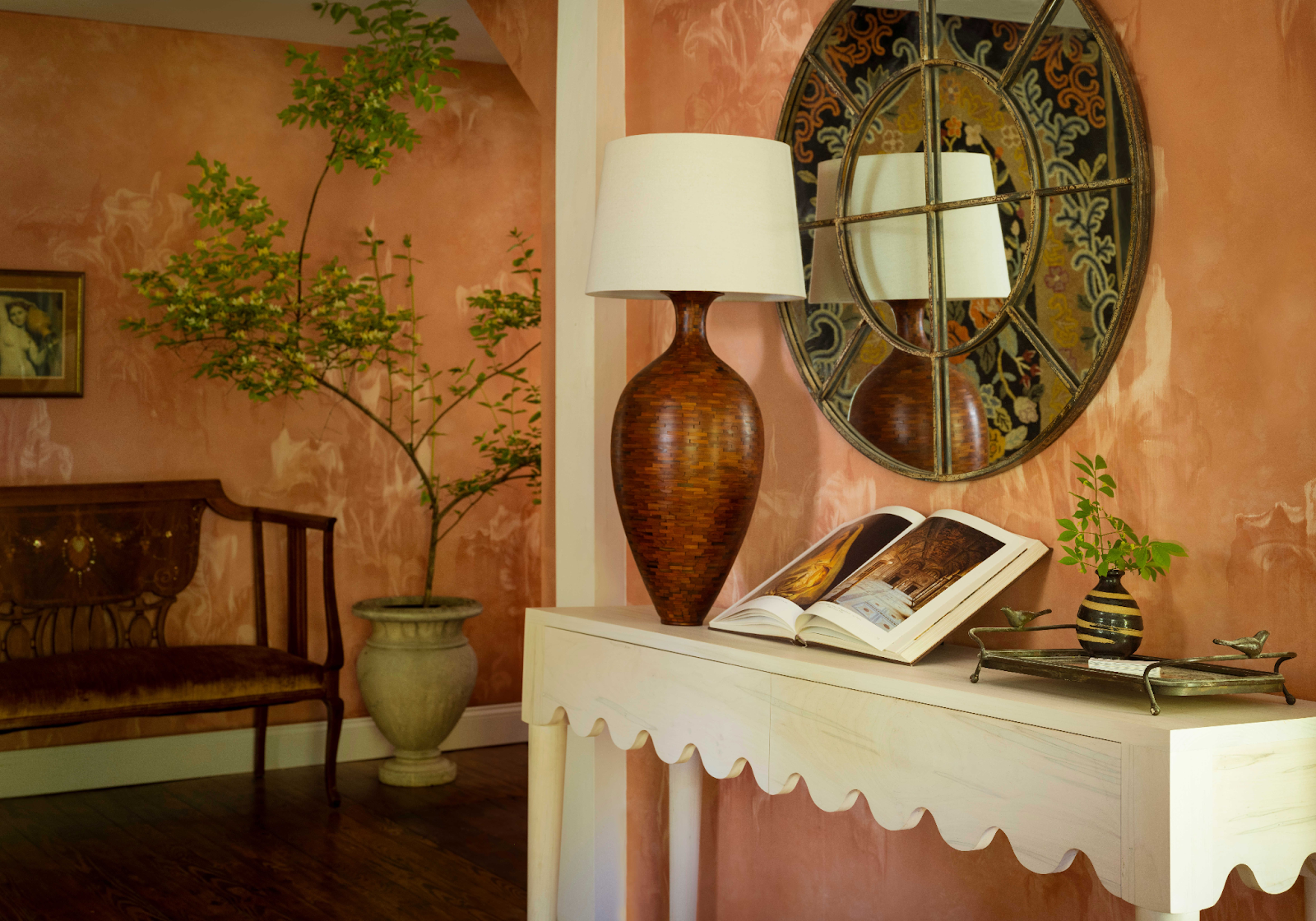
Kelsi Mural
AJ: How do you approach a new design project?
DA: I always start with research to define the point of view, find the story and richness, and establish the goals. Then comes creating all the rules — my palette, my materials, my fonts if it’s graphic, and an overall tone. Then, only once I have all those rules in place and start the process of following them, can I begin breaking them in the MOST entertaining ways.
AJ: What is the most important element in a successful interior design?
DA: Personality.
AJ: What is your favorite aspect of your job?
DA: There is a quote in Wendy Goodman’s book May I Come In where she says, “How lucky, and rare, to be able to dream up an idea and make it happen with your own hands — and maybe a little help from your friends.”
That just about perfectly describes my favorite thing about the work I get to and plan to keep doing.
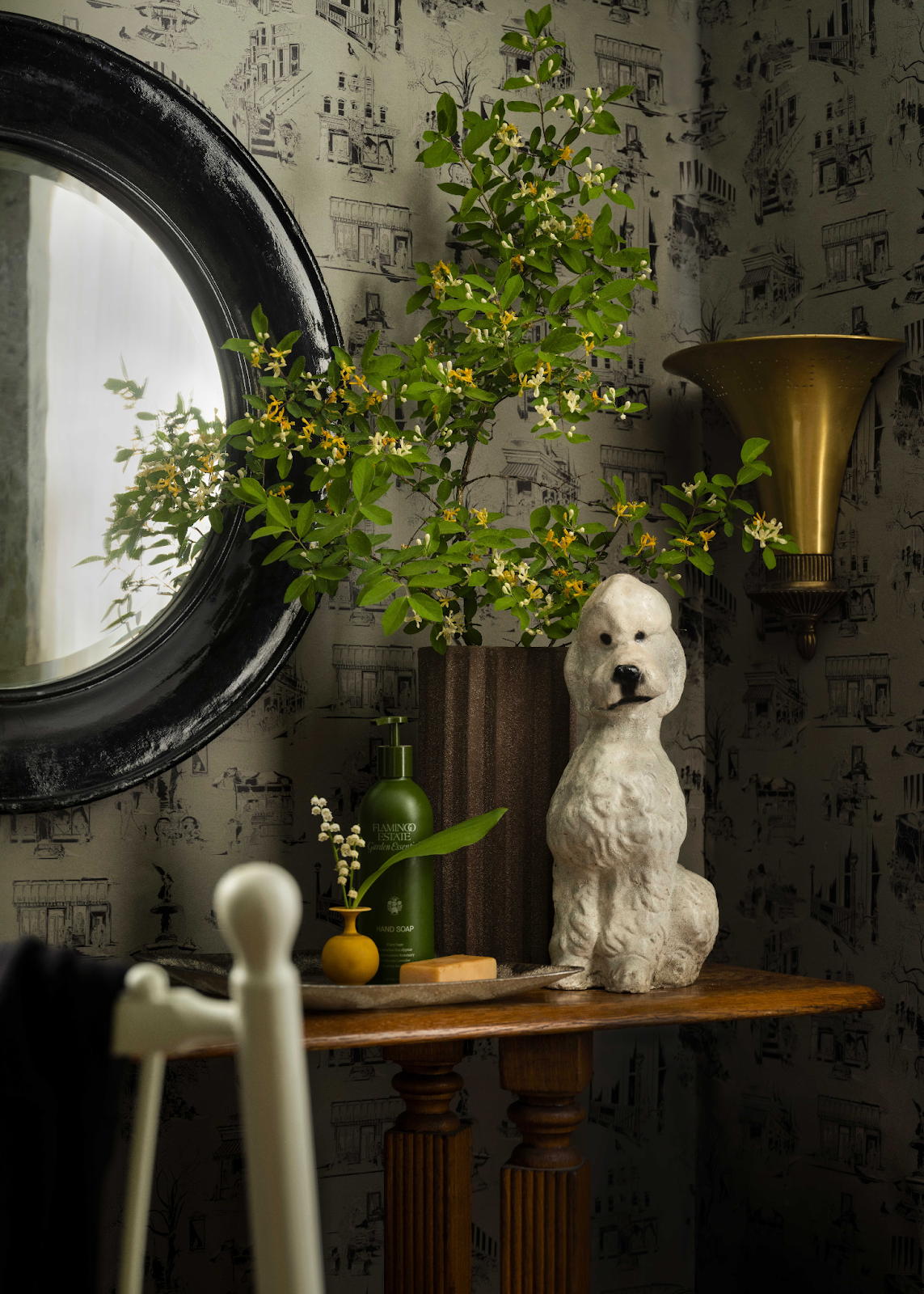
Bettie Toile
AJ: How do you incorporate sustainability into your designs?
DA: Any designer making or sourcing products should be keeping their impact top of mind and staying educated on materials, innovation and best practices. There is always an opportunity to do better and advocate for potentially more difficult or expensive solutions when it’s the right thing to do.
My bespoke wallpaper line is printed to order so I don’t stock any materials. To reduce waste, I custom print the best roll or panel size for each specific project.
Designing with sustainable materials is much more attainable for residential projects than commercial so it was very important to me that my standard commercial paper is a PVC-free, low VOC emission stock that still meets fire code and durability requirements.
I would like to expand what I can offer for sustainable materials in commercial applications in the next few years and get more involved in solving those design problems myself.
AJ: What would your dream project or dream client be right now?
DA: I would love to work collaboratively on a hotel project — it’s so rewarding to work on graphics and interiors for hospitality projects in tandem and explore the unique design solutions that can come from that collaboration.
I also have plans for some design books I’d love to see come to life that would be long-term, challenging, but absolute dream projects for myself, and some of my other favorite makers to get lost in.
Like what you see? Get it first with a subscription to aspire design and home magazine.