
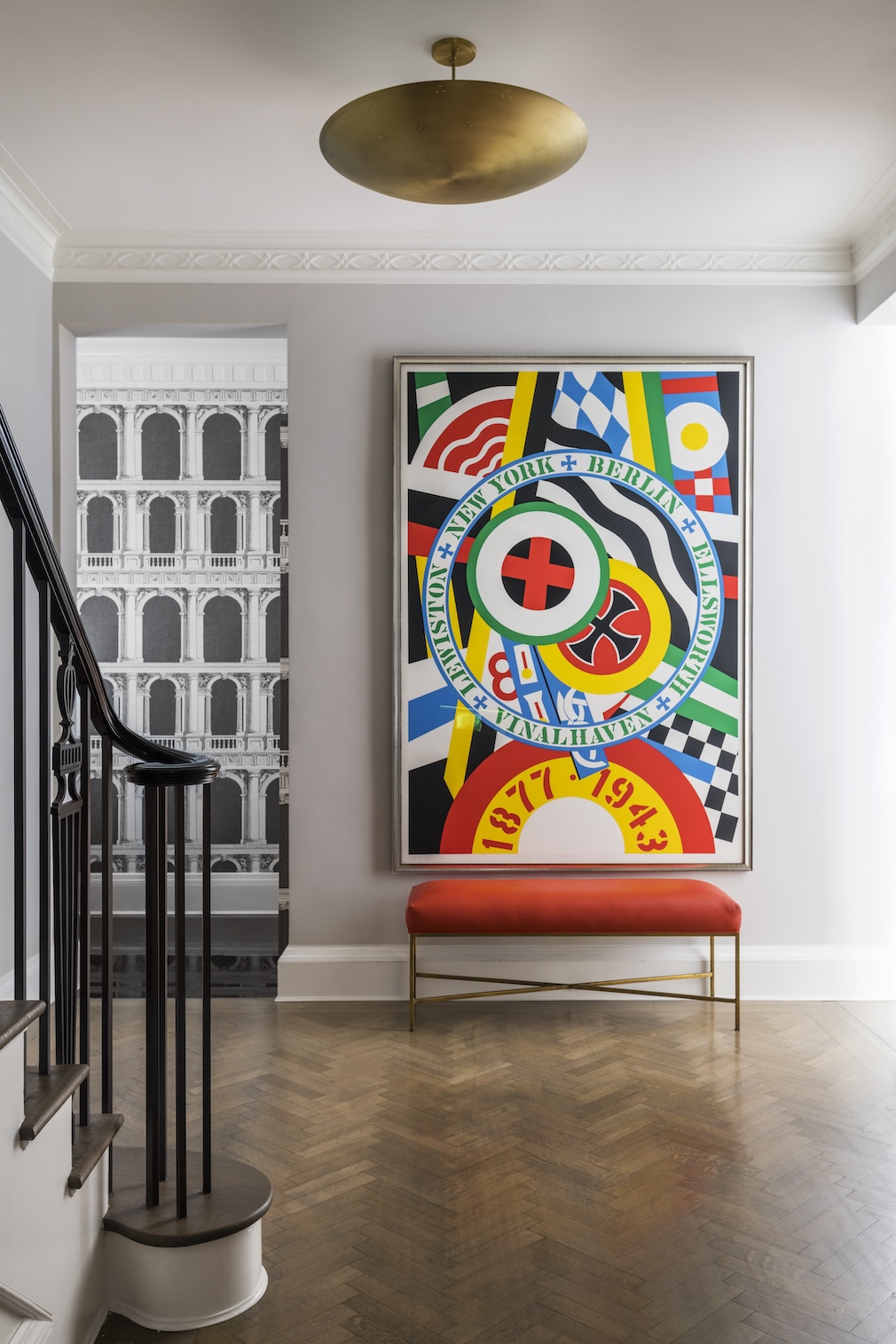
Built in 1930, this New York City duplex, like other sought-after, historic apartments by Italian-American architect Rosario Candela, showcases his signature. Note the grand entrance with spiral staircase and curved banister, lofty ceilings, original moldings, herringbone parquet floors, a wood-burning fireplace, graceful room flow and tall windows. Such Candela style in the pre-WWII years lured people into investing in iconic properties that felt more like houses than apartments.
Time marches on, but enduring details are honored in the hands of careful homeowners and designers. Enter new residents: a couple with adult children, multiple homes, favorite artwork and a love of reading. “In the 1930s, having a grand apartment versus a house was the ultimate sign of luxury,” describes the owner. “Despite being in the heart of the Upper East Side, this space is still surprisingly quiet, yet elegant and inviting. Light pours into every room.”
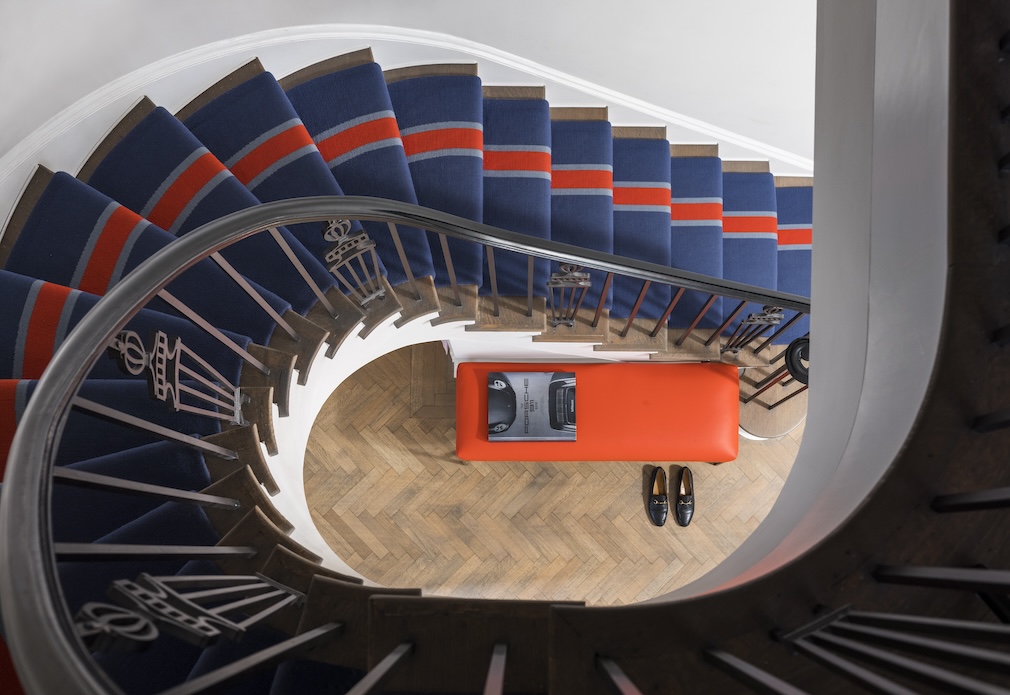
In honoring the beloved architectural touches yet adding modern updates, designer Elizabeth Bolognino handpicked everything, from fixture to fabric. To pay homage to the quintessential entry foyer, she chose a bespoke Merida Studio stair runner with the colors of the owner’s favorite vintage Martini Racing® Porsche stripe. A bench wrapped in fresh orange Hermès leather is the perfect foundation for bright “Hartley Elegy” art by Robert Indiana. (Bolognino envisioned interiors for several Ralph Lauren stores; the Tiffany & Co. Wall Street location in a bank vault with bejeweled crystal droplet lighting; a heritage compound in Connecticut; and many Manhattan apartments and lofts.)
“Elizabeth’s spaces feel clean and sophisticated, yet warm and livable,” the owner adds. “Nearly everything was custom upholstered, from the Hermès tartan wool on the curved sofa to the dining chairs in two tones, the B&B Italia sofa and especially the kitchen banquette,” Bolognino notes. “The couple loves blue, so a touch of it appears throughout, tying the rooms together subtly without ever feeling repetitive.”
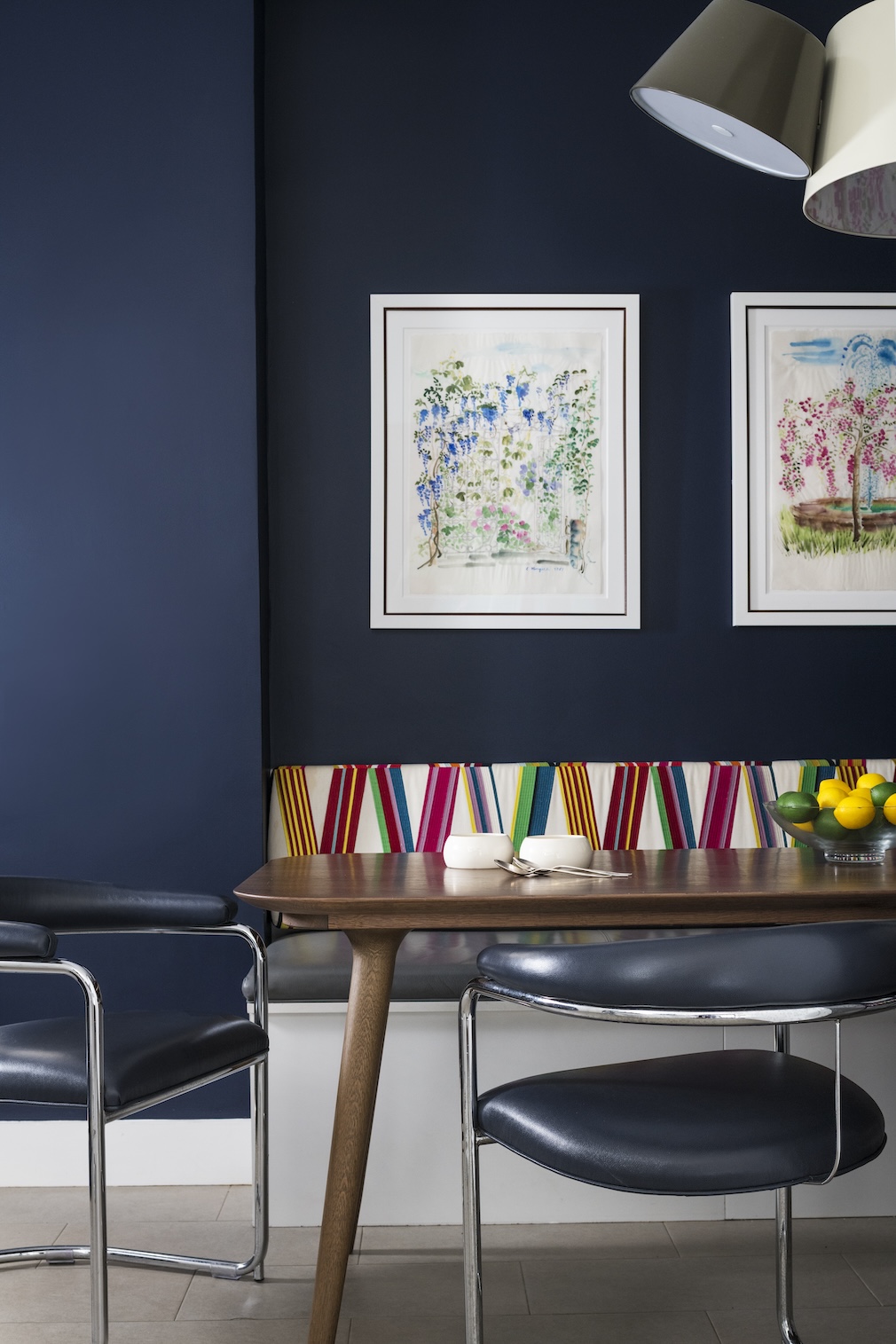
“Every decision they made was intentional. We need to be restoring history, not tearing it down and erasing it,” she explains. Plaster walls are intact, and an expert was hired to lovingly refurbish the staircase, moldings and hardwood floors. (This is the designer’s fourth project for the family, with a fifth to come in Maui.)
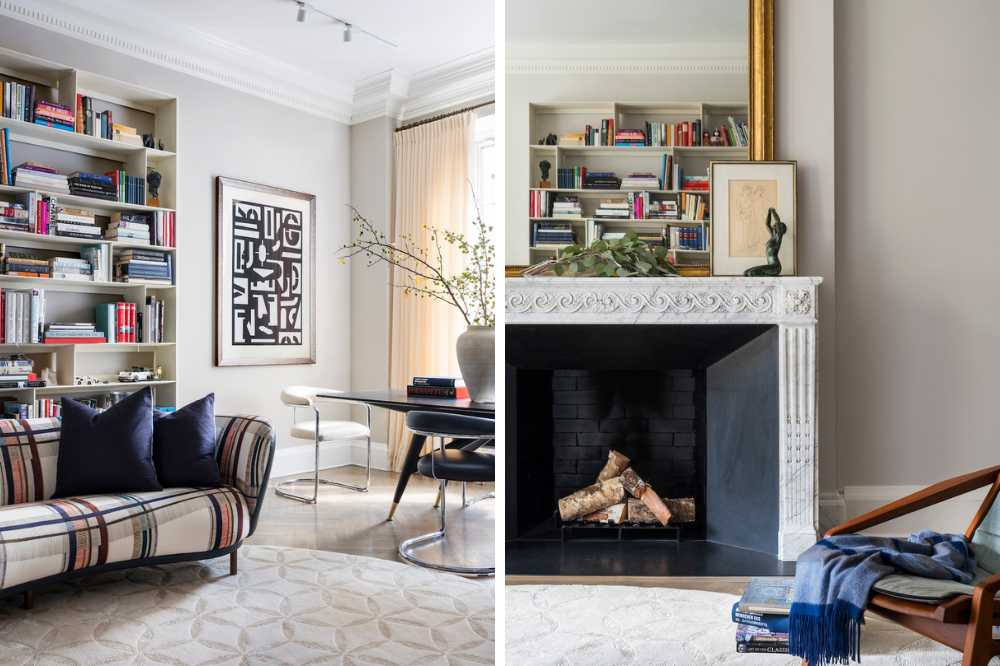
For the revamped reading space, she and the owners searched for months to source the marble mantel and gilt mirror, both from Paris. They hunted for the ideal patina and scale. The mantel was inspired by a chance glimpse of Karl Lagerfeld’s Paris apartment, where a Vitruvian wave scroll design caught their attention. (“Vitruvian” is for the Roman architect Marcus Vitruvius Pollio.) “The wavelike pattern felt perfect for a water-sports-loving couple, a timeless alternative to the Art Deco mantel we first considered,” Bolognino notes.
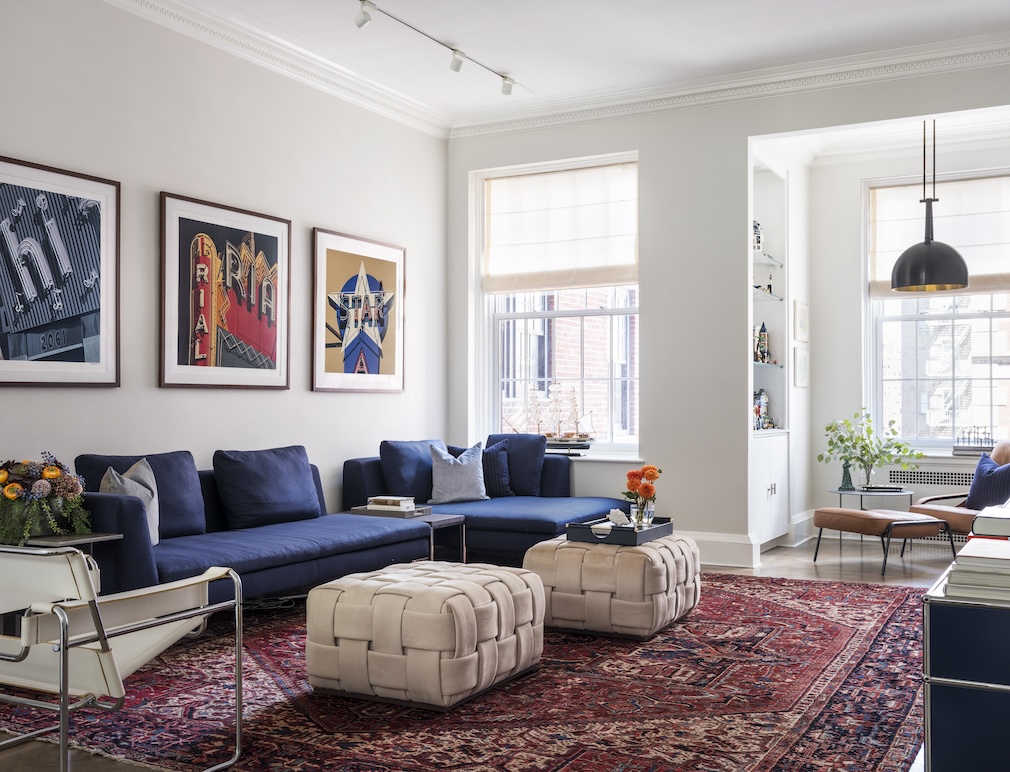
Their goal for the living room – at 16 by 50 feet – was to find furnishings, such as a deep-blue sectional sofa, to fit that wide-open space. An oversize bookcase anchors it, while 11-foot ceilings allow light and airiness. The modern Gio Ponti table near the wide windows offsets the classic dining room. It is grounded with reupholstered vintage chairs in cream and navy, which tie into the curved sofa with its navy leather back. Every line and finish hums with intention; this is a design that idles quietly but moves with purpose.
Photography by Adam Kane Macchia.
Like what you see? Get it first with a subscription to aspire design and home magazine.