


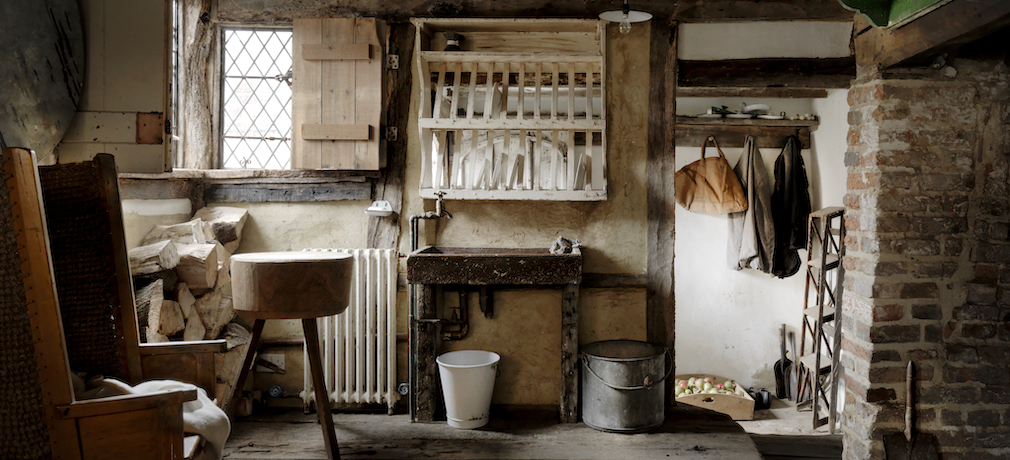
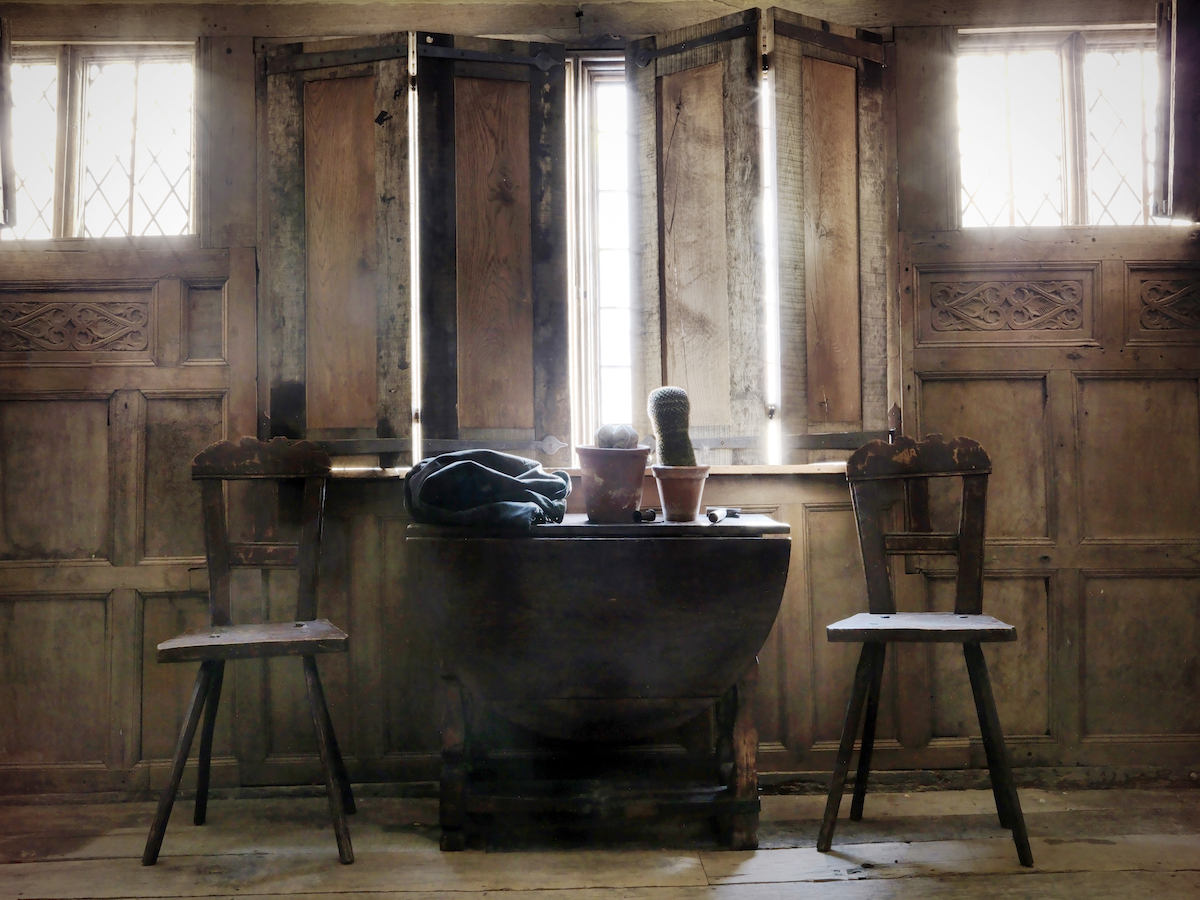

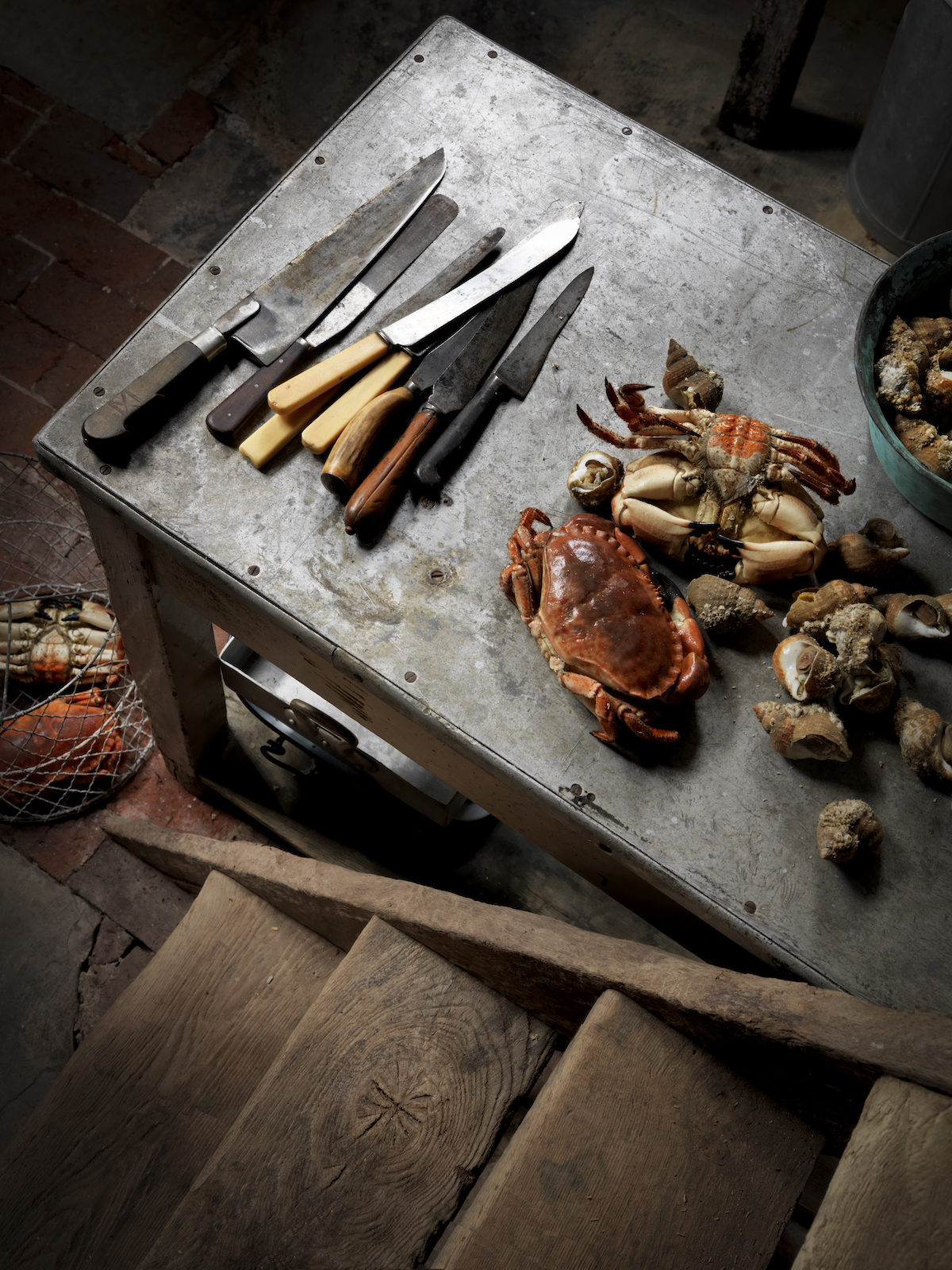
Whether pining for a simpler time or dreaming of a more glamorous age, nostalgia, as we know, isn’t always pegged to personal experience. Or reality. A Gen Z-er with a thing for the 70s might groove on the idea of an avocado-green kitchen but probably wouldn’t be happy with what was whipped up there back in the day. (Hamburger Helper, anyone?) Of course, conjuring the past doesn’t mean living like it was yesteryear. Food writer and photographer Alastair Hendy isn’t chowing down on such Tudor delicacies as badger and heron in the 16th-century house he’s restored in Hastings, East Sussex. But the air of the past is so wonderfully thick here you could cut it with a knife.
The author of eight cookbooks, and twice voted World Best Food Journalist and World Best Food Photographer at the World Food Media Awards, Hendy’s primary residence is a warehouse flat in London’s Shoreditch. When he got the itch to buy a second place, Hastings made sense, as his grandparents had lived nearby and the town felt like home. The property, which is open to visitors, sits smack-dab in Hastings Old Town, where Hendy operates a unique housewares store on the High Street. He’d had his eye on the property, and when it came to market, jumped on it. “It was the first and the last house I looked at. I fell in love. My London flat has large spaces, is all concrete and steel, and this was the opposite – intimate rooms, wood, lime plaster and not a straight line in the place. It spoke to me straightaway.”


Unsurprisingly, the house had been modernized over time, but Hendy saw beyond the carpet and en suites and, like an archeologist, set about unearthing what lay beneath. The roof was rebuilt and retiled, compromised timbers were shored up, interior walls were stripped back and restored with lath and horsehair and lime plaster. “I’m a sucker for a new challenge and went through lots of daunting stuff – years of deconstruction, mess and mayhem – before the ‘set- dressing’: putting in the things that reflected the true character of the house.”
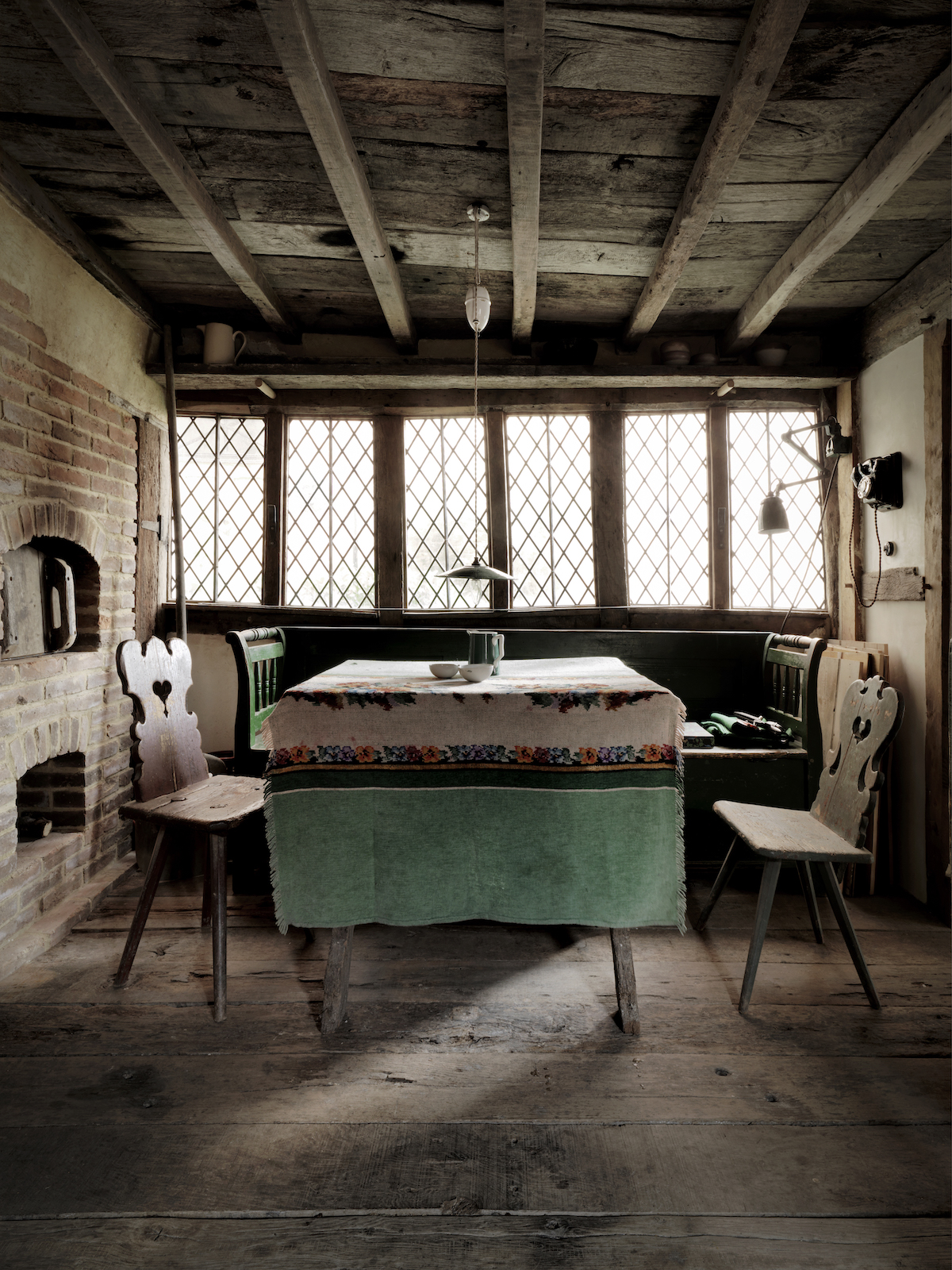
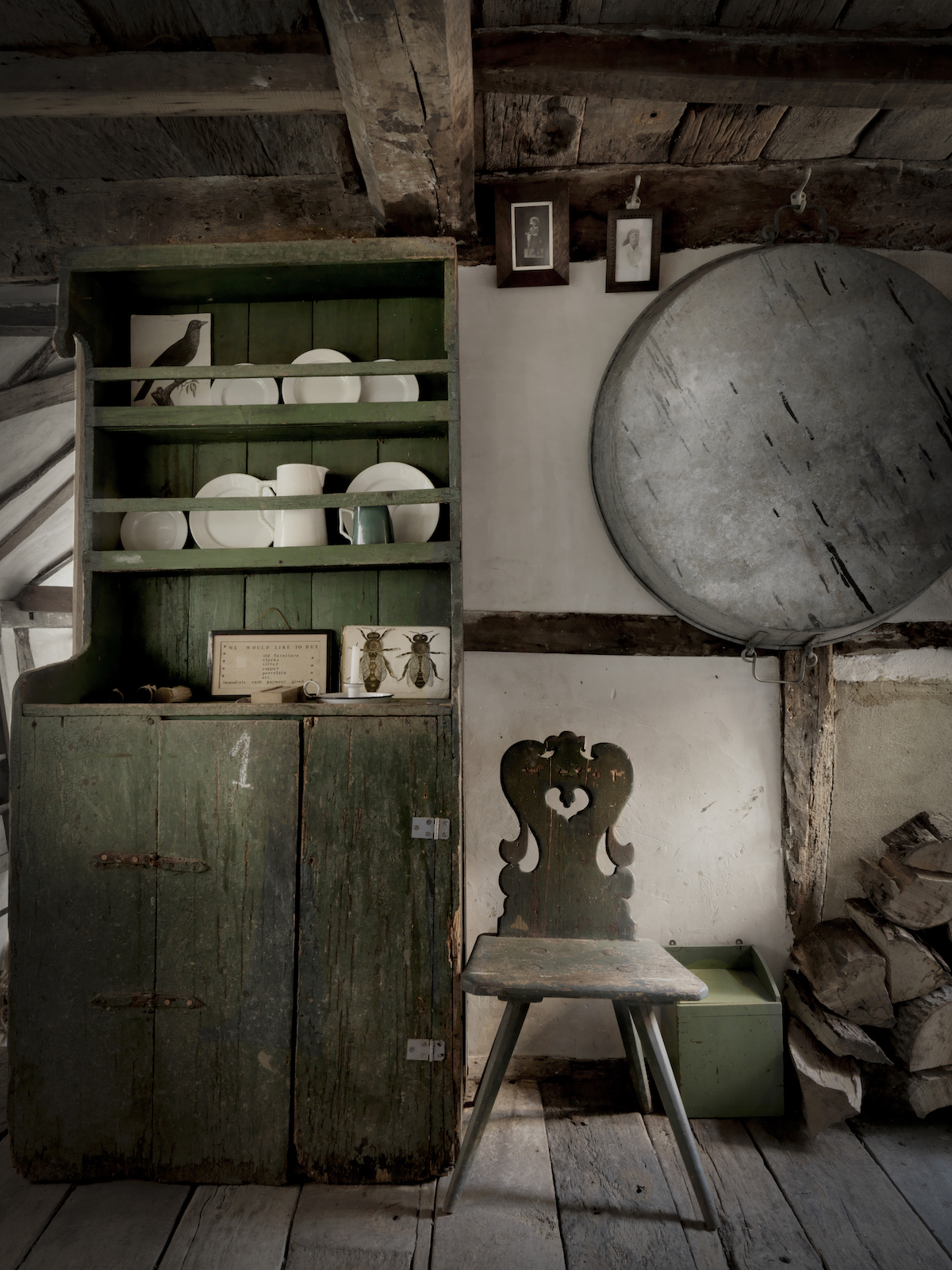
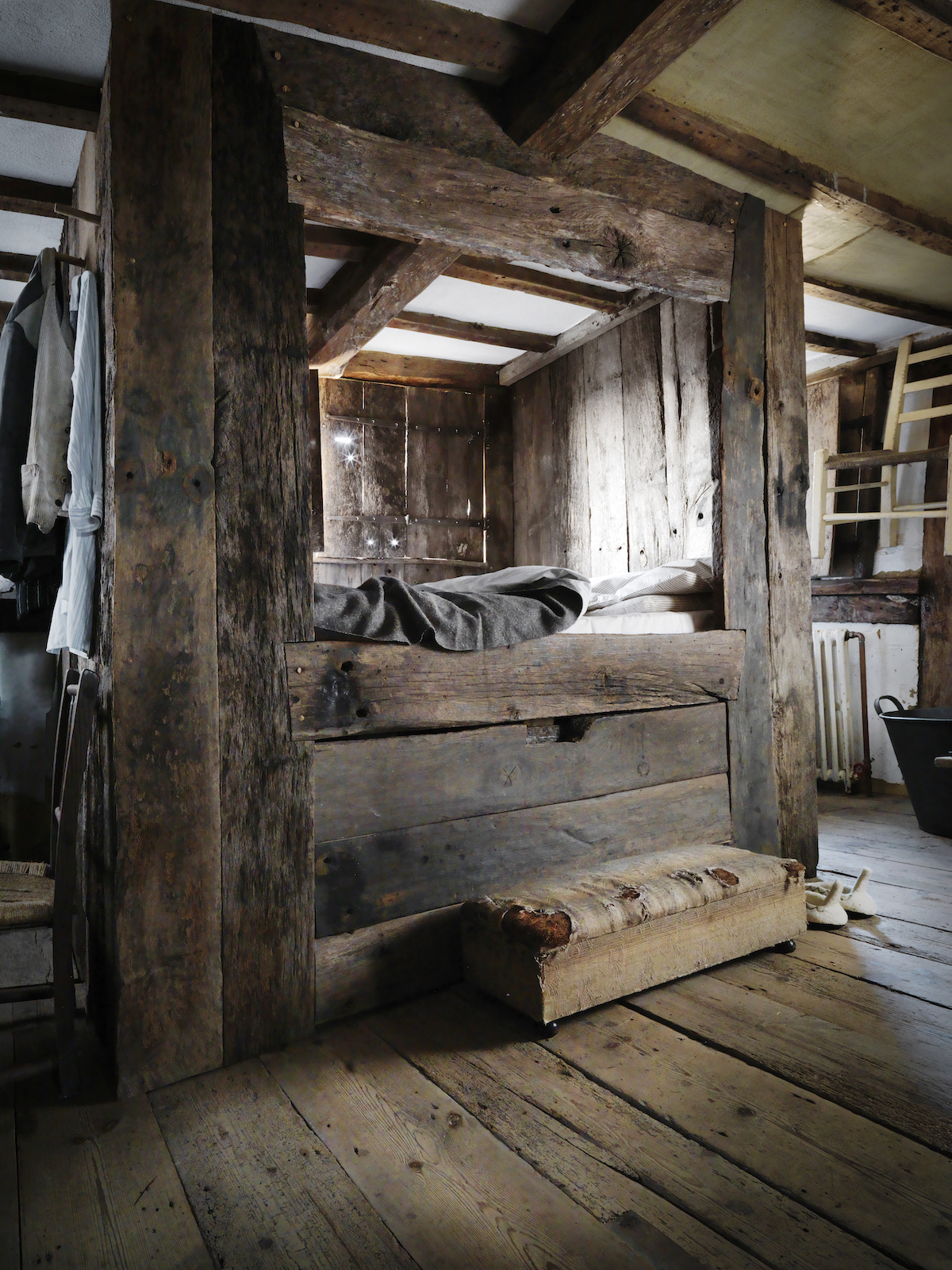
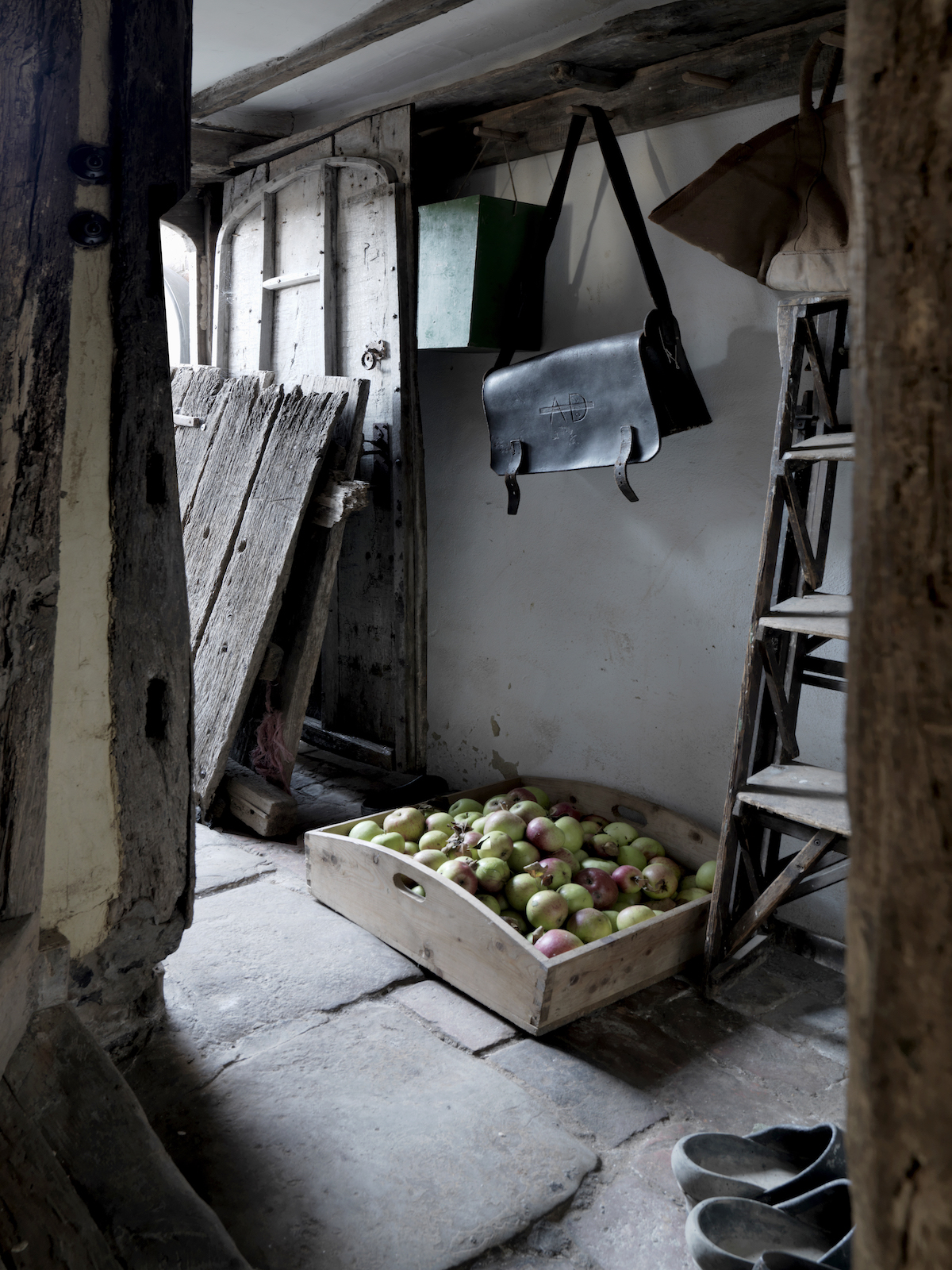
Not out to create period-perfect interiors, Hendy took a somewhat conceptual approach to the project as he went about “putting back the years.” “I am certainly not a slave to the buildings’ roots; however, I am a slave to detail and getting things right to achieve results in unexpected ways,” he explains.
In kitting out the house, he cast a wide net, reeling in an array of pieces from 19th-century Orkney Island rush back chairs to a primitive Hungarian dresser rescued from a barn, and installed an Alpine-inspired, double box bed constructed from reclaimed oak. There’s a 19th-century cuckoo clock crafted by noted Black Forest clockmaker Johann Baptist Beha, a trio of Victorian deer heads made of papier-mâché, actual antlers and a bathtub fashioned from an old grape-pressing barrel.
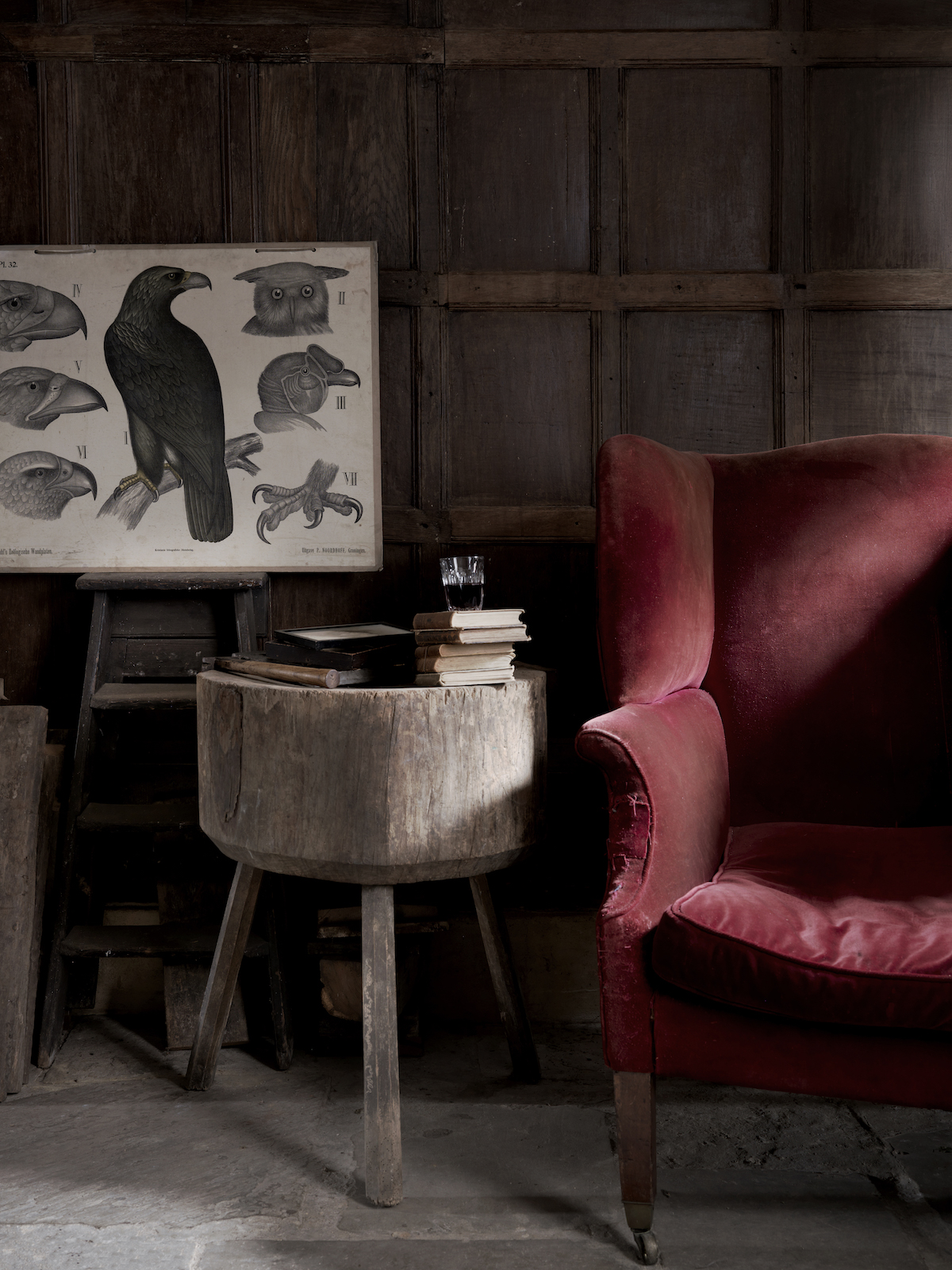

In conjuring “the dust of history,” as he puts it, Hendy has steered clear of a museum-like presentation, favoring instead an intimation of lives lived. There’s an immediacy to these spaces, an intimacy, a real sense of communication with the past. “Yet we have electricity, hot running water, baths, central heating, even underfloor heating in the kitchen,” he notes.
“The pleasure of the past occupying the present is the pleasure of illusion. The house is a living skeuomorph; it mimics the past and fools many into believing they’re stepping into Tudor times, when they are certainly not. There’s not even a stick of Tudor furniture. Because it doesn’t have any obvious modern trappings, it feels unworldly, unrelated to today’s living. Yet it’s totally in sync with everything we need and crave.”
Photography by Michael Paul.
Like what you see? Get it first with a subscription to aspire design and home magazine.