

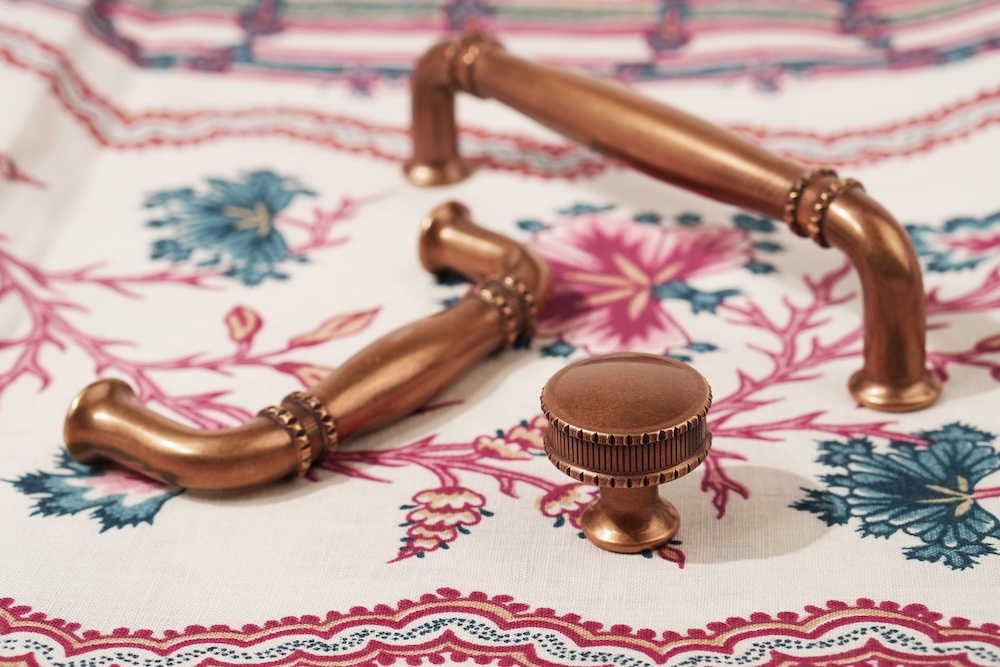
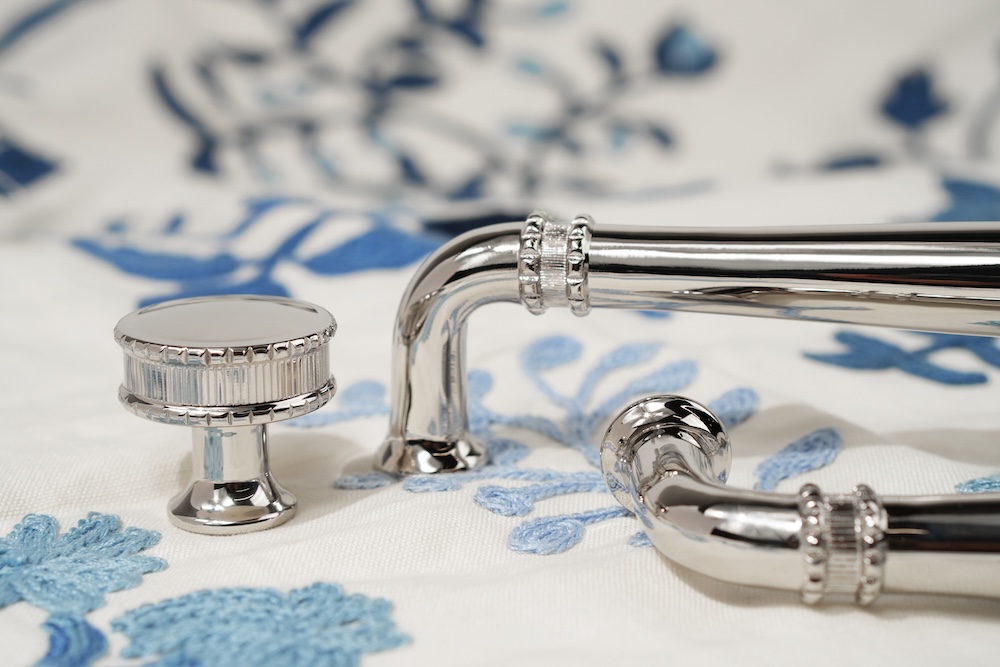
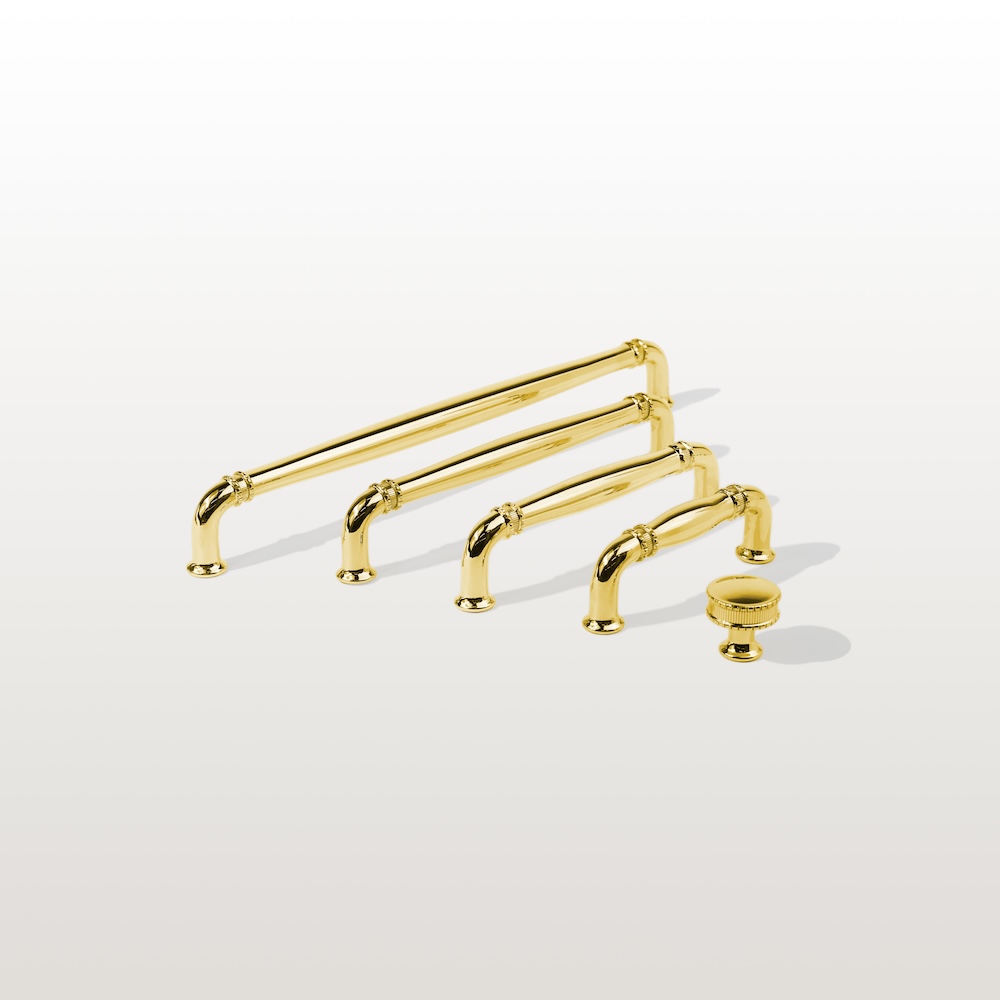
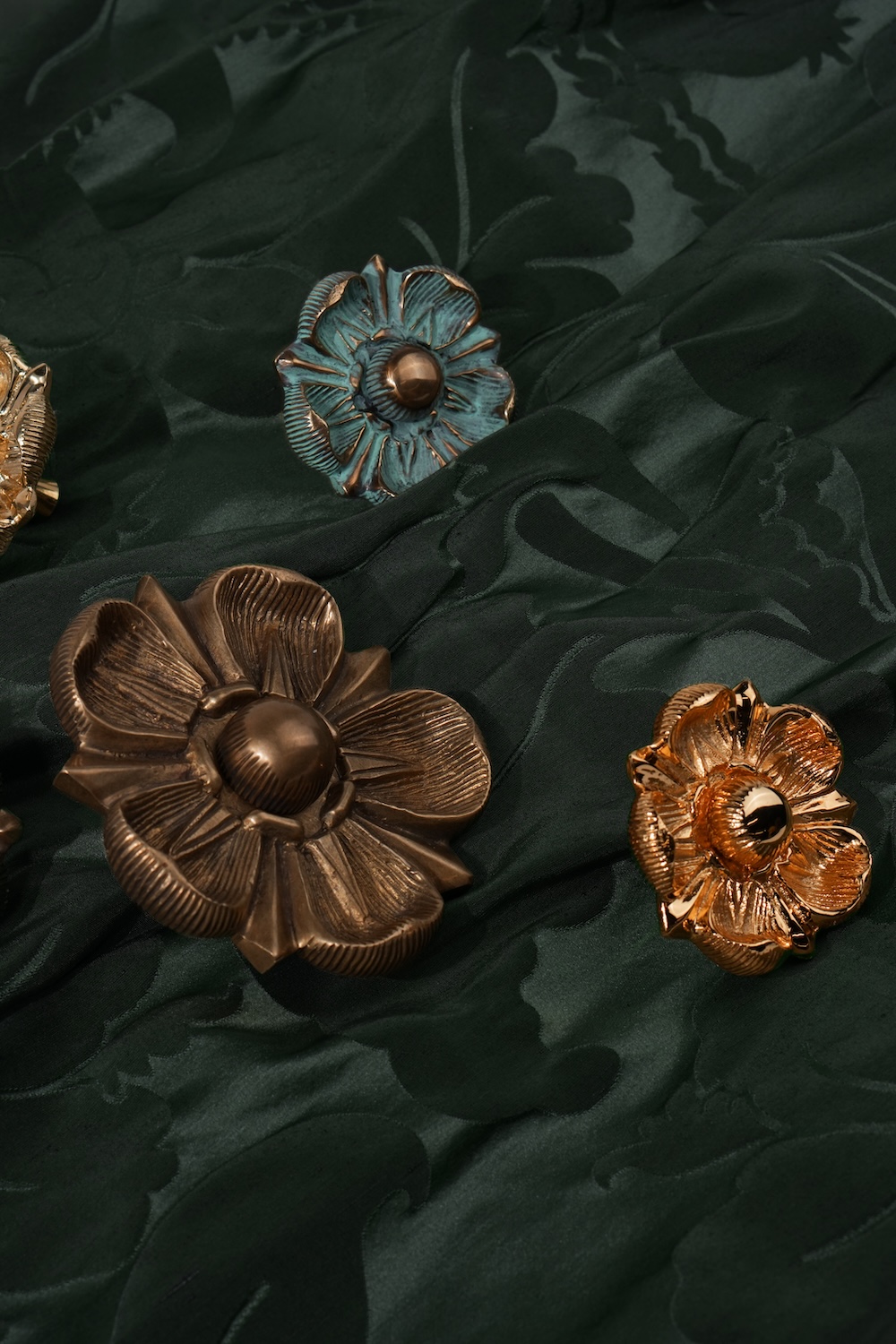
The James Collection from Art & Forge, created in collaboration with Williamsburg, brings 18th-century elegance into modern interiors. Inspired by antique furniture knobs, this collection features sculptural profiles, raised domes, and finely detailed banding, a classic design language reimagined for contemporary cabinetry. Released in tandem with the collection, the Francis Flower Knob is inspired by an 18th-century floral illustration uncovered in Colonial Williamsburg’s Rare Books archive and a floral metal mold discovered in the site’s archaeology lab.
Cynthia Malhotra, co-founder of Art & Forge, joins us this week to discuss the design process for these pieces.

Raymond Paul Schneider: When did you first start developing this new collection?
Cynthia Malhotra: We started developing the collection in 2024, but the idea had been a dream for years. As founders who first met at The College of William & Mary in Williamsburg, Virginia, the chance to partner with the Williamsburg brand as our foundational partnership felt deeply personal — a way to honor our own connection to the place while bringing its design heritage into the present.
RPS: What was the overall timeline from conception to final design?
CM: The process took well over 18 months. We spent over 6 months establishing the baseline research, interviewing Williamsburg curators and collectors. Since we were working with historic artifacts, every step required care and sensitivity. It was important to honor the legacy of Williamsburg while refining the details, proportions, and finishes until the designs felt both authentic to the past and relevant for today.
RPS: What was your initial inspiration, and where did the idea(s) come from?
CM: Our inspiration was drawn directly from the rich historical resources of Colonial Williamsburg, from its early American archives and artifacts to its renowned furniture collection, numismatics, and mechanical arts. We worked closely with curators, design experts, and librarians, studying 18th-century furniture, metalwork, rare books, and archaeological findings to inform every detail.
From floral molds and rosette motifs to oval knobs and the beaded, coined edges that once reflected candlelight in dim colonial rooms, we sought to honor the artistry of the past. The result is hardware that blends historical authenticity with modern sensibility, a tribute to American craftsmanship reimagined for today.
RPS: Describe your overall creative and design process.
CM: We always begin with a story, often rooted in history or archives, which we translate into sketches and 3D-printed models before moving into brass prototypes. Each piece is then hand-cast and refined through multiple iterations until it balances beauty, proportion, and function. For this collection, we worked closely with the Williamsburg brand team – including their product design and creative experts, in a truly collaborative process. Williamsburg’s strong design and positioning ethos helped guide us in narrowing down a long list of ideas, ensuring that every piece aligned with their vision and legacy. We prototyped and 3D-printed nearly 80 unique designs, of which only about 20% ultimately made it into the final collection. The depth and breadth of Williamsburg’s archive, combined with their thoughtful approach to interiors, as seen in their partnerships with brands like Schumacher, Paul Montgomery Studio, and others, were a constant source of inspiration throughout the journey.

RPS: Did you have a specific audience or theme in mind?
CM: Art & Forge speaks to design professionals (interior designers and architects) who seek distinctive, story-driven hardware, to homeowners investing in heirloom details, and to showrooms curating premium lines. All share a desire for quality, authenticity, and service — without the headaches of traditional luxury hardware brands.
RPS: What methods, tools, and materials did you use to develop and prototype this design?
CM: All of our products are designed in Norfolk, Virginia, where we follow a workshop model that brings together designers, artisans, and tradesmen from start to finish. The process begins in the foundry, where molten brass and bronze are carefully poured into sand molds, capturing intricate details with precision. Skilled artisans then refine each piece — cutting, grinding, and machining to shape the hardware before moving to polishing, finishing, and coloring. Whether achieving a satin texture or a rich patina, every step is handled with expert craftsmanship, ensuring that our hardware is as enduring as it is beautiful.
RPS: Did you use any new techniques or technologies to conceptualize or create this product?
CM: For the James design, we fused multiple metalworking techniques to create beading and coining patterns into a single piece, a combination rarely seen in hardware today. Creating both patterns together in one form was an intricate challenge: each requires a different level of polishing and finishing to maintain consistency, and bending the metal cleanly around corners without distorting the patterns added another layer of complexity. Achieving the right balance took many iterations. Each prototype was developed in solid brass, then refined through careful hand-finishing to preserve the crispness of the detail while maintaining the warmth and character of the form.

RPS: Were there any challenges that influenced or changed the final design?
CM: Every design has its challenges, and for the Francis Flower knob, the key was proportions and balance. After many prototypes, we refined the weight to feel substantial yet delicate, ensuring it wouldn’t overpower cabinetry. At the same time, we stayed true to its historic inspiration — a rosette image and fragment of hardware unearthed in Williamsburg — until we achieved a form that honors the artifact with both strength and elegance.
RPS: Describe your brand’s overall DNA and ethos.
CM: Art & Forge seeks to create premium cabinet hardware that feels like a natural heirloom (rich in material, texture, and history) while being design-forward, reliable, and accessible in the present day. Our company’s DNA is grounded in design, craft, and integrity.
Like what you see? Get it first with a subscription to aspire design and home magazine.