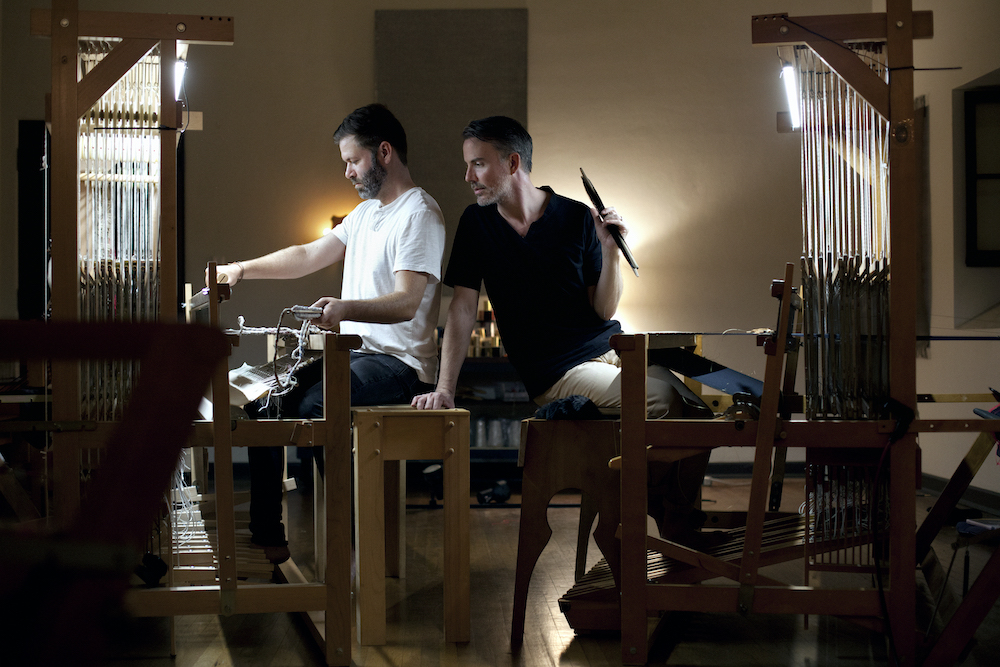
A multidisciplinary weaving and sculpture studio, North Carolina-based Dougall Paulson specializes in handwoven art textiles. Silver-plated, enameled jewelry wire is woven over warps of richly hand-dyed and natural silks in this practice, exploring the ways in which light appears through absorption, reflection, and transparency.
Co-founder Sean Dougall joins us this week to discuss the firm’s custom woven art glass.
Raymond Paul Schneider: When did you first start to develop this new collection?
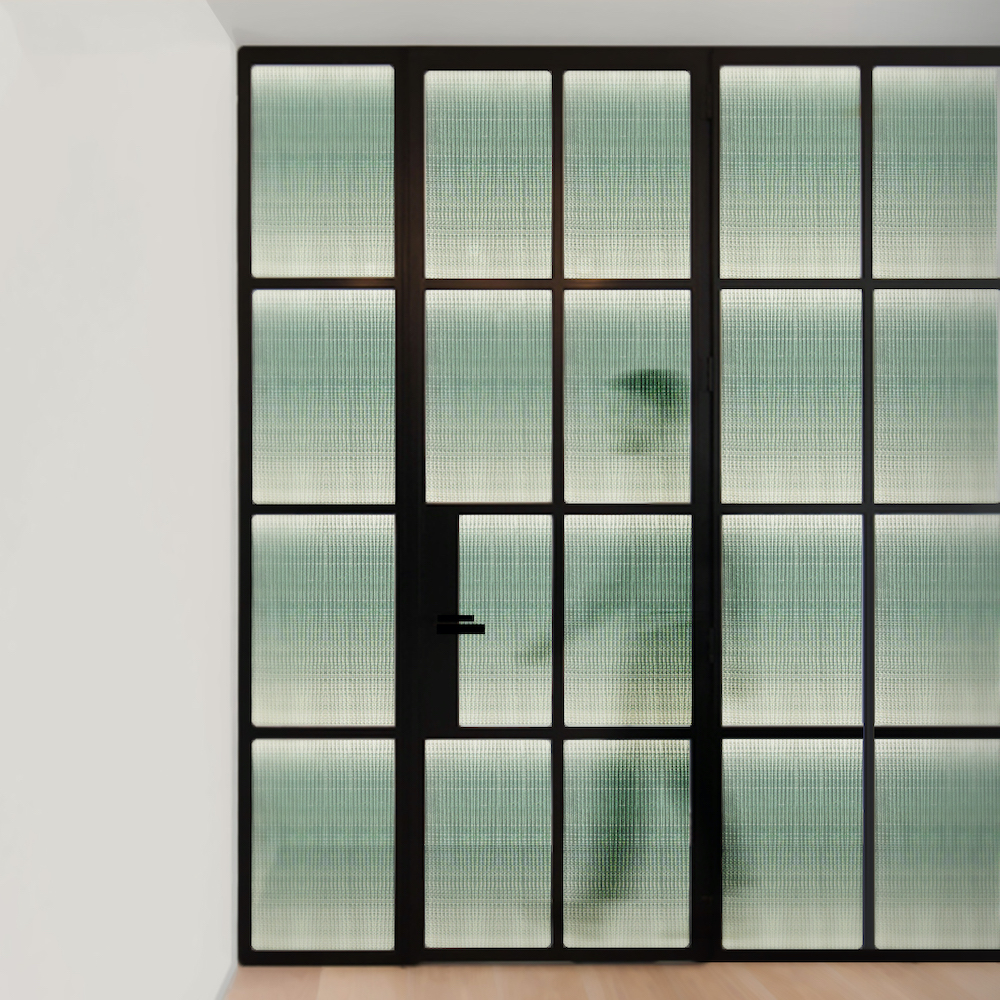
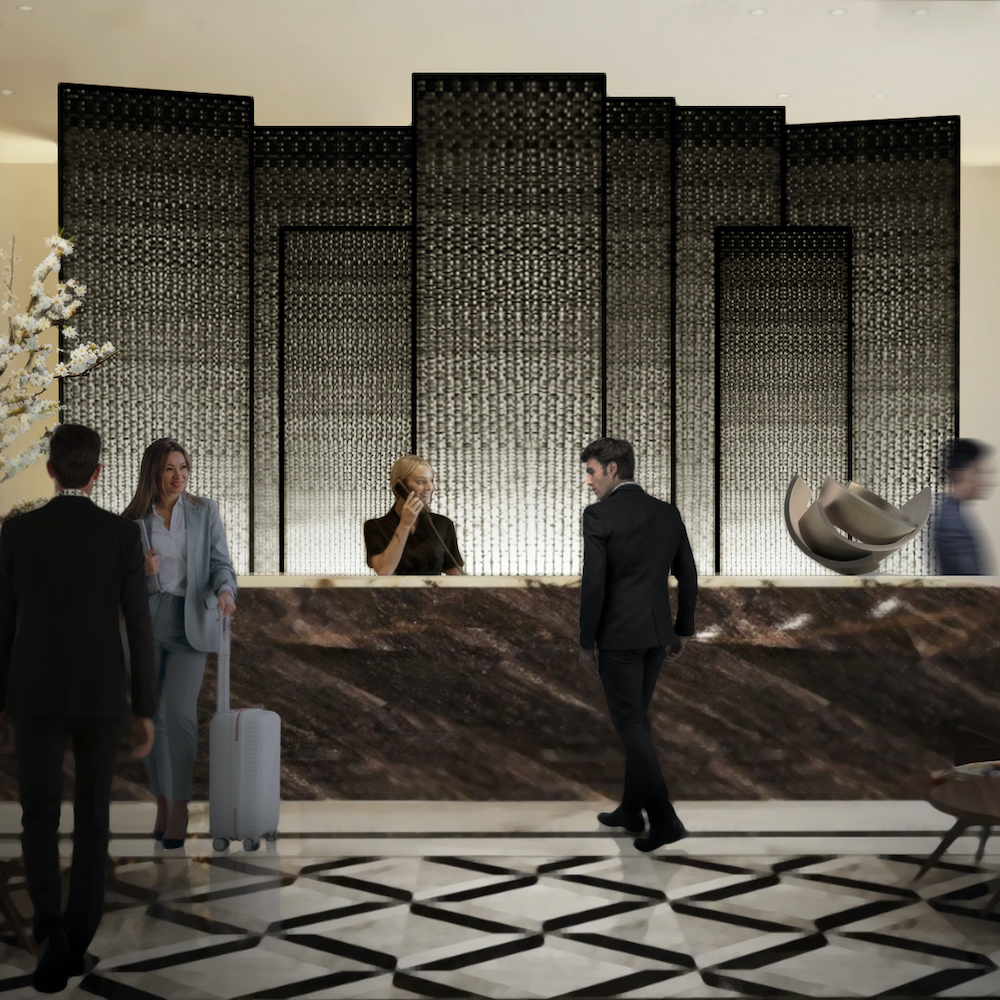
Sean Dougall: The joy of practicing any craft comes from getting to the studio and trying new things. Experimentation — and the work that comes out of it — will always lead to something as long as you put the work in. We’re always looking for new ways to take our weaving off the wall to create opportunities for sculptural expression. We were getting a lot of inquiries for commercial applications of our weavings — applications that would put them within reach of the public. We were interested in finding a way to meet the creative briefs while ensuring that the work wouldn’t suffer damage from that very public display. Glass answered the call, and after experimenting with a lot of woven structures and materials, we landed on the right combination. The result is our handwoven jewelry wire and silk weavings in glass, which can be specified for just about any application you can imagine.
RPS: What was the overall timeline from conception to achieving the final design?
SD: We spent several years with just a hunch, and we sold our first glass project to Rockwell Group for their new Nobu Hotel in Atlanta. We work with a glass partner who focuses on lamination of very special materials, but finding that partner took several trials with a handful of different shops on both coasts. As with anything, collaborating with a workshop is a very special but time-consuming process.
RPS: What was your initial inspiration, and where did the idea(s) come from?
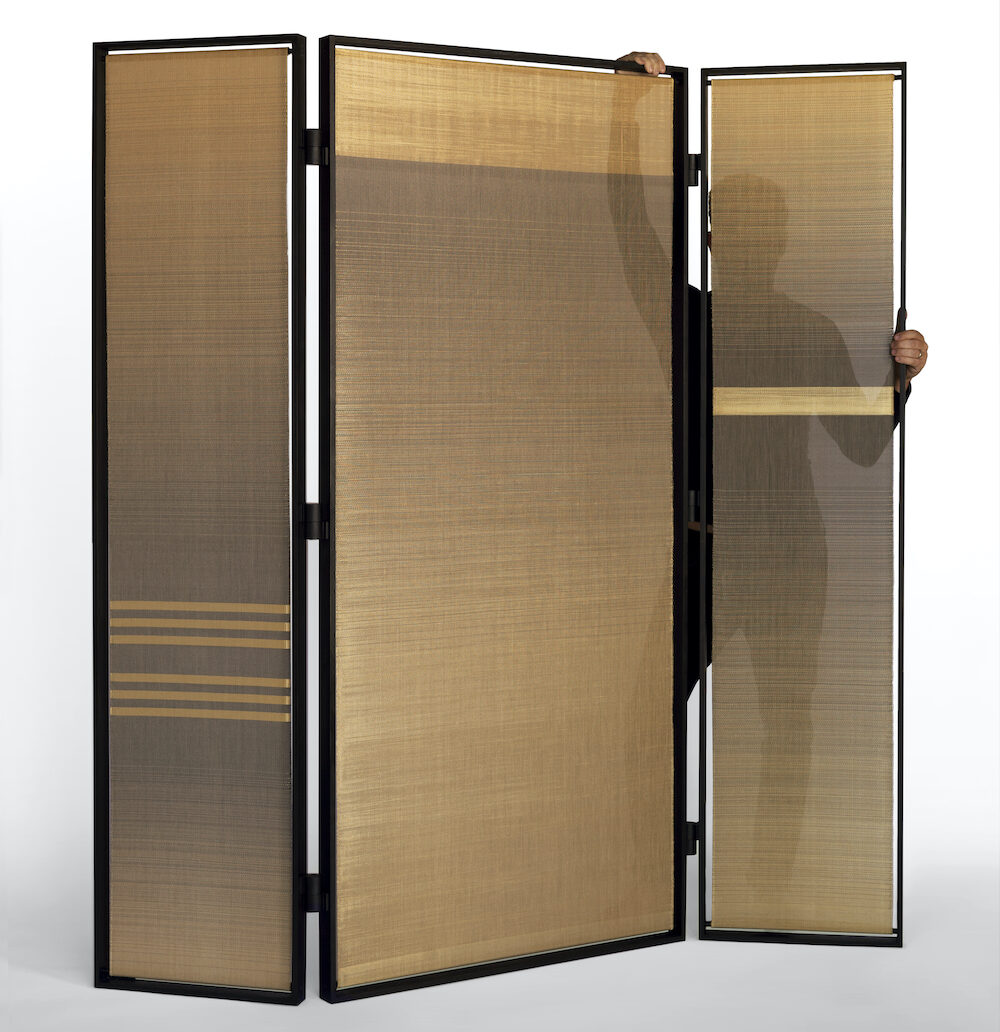
SD: We wanted to create a product that was translucent and reversible and entirely customizable. We’re drawn to the idea of being able to walk around a weaving floating in space so that you can experience it from all angles. That idea first came from our Ascension Screen (pictured above) — which we introduced in 2019 at Salon A+D in New York — a three-paneled screen with custom patinated bronze frames and hinges.
RPS: Please describe your overall creative and design process.
SD: Our creative and design process is always collaborative. Clients approach us with an idea, and after providing us with elevations, drawings, or even just dimensions and a photo, we work with them to establish a palette of materials to complement the project as a whole. After landing on a materials direction, we create photorealistic renderings so our client can see exactly what the finished pieces will look like in their space. When the renderings are approved, we initiate sampling, and then we begin production of the finished work. The process can be very quick or very lengthy, depending on the scale of the project and timing to deliver.
RPS: Do you have a specific audience or theme in mind?
SD: Our clients are pretty evenly distributed across the commercial, hospitality, and residential design markets. At the moment, we have projects in various stages of development on five continents. We also do some experimental development work for architecture firms.
RPS: Please describe the methods, tools, and materials you used to develop and prototype this design.
SD: We use traditional Leclerc multi-shaft floor looms. For our weavings laminated in glass, we use cultivated silk warps and silver-plated enameled jewelry wire wefts. The glass is low-iron, which allows the shimmer of the materials to really come through.
RPS: Did you utilize a new technique or technology to conceptualize or create this product? If yes, please share the details.
SD: Laminating fabric in glass isn’t necessarily a new concept, but what we’ve created takes it to a whole new level; the combination of fine materials, woven structures, and unique compositions sets it apart from anything else on the market. Also, because we start our collaborations with clients on a very granular, bespoke level, each project is one-of-a-kind, which means no two projects will ever be the same.
RPS: Describe your overall brand DNA and ethos.
SD: With an emphasis on handwoven art textiles and sculpture, our studio practice seeks beauty through the creation of brand-new expressions of form, materiality, and light. Completely customizable, each project begins as a conversation in color, composition, materiality, and effect, ensuring that no two projects are ever the same. Coupled with a sculpture practice employing cast bronze and one-of-a-kind expressions of ceramic and glass, our unique take on site-specific installation is the starting point for the creation of objects that straddle the fine and decorative arts.
Like what you see? Get it first with a subscription to aspire design and home magazine.