

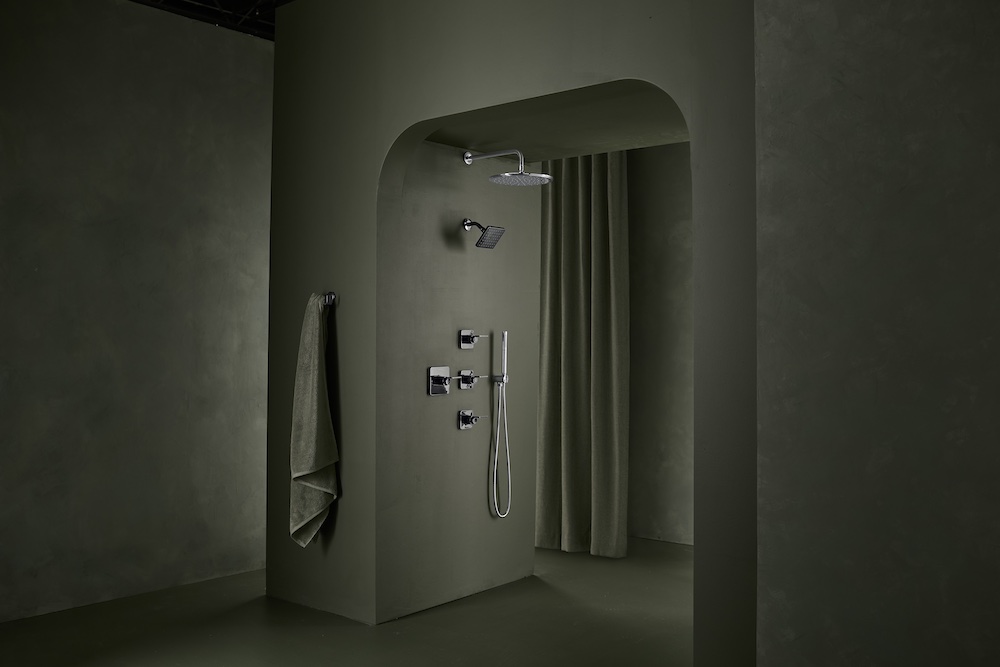

Kallista’s latest offering, the Guise collection, is inspired by classic modernism and realized through the lens of American contemporary style. Crafted with precision engineering, each piece is cast as an immaculate singular form to masterfully achieve seamless connections and subtle transitions between two geometries.
Alex Dornbracht, Managing Director at Kallista, joins us this week to discuss the process in designing Guise:
Raymond Paul Schneider: When did you first start developing this new collection? What was the overall timeline from conception to final design?
Alex Dornbracht: We began developing the Guise concept starting in 2021. The collection went through a redesign, and the official design was approved at the end of June 2022. The collection was then launched in September of 2024.

RPS: What was your initial inspiration, and where did the idea(s) come from?
AD: We looked to the Bauhaus movement across architectural and product design when developing the collection and were particularly inspired by designers who had a uniquely American viewpoint, such as German American architect Mies van Der Rohe. While his roots are classic Bauhaus, the influence of the American aesthetic is clear in both his commercial and residential designs. Projects like the Farnsworth house, Seagram tower and IBM Tower showcase an American spin on Bauhaus. His use of glass and steel create lines commonly seen in Bauhaus design but applied in a very American way that had not been done before.
Another example is Hungarian German American designer Marcel Breuer and his Wassily chair that has become a classic. It is very geometric with a bold but clean profile defined by a metal frame and connected leather straps. The interplay of the lines and portions heavily inspired the design of Guise.
We looked at these groundbreaking – and often imitated – designs, and that’s where we wanted to start, but not where we wanted to stop. Instead, we wanted to take it a step further to make it Kallista’s very own take on American contemporary design and infuse global appeal. American contemporary design language has yet to be clearly defined. With Guise and other collections, Kallista is beginning to do just that.
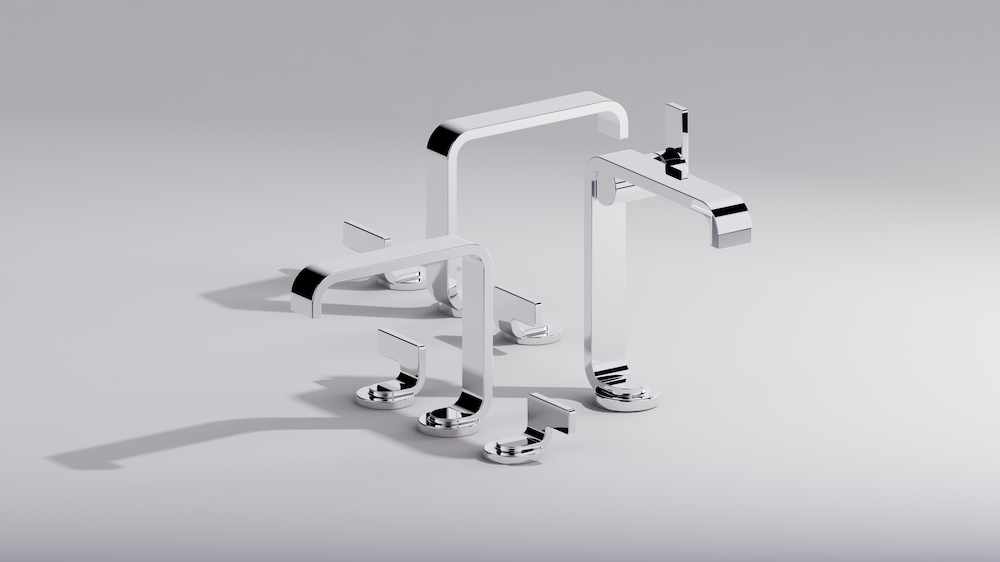
Details like the softness of the round escutcheon and the slight off-set of the faucet gives the collection that feeling of lightness and a distinct personality unlike anything else available. It remains contemporary but is more interesting than the bent tubes and cylinders that flood the marketplace.

RPS: What methods, tools, and materials did you use to develop and prototype this design?
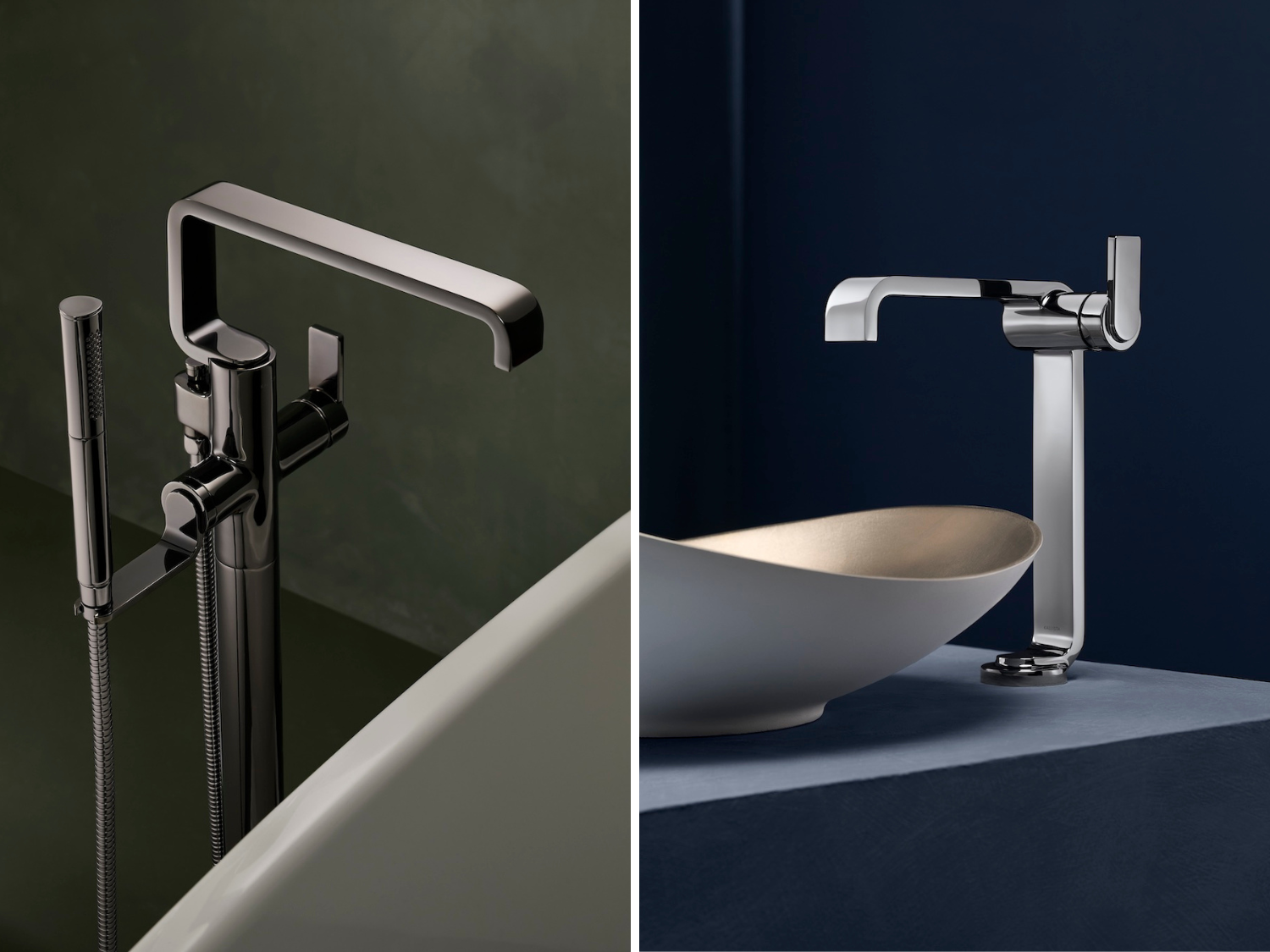
AD: We approached the development of the Guise collection with a meticulous and multi-faceted process that blends digital innovation with hands-on prototyping. It all begins in the digital realm, where we evaluate designs for aesthetics, performance, and manufacturability. For aesthetics, we place our concepts into virtual mockup rooms to assess size, ergonomics, and how the designs interact with their environments. This allows us to refine proportions and shapes early on.
From there, we shift our focus to performance by overlaying the essential mechanical components valves, connectors, hoses, and fittings onto the design. This step ensures that the internal structure accommodates all parts seamlessly. To fine-tune water flow and eliminate potential issues, we rely on computational fluid dynamics (CFD), simulating how water moves through the product to ensure optimal flow rates and minimal noise. Given the ultra-thin profiles of the designs, we also employ finite element analysis (FEA) to pinpoint structural weak points and guide enhancements for durability.
Next, we perform a thorough manufacturing analysis, evaluating thicknesses, machining, and casting requirements to confirm that the design is fully production ready. Once the digital design is refined, we bring it to life through 3D printing, creating full-scale models for team-wide review. These physical prototypes let us assess functionality and compare against similar products to confirm our vision is on track. Any necessary adjustments are reprinted and reviewed until the design aligns perfectly with our intent.
We then produce machined samples of key components, such as the spouts, to verify engineering specifications, particularly regarding thickness and durability under daily use validating the insights from our FEA testing. Finally, when production-ready parts are in hand, we conduct rigorous testing to confirm the product meets every performance benchmark. This includes flow and pressure testing, spout strength assessments, and handle lifecycle evaluations, among others.
Every stage of this process reflects our commitment to balancing form, function, and precision, ensuring that the Guise collection not only looks stunning but performs flawlessly in the hands of our customers.
RPS: Did you have a specific audience or theme in mind?
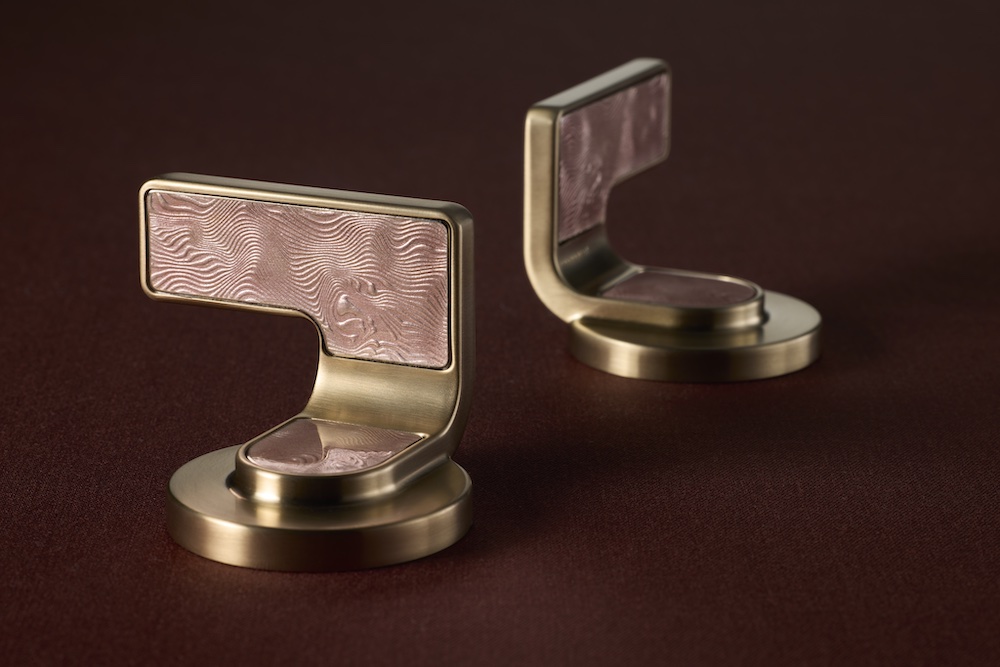
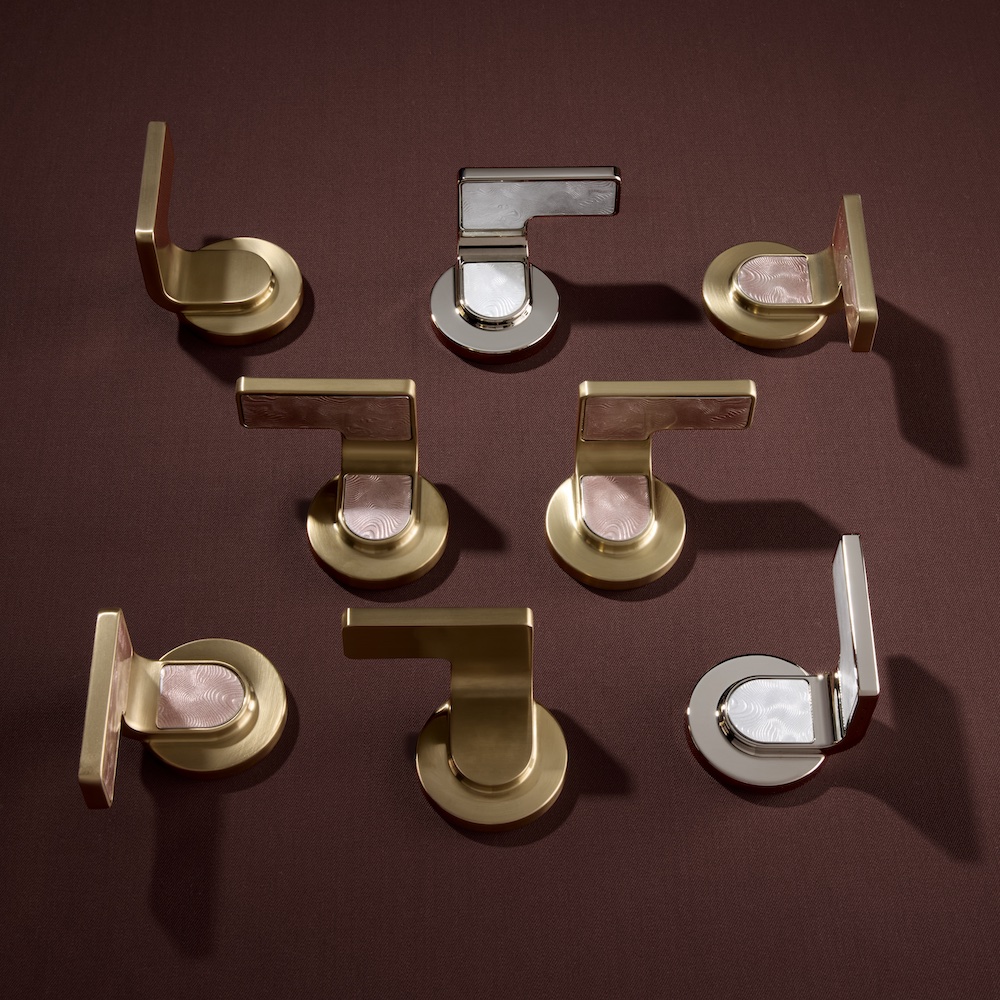
AD: Kallista products are designed to appeal to luxury consumers and satisfy the demand of evolving tastes in high-end interiors. There is a huge emphasis on customization and personalization. One way Kallista is delivering that is with handle upgrades. For Guise (like 002) we not only offer the four handle upgrades but can use just about any material the customer sources. Beyond color and customization, manufacturers are experimenting with unexpected materials and innovative finishes. Kallista is excited to have introduced a new graphite finish available in both a polished and brushed option. As a much richer take on a classic black, our graphite offers more depth and visual interest.
RPS: Did you use any new techniques or technologies to conceptualize or create this product? If so, please explain.
AD: Our Guise Brassware collection represents a significant technological advancement in both design and functionality. We have employed ultra-thin sand core technology that mimics the internal structure of the spout and can be washed away after the brass casting process. As evidence of fighting for every millimeter, the Guise widespread faucet measures an impressively narrow 10mm thick and 33mm wide with the single control design measuring 12 mm thick and 36 mm wide. This breakthrough allows us to produce the thinnest spout in our company’s history and enhances the overall product durability.
The handles of the widespread Guise faucet are crafted to hover precisely 0.76 mm above the finished countertop. Not only does this ultra-thin measurement create the pleasing appearance of a seamless connection to the surface, but the micro gap also ensures water doesn’t get trapped between the two. The single casting of the handles with its solid metal construction delivers a satisfying hand feel and elegance movement when turning on and off the faucet. Additionally, the water stream has been refined to a ribbon-like rectangular spray that is just as luxurious to look at as it is touch.

RPS: Were there any challenges that influenced or changed the final design?
AD: Recognizing the challenges posed by the thin profiles and one-piece design, we prioritized prototyping well ahead of our usual schedule to better identify potential manufacturing issues. Early prototypes — such as 3D-printed and brass-machined components — proved invaluable in refining the design. This process allowed us to maintain the original design intent while ensuring the feasibility of large-scale production.
RPS: Describe your brand’s overall DNA and ethos.
AD: Kallista is globally recognized as the premier brand of luxury American kitchen and bath solutions. Offering award-winning products ranging from kitchen faucets, sinks and accessories to bathroom faucets, sinks, showering and tubs, Kallista has been introducing some of the industry’s most innovative and quality collections since 1978. Founded with unwavering commitment to finding the most skilled craftsmen and offering only the best in form, function and materiality, Kallista upholds that legacy today. While the brand continues to offer its best-selling products in traditional styles, Kallista prioritizes evolving with luxury tastes, developing more and more distinctive designs in a range of transitional to contemporary aesthetics. Our core mission is to provide the greatest enduring value for the discriminating consumer.
Like what you see? Get it first with a subscription to aspire design and home magazine.