
Mazy Path is a line of wallpapers, textiles, limited edition art prints, and most recently notecards, based on handmade, botanical linocut prints by Alexis Audette.
Alexis joins us in this week’s Anatomy of a Design to discuss how her collections come to fruition.
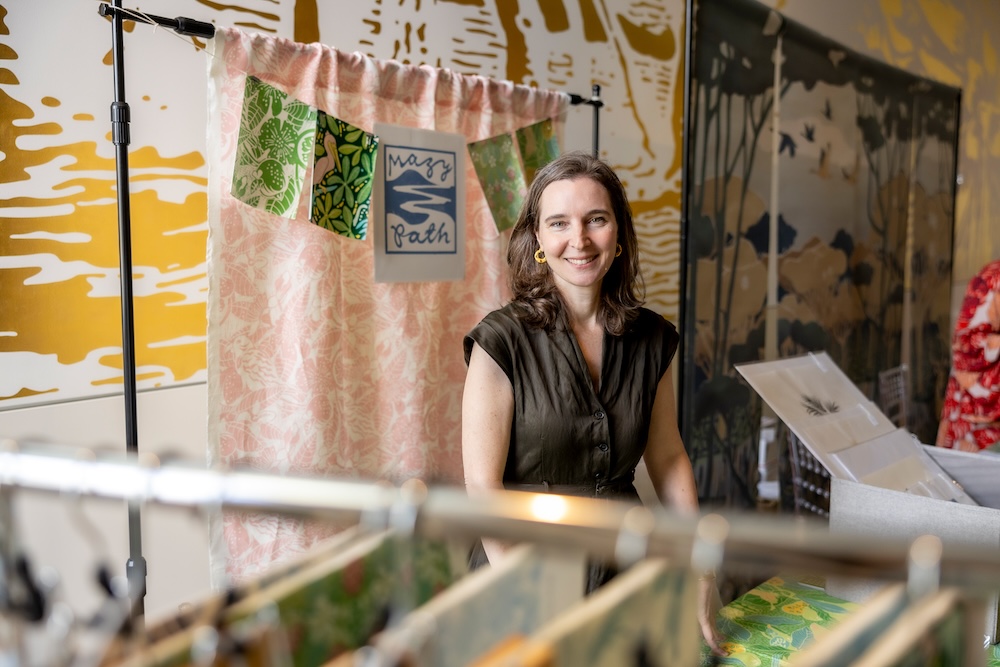
Raymond Paul Schneider: When did you first start to develop this new collection?
Alexis Audette: The five designs in Companion, my first textile collection, originated as wallpapers. They were drawn from collections that have launched in the last four years. So, it’s fair to say that while I started working on the designs themselves as early as 2020, I began working on the interpretation of the designs into fabrics in 2023
RPS: What was the overall timeline from conception to achieving the final design?
AA: With regard to my wallpapers and textiles, it usually takes several months from when I get an idea for a design to when the artwork for the design is completed. Creating sketches, establishing pattern repeat, developing ideas for color, and carving and printing blocks takes time. Once the artwork is complete and I submit it to the mill, developing strike-offs and making adjustments, plus the actual production printing, takes an additional 3-4 months.
My limited-edition linocut prints move a little faster. In many ways, the process is the same. I also make sketches, experiment with color, and carve and print the blocks. However, the prints are art made for art’s sake. Nothing is put in repeat or sent to a mill. The numbered editions often have 50-100 prints, and I make each one by hand.
RPS: What was your initial inspiration, and where did the idea(s) come from?
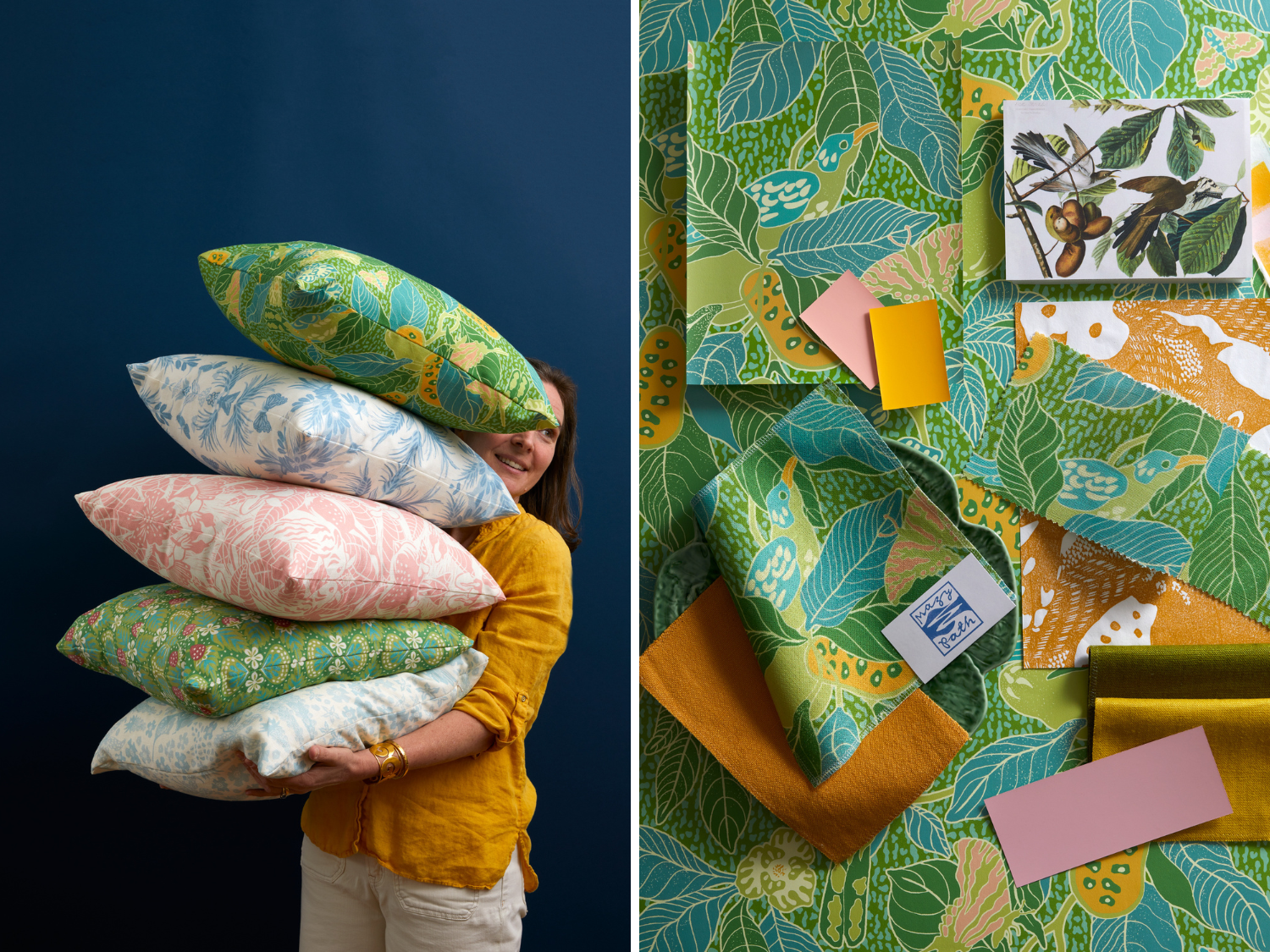
AA: The ideas for each of my wallpaper collections – Community Garden, Treasure Tree, and Heirloom – all come from the world of plants. The designs that I pulled from those collections for the Companion textile collection had a range of inspirations, from pawpaw trees to heritage grains. I named the textile collection “Companion” in reference to companion planting, an agricultural method in which crops are planted in close proximity to each other to enhance one another’s well-being. In that spirit, my wallpapers and textiles are printed on different grounds – clay-coated paper versus Belgian linen – but they share patterns in common. Paired together (with a print thrown in for good measure), they bring a full suite of wallpaper, textile and art possibilities to an interior.
RPS: Please describe your overall creative and design process.
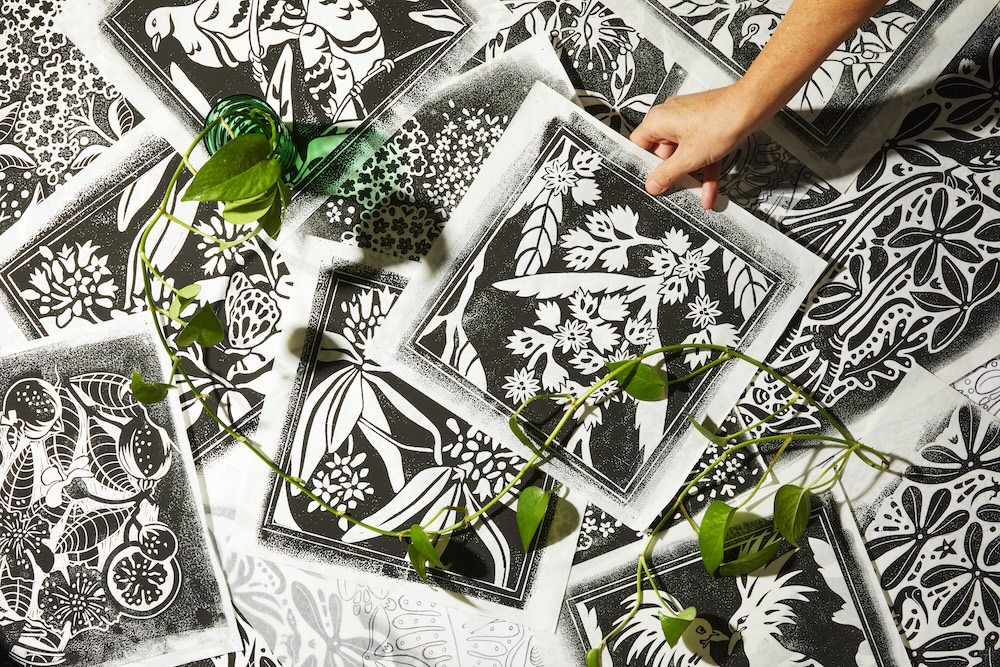
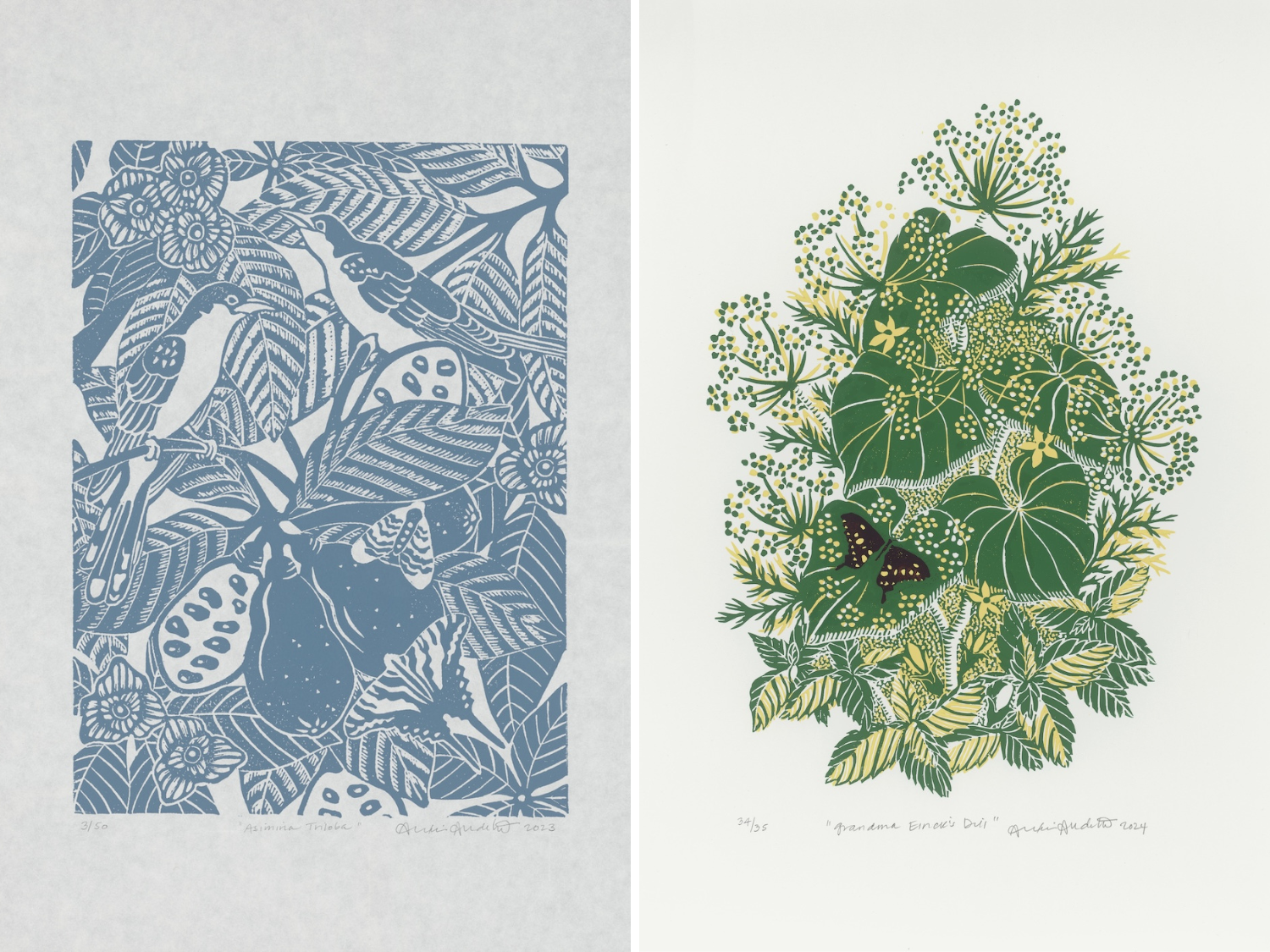
AA: I find my inspiration in contemporary nature writing. For example, I created my design Pawpaw and its sibling linocut print, Asimina Triloba, after reading Andew Moore’s 2015 book Pawpaw: In Search of America’s Forgotten Fruit. Moore’s book is a captivating exploration of why pawpaws are deeply rooted in American folklore, but nowhere to be found in American supermarkets. After a plant has captured my imagination, I gather imagery and start sketching. Next, I organize my sketches into a repeating pattern and transfer them onto blocks. I use rubberized blocks that have a similar mark to linoleum, but they’re much easier to carve. The number of blocks depends on the size of the repeat and whether I’m adding color post-production (as was the case with Pawpaw) or adding it through a multi-block printing process. Then I carve the blocks, ink them, and print them. For polychromatic designs that require multiple blocks, registration is everything!
RPS: Did you have a specific audience or theme in mind?
AA: Mazy Path speaks to people who are drawn to botanical art, who enjoy the stories of plants, and who appreciate work that shows the hand of the maker. Linocut prints reveal where a block’s crevices are deep, where ink is heavy, where pressure has been applied, and each impression is slightly different than the last. This visual connection from maker to object resonates with our clients, most of whom are creatives themselves, whether in a design studio, a garden, or both. I give linocut printmaking workshops, and I’m always amazed by the hush that falls over the room as people get to work. There’s something about a shared love of plants and working with your hands that leads to a sense of creative communion.
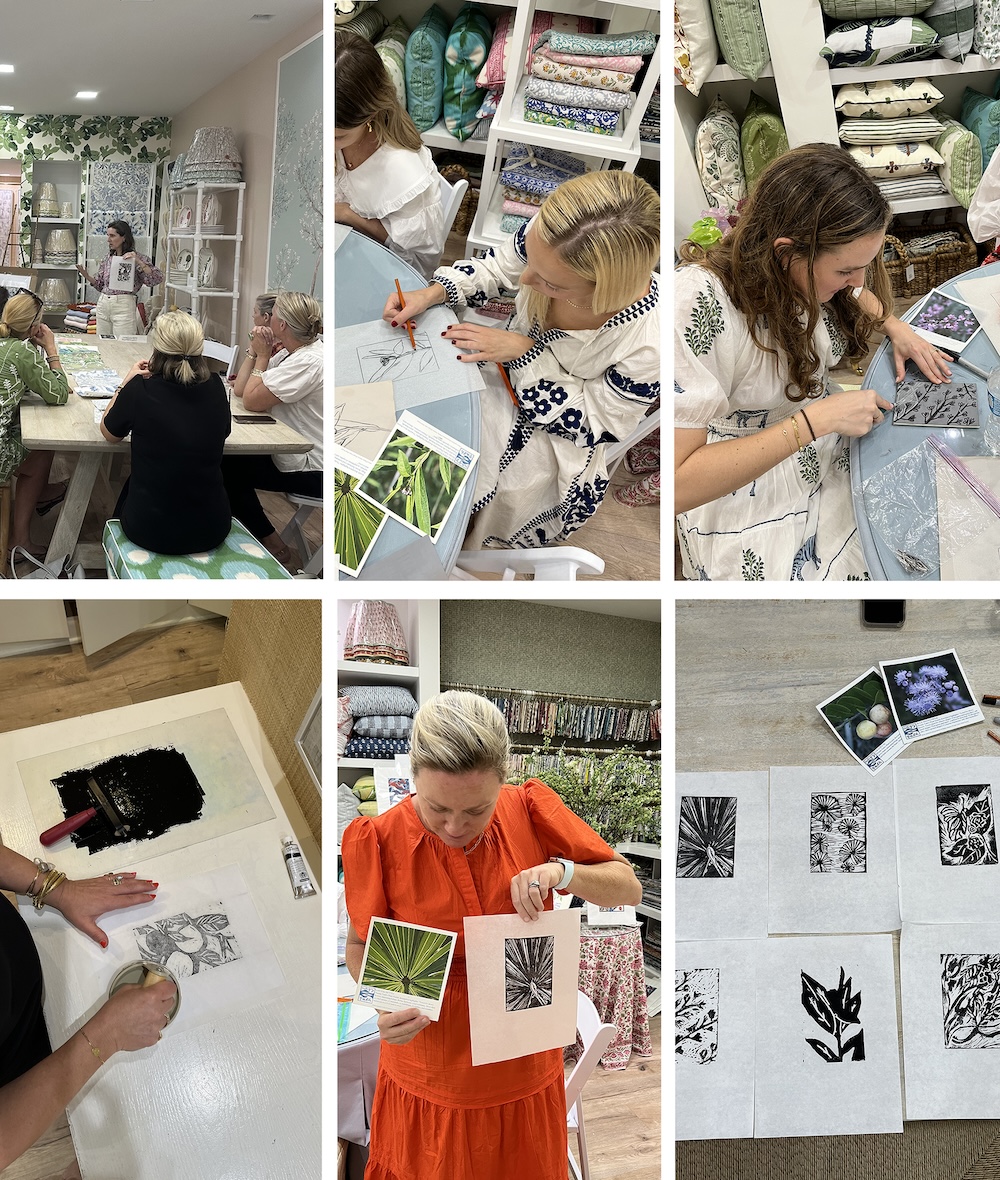
RPS: Please describe the methods, tools, and materials you used to develop and prototype this design.
AA: Linocut printmaking gives Mazy Path its unique visual signature. However, to reproduce my work, I use two different kinds of printmaking. To translate my patterns into wallpaper and textiles, I use digital printing techniques to best capture the subtle textures and rich tonalities of relief prints. To adapt the work to note cards (my newest offering), I work with a letterpress printer. The debossed quality of letterpress printmaking conveys the dimensionality of linocut works on paper.
RPS: Describe your overall brand DNA and Ethos
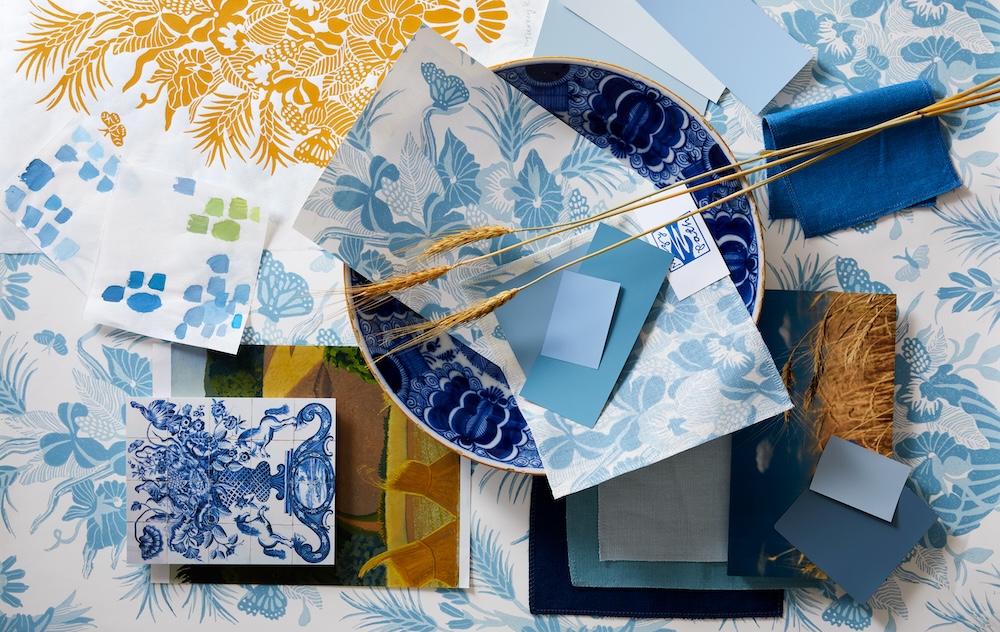
AA: Mazy Path brings forth captivating botanical images that spark conversations about plants. Our destinies are intertwined, and keeping plants top of mind protects both their future and ours. This principle guides my choices around all aspects of Mazy Path, including design subject matter, manufacturing partners, and collaborations. Along these lines, my collaborative partners have included the Late Bloomers, a Jacksonville, Florida-based Garden Club of America chapter, Inverto Earth, a Swiss robotics start-up that works on global mangrove forest restoration, and Seed Savers Exchange, an Iowa-based, non-profit that preserves heirloom seeds to protect the biodiversity of our food system.
Mazy Path’s botanical orientation, linocut print signature, and commitment to the natural world give the brand a singular presence in the design landscape and make it a destination for fellow plant, printmaking, and conservation enthusiasts.
Photography by Alexandra Rowley.
Read more of our Anatomy of a Design series here.
Like what you see? Get it first with a subscription to aspire design and home magazine.