


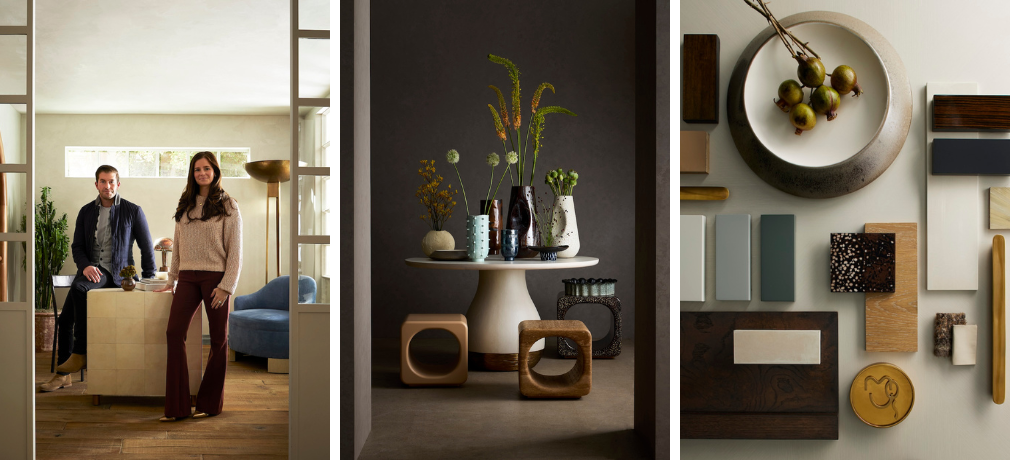
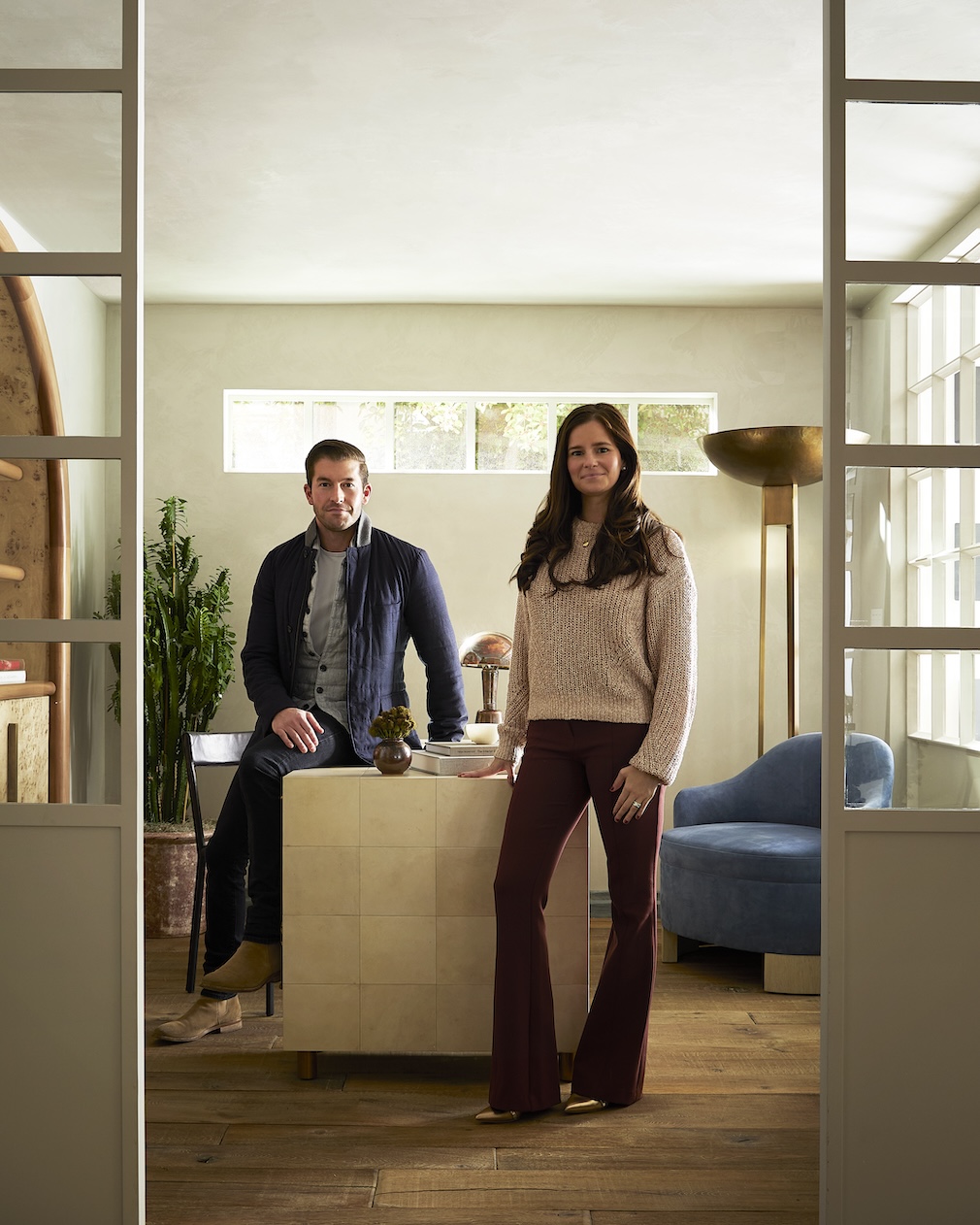
As third-generation furniture designers, Tanner Moussa and Mackenzie Lewis grew up immersed in the family trade. They founded MOUS in 2023 to create functional art, resulting in style-bending case goods, seating and objects that depart trend — including those in their inaugural Narrative Arc collection.
Tanner and MacKenzie join us this week to discuss the latest additions to the collection.

RPS: What was the overall timeline from conception to achieving the final Design?
The design journey for Volume II spanned approximately 18 months, from initial conceptual sketches to the final crafted pieces. This extended timeline allowed us to refine our techniques and explore new materials that expanded the Narrative Arc’s scope.
RPS: What was your initial inspiration, and where did the idea(s) come from?
Our inspiration for Volume II stemmed from a combination of architectural marvels, from ancient to modern, and the timeless allure of celestial bodies. We sought to capture this duality by balancing organic curves with angular forms, creating a juxtaposition that is both dynamic and harmonious.

RPS: Please describe your overall creative and design process.
Our design process is an interplay of conceptual exploration and hands-on experimentation. Starting with sketches and digital models, we continuously refine our ideas, testing proportions and textures. This iterative approach enables us to push boundaries in materiality while ensuring that functionality is embedded in every piece.
RPS: Did you have a specific audience or theme in mind?
We envision our pieces as statements for collectors and design aficionados who value innovation, craftsmanship, and unique material finishes. Volume II was crafted to inspire audiences who appreciate furniture as both art and utility.

RPS: Please describe the methods, tools, and materials you used to develop and prototype this design.
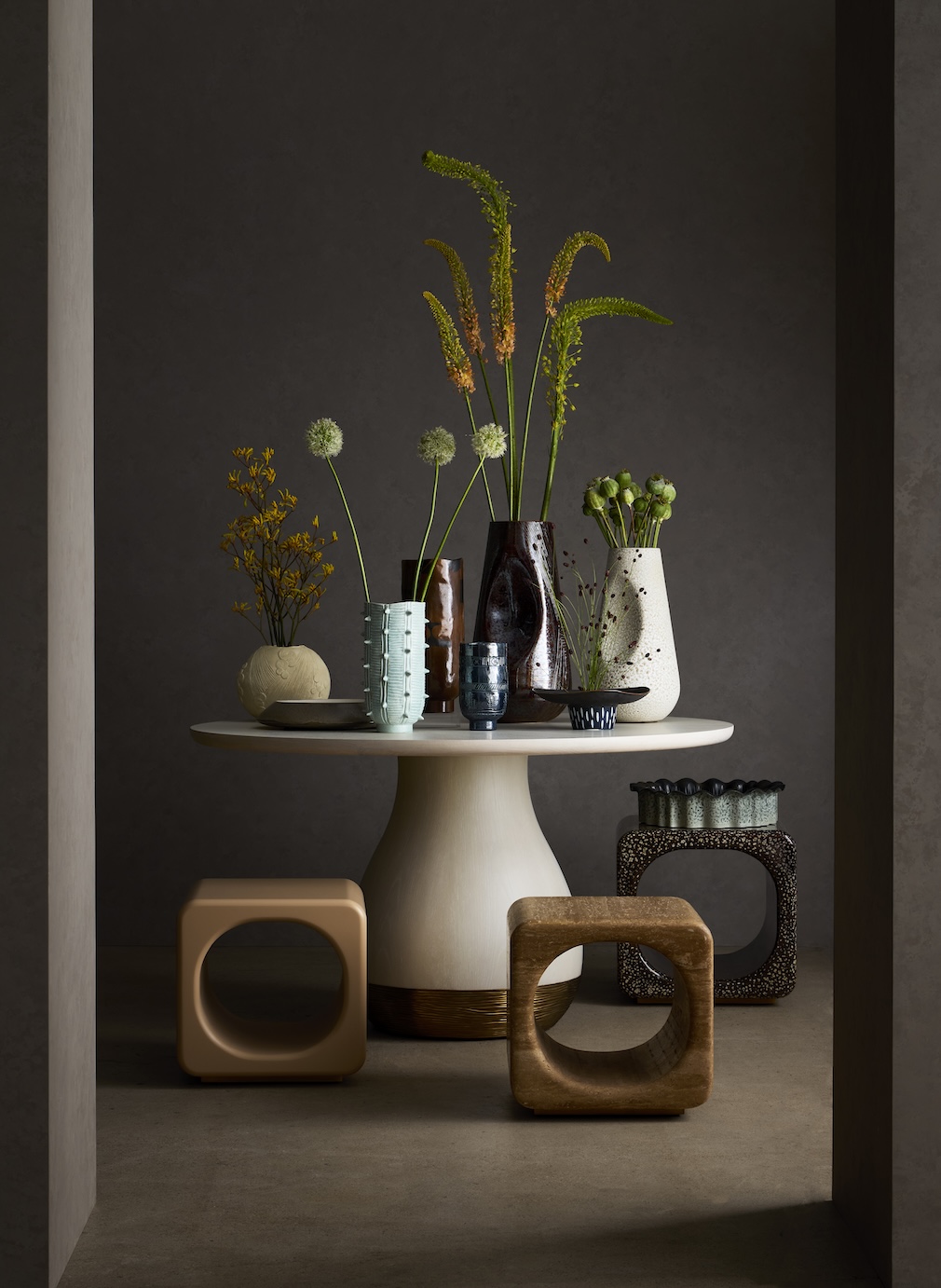
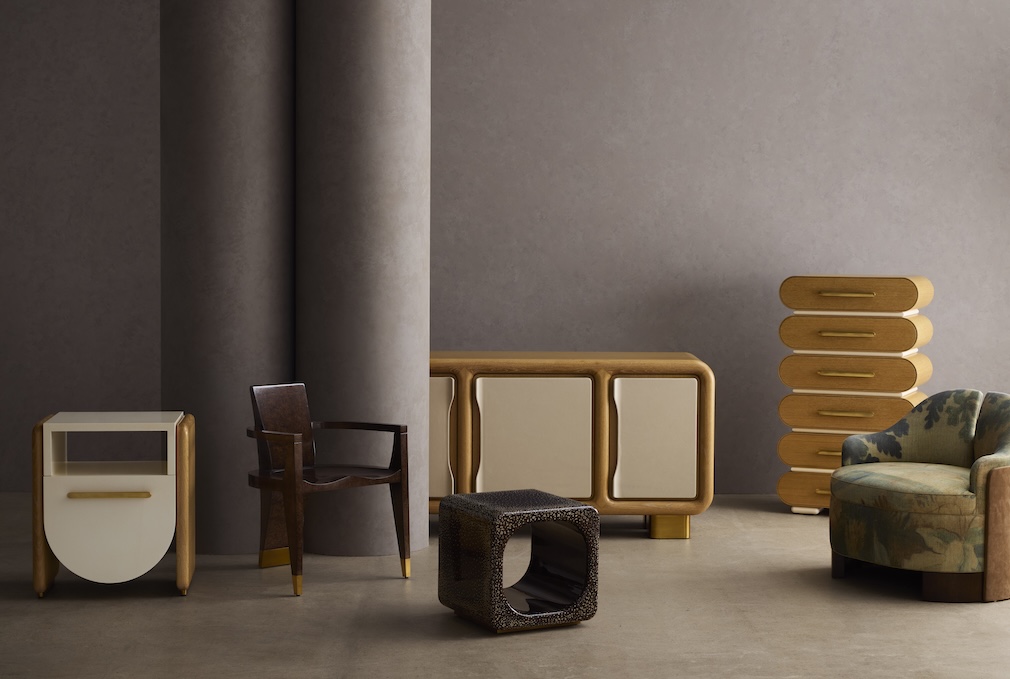
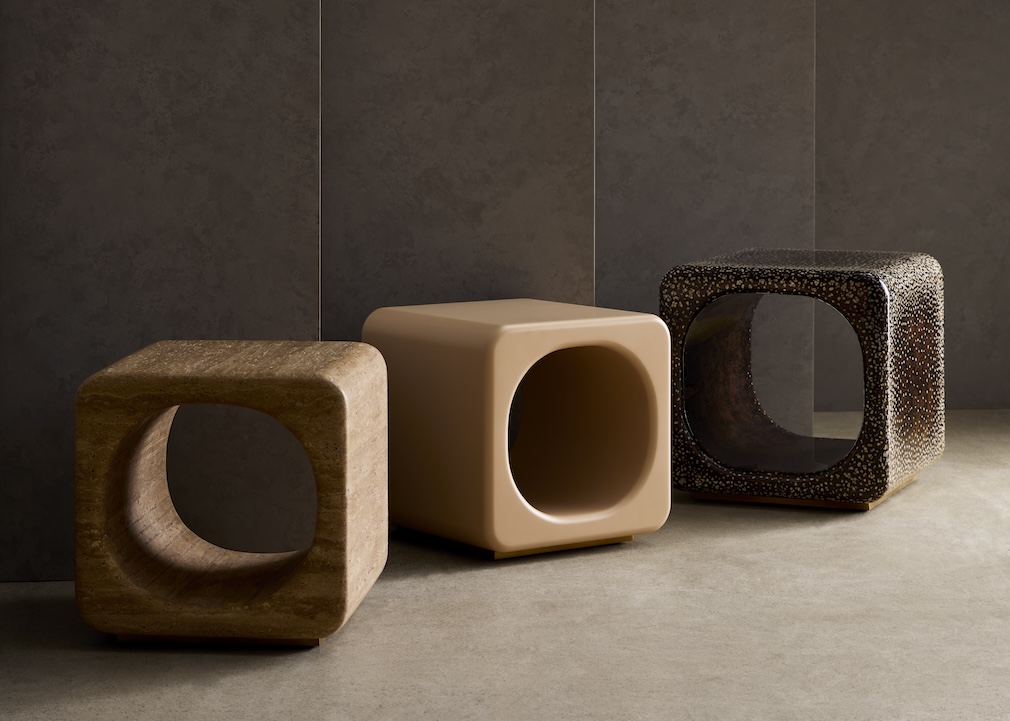
We used a range of methods, from hand-applied techniques to advanced machinery. Materials like lacquered faux parchment, hand-applied eggshell, travertine, burl wood, and straw marquetry were essential, as well as finishes like speckled red glaze and iridescent cream. Crafting each piece required precision, particularly for the travertine spot table, where a channeled aperture was bored through the stone to achieve our desired effect.
RPS: Did you utilize a new technique or technology to conceptualize or create this product? If yes, please share the details.
Yes, we pushed our technical capabilities in Volume II. For example, creating the cantilevered support for the floor mirror and ensuring the stability of the Axis Bench’s thin metal base required innovative engineering solutions. Boring through solid travertine was a particularly challenging feat, demanding specialized machinery to achieve the desired aesthetic while maintaining structural integrity.

RPS: Please describe any challenges that affected the design and perhaps steered you to an entirely new final design?
The construction of certain pieces, like the travertine table and Cupola End Tables with their curved “crib” structures, posed unique challenges. These elements required us to rethink structural support, which led to creative solutions that ultimately enhanced the designs.
RPS: Describe your overall brand DNA and Ethos.
MOUS is committed to transcending traditional furniture design by integrating material exploration and craftsmanship. Our ethos is to create pieces that balance the “yin and yang” of utility and artistry, where each form has both functional purpose and aesthetic appeal.
Like what you see? Get it first with a subscription to aspire design and home magazine.