
This fall, The Selects Gallery presented Threads of Time, an exceptional exhibition uniting the creative visions of iconic American fashion photographer Robert Farber and Delphine Nobili, founder of Atelier Lebuisson, a Parisian textile studio specializing in haute couture embroidery.
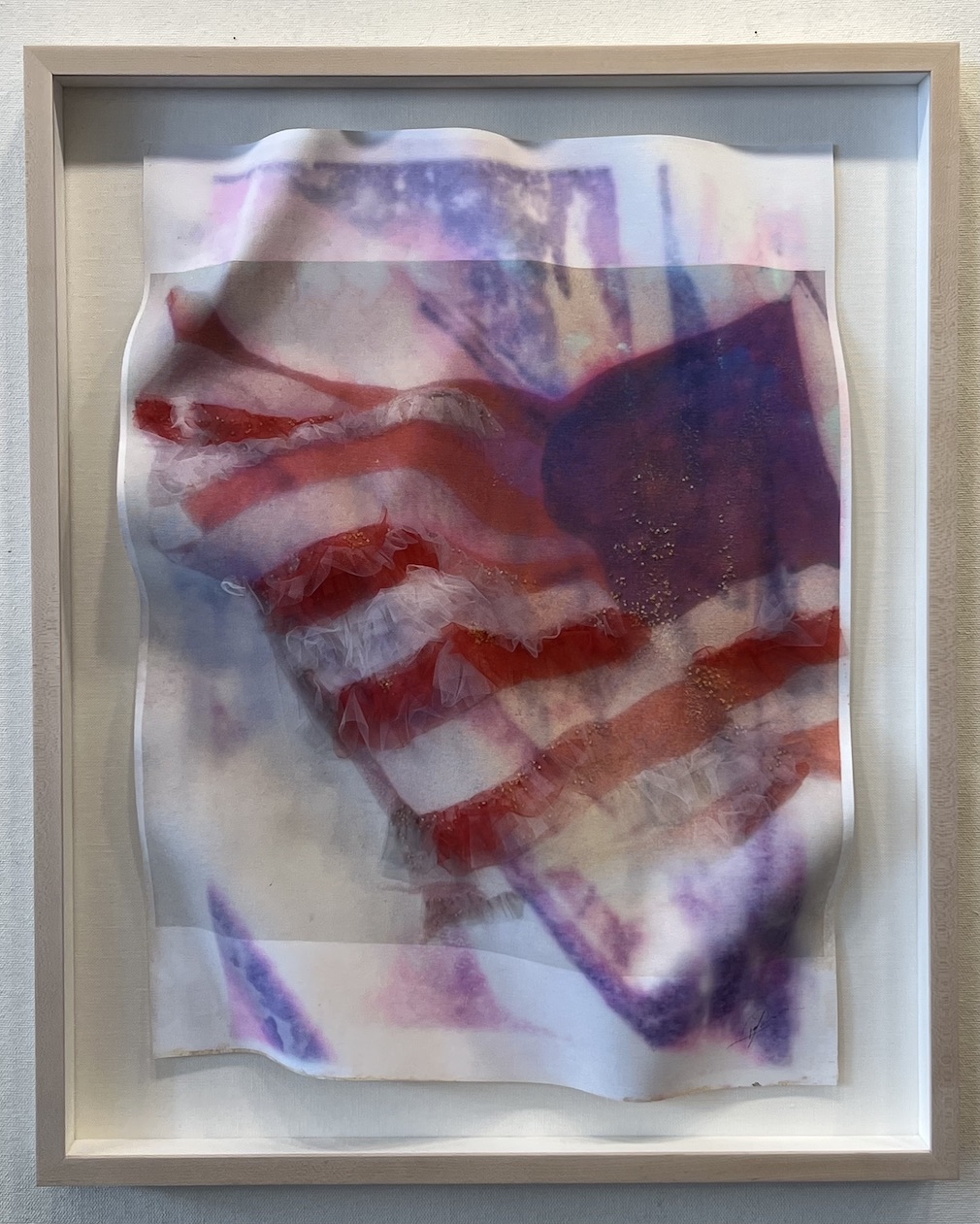
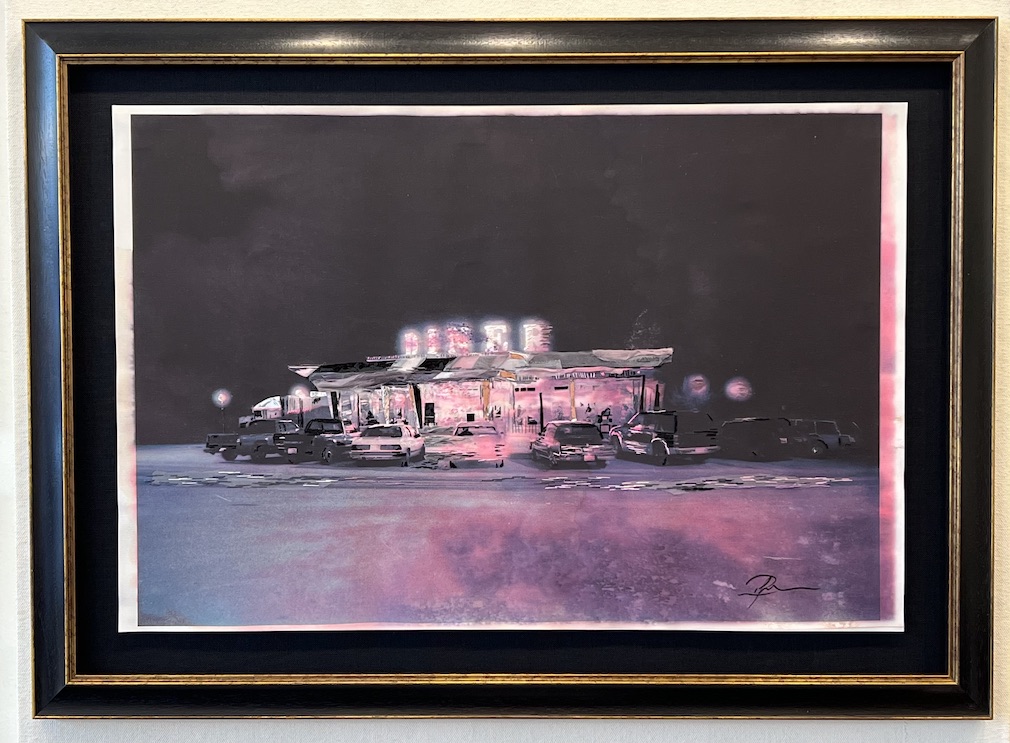
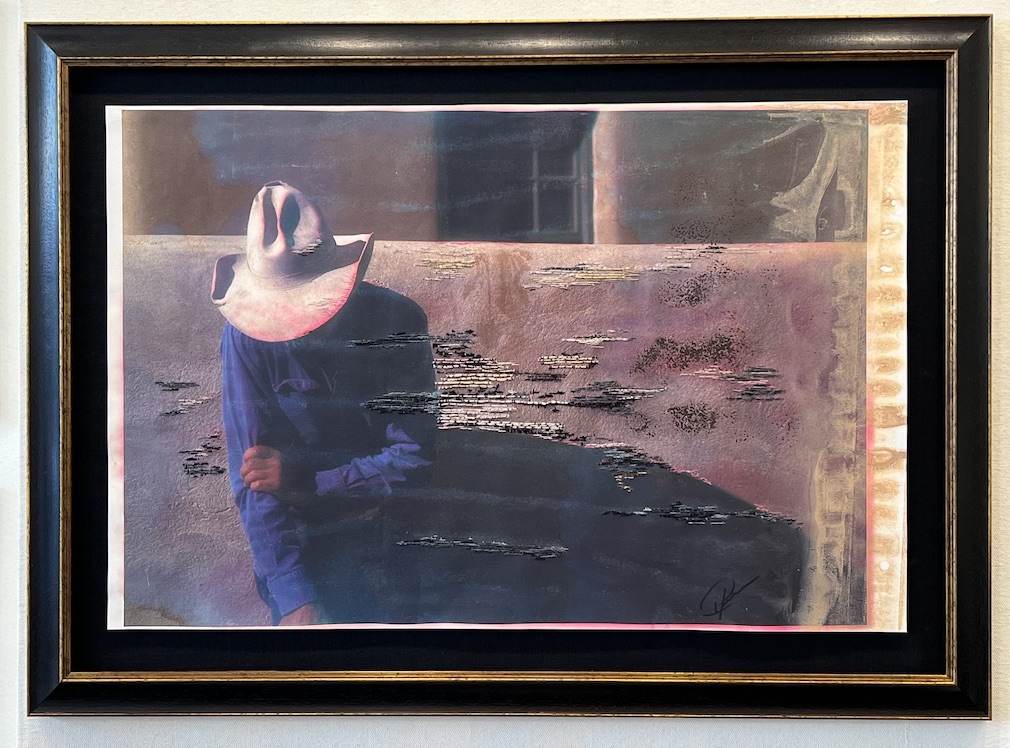
At its heart are three works from Farber’s Wet Series, printed on canvas, and reimagined through the art of hand embroidery by Atelier Lebuisson in France. Carefully selected for their symbolic resonance, these dreamlike photographs — featuring a diner, a cowboy, and an American flag—each represent a defining aspect of American culture.
Marie Audier D’Alessandris, founder of The Selects Gallery, joins us this week to discuss the exhibition.
Raymond Paul Schneider: When did you first start developing this new collection?
Marie Audier D’Alessandris: It all started with a chance encounter when I met Delphine Nobili, the owner of French Embroidery studio Atelier Lebuisson in New York City, in the Fall of 2024. As two Parisian women who share a love of art, we connected immediately. Atelier Lebuisson creates haute couture embroidery for the most exclusive fashion brands in the world, such as Dior, Louis Vuitton, Chanel, and Tiffany, and she shared her dream of embroidering photography. She loved that we work with fashion photographers, who have trained in the highly demanding, creative world of fashion and tend to be masters of their craft. I immediately had a vision that I should show her the work of our artist Robert Farber, as they share a delicacy and sense of fluidity and elegance that would resonate well. Robert Farber is a prominent photographer who has published over 15 books and exhibited in museums. She discovered his Polaroid series we were showing at the time, discovered his books, and loved his work. I introduced them for what would become a truly unique collaboration between photography and embroidery.
RPS: What was the overall timeline from conception to final design?
MAD: From the first work meeting, online, to the exhibition, it took approximately six months.
The fascinating part is that both artists never met in person until the exhibition opening. It all happened online between Robert, currently based in Florida, Delphine, based in Paris, and me, based in New York City. The timeline was never an issue, as there was a mix of mutual respect and curiosity between the two artists. The process was very pleasant and fluid.
RPS: What was your initial inspiration, and where did the idea(s) come from?
MAD: The initial inspiration was to give new life to Robert’s photographic work through the embroidery of Atelier Lebuisson. Robert has a series of works that have already gone through two lives: a major flood in his NYC studio in 2018 affected some of his prints, which evolved from painterly images to watercolor through the effects of water. Instead of destroying them, he loved them and called them the Wet Series. Among that series, we selected three images shot in 2004 for his book American Mood with high symbolic representation of America: a diner, a cowboy, and a flag. Atelier Lebuisson embroidered them to give them a third life.
RPS: Describe your overall creative and design process.
MAD: A powerful set of values drove the project from its inception: cross-border artistic collaboration between a man and a woman from different continents with different artistic practices, who share a heightened sense of delicacy and subdued elegance. Both artists had deep trust and profound respect in the collaboration process. They both wanted the partnership to honor the works’ original lives and to enrich them, creating layers and a new perspective. Robert never guided the embroidery work and discovered the final result at the exhibition. Atelier Lebuisson worked towards staying very close to the universe of the photograph. The result is a very powerful yet incredibly delicate piece of art that transcends its physical elegance and embodies humanity at its best. It is a message of hope and elevation of the soul.
RPS: Did you have a specific audience or theme in mind?
MAD: I have a background in beauty and fashion in marketing, so you would think we work towards a target audience, but we don’t!
The creative process of the gallery comes first and foremost from a place of deep respect for the artists selected, and the ambition to provide access to the work of the best Fashion photographers.
In Europe, and in Paris in particular, you won’t find a cool, elegant and cultured interior without photography. Photography is part of the culture; there are many institutions and galleries dedicated to fine art photography. It is still comparatively niche in the U.S., but it is growing, and many art institutions are increasingly acquiring and promoting photography. Our collectors are well-traveled and cultured; they like dimension and layers. Our work is limited edition, so it is very exclusive.
Photography adds an edge, layers a story, and creates a powerful, lasting emotion. It makes the interior unique and personal.
RPS: What methods, tools, and materials did you use to develop and prototype this design?
MAD: Every step was very intentional, handmade with the best quality and attention to detail. This is haute couture applied to fine photography.
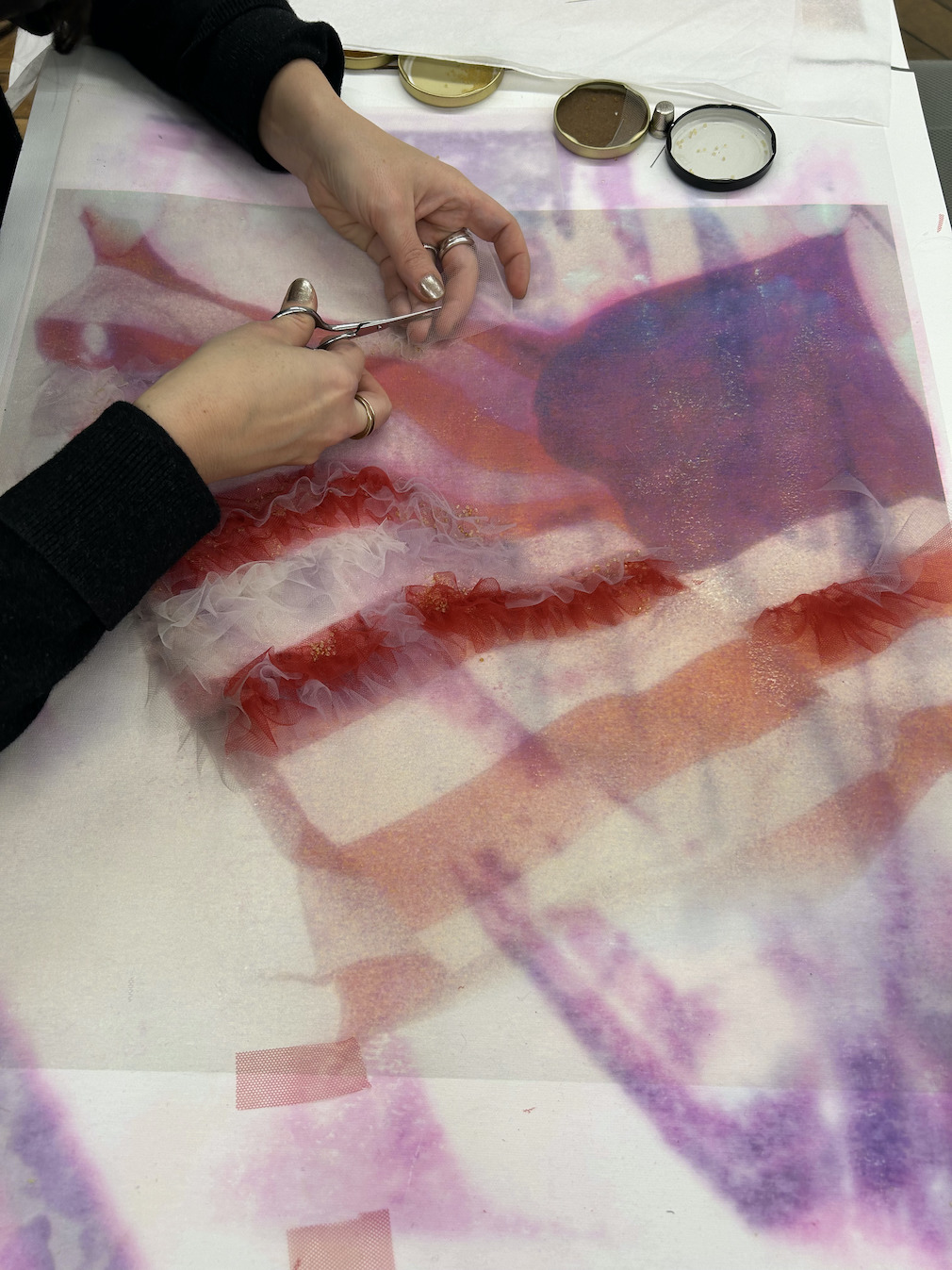
The photographs were printed with archival inks on canvas by Robert himself using a giclee process. He hand-signed each piece, which was then shipped to Atelier Lebuisson in France. Atelier Lebuisson embroidered each piece by hand and selected the materials based on each image.
For the Diner piece, they wanted to reflect the diner’s vinyl and metallic feel and reinforce the deep blacks of the image. They used silk and cotton threads, metallic silver vinyl finish, and hand-painted organza fabrics and used the stem stitch, French knots and satin stitch techniques.
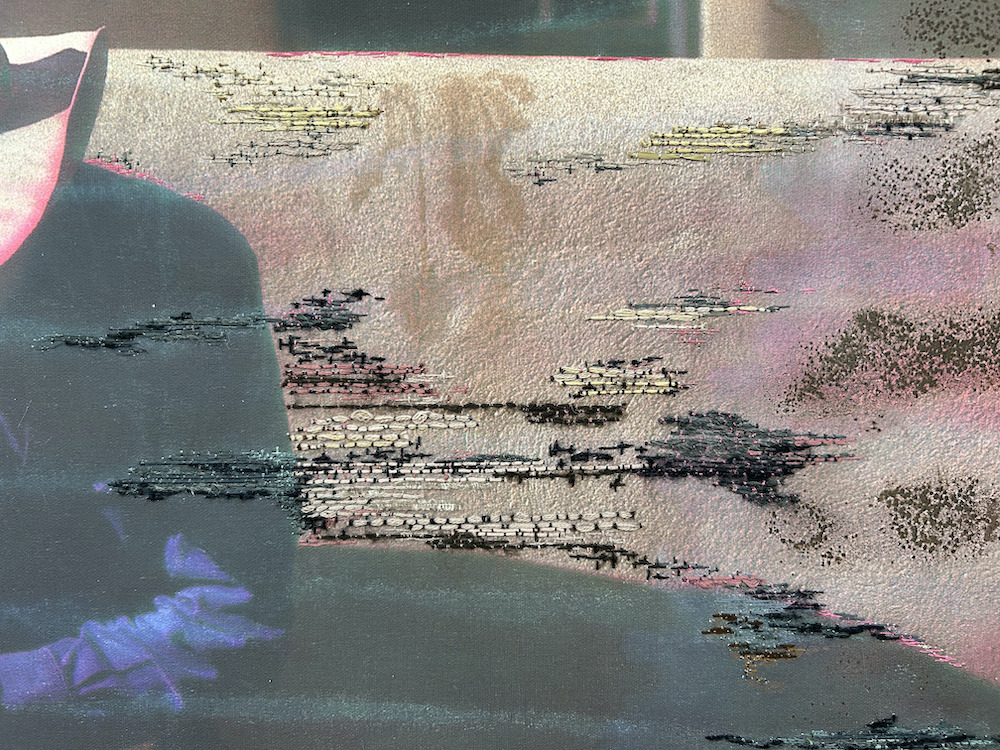
For the Cowboy piece, they wanted to honor the natural environment pictured in the image and used raffia, natural wool threads from Aubusson, mohair, silk and cotton threads through stem stitch and drawn thread work.
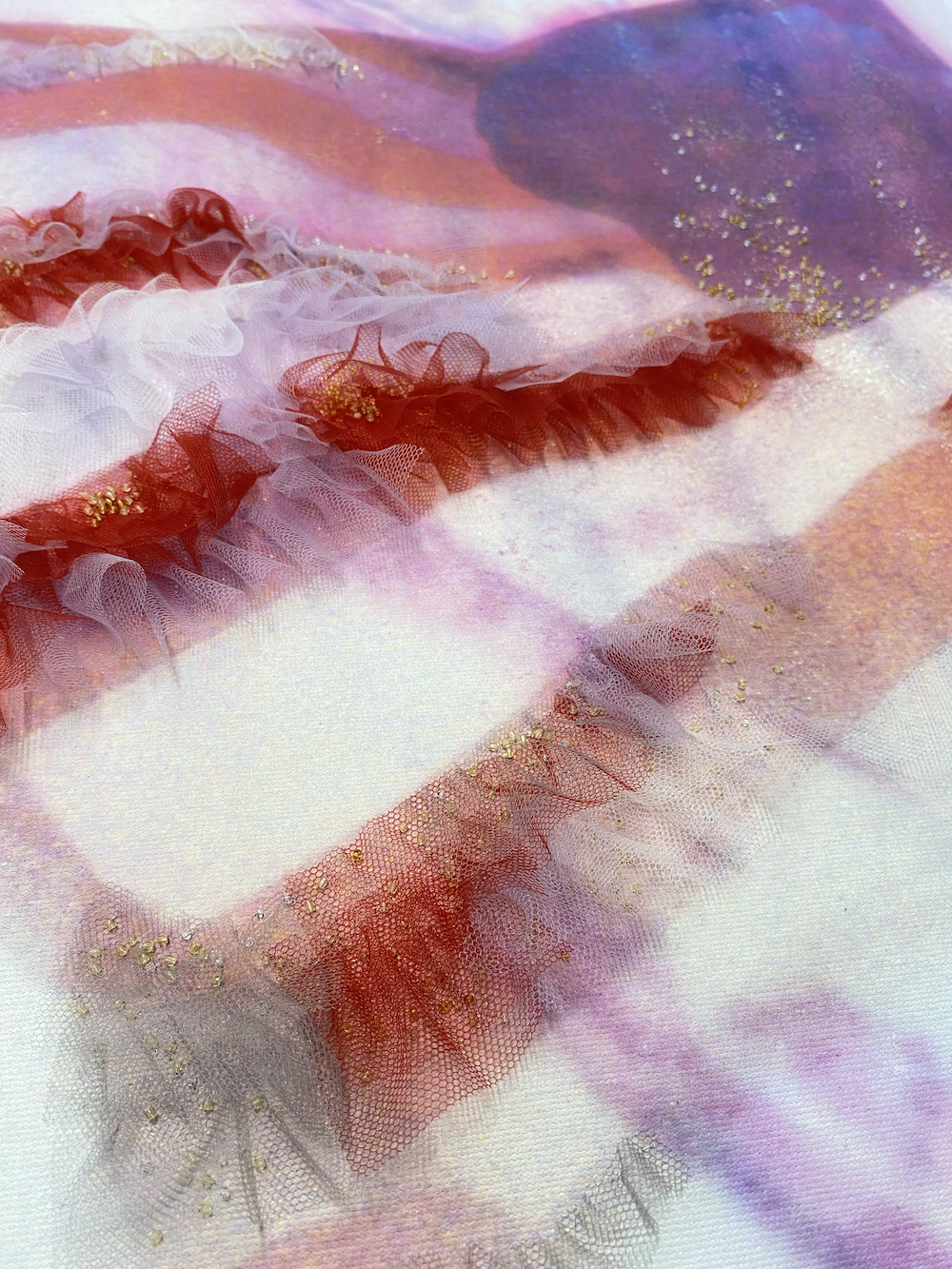
For the Flag, the goal was to bring a sense of lightness and femininity with hand-painted tulle fabrics, glass beads through fabric manipulation and hand embroidery.
The artworks were then framed by hand in New York City by a master framer, back-mounted on linen, without glass. The Flag was mounted using a very demanding technique to create the wave effect of a flag floating in the wind.
RPS: Did you use any new techniques or technologies to conceptualize or create this product? If so, please explain.
It requires all the know-how of a haute couture atelier to embroider photography without creating any holes and without disrupting the integrity of the image. No technology, but mastery in the craftsmanship and artisanship.
RPS: Were there any challenges that influenced or changed the final design?
The pieces are one-of-a-kind, so Atelier Lebuisson had to work with extreme care and iteratively, keeping the uniqueness of each piece in mind while maintaining the ensemble.
Like what you see? Get it first with a subscription to aspire design and home magazine.