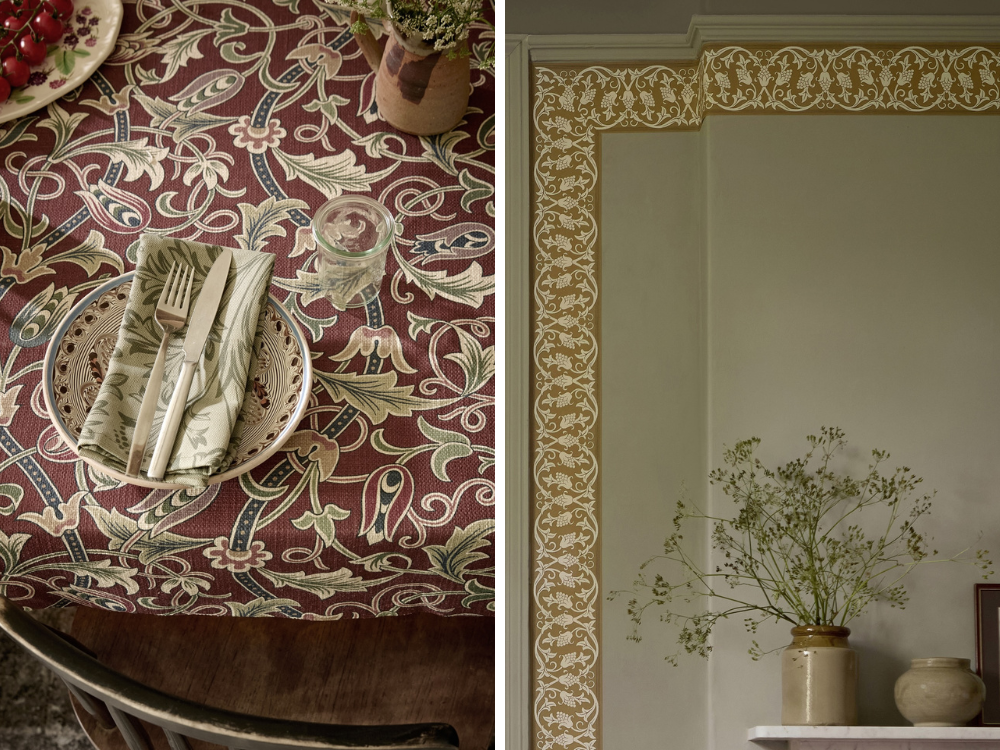
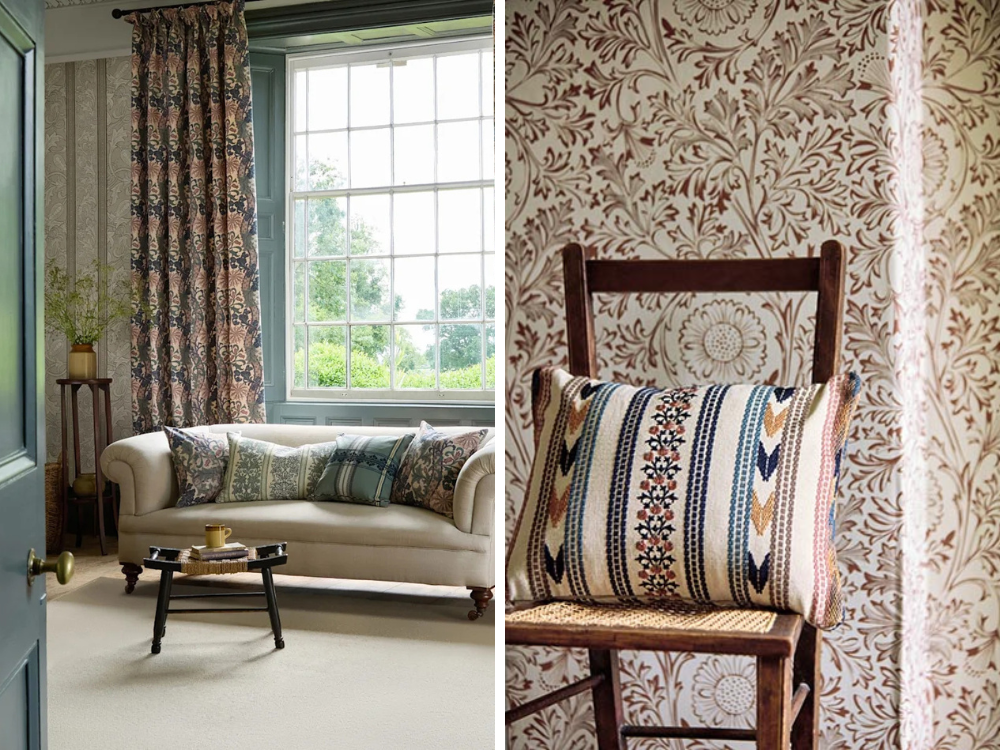
The Huntington, a world-renowned cultural and educational institution, holds one of the top three William Morris archives in the world, with hundreds of original, unfinished designs by Morris and his protégé, John Henry Dearle. In their first major public-facing design partnership, The Huntington has collaborated with Morris & Co. to release The Unfinished Works — featuring 26 19th-century designs by Morris and Dearle, produced for the first time as wallpaper, printed and woven fabrics, borders, embroideries, and jacquards, using original notes, methods, and color references.
Claire Vallis, design director of Sanderson Design Group, joins us this week to discuss how the collaboration came to fruition.
Raymond Paul Schneider: When did you first start developing this new collection?
Claire Vallis: We started talking to The Huntington around three years ago, discussing the possibility of this series, which was thrilling as it was a relative unknown what we would discover until we were granted access to the archive. Once we saw the vastness of what The Huntington held, we knew this collaboration would be very special and a big moment for Morris & Co., as the original company founded by William Morris.
RPS: What was the overall timeline from conception to final design?
CV: This first series has taken around two years following initial discussions. There is much more to come as well. Our work with The Huntington continues, and we’re very excited about the next designs that may come to light in the series.
RPS: What was your initial inspiration, and where did the idea come from?
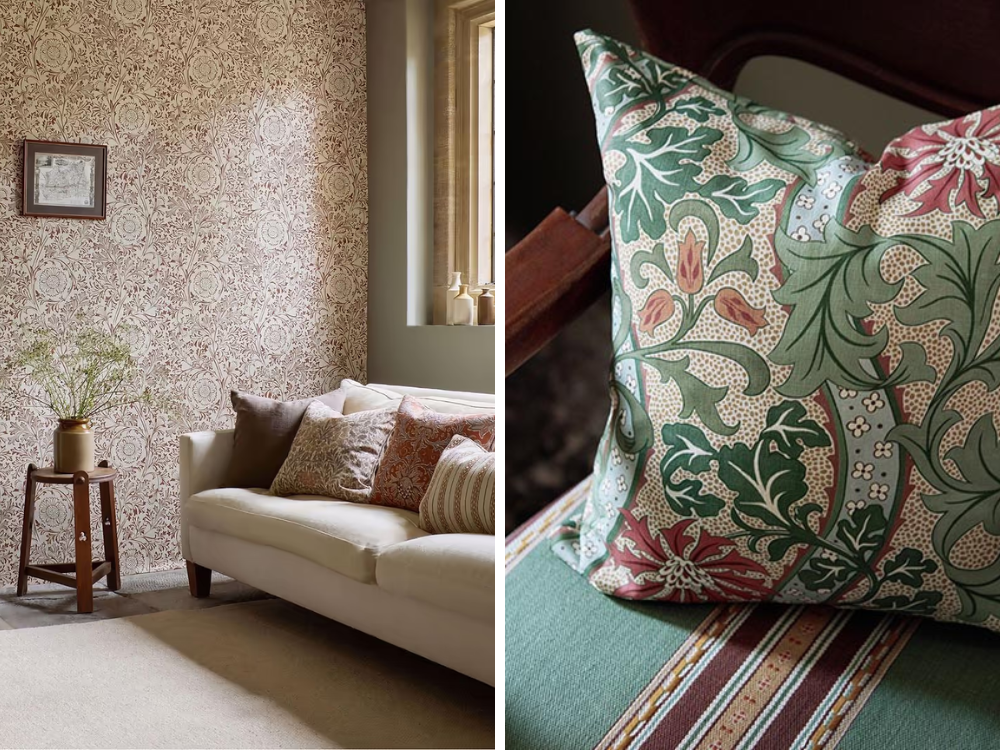
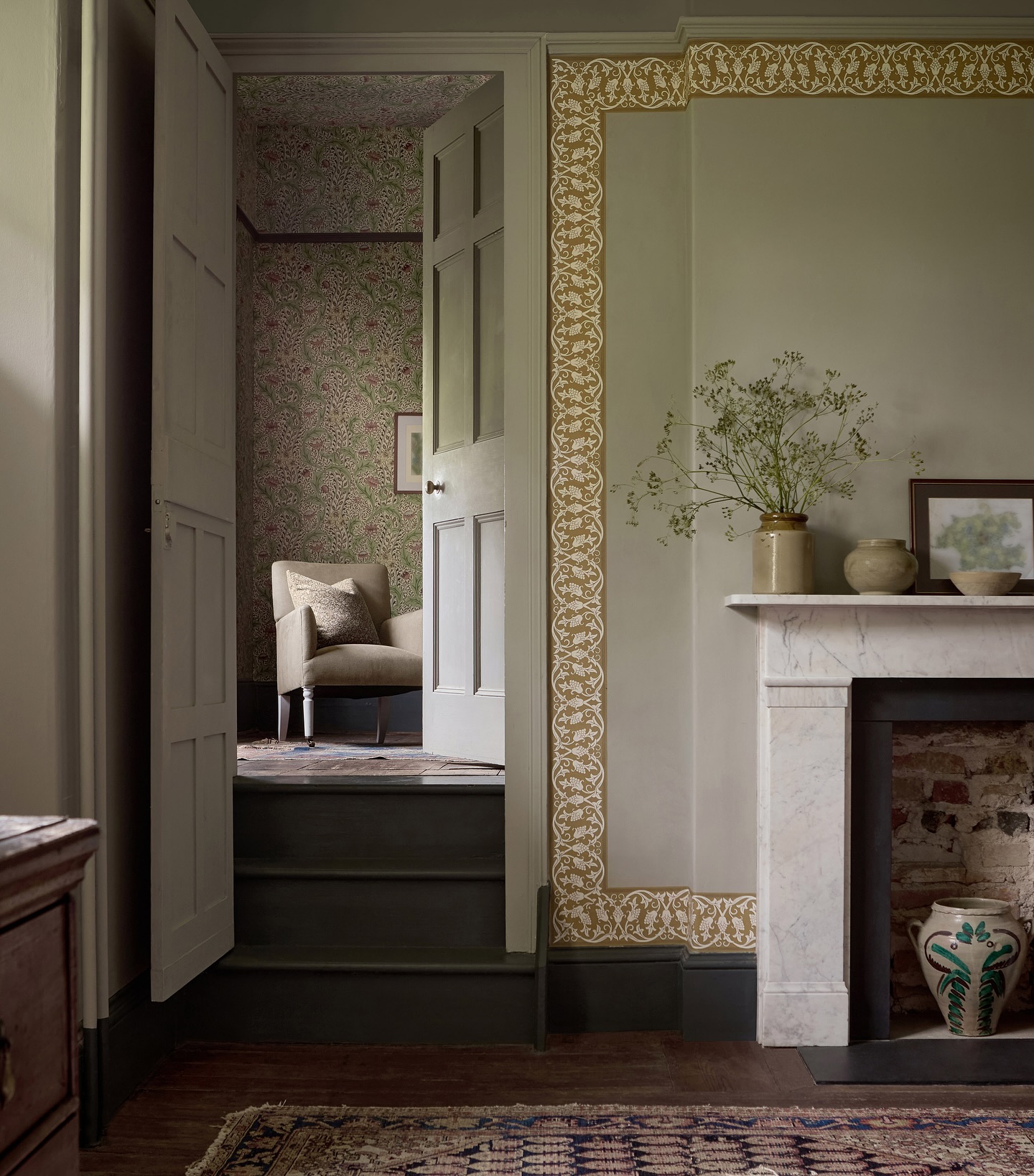
CV: Naturally, it was the vast archive of sketches and artworks that The Huntington held. We were so inspired by the uncovered work and the period in which it was all designed, and eager to get started on seeing these designs through to completion. The archive has a variety of archival pieces, some sketches, and some more finished artworks intended for different purposes. Borders for carpets have been translated into finished, repeated fabric and wallpaper, including stripes, and it has been a thrill to see these come to life in new iterations, bringing borders and stripes to the Morris & Co. Portfolio once more.
RPS: Describe your overall creative and design process.
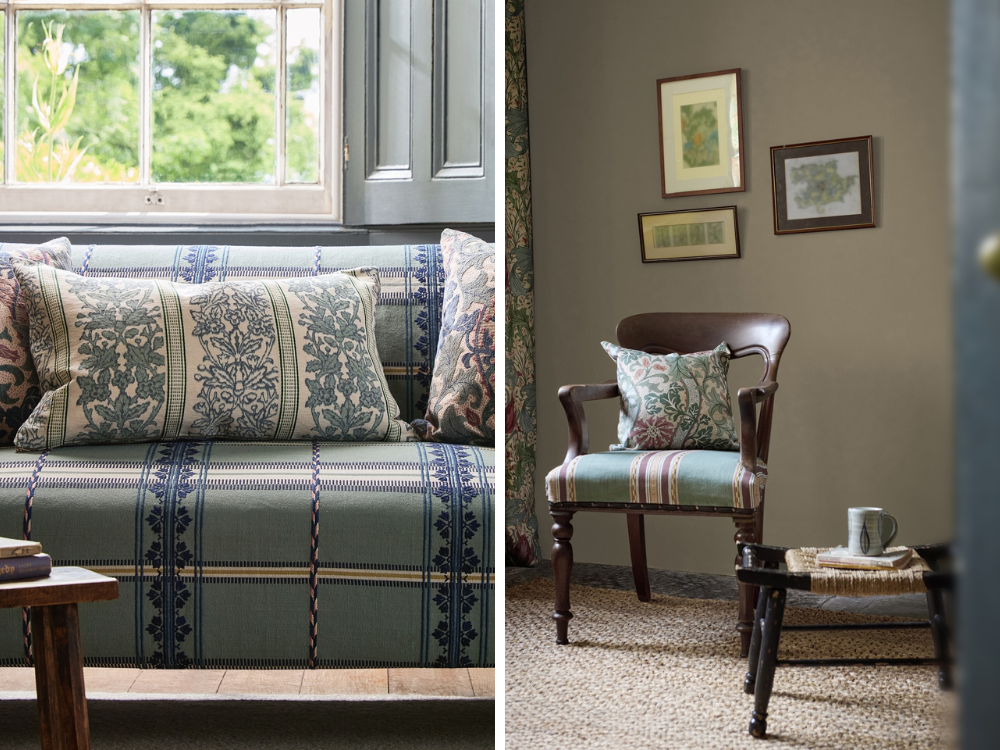
CV: Our job was to take these sketches to completion, honouring the original documents and thoughtfully bringing them into the 21st century. In this first iteration, we’ve kept them as authentic as possible and started experimenting with techniques like warp printing, taking elements for stripes. The stripes have a global textile feel, which is very much what’s happening in textile design.
As the company founded by Morris, it is our honor to work with these original artworks. We’re already developing them using different techniques — you can see this emerging in the special handcrafted book The Unfinished Works.
RPS: Did you have a specific audience or theme in mind?
CV: It was important to us that we didn’t create a theme from these designs. They stand beautifully as individual designs, brought together by that familiar handwriting. The influences of Persian design show that these sketches were perhaps created during a particular period, but The Unfinished Works isn’t bound by a theme. In terms of the audience, we hope everyone can embrace and enjoy something from this series, embodying Morris’s highest-held value that good design should be for all to enjoy.
RPS: What methods, tools, and materials did you use to develop and prototype this design?
CV: We have our unique and talented artists in the studio who took on different designs depending on their handwriting to draw out the best of each sketch, document, or artwork. We also used our archive for reference points to honor the handwriting where possible. We used our vast resources to ensure that the designs were finished and the repeats were created as intended by Morris, Dearle, and the collective of artists of that period. We also coloured the series using our archive, drawing palettes from archived books.
RPS: Did you use new techniques or technologies to conceptualise or create this product?
CV: What’s incredibly exciting about the collection at The Huntington is the variety of sketches and artworks, their iterations, the periods in which they were produced and by the hands of which artists.
At Morris & Co., our heritage is the design anchor in all we do, not only through our extensive archive and work with institutes like The Huntington, but also our exceptional printing abilities. With our historic British factories, producing printed fabric and wallpaper, we can harness conventional techniques with digital printing advancements for the most remarkable finishes.
We are committed to this lovingly crafted blend of old and new, and The Unfinished Works demonstrates that through our work in our factories and with specialist mills. Techniques like warp printing and tapestry weaving are brought to the fore in this series, resulting in incredibly special fabrics and finishes that must be seen and touched to be believed.
Morris famously used discharge printing, so we try to honor his preferred technique by creating things in the same way. We have a vast amount of technology that wasn’t available then, but we use it now to explore as creatives. Persian Scroll is an example of the overdyeing technique that has produced beautiful results. Oak & Blossom is a beautiful warp-printed ikat, and Persian Tulip Embroidery uses dissolvable foam where fabric paper is used in the stitching. Before overdyeing, color pools across the cotton threads for a rich, aged, artisanal effect with a sculpted surface. This technique echoes Morris’s innovative spirit.
All weaves in the series have a heavy tapestry quality. Many of these designs were originally designed for carpet, so we’ve honored that while moving the design forward. Additionally, Surflex printing creates the look and feel of hand block printing in wallpapers.
RPS: Were there any challenges that influenced or changed the final design?
CV: Each unfinished sketch was designed for a different end product at a different time, so we’ve taken them all to their natural conclusion, rather than forcing them into a specific style. Every design sits together but stands individually. We were committed to honouring these sketches, and that initial challenge has rendered some really beautiful results.
RPS: Describe your brand’s overall DNA and ethos.
CV: As a political theorist, publisher, environmental campaigner, poet, and outstanding designer, William Morris (1834–1896) was one of the single most influential figures of the nineteenth century, founding Morris & Co. (originally Morris, Marshall, Faulkner & Co.) in 1861. Under his direction, the company grew into a flourishing and fashionable Arts & Crafts decorating business renowned for wallpapers and textiles, becoming part of Sanderson & Sons in 1940.
Today, we build on that proud heritage with the inventive reimagining of Morris & Co. classics, upholding the impeccable standard of craftsmanship that has defined all Morris & Co. products since inception. Guided by William Morris’s creative intuition, designs are inspired by treasures in the Morris & Co. archive, which houses historical logbooks, samples of each wallpaper, printed and woven textiles, and original wooden printing blocks.
Like what you see? Get it first with a subscription to aspire design and home magazine.