


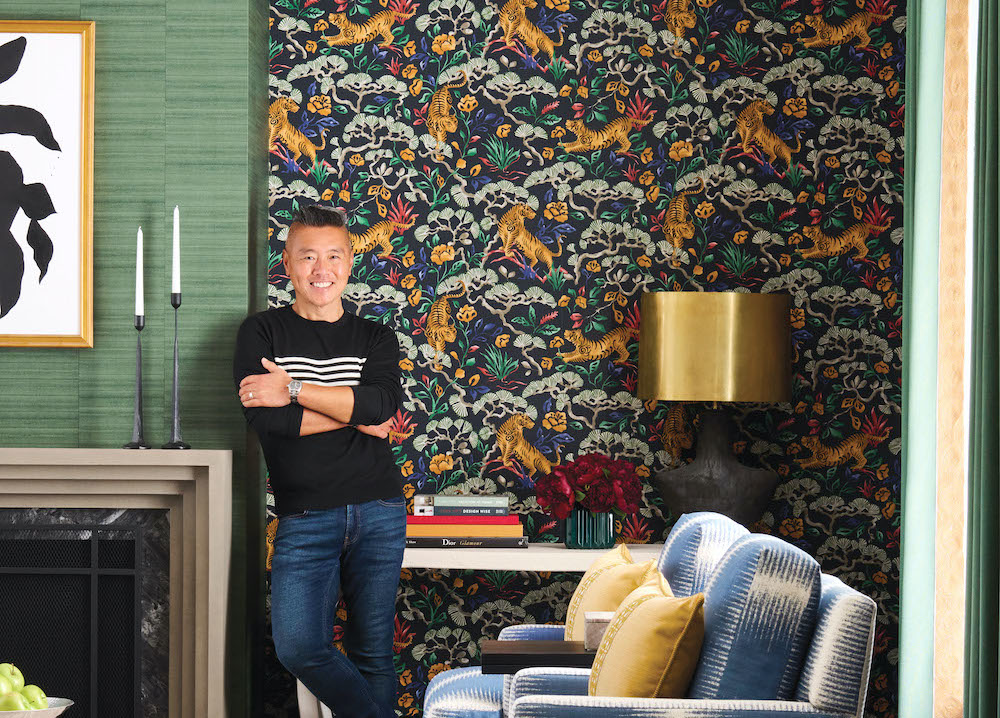
From bold and brightly hued to subtle, neutral palettes, Vern Yip’s latest collection of wallcoverings for Trend is all about harnessing pattern, color and texture. Vern joins us this week to discuss how Vol. II of this collection came to life.


Raymond Paul Schneider: What was the overall timeline from conception to achieving the final design?
Vern Yip: This latest wallcovering collection was first seriously worked on about eighteen to twenty months ago, but I had been collecting ideas for a long time before that.
During [that time], the first several months are spent determining and developing the main concepts and designs. We then progress into the artwork stage, which is about a four-to-six-month process. After an often difficult editing process, we go into the physical sampling stage, which can take another four to six months, followed by another difficult editing process. The final product usually then arrives about four to six months after that.
RPS: What was your initial inspiration, and where did the idea(s) come from?
VY: My ideas usually come from my travels and my attempts to problem solve. I think it’s important to design products that manage to be both fresh and timeless aesthetically. Additionally, I love figuring out how to deliver what the marketplace lacks but desperately needs. I’m constantly dialoguing with our sales team, other designers, and homeowners to figure out the next collection.


RPS: Please describe your overall creative and design process.
VY: For me, it’s important to constantly learn, expand my mind, and expose myself to new cultures and ideas through reading, travel, and staying plugged into everything… not just the design world. Of course, art, music, fashion, and architecture are important to stay on top of… but I also think it’s important to be well-informed on history, literature, science, politics, and current events. I then usually compile lists of ideas that come to me and create sketches to best capture the overall concept, sending them periodically to the Fabricut team even if we’re not currently working on a new collection. It helps for everyone to know what I’ve been thinking even if we don’t have a current need for ideas. So many internal experts bring their valuable opinions to the table, and I love vetting my thoughts through them. Being challenged, and seeing if you can justify an idea, is a wonderful way to ensure you’re pursuing value.

RPS: Did you have a specific audience or theme in mind?
VY: I love the challenge of designing products that solidly deliver on design, quality, and attainability. That’s important to me because I want to provide accessible tools for everyone to see themselves manifested through the design of their homes. When a home is tailored to you both functionally and aesthetically, it has the power to help you lead your best possible life. Also, I live in a two-career household with two teenagers and seven large dogs… but I still want my home to be beautiful and reflective of all of us. I appreciate the challenge of delivering products for busy families like mine, so that is also often an inspiration.
RPS: Please describe the methods, tools, and materials you used to develop and prototype this design.
VY: Staying informed and plugged in, on a broad array of topics, is the most important starting point. Learning should never stop if you’re a creative person whose job it is to constantly put new, useful ideas out into the universe. I also take notes on my phone constantly, capture plenty of photos of details that inspire me, and always keep a sketchbook with me. Many of these ideas often make their way into the artwork and prototype stage after being vetted by the talented group of folks I work with at Fabricut. It’s also a thrill to see something successfully make it to a final collection edit.
RPS: Did you utilize a new technique or technology to conceptualize or create this product?
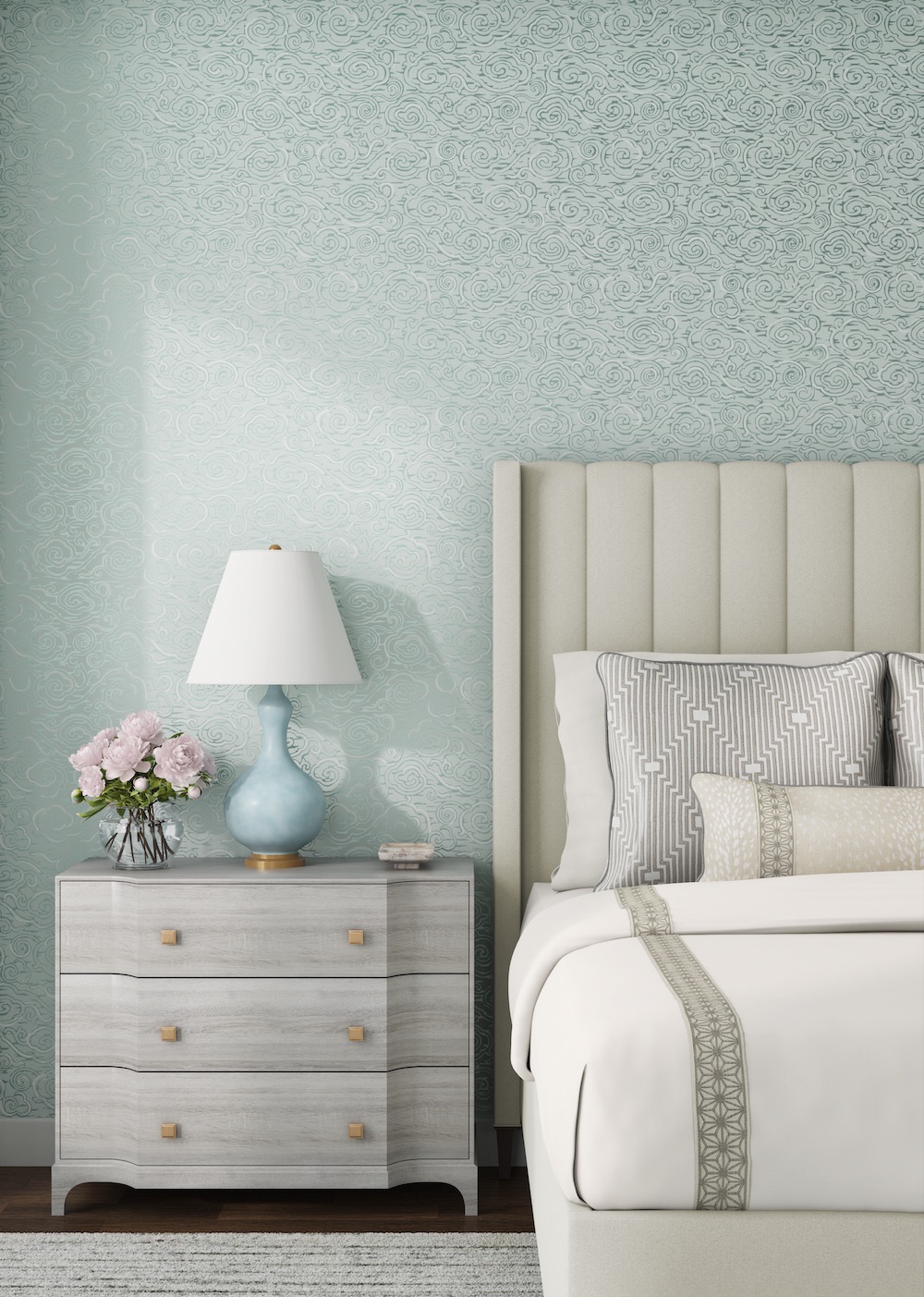
VY: I think it’s always important to understand what advancements in manufacturing are available when developing a new collection. Figuring out how to take advantage of those advancements, to deliver products that you might not have been able to accessibly deliver beforehand, is always so interesting and thrilling. When you try to design collections that deliver on design and quality more attainably, it’s always wonderful to exploit manufacturing developments. In this latest wallcovering collection, we took advantage of new opportunities in embossing and metallic ink application, as well as adding even more durability.
RPS: Please describe any challenges that affected the design and perhaps steered you to an entirely new final design?
VY: Sometimes designs that look great at the art stage don’t necessarily translate to the sample, even after multiple iterations. But when it doesn’t initially work out, a new path is sometimes forged. In this latest collection, we worked hard to develop a parchment-look wallcovering with all the variations of the natural product but made more accessible. After the artwork was perfected, we couldn’t achieve the luxe texture and feel we were seeking in a vinyl fabrication… so we pivoted to an incredible fibrous paper fabrication instead, which necessitated expanding the scale of the design. The end product, with the larger scale parchment design, is incredible and so luxe-looking while still staying true to our foundation of accessibility.

RPS: Describe your overall brand DNA and Ethos:
VY: I love to problem-solve because the world doesn’t need more new products just to provide a redundant version of what already exists. We all benefit from a problem-solving mentality. For me, the brand DNA must always deliver high quality and high design at accessible price points. From an aesthetic standpoint, I always aim for the confluence of fresh and timeless, which is quite difficult. It’s easy to deliver fresh designs and it’s equally easy to deliver timeless designs. It’s incredibly difficult to find the sweet spot where fresh and timeless come together, but I think it’s invaluable in guiding how we beneficially add to the big picture.
Click here to see more of our “Anatomy of a Design” series.
Like what you see? Get it first with a subscription to aspire design and home magazine.