

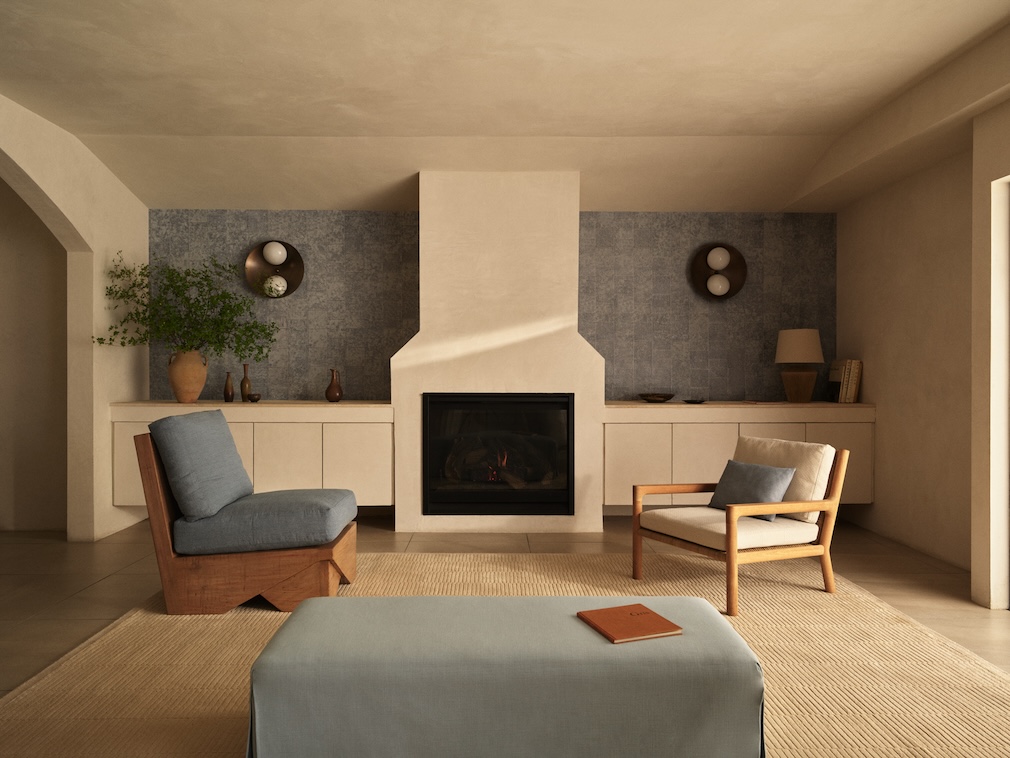
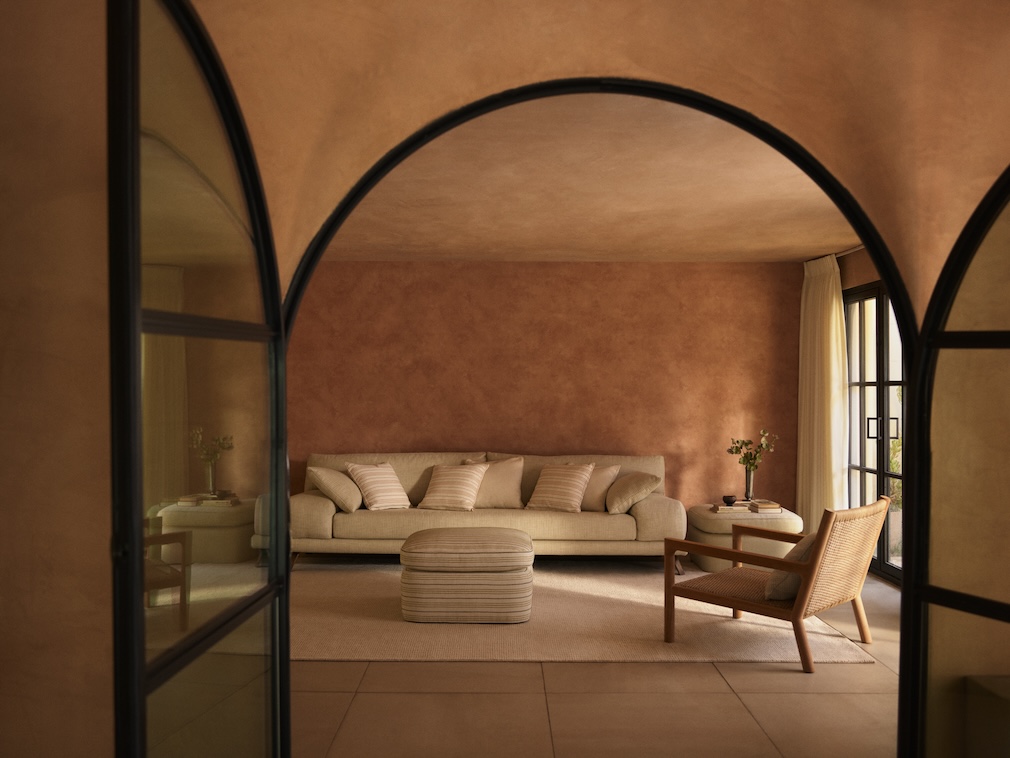
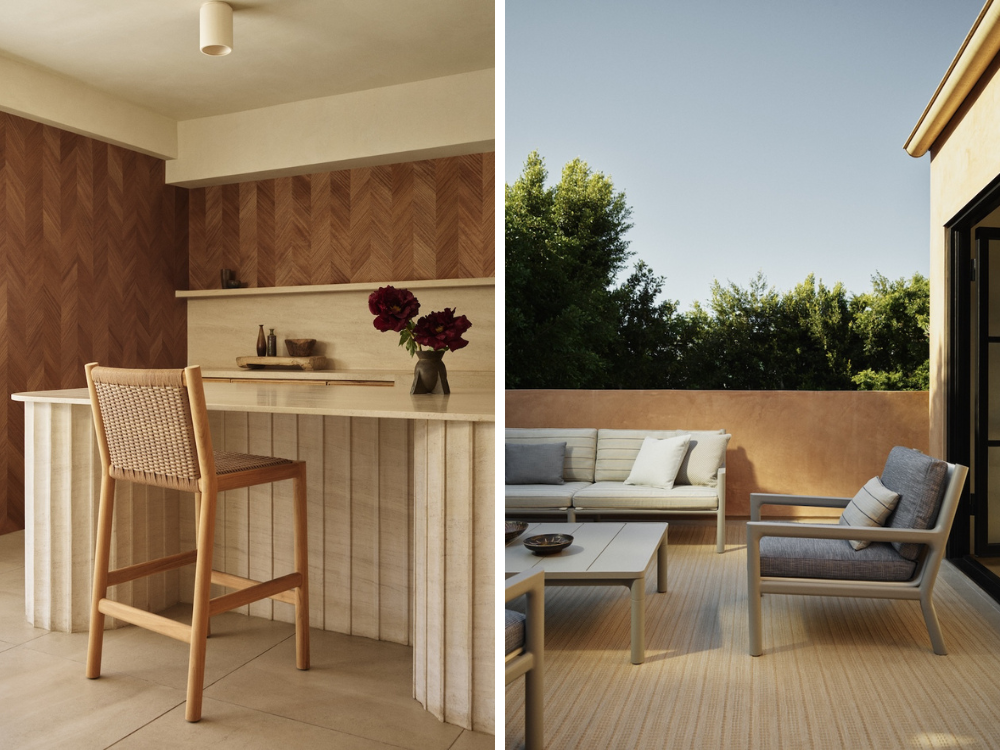
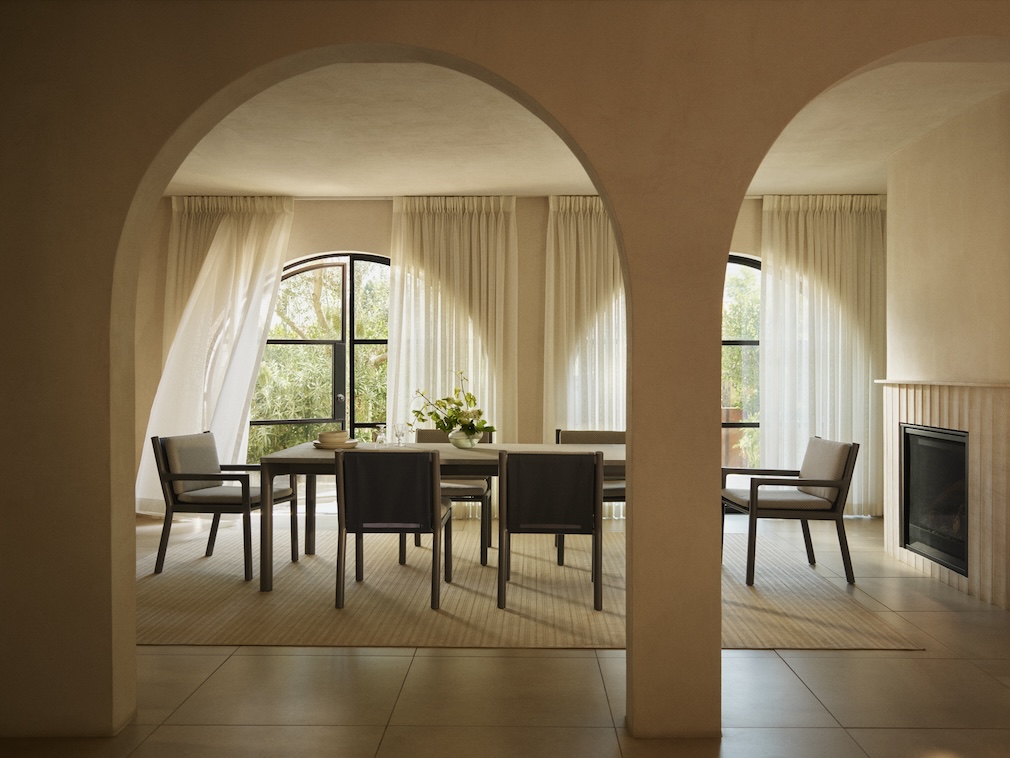
Perennials and Sutherland by Vincent Van Duysen is the brand’s newest collection, and includes outdoor furniture, luxury wallcoverings and 100% solution-dyed acrylic fabrics and rugs.
Vincent joins us this week to shed some light on the year-long process designing the collection.

Raymond Paul Schneider: When did you first start developing this new collection?
Vincent Van Duysen: We began working on the collection about a year ago. It started quite naturally, almost as a continuation of the energy from our previous collaborations. There was a shared desire to go deeper, to explore a richer textile universe together. From there, the project grew little by little, guided by conversations, material trials and the simple pleasure of discovering what these textures could become.
RPS: What was the overall timeline from conception to final design?
VVD: The entire process unfolded over the course of a year. It was not rushed. We allowed ourselves the time to understand each material, to revisit prototypes, and to let the textures mature. Some ideas appeared quickly, others needed months of refinement. Looking back, the rhythm of the process mirrored the spirit of the collection itself, calm, thoughtful and grounded in a very tactile exploration.
RPS: What was your initial inspiration, and where did the idea(s) come from?
VVD: The inspiration came from my long-standing fascination with tactile materials. I’ve always been drawn to surfaces that carry a quiet presence, textures you instinctively want to touch. This led me to think about the architectural language I work with every day, soft reliefs, subtle shadows, rhythms that come from stone, plaster, or raw textiles. I wanted to translate these sensations into fabrics and wallcoverings, not as patterns, but as atmospheres. Something that feels intimate, natural and deeply connected to how we experience a space.
RPS: Describe your overall creative and design process.
VVD: The process always begins with touch. I need to feel the materials before anything else. Small fragments, loose fibres, early weavings. They trigger sketches and ideas about how a texture might inhabit a room. From there, everything becomes a dialogue. Between intuition and technique, between what feels right in the hand and what works in a larger architectural context. Together with the Perennials team, we spent a lot of time adjusting the weaves, exploring densities, and testing how light interacts with each surface. Prototyping was essential. We looked at the samples in different moments of the day, comparing how a nuance shifts from morning light to evening shadow. Slowly, the collection found its shape, discreet, tactile and emotionally present.

RPS: Did you have a specific audience or theme in mind?
VVD: I imagined people who crave calm, textured spaces, places that don’t try to impress, but simply feel good to live in. The theme was always about subtlety and atmosphere. These textiles are not meant to dominate a room; they are there to soften it, to bring warmth, to create a sense of quiet sophistication. Whether in a home or a hotel, I wanted the collection to offer a feeling of comfort and grounding, something you notice more with time than at first glance.
RPS: What methods, tools, and materials did you use to develop and prototype this design?
VVD: Everything began with materials in their most humble form: fibers, textures, small samples that evoke a mood more than a finished idea. I laid them out, combined them, compared them, and gradually a direction emerged. From there, I sketched patterns and rhythms that could translate my architectural sensibility into textiles. The real work happened in the dialogue with Perennials. Together, we refined the weaves, adjusting scale, tension, and density until each texture felt both expressive and calm. We produced many prototypes and reviewed them in different lights, touching them, folding them, sometimes discarding them entirely and starting over. The materials, from performance yarns to more complex constructions, were constantly tuned to find the right balance between softness, durability, and emotional depth.
RPS: Did you use any new techniques or technologies to conceptualize or create this product?
VVD: What felt new was not a single technology, but the way we merged craft and performance. We pushed certain weave constructions further than I had imagined at the beginning, finding ways to introduce relief and nuance into textiles that must also be extremely durable. This is where the collection feels innovative to me, in the harmony between emotional tactility and technical resilience.
RPS: Were there any challenges that influenced or changed the final design?
VVD: Yes, of course. One of the biggest challenges was restraint. Some early prototypes had too much presence, others felt too quiet. Finding the right equilibrium, where the texture enriches the space without overtaking it took time. Another challenge was translating my architectural sensitivity into high-performance materials. These constraints forced us to be precise, to refine every detail, and ultimately gave the collection the calm, grounded identity it has now.

RPS: Describe your brand’s overall DNA and ethos.
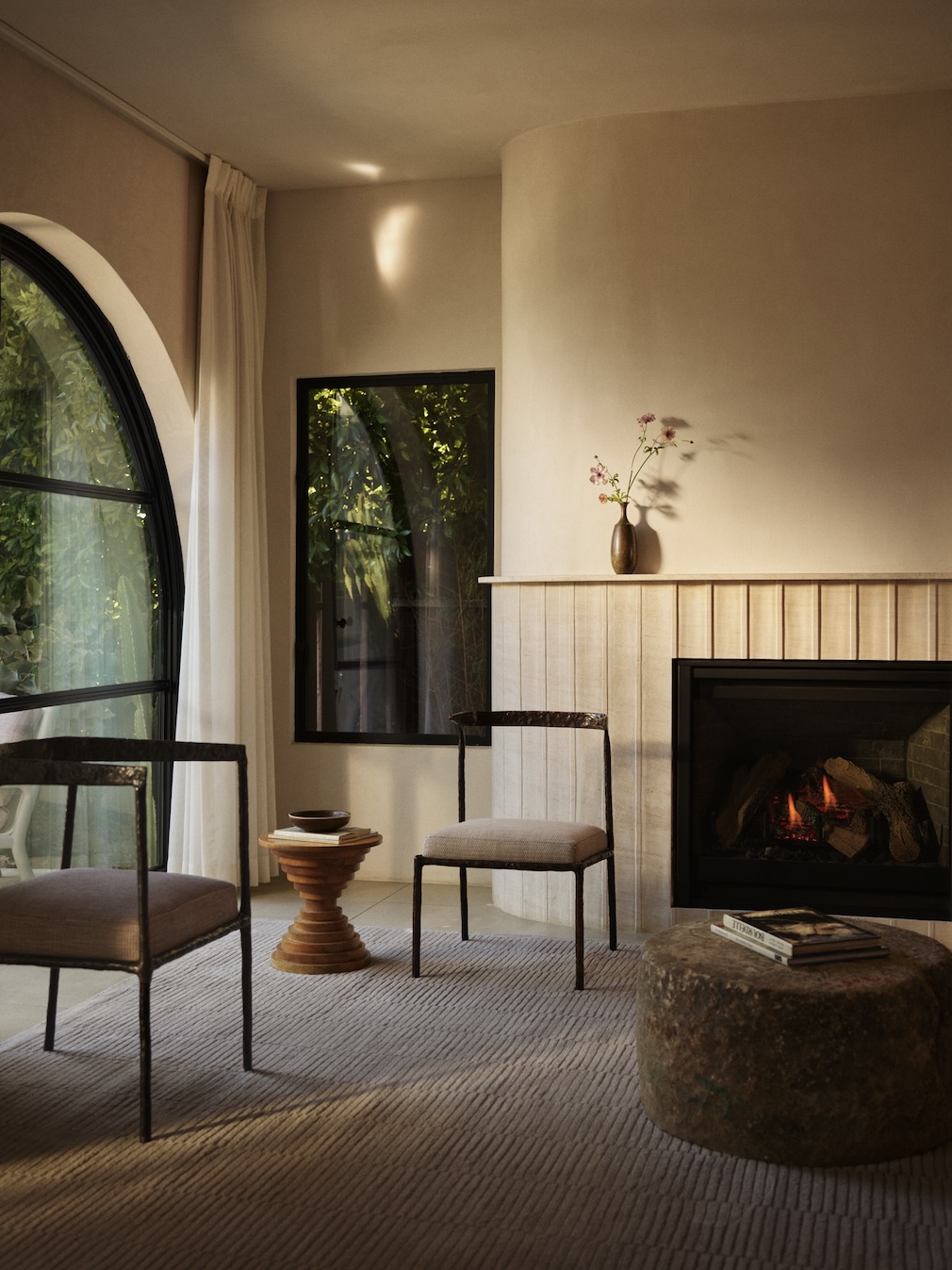
VVD: From the outset, my DNA is defined by a definite relationship between architecture, interior and product design, which has been the driving force behind the conception of projects inspired by subtle transitions between these disciplines and combined with a spatial design attitude, constantly striving for the essence. The use of pure and tactile materials translates into clean, timeless design. With respect to context and tradition, it’s an approach within which the senses, and the physical experience of space, textures and light place the integrity of the user at its core. Functionality, durability and comfort are the prime components of the work, an architectural language not shy to convey aesthetics, but prone to eschew fashion and trends.
Like what you see? Get it first with a subscription to aspire design and home magazine.