


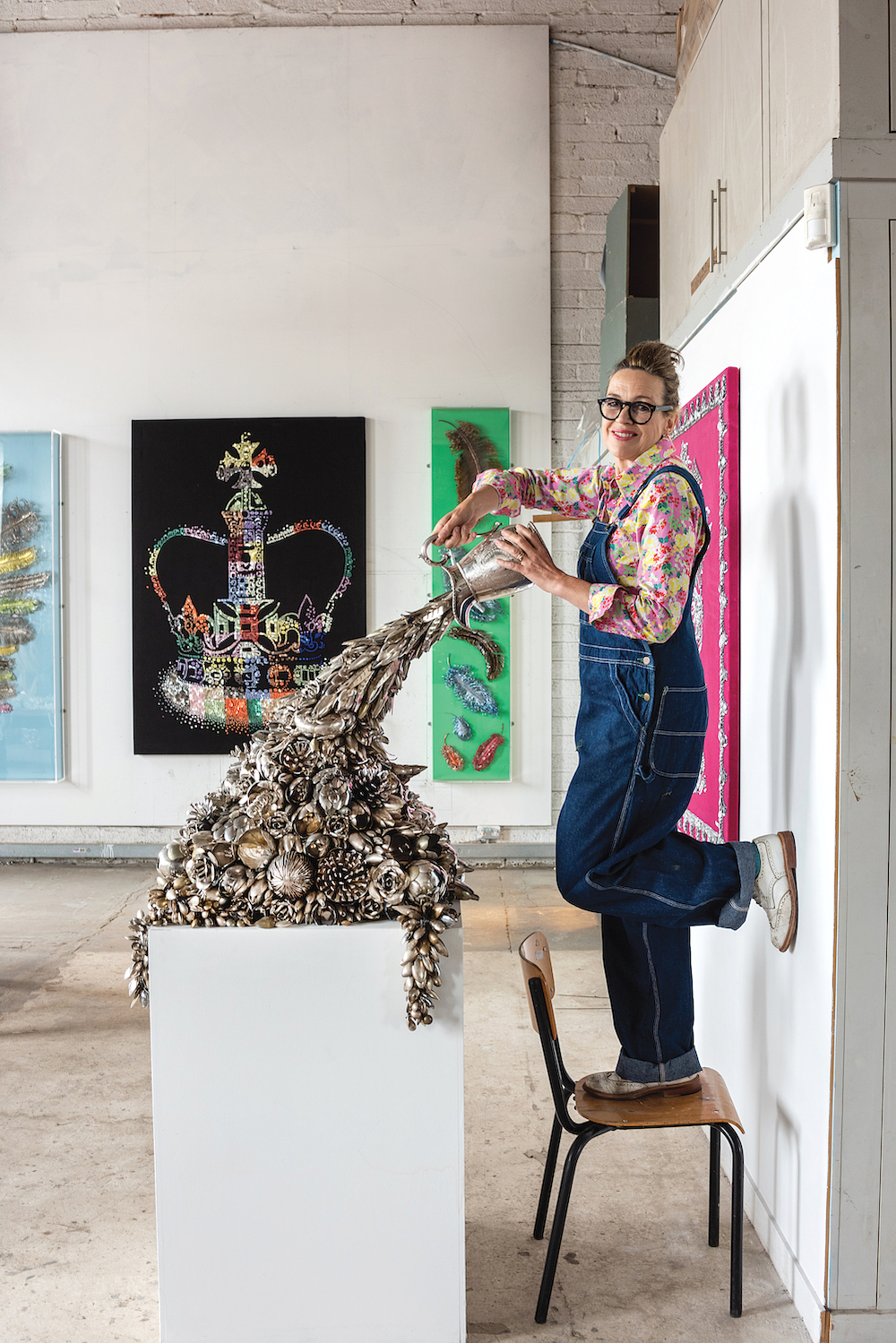

“I’ve always found it fascinating how people make objects from the things around them,” explains English artist Ann Carrington from her studio in an old railroad yard in Margate on the north coast of Kent.
But when Carrington was studying at the Royal College of Art in London in the mid-1980s, the work she made from all manner of found objects was, she recalls, “deeply unfashionable.” At the time, “everything was very conceptual. I felt like an outsider.”
Despite the fact that the designer Paul Smith basically bought out her entire graduate show in 1988, the following year Carrington decided to forego the traditional artist’s path to gallery representation after having a “seminal moment”: She would squat in vacant studio spaces and put on her own shows. Lacking money and access to materials like clay and stone, she created horse sculptures from coconut shells and other found object works.
The Telegraph newspaper soon knocked at her door, eventually running a three-page article on Carrington and her starving-artist aesthetic. It was the second break in a string of what has made Carrington a self-admitted “cult figure” in the British art scene. “I like to tell stories with materials,” she describes. “Sometimes objects will lie around for weeks or years on end until they tell me what they’re meant to be.”
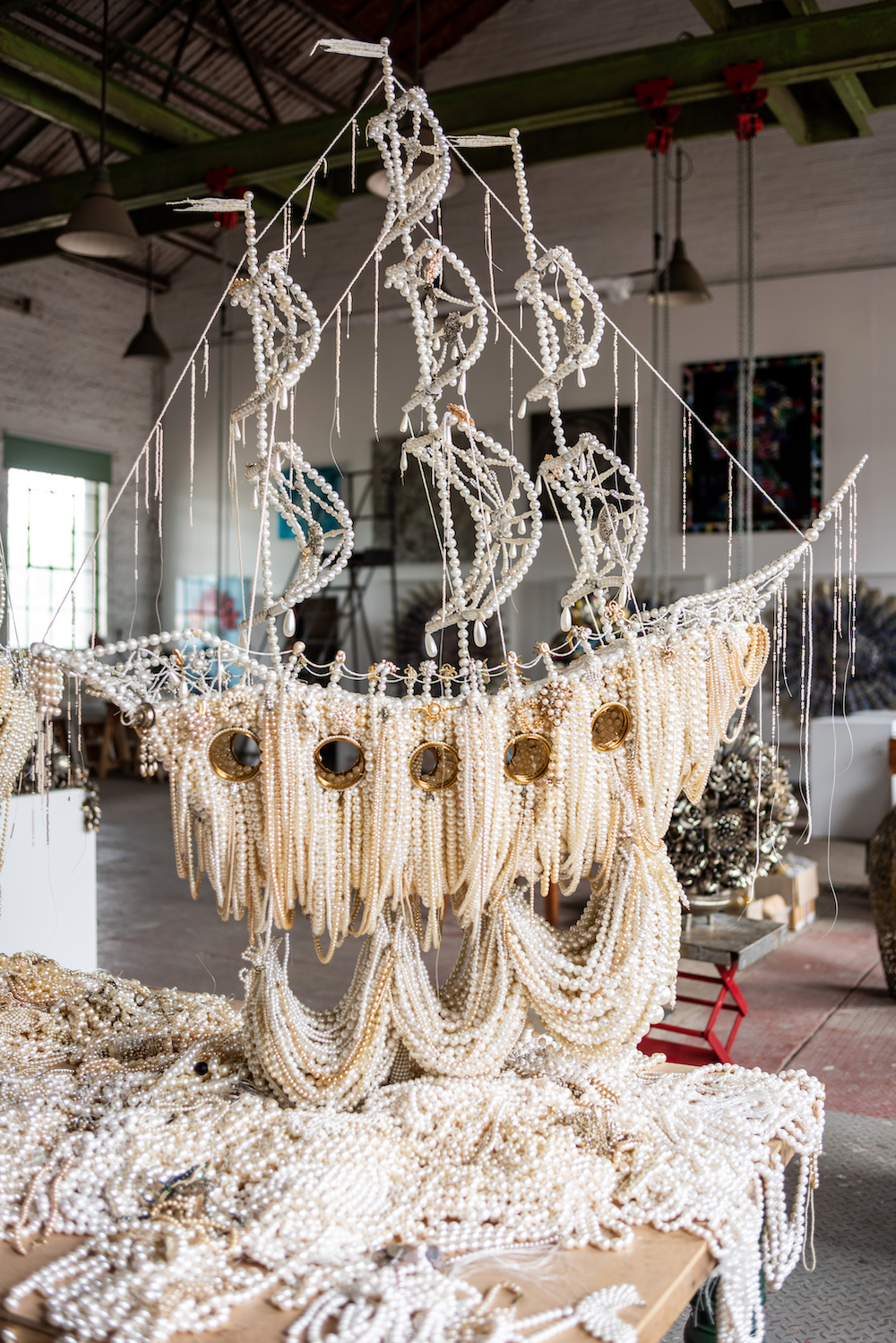
Any material is fair game. These could include horse brasses (folk amulets meant to protect horses from the evil eye), faux pearl necklaces, tin cans, wire hangers, old silverware … The list is endless.
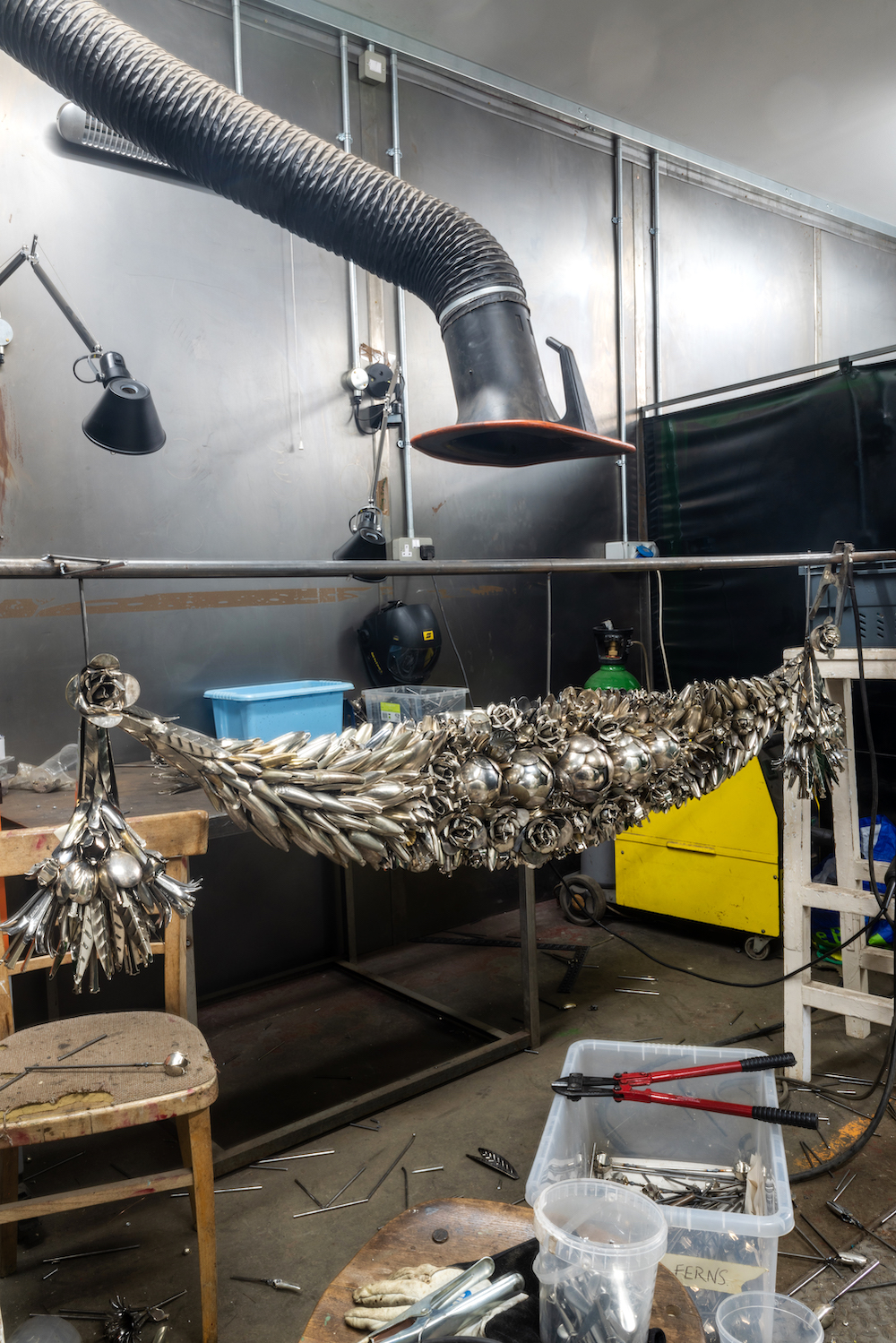
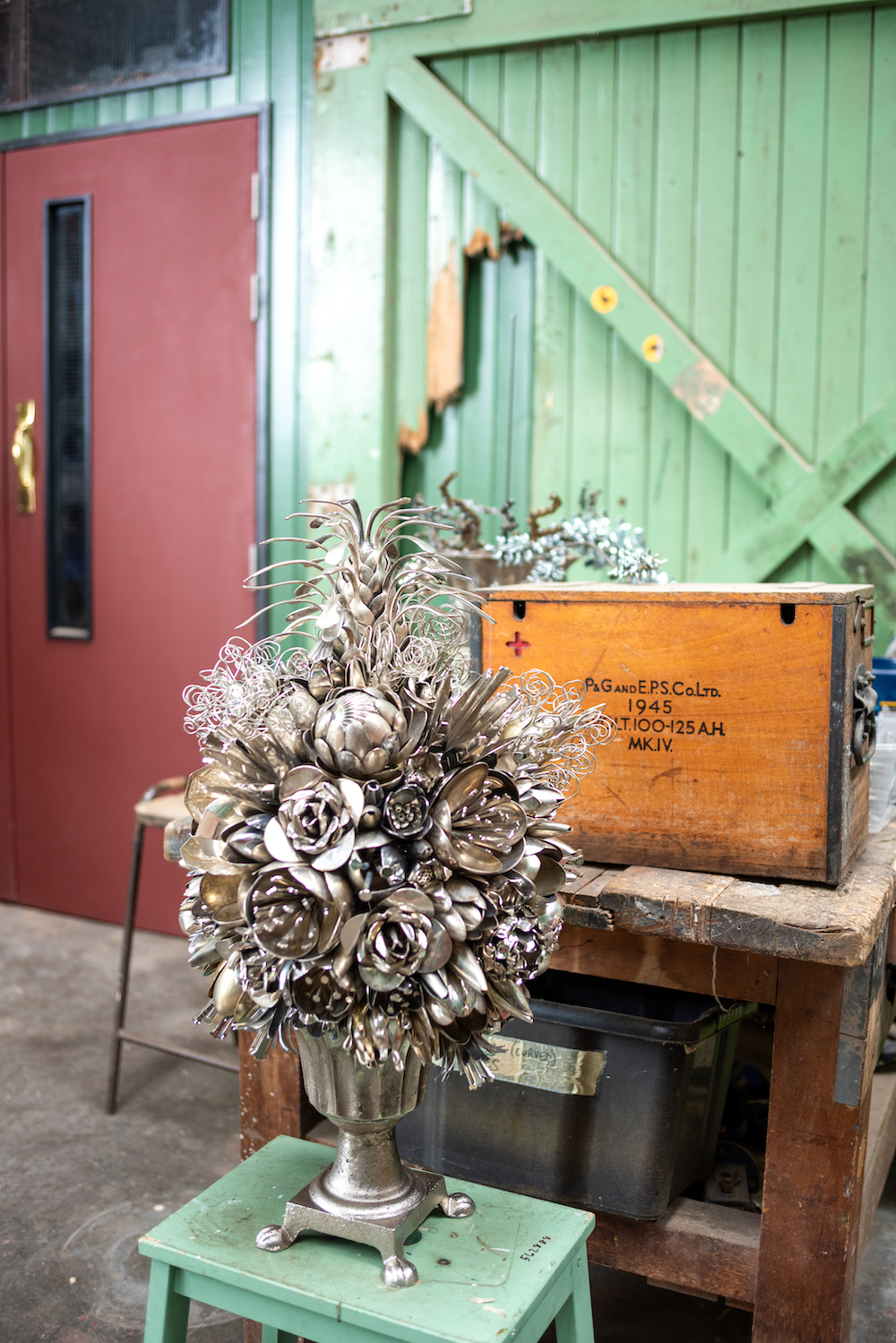
For instance, thinking about Dutch still life paintings called memento mori one day, she realized that out of their underlying messages of human ephemerality, only the cutlery would survive. “I had a pile of teaspoons on the floor and thought, ‘Oh gosh, they really look like petals.’” After taking some welding courses, she began creating extravagant floral arrangements from cutlery that are among the most impressive (and heaviest) of her works.
Another stroke of good fortune arrived after her move to Margate two decades ago. In 2010, Robert Novogratz, producer of Bravo channel’s 9 by Design, ran an episode about Carrington. As her visibility grew, so did her work, which became more and more ambitious. Two years later, she was invited by Prince Charles to create a banner for Queen Elizabeth II’s Diamond Jubilee. The resulting standard was embroidered with a mixture of more than 500,000 buttons – some antique military specimens donated by the army and navy, others modern ones she hand-dyed.
Still more recently another royal, famed furniture maker, David Linley, second Earl of Snowden, mounted a show of Carrington’s works at his shop on Pimlico Road in London. Shortly before it opened, Linley’s aunt, the Queen, passed away, so the exhibition became a tribute to the beloved monarch.
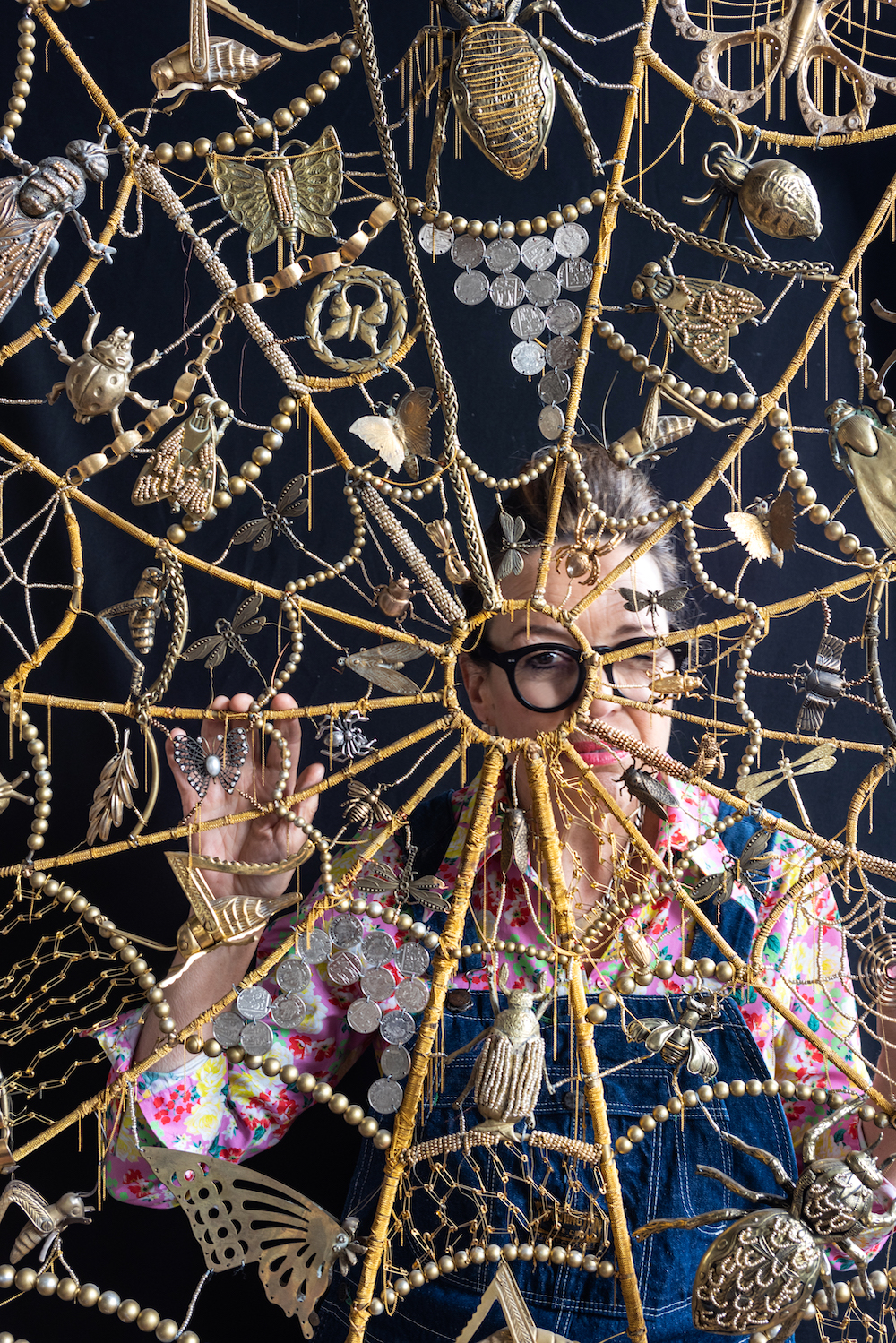
Thanks to an endless stream of discarded materials, Carrington’s palette continues to broaden. She is currently considering a request from someone in the Maldives to create a work from sea plastics. But she never intended for her art to carry an environmental message. “Any object has a story to tell,” she believes. Carrington continues to spin those narratives into art.
Photography by Mark C. O’Flaherty.
Like what you see? Get it first with a subscription to aspire design and home magazine.