

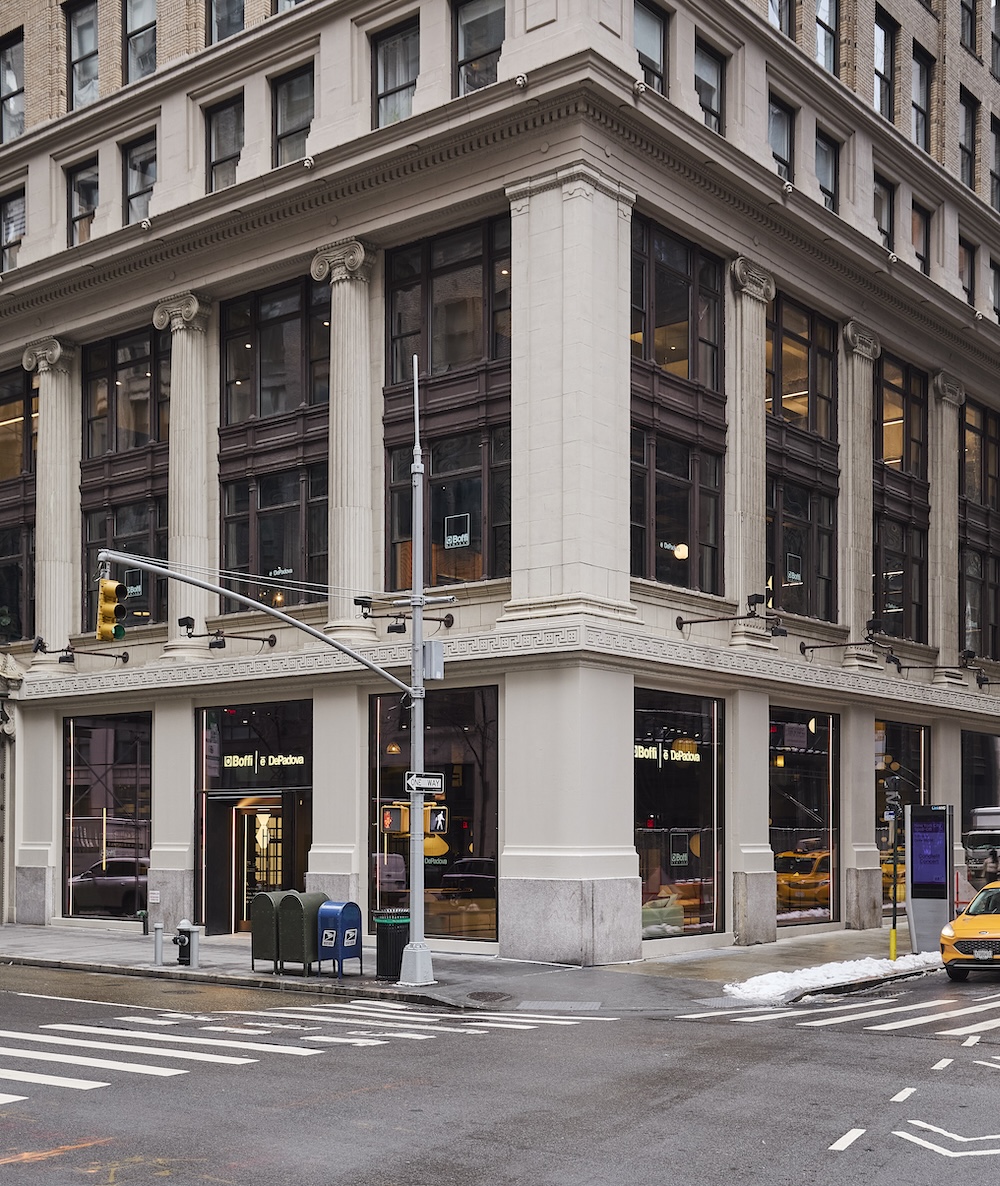

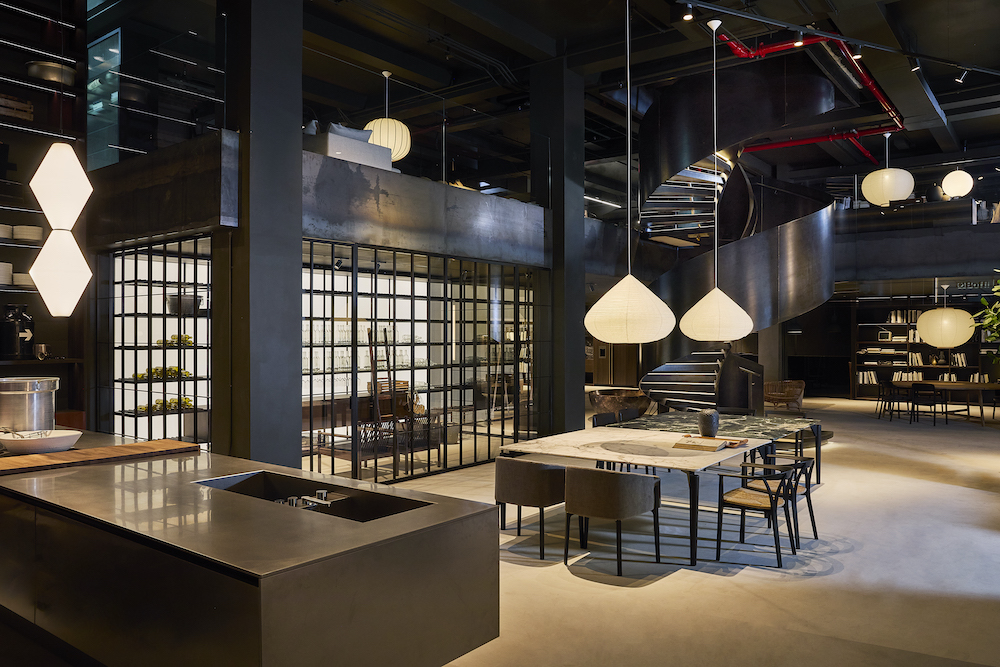
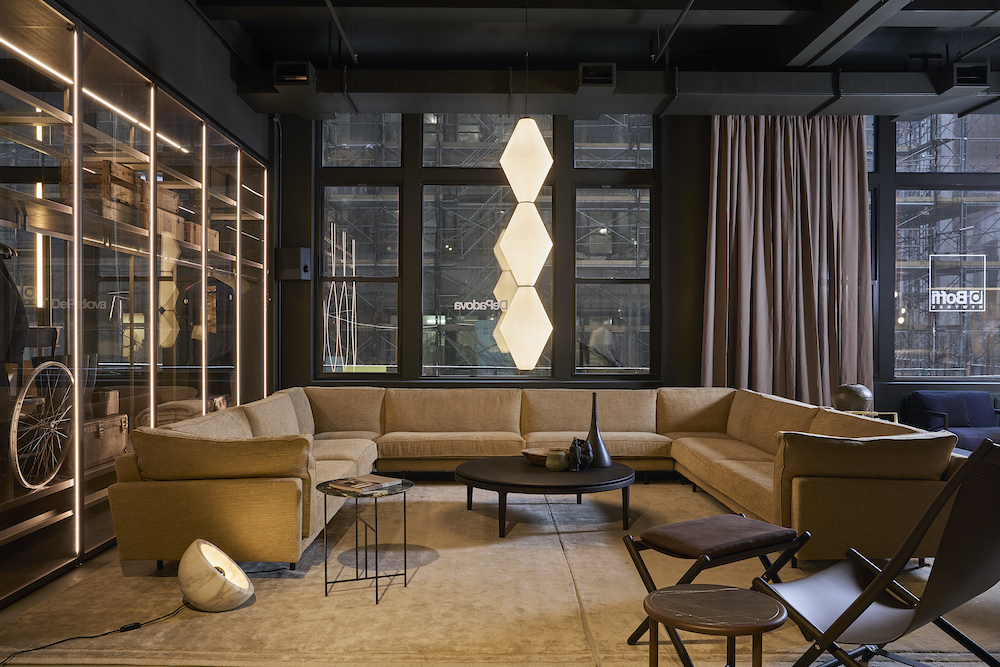
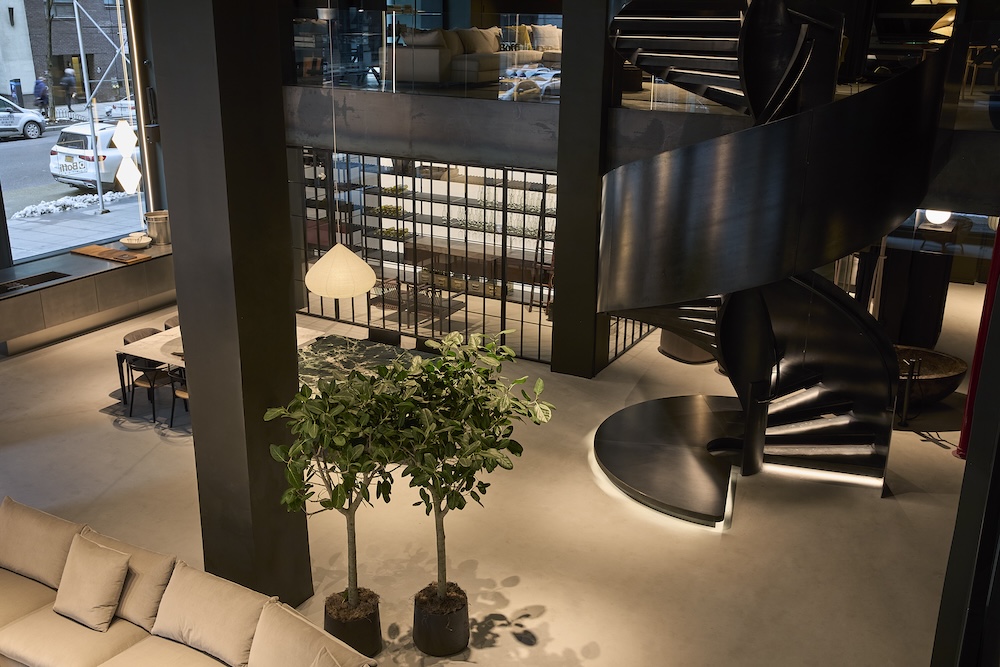
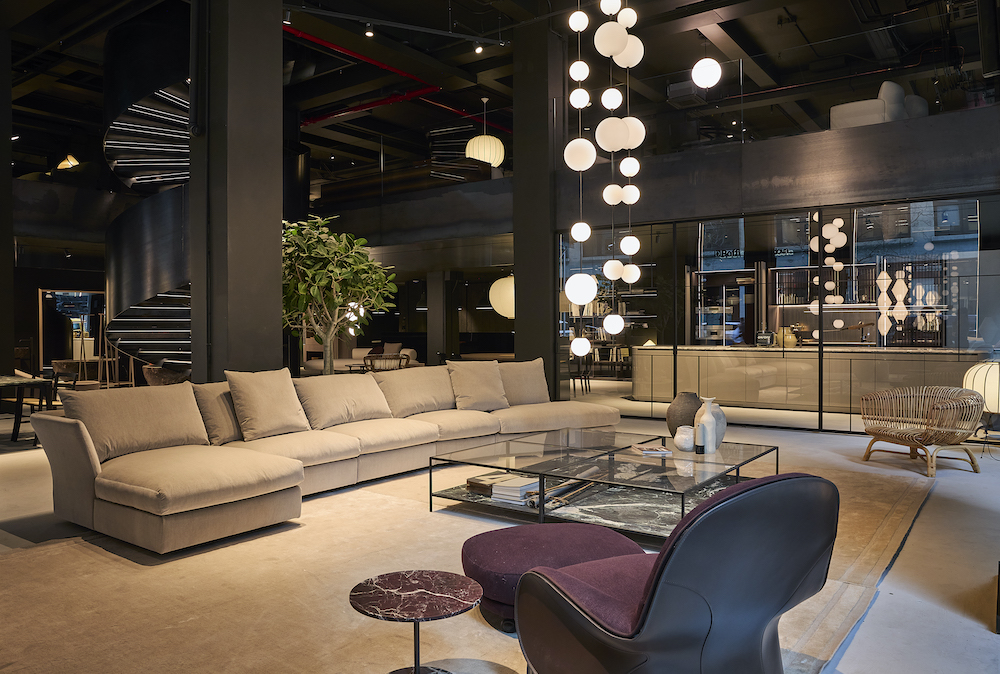
Amid the ever-blossoming design district that has morphed Manhattan’s NoMad neighborhood into one of the city’s most stylish, Boffi|DePadova has planted roots with a flagship location at the intersection of Madison Avenue and 29th Street. The airy new showroom lures passersby into the contemporary luxury for which the brand is known via 175 feet of multi-story, wraparound windows that offer a glimpse of the possibilities that lie within and lend a distinct visual to the phrase “cornering the market.” The nearly 20,000-square-foot, three-level showroom brings the Milan-based company’s three brands — Boffi, De Padova and ADL — together for one cohesive and immersive design and lifestyle experience.
aspire’s Deputy Editor Jennifer Quail spoke with Roberto Gavazzi, President & CEO of Boffi|DePadova, about the New York investment and the company’s forward-looking plans.

Jennifer Quail: Tell us about the decision to expand your New York footprint. Why was this the right time? And why is New York an important place for the company to make such an investment?
Roberto Gavazzi: The decision to open a new flagship in Manhattan reflects our continued commitment to the North American market and to New York City in particular, which we see as a global epicenter of design and architecture. We’ve had a presence in New York for many years, in the SoHo District, but the time felt right to create a space that fully embodies the evolution of our brand — a place where the Boffi|DePadova world can be experienced in all its depth, from systems and furniture to lighting and accessories.
This investment is not just about expanding our footprint — it’s about deepening the dialogue between our design vision and the architects, designers and clients who shape contemporary living in a city like New York. There’s a sophisticated, international clientele here that appreciates quality, innovation and the kind of holistic, curated approach we offer. Moreover, we know that the experience of space — how materials, proportions and details come together — is irreplaceable. And there’s no better stage for that experience than New York.
JQ: The stretch of Madison Avenue where your new space is located is truly prime real estate — particularly for those in the design community, as the neighborhood has become a true design destination. Why was this the right location to make a new statement for Boffi|DePadova? Is there a sense of community among the luxury design brands on the street and in the neighborhood?
RG: Madison Avenue represents a unique convergence of history, elegance and cultural relevance — values that align seamlessly with the identity of Boffi|DePadova. When we looked at expanding our presence in New York, we weren’t simply seeking visibility. We were looking for a location that embodies the same level of sophistication and design awareness that defines our brand. Madison Avenue has evolved into a true destination for the global design community, and it felt like a natural fit for us to become part of that dialogue.
JQ: De Padova has been part of the Boffi family for several years now. Tell us about the synergies between the Boffi and De Padova brands and how this new location will help to showcase the individual yet complementary styles of the two brands, plus ADL.
RG: De Padova became part of the Boffi family with a shared vision: to create a complete, seamless living experience that brings together architecture, design and lifestyle. Over the years, we’ve built a strong synergy between Boffi, De Padova and ADL, each brand maintaining its distinct identity while contributing to a broader, integrated offering.
Together, they form a complete vocabulary of living — one that allows for individual expression within a coherent design narrative. This new showroom is a physical manifestation of that vision. Rather than presenting the brands in isolated zones, we’ve designed the space as a flowing environment where each brand enhances the others. The layout allows visitors to experience real-life compositions where Boffi’s architectural elements, De Padova furniture, and ADL’s systems coexist naturally.
It’s not just a showroom — it’s a storytelling space to discover our integrated approach to contemporary living.
JQ: Boffi is known for innovation in design and for recognizing lifestyle movements before they are mainstream, like the idea for smaller kitchen footprints to suit more nomadic lifestyles, which dates all the way back to the early 1960s at Boffi. Tell us about the ideas in development today and what the company sees as today’s guiding lifestyle directions.
RG: Boffi has always been ahead of its time — not just following design trends but anticipating the ways people live and how those habits evolve. The compact Minikitchen concept from the 1960s is a perfect example: it reflected a shift toward more mobile, urban lifestyles, long before minimalism and flexibility became part of the mainstream conversation. Today, we see several lifestyle movements shaping the way we design. One key direction is the blurring of boundaries — between work and home, indoors and outdoors, private and shared spaces. People are looking for environments that are more fluid and adaptive. In response, we’re focusing on modularity, multifunctionality, and the integration of technology in subtle, human-centered ways.
Sustainability is another major driver. It’s not just about materials but about creating enduring products, both in terms of quality and aesthetic relevance. At Boffi, we invest heavily in R&D to develop solutions that are not only beautiful but smart, efficient and built to last. We’re also seeing a return to craftsmanship, but interpreted through a contemporary lens. Ultimately, Boffi’s role is to interpret these shifts and translate them into systems that offer both architectural precision and emotional resonance. It’s about designing spaces that feel tailor-made, even as they evolve with the lives of the people who inhabit them.

JQ: Paolo Boffi passed away recently. Tell us how we see his family’s legacy and design viewpoint live on in the brand today.
RG: Paolo Boffi was a visionary who deeply understood the power of design to shape not just objects, but entire ways of living. His legacy is not only visible — it’s foundational. He believed in design as a dialogue between form and function, beauty and utility, industry and craftsmanship. What Paolo instilled in the company is a culture of curiosity and courage — the willingness to challenge conventions, to invest in innovation, and to always pursue excellence without compromise. Those values continue to guide us today.
His design viewpoint — one that embraced modernity while respecting tradition — is reflected in how we approach every collection, every collaboration, and every space we design. More than anything, the Boffi legacy is about coherence and integrity. It’s not just about producing beautiful products; it’s about creating a lifestyle rooted in intelligence, elegance, and lasting relevance. That’s the compass that still guides the brand — and always will.
JQ: What is next for Boffi|DePadova?
RG: A continued evolution of our vision: to offer a complete, coherent and deeply personal approach to contemporary living. We’re expanding our international presence, investing in new showrooms in strategic markets, and continuing to refine the way we bring together architecture, design, and lifestyle.
We aim at developing new systems that respond to how people actually live today — spaces that are more flexible, hybrid and emotionally engaging. That means innovations in modularity, material research, and digital integration — always with the same attention to craftsmanship, aesthetics and sustainability that defines us.
Photography by Genevieve Garruppo.
Like what you see? Get it first with a subscription to aspire design and home magazine.