
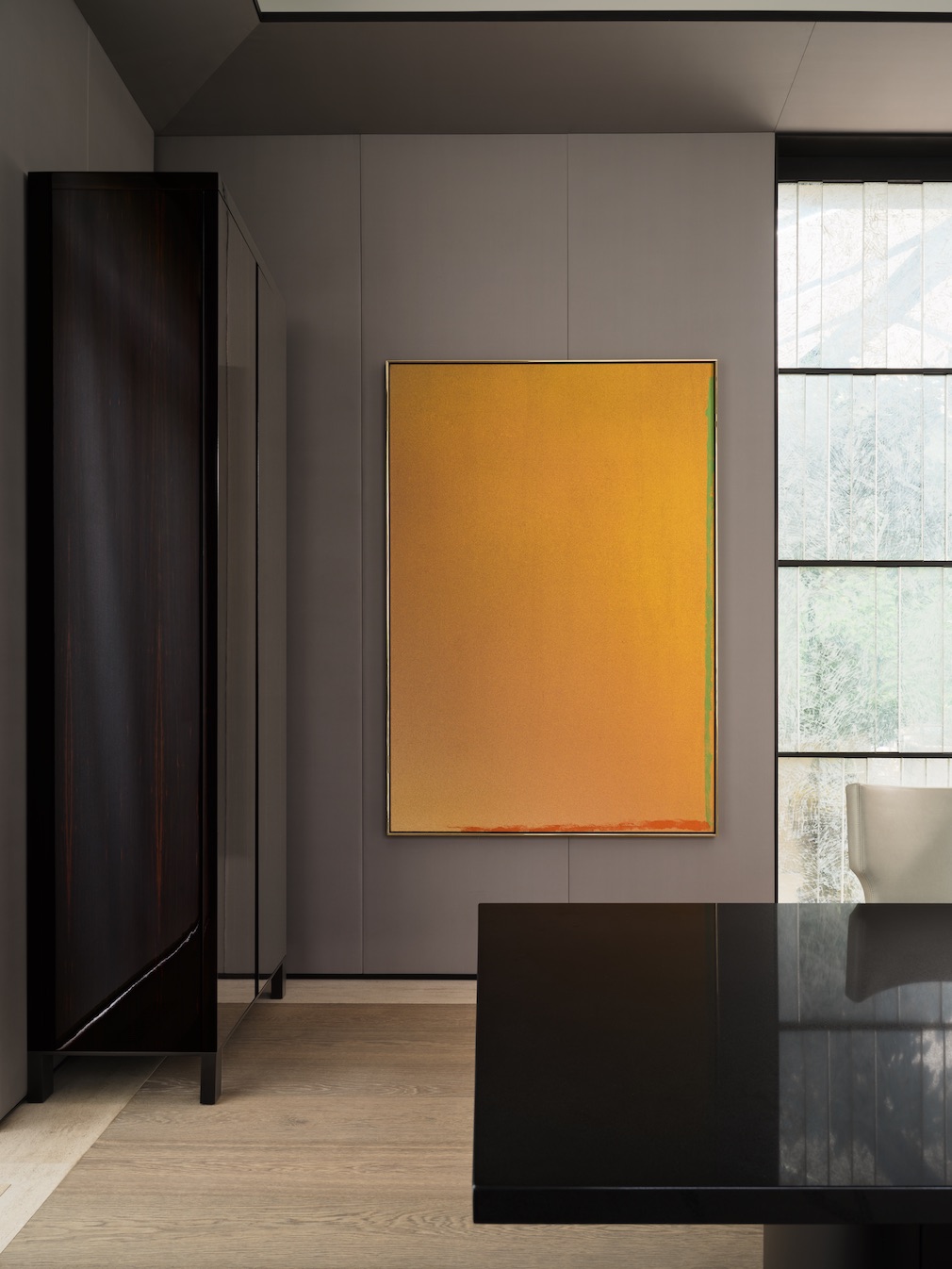
When was the last time you remember noticing that the scene stealer in an interior was actually its backdrop? This house in Toronto, designed for an empty-nester couple by Diego Burdi – the partner of Paul Filek in the interiors firm Burdifilek – is a study in how a subtle architectural envelope can thoroughly ground a design. It also proves that commandeering the limelight needn’t involve ornate cornices or dentil moldings, elaborately veined marble dados, classical pilasters or any other such ornamentation.
“The clients had lived through various design moods,” explains Burdi. “It was about creating a newer language for them. They were ready for their ‘forever’ house, so they were willing to go on a different sort of journey with us.”
This involved editing many of their possessions down, retaining individual, showstopper antiques that could punctuate rooms and create focal points. “In the beginning we wanted to use a lot more of their existing furniture,” Burdi admits. “This brings in the personality of the clients and makes the interiors unique. But as we went along, the design took on a life of its own.”
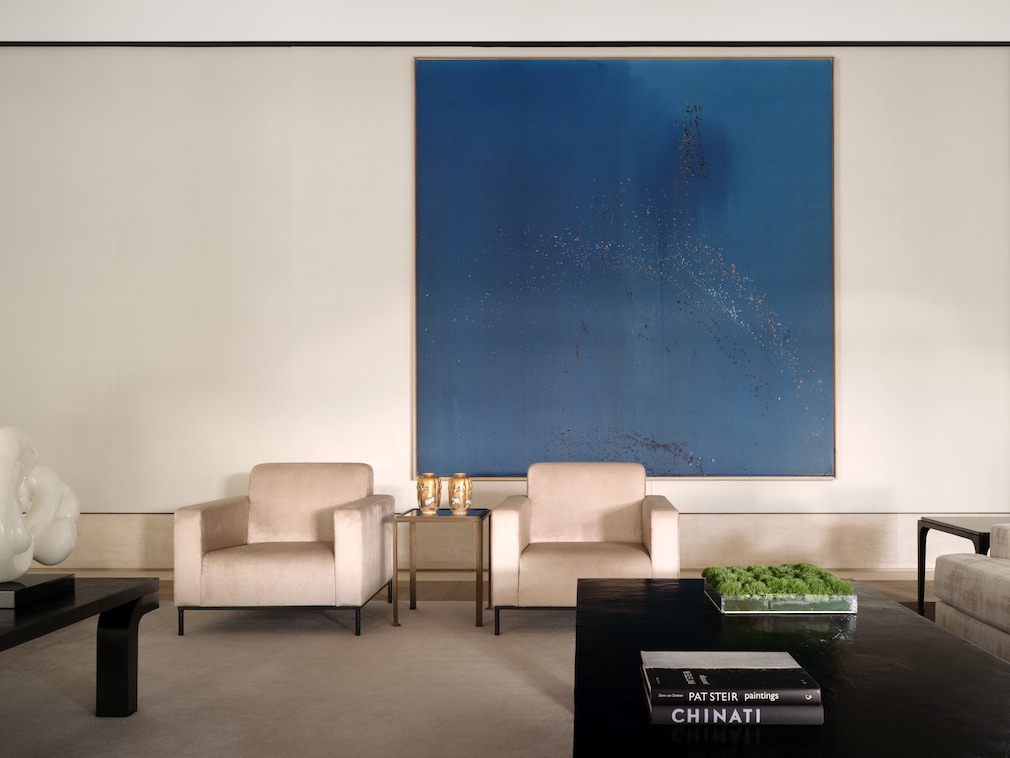
More and more, they realized, the real splendor would be in the details, and the furnishings and antiques would be deployed like sculptures in their own right. The architecture was initially quite straightforward – orthogonal and minimal. “We knew we had to create this beautiful envelope that depended on a lot on materiality,” explains Burdi, who layered in a limited palette of exquisite materials that create a sublime sense of harmony throughout the spaces.
Oyster shell-toned silk imparted texture and sensuality to walls in the main spaces. Doorways framed in dark-stained Mozambique wood, a relative of rosewood, provided a rich, dark, yet softly veined contrast to the neutral walls. Pale European white oak floors gave rooms another note of mellow warmth. Wide baseboards of French limestone and a strip of dark bronze ringing the walls a foot or so below the ceiling defined the perimeters of these graciously proportioned spaces.
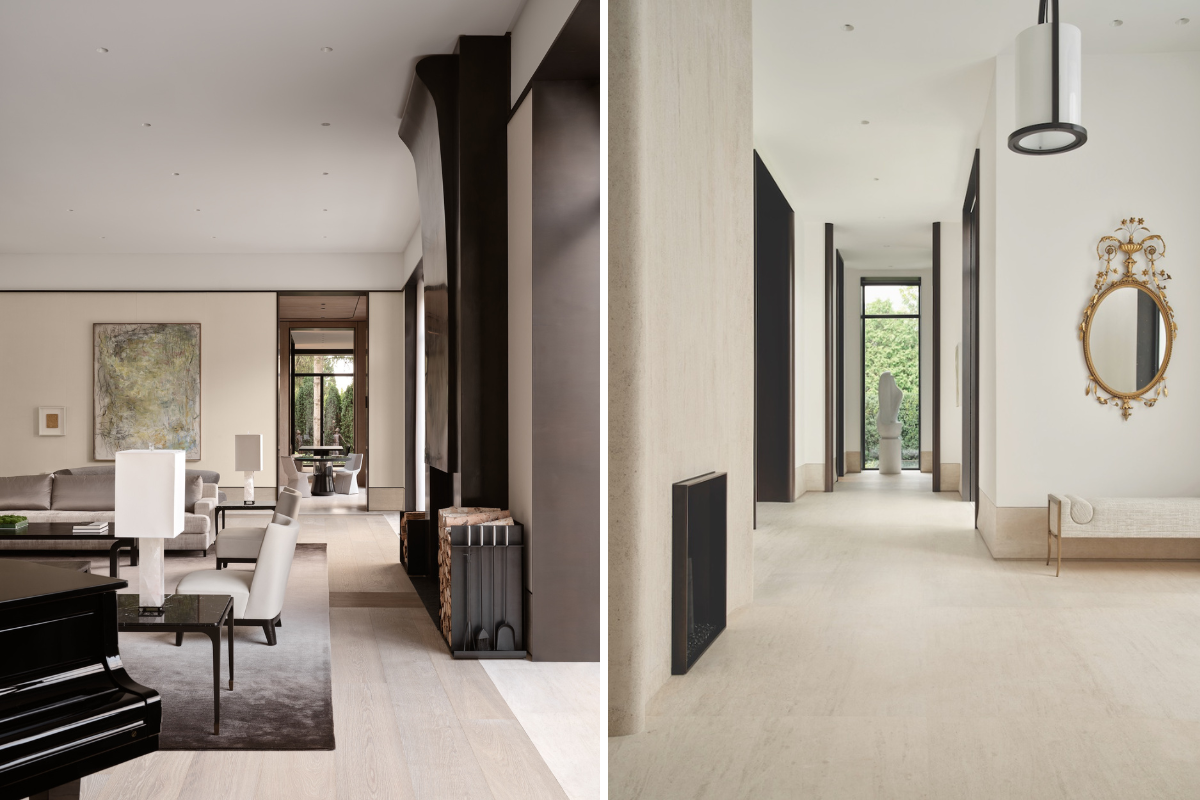
Within several rooms, Burdi designed fireplaces of oiled bronze or limestone that sculpturally vary the right angles of the architecture. In the living room, for instance, a bronze fireplace begins parallel with the firebox at the bottom but gently flanges outward toward the ceiling. And in the entry hall, a fireplace is made of carved limestone that undulates ever so slightly outward at either end before veering 90 degrees toward the wall after rounding delicately curved corners. (Burdi also designed a bronze sculpture to sit on the lava rocks inside the gas firebox, adding still more character with their columnar forms, which are tapered and faceted.)
For furniture, describes Burdi, “We looked globally.” He created a mix of seating from Liaigre Studio, Bruno Moinard and Christophe Delcourt, sculptural tables by Parisian designer Eric Schmitt, and lighting by Matthew McCormick, Schmitt and Alberto Pinto. The owners’ fine antiques – a French gilded mirror, a bisque porcelain statuette of cherubs, an Aubusson tapestry – add notes of historical elegance in various spaces.
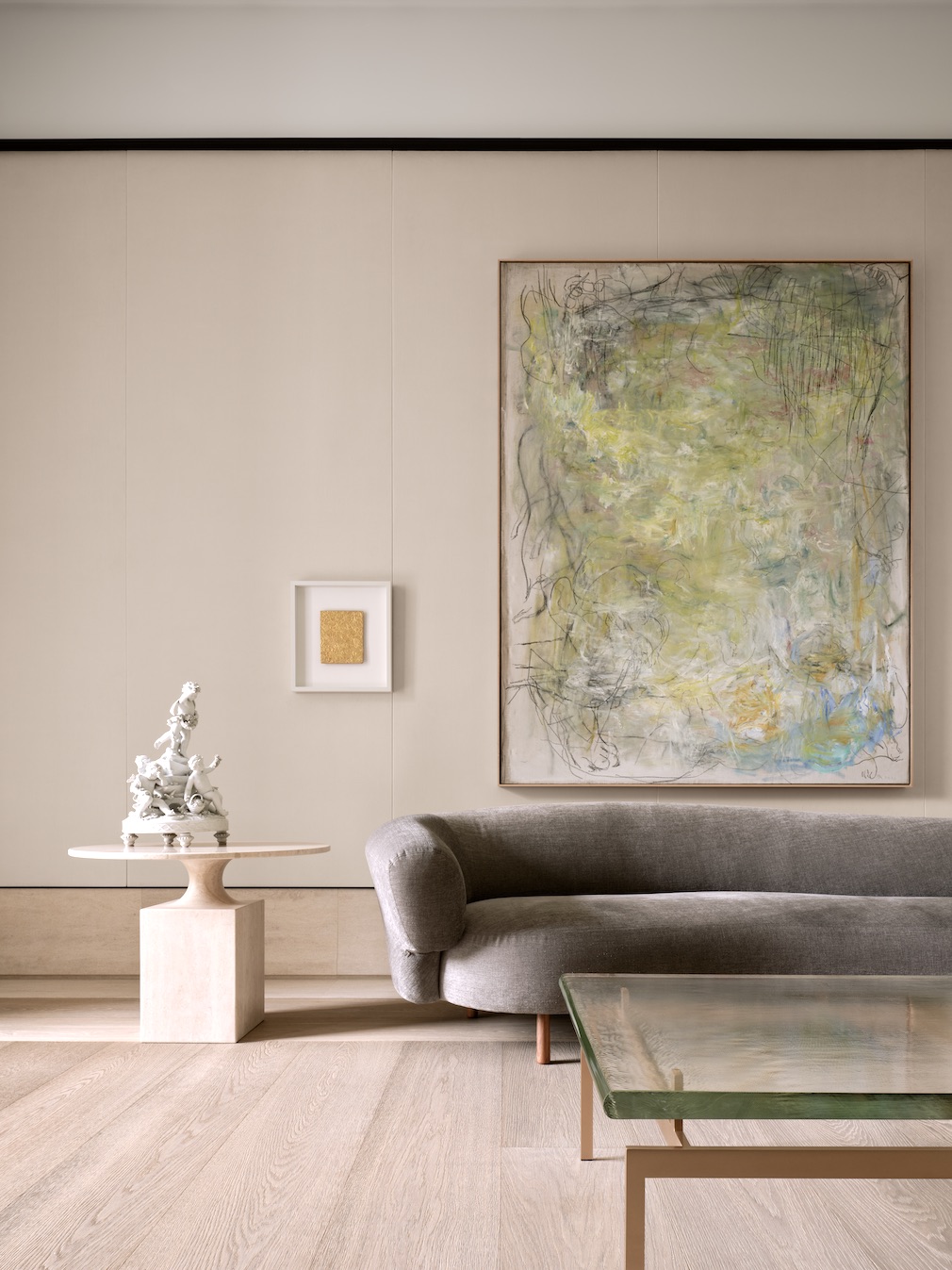
Both client and designer worked with Toronto-based art consultant Jane Corkin of Corkin Gallery to acquire art that spoke to the environments in which they’d be displayed. “At the start they said, ‘We’re not art collectors,’ ” recalls Corkin of the clients. “But then they realized that they’d built such a magnificent house that they wanted art that would be substantial to match the magnitude of what the home had become.”
The resulting collection includes works by Pat Steir, Victor Vasarely, Jean Arp, Jules Olitski, Yves Klein, Rita Ackermann and others. It spans from the 1950s to the 21st century and, notes Corkin, “It holds together fantastically well. We didn’t always have a particular wall in mind, but then we’d move the paintings around and they would tell us where they wanted to go.”
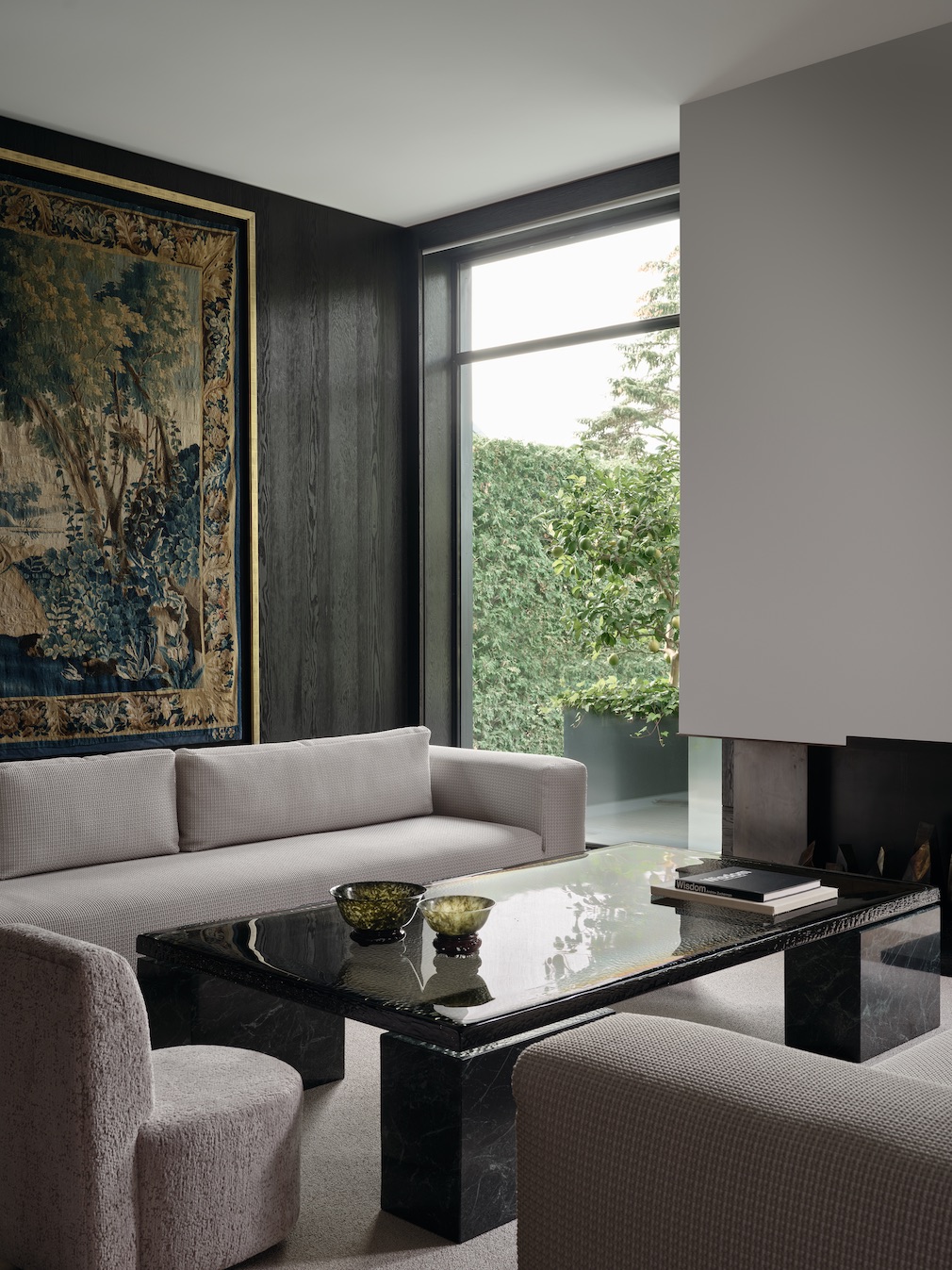
In fact, the entire composition – envelope, furniture and art – “holds together remarkably well.” The backdrop certainly doesn’t upstage any of it, but the closer we look, the more extraordinary it feels because we realize that it is what makes everything else appear so ethereal, if not positively empyrean. The home’s new language, believes Burdi, “is quiet, elegant and quite confident,” yet not in any boastful way.
Photography by Doublespace.
Like what you see? Get it first with a subscription to aspire design and home magazine.