



Age. Wisdom comes of it. So does a fine wine. Buildings, on the other hand, can withstand the ravages of time. They may need a little sprucing up, but when their original character is kept intact, when contemporary touches are introduced sympathetically – like a wardrobe updated just this side of trendiness – “old” is an accolade, not an insult.
Situated on the top floor of a 19th-century building in the Brera district of Milan – long known as a creative enclave, thanks to the presence of the Academy of Fine Arts – this spacious apartment is rich in vintage appeal and of-the-moment style. Home to a family with a love for architecture, art and design, it owes its past-and-present essence to De Amicis Architetti, the Milanese architecture firm founded by Giacomo De Amicis in 2005.
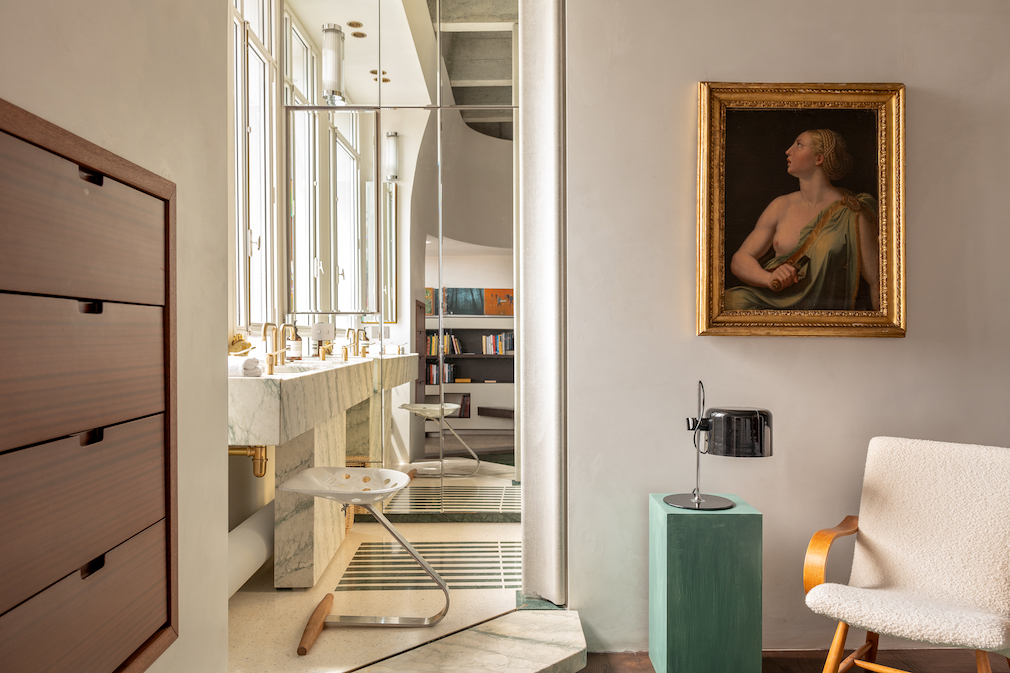

“The initial desire of the family was to renovate their apartment in order to obtain an additional bedroom,” explains De Amicis. “We proposed to the client to evaluate, even just for exploratory purposes, the hypothesis of a conceptual overturning of spaces in search of a new identity and a new relationship with the views. They appreciated the proposal, and in the end, they opted for a complete renovation of the apartment.”
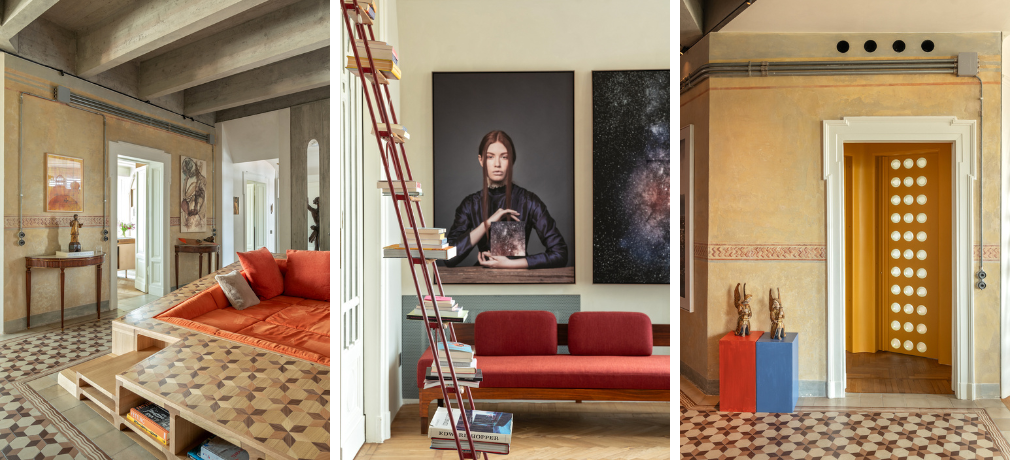
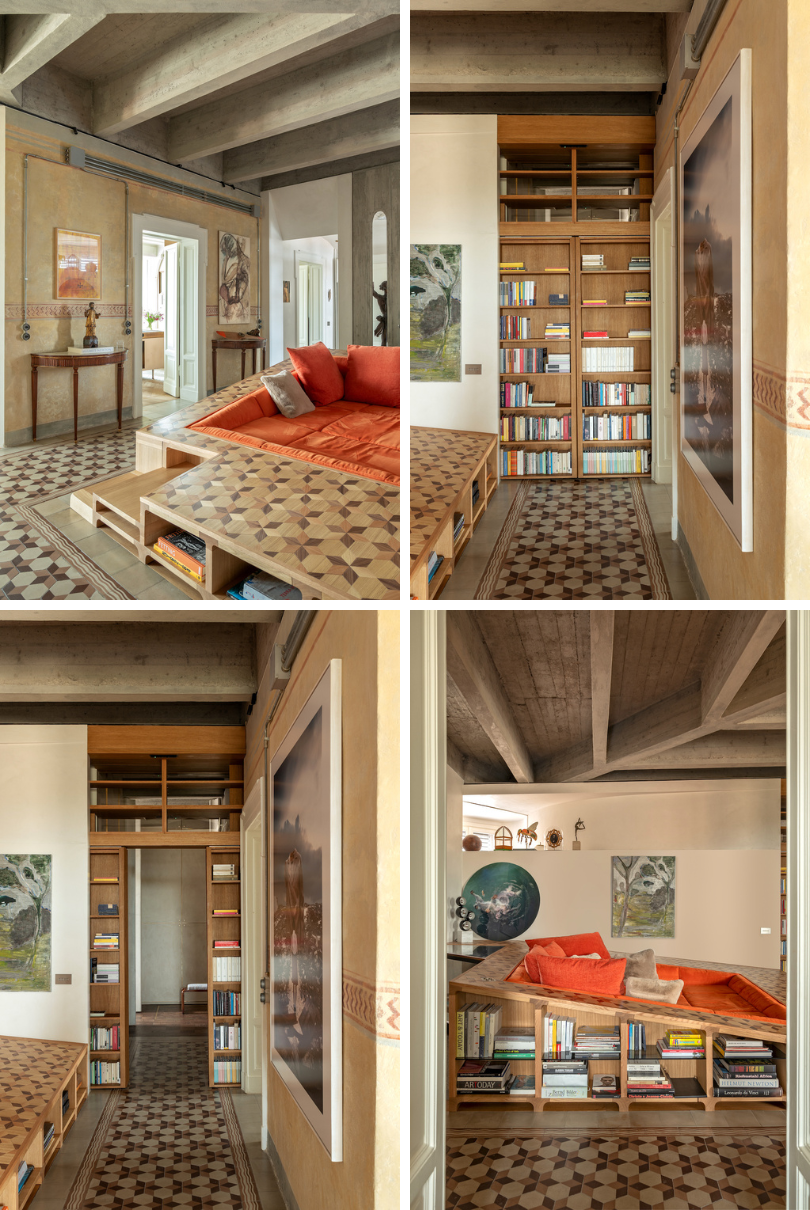
With his client on board, De Amicis and his team took a deep dive in reimagining the home. “At the typological level,” he describes, “we built a concatenation of areas and subareas, interconnected with each other by a circular path, thus ensuring a nonrigid flow of environments. At the spatial level, we made sure that each environment was uniquely linked with a specific type of light and view.” The architects also addressed time as a component of the project, embracing the existing wall decorations and flooring. Removing a false ceiling, they uncovered substantial concrete beams that they left exposed as a dramatic new design element. As a complement to this somewhat brutalist gesture, the firm created an elevated conversation area, set within a diagonally pitched frame and accessed by three steps.

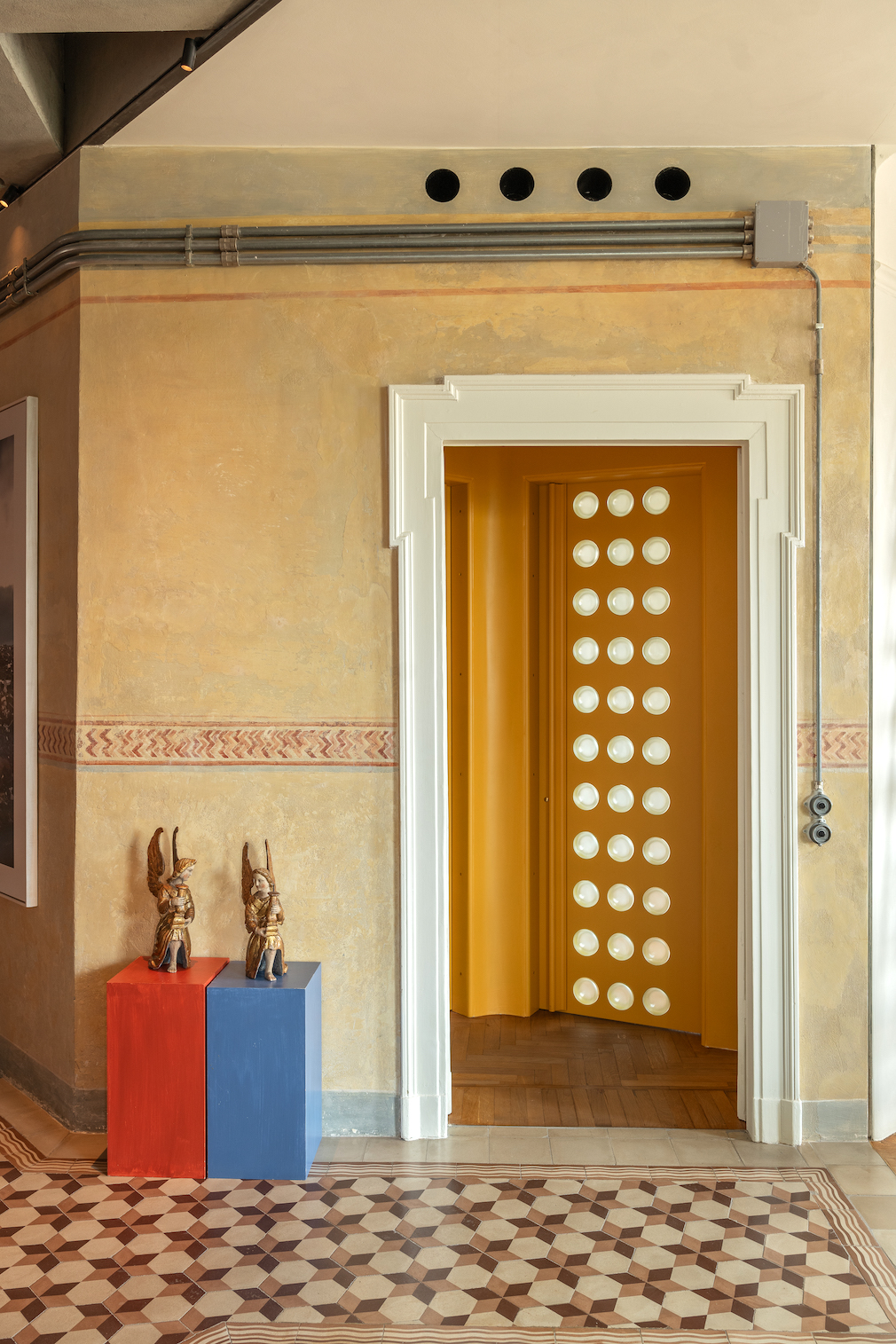
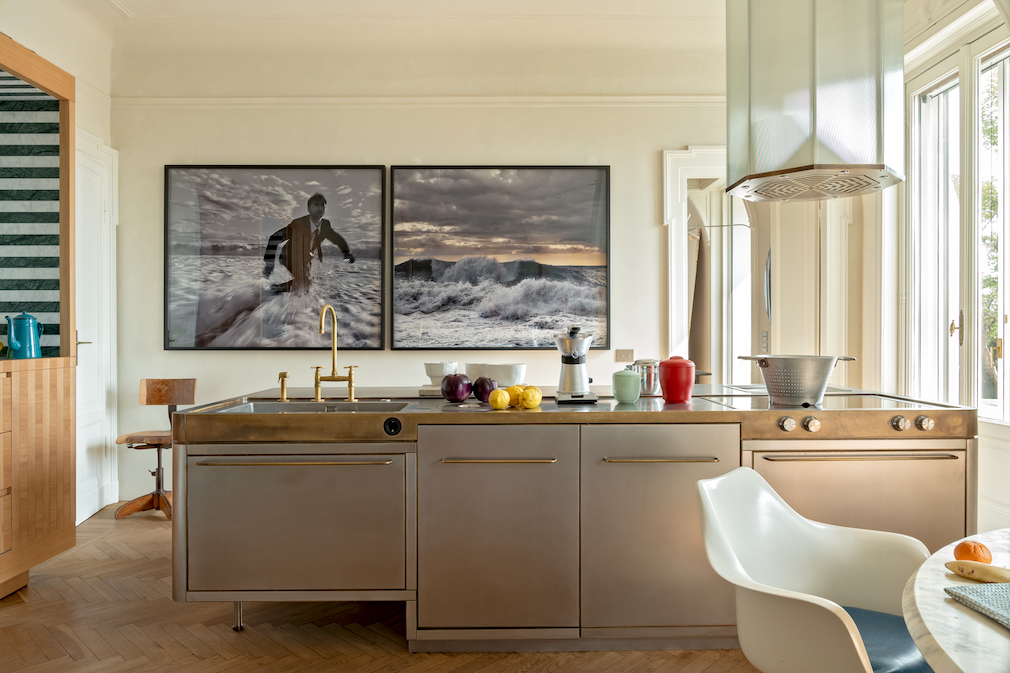
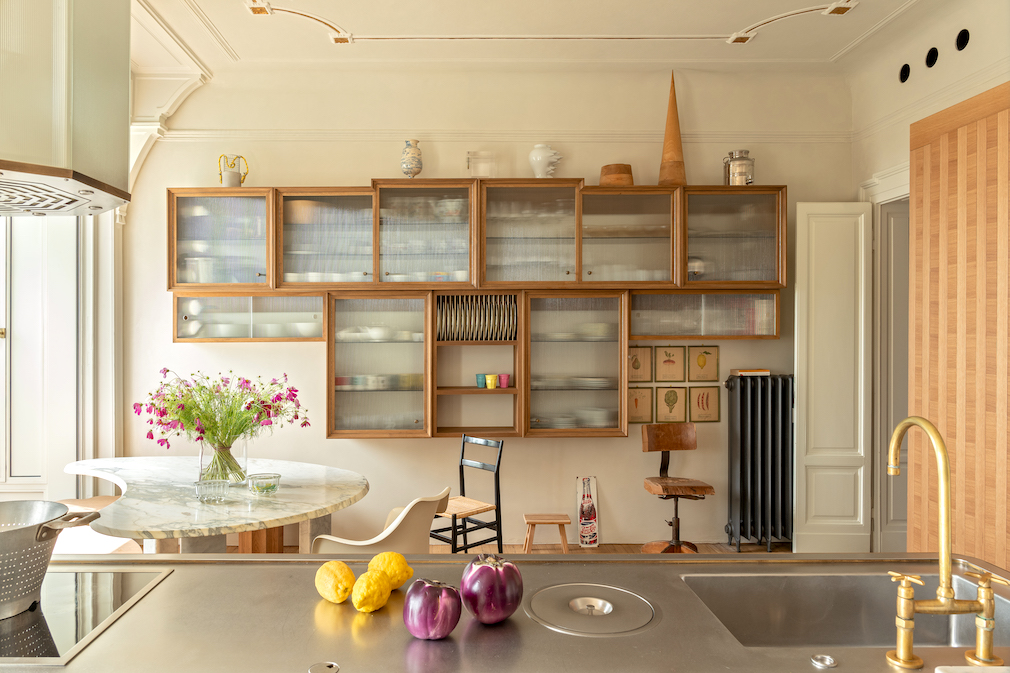
Modern and contemporary furnishings – many by Italian designers – fill the apartment, from a brick-red Piero Ranzani sofa to Gae Aulenti’s Oracle Lamp. An irregularly shaped, double-sided On the Rocks sofa, designed by Francesco Binfaré, sits like a welcoming island in the center of the living room. The dining area of the open-plan space is set with a long table from a Venetian factory, accompanied by vintage Leggera chairs designed by Gio Ponti. In the kitchen, a Saarinen Tulip chair keeps company with a custom-designed, crescent-shaped table in white Carrara marble. A bespoke, glass-fronted cabinet spreads across one wall like a minimalist triptych. The sink, stove and refrigerator are housed in a brass-and-stainless-steel island that reads as solid as a small automobile. The artwork is of various eras – from a large sculpture of Saint Sebastian placed at the entrance to a painting of Lucrezia Romana in a bedroom. Two wooden angels, carved in Tuscany in the 16th century, are stationed not far from the front door. A large grisaille canvas by contemporary artist Federico Pietrella leans against a wall in the living room.
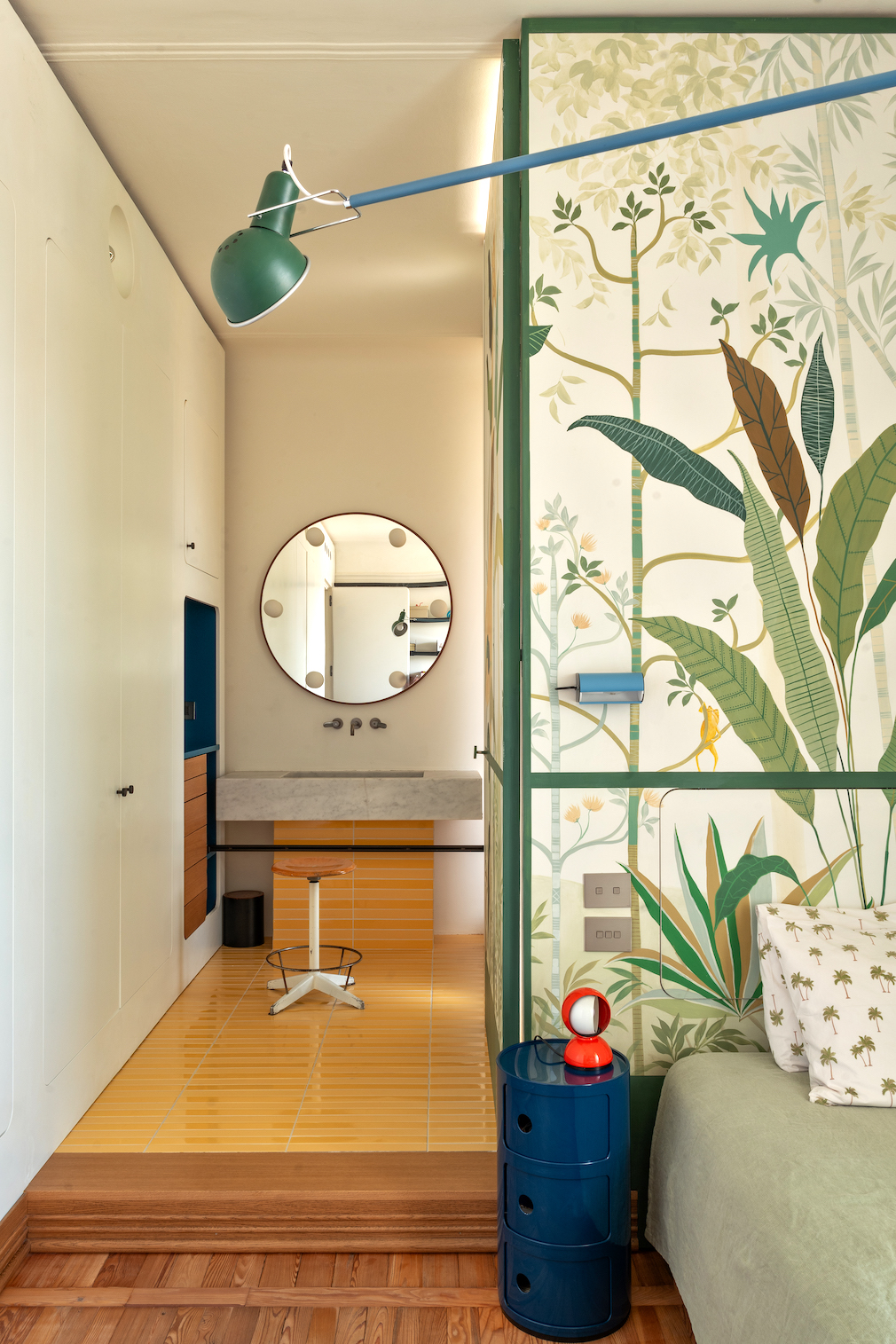
The combination of the apartment’s generous proportions, existing detail and De Amicis’ proportionate interventions make for a rather free-flowing spatial experience. Visually, too, the home seems to unspool naturally. Even unusual moments, such as the exposed concrete beams, strike one not so much as architectural statements but quite coherent, the kind of archeological evidence one might expect to find in a building that has aged. And aged well.
Photography and styling by Marco Bertolini.
Like what you see? Get it first with a subscription to aspire design and home magazine.