

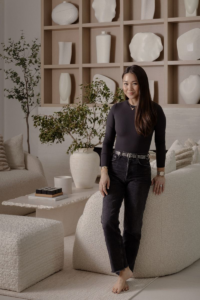


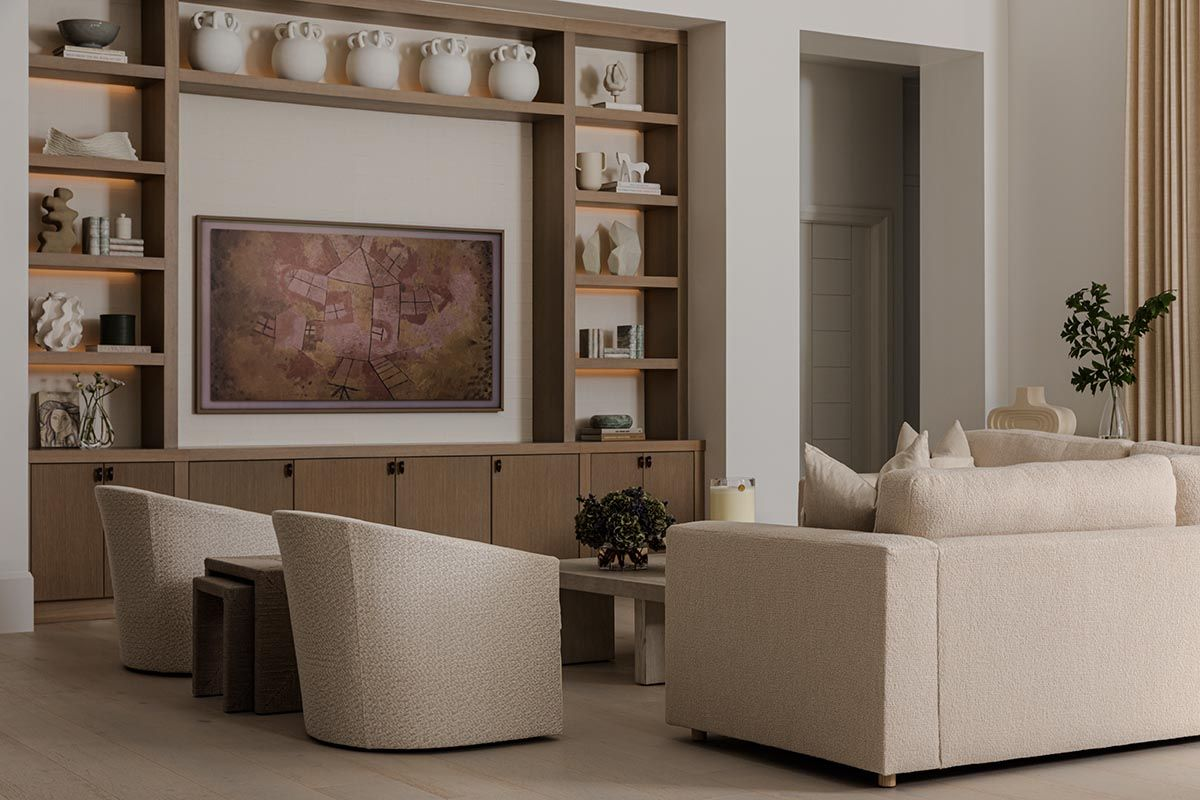
Warm oak built-ins frame a geometric abstract painting, while layered neutral seating creates a calm, conversational living space.
Andrew Joseph: What inspired you to become a designer?
Amy Lee McArdle: As a child, I was constantly rearranging the furniture in my bedroom — and often the rest of the house, to my mother’s dismay. I loved the feeling of transforming a space and seeing how small changes could shift the entire mood of a room. When my mother once worked with an interior designer, I remember being completely mesmerized by the process — the fabric swatches, the floor plans, the attention to detail. I thought, That’s exactly what I want to do when I grow up.
Over the years, that early fascination evolved into a true passion for creating environments that reflect people’s stories and lifestyles. I’ve always believed that design isn’t just about making things look beautiful; it’s about how a space makes you feel — comfortable, inspired, grounded. That emotional connection to spaces is what continues to drive me today.
AJ: What is your favorite aspect of your job?
ALM: My favorite part of the job is the intimacy of it — we step into people’s lives in such a real and personal way. We see how they live, how they gather, what routines anchor their days, and what truly matters to them. There’s something incredibly meaningful about being invited into that space of trust and transformation.
Design isn’t just about furniture and finishes; it’s about understanding how someone wants to feel when they walk through their door at the end of the day. I love helping clients articulate that feeling — sometimes even before they realize it themselves — and then translating it into a home that supports and enhances their everyday life. It’s deeply personal work, and that human connection is what makes it endlessly fulfilling for me.
AJ: What is your favorite design-related quote?
ALM: “There are two things that make a room timeless: a sense of history and a piece of the future” – Charlotte Moss

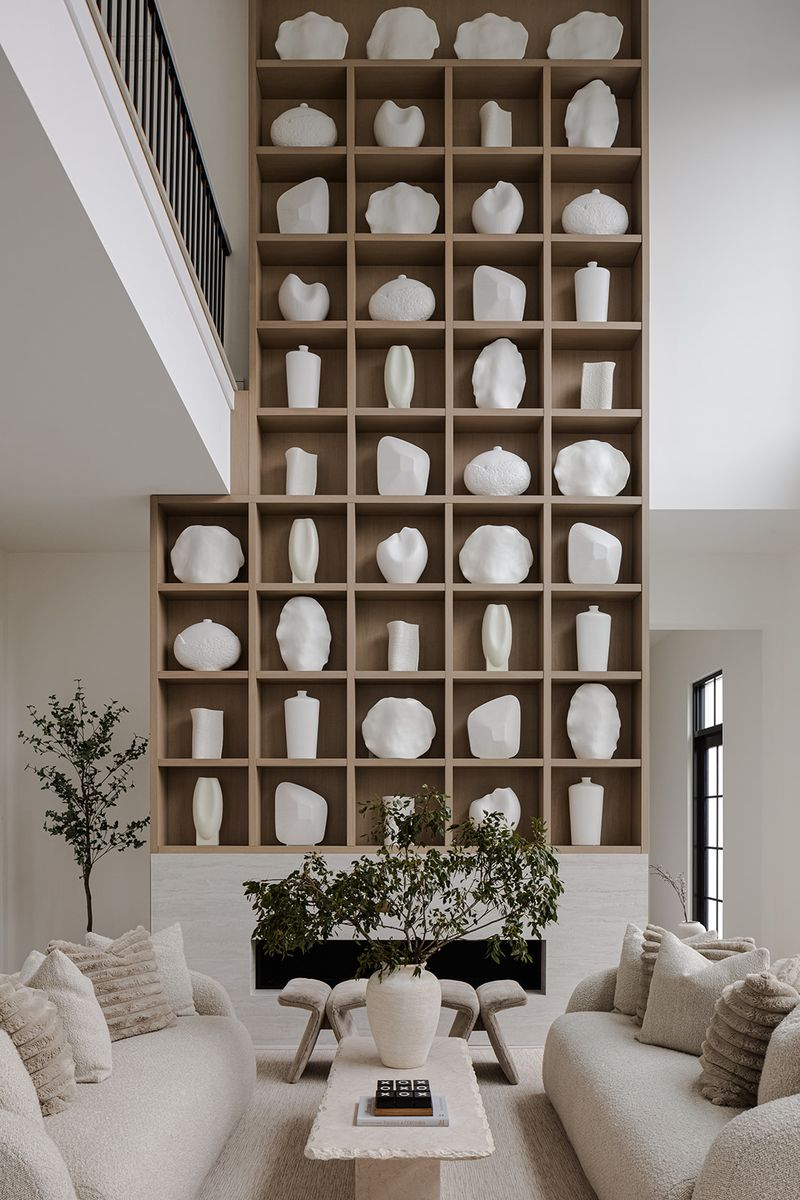
A wall of curated ceramics creates a sense of quiet drama, anchoring the room without overwhelming it.
AJ: What is the most important skill for a successful designer?
ALM: The most important skill isn’t just having a great eye — it’s understanding people. A successful designer has to read between the lines: how a couple makes decisions, how their family functions, what they value, and what each person truly needs to feel at home. We often become part designer, part therapist, and part strategist.
Every client brings a different dynamic, and navigating those nuances is as important as selecting the right fabric or finish. You have to listen carefully — not just to what they say, but to what they mean. When you can translate those conversations into spaces that reflect who they are, that’s when the magic happens. Design is as much about empathy as it is about aesthetics.
AJ: If you weren’t a designer, what would you be and why?
ALM: Probably a CIA agent or a psychiatrist — something that involves decoding human behavior. I’ve always been fascinated by people: what drives them, how they communicate, and the subtle cues that reveal what they’re really thinking. In a funny way, I already use those same instincts every day as a designer.
Half of my job is reading energy and figuring out what’s really behind a client’s reaction. When someone suddenly isn’t sure about an item they loved two weeks ago, sometimes it’s not as simple as a switch in opinion or preference. Being able to sense that shift and gently guide them back to clarity is part art, part psychology, and part intuition.
So while I might not be interrogating spies or analyzing dreams, I do spend my days unraveling human behavior — just through fabric swatches and floor plans instead of case files.
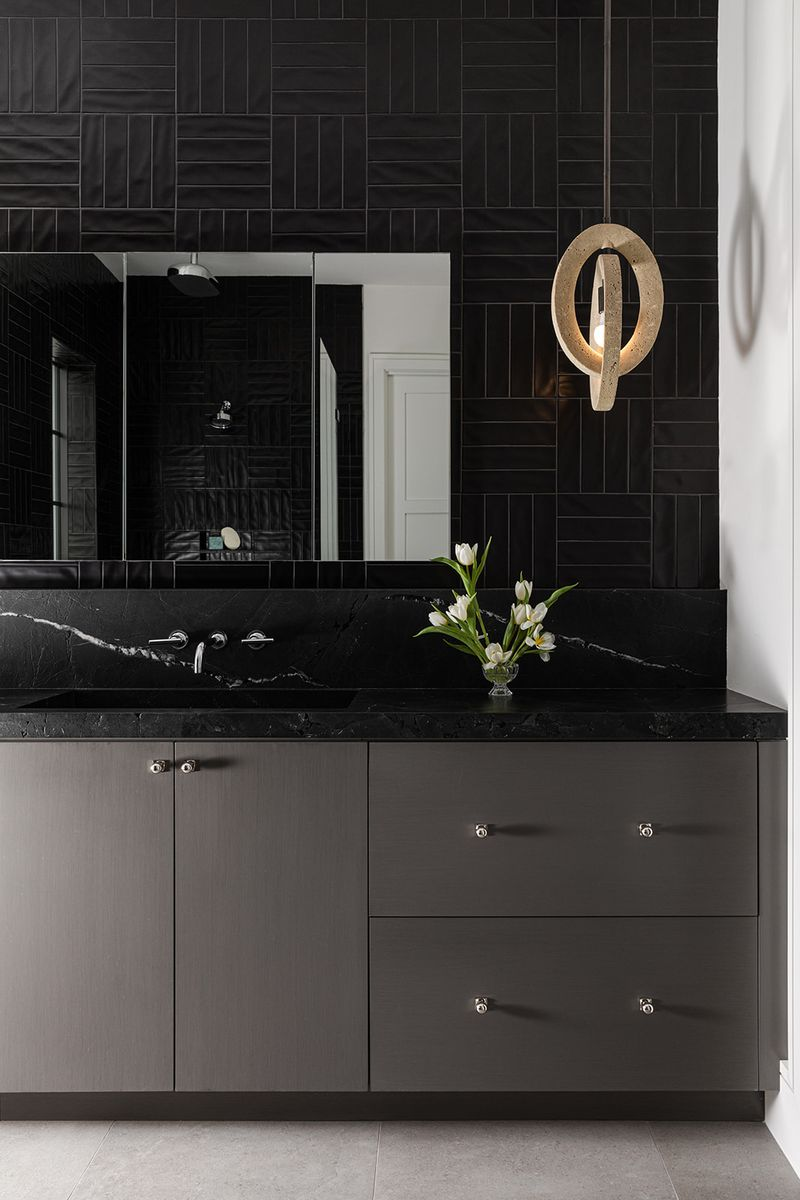
Bold veining cuts through the vanity like a horizon line, easing the ombré shift from black tile to gray cabinetry, while polished hardware adds a quiet point of contrast.
AJ: What’s your favorite cocktail?
ALM: Espresso Martini – It’s the perfect mix of relaxation and energy, which pretty much mirrors my life. I love that it’s a little indulgent but still has purpose — it keeps you going. After a long install or late design meeting, it’s my go-to pick-me-up that feels refreshing and well deserved!
AJ: What’s the weirdest thing a client has ever asked you?
ALM: The client once asked me to flush every toilet in the house during a site visit, while they were out of town.
AJ: Best advice you’d give your teenage self?
ALM: What’s meant for you will always find you, no matter how many detours you take. I started my career in politics and government — far from floor plans and renderings — but looking back, every step was leading me exactly where I was supposed to be. That chapter taught me how to navigate personalities, manage expectations, and communicate with clarity — all skills that I now use daily as a designer.
I’d tell my teenage self not to worry so much about having the perfect plan. The path rarely looks like you think it will, but if you stay curious and keep following what feels authentic, it always leads you home.
Like what you see? Get it first with a subscription to aspire design and home magazine.