

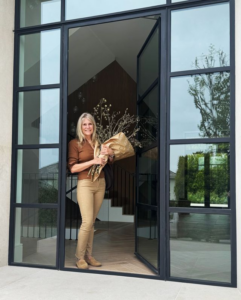


Andrew Joseph: What inspired you to become an interior designer?
Lisa Price Canale: I wanted to be a designer from the time I was 13 years old. Creativity was never a hobby for me; it was instinct. When it came time for college, my father encouraged me to earn a business degree first, promising that if I did, he would support me going back to school for design. That foundation in business turned out to be one of the smartest decisions of my career. After college, I went into fashion, but I always found myself pouring my creative energy into my own homes. Friends began asking for help with theirs, and what started as casual advice quickly became something more serious.
While pregnant with my son 30 years ago, I purchased a foreclosure and completely gutted it, acting as my own general contractor. It was an intense hands-on education in construction, design, budgeting, and problem-solving. I sold that home for a significant profit. That experience changed everything. I realized design was not just my passion, it was my path forward. Needing to support my children through private school, I officially launched my design firm. In the first year alone, I completed seven homes and soon after opened a staging company. What began as instinct evolved into a thriving business built on creativity, resilience, and a deep understanding of both beauty and value. The rest, as they say, is history.
AJ: Can you describe your design philosophy in 3 words?
LPC: Livable, comfortable luxury.
AJ: What design trends do you think will be popular in the coming years?
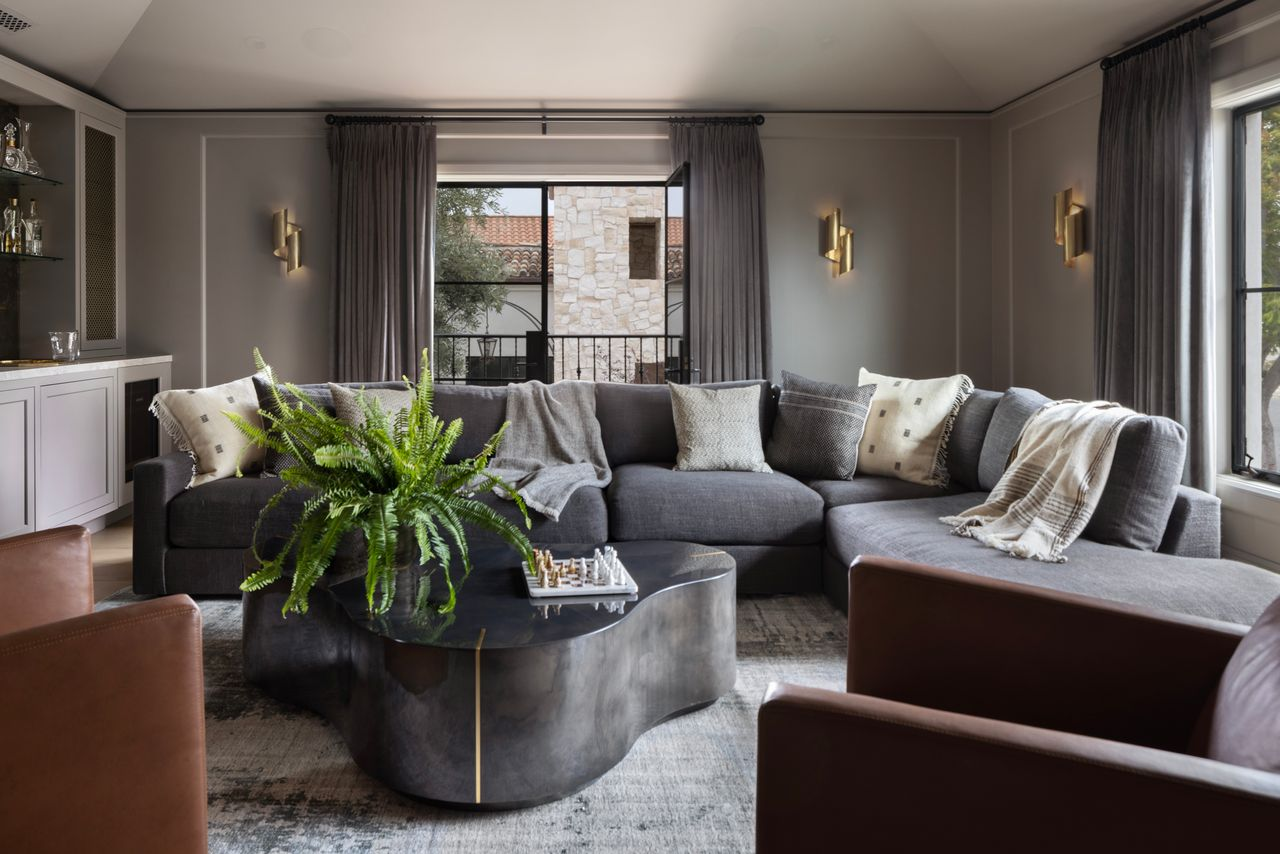
LPC: The biggest shift with design trends in the years to come is a move toward saturated color. We are seeing a return to rich jewel tones such as deep plums, forest greens, and teal, layered alongside grounded earth tones like brown, ochre, khaki, clay, and terracotta. These hues exude warmth and depth, creating interiors that feel cozy and grounding. Entire rooms are being painted in these colors, including ceilings and cabinetry. Flat, overly minimal spaces are giving way to rooms with dimension and character. Richer palettes, handmade pottery, and one-of-a-kind pieces are replacing overly simplified interiors. Lighting is being layered to feel like art. We are mixing in antiques and embracing curves, alongside furniture with clean lines, designing spaces that feel tactile and collected. Interiors are becoming more personal and more reflective of how people truly live.
At the same time, homes are increasingly being designed around lifestyle. There is greater emphasis on dedicated home offices, thoughtfully designed workout spaces, and environments that support entertaining at home. Interior design is moving beyond aesthetics and becoming more about how a space makes you feel. We are incorporating elements that nurture wellbeing, including spa-inspired bathrooms, saunas, and cold plunges, transforming homes into places of retreat and restoration. Ultimately, design is becoming more dimensional, more layered, and more human. Homes are no longer just beautiful backdrops. They are deeply considered environments that support and elevate everyday life.
AJ: How do you approach a new design project?
LPC: Every project begins with listening. I spend time getting to know my clients so I can truly understand how they live. I want to know about their lifestyle, their budget, and what comfort means to them. Are they entertaining often? Do they have young children or pets? Do they need durable fabrics and surfaces, or are they drawn to more delicate materials? What colors do they gravitate toward? Are they envisioning something modern, transitional, or layered and eclectic? I also ask them to share images that reflect what they are drawn to so I can better interpret their vision.
From there, I move into the architectural plans. I study the drawings carefully and develop a detailed furniture layout. Space planning is foundational because it allows us to understand scale, flow, and function before anything is purchased. It also informs our lighting plan, ensuring that both the ambiance and functionality align with how the home will be lived in. For me, great design is the balance of beauty and practicality. When the foundation is thoughtful and intentional, the aesthetics fall into place naturally.
AJ: What is the most challenging project you worked on, and how did you overcome it?
LPC: One of the most challenging projects I have worked on was a 13,000-square-foot home that we designed from the ground up. It was an extraordinary project in scale and detail, but what made it especially complex was that the contractor went through five different project managers during the build. Each time someone new stepped in, we had to reeducate them on the design intent, specifications, timelines, and decisions that had already been made. As we were nearing completion, the Palisades fire broke out. The clients lost the home they were living in while we were building their new one, which caused significant delays and emotional strain. At the same time, I also lost my own home. It was an incredibly difficult period, but it gave me a profound understanding of what they were experiencing. That shared hardship allowed me to guide them not only as their designer, but as someone who truly understood the urgency and emotional weight of rebuilding and moving forward. We worked tirelessly to help them transition into their new home as quickly and smoothly as possible. That project tested every aspect of leadership, resilience, and compassion. In the end, it reinforced something I deeply believe: design is not just about creating beautiful spaces, it is about supporting people through some of the most significant moments of their lives.

AJ: What is your favorite type of space to design?
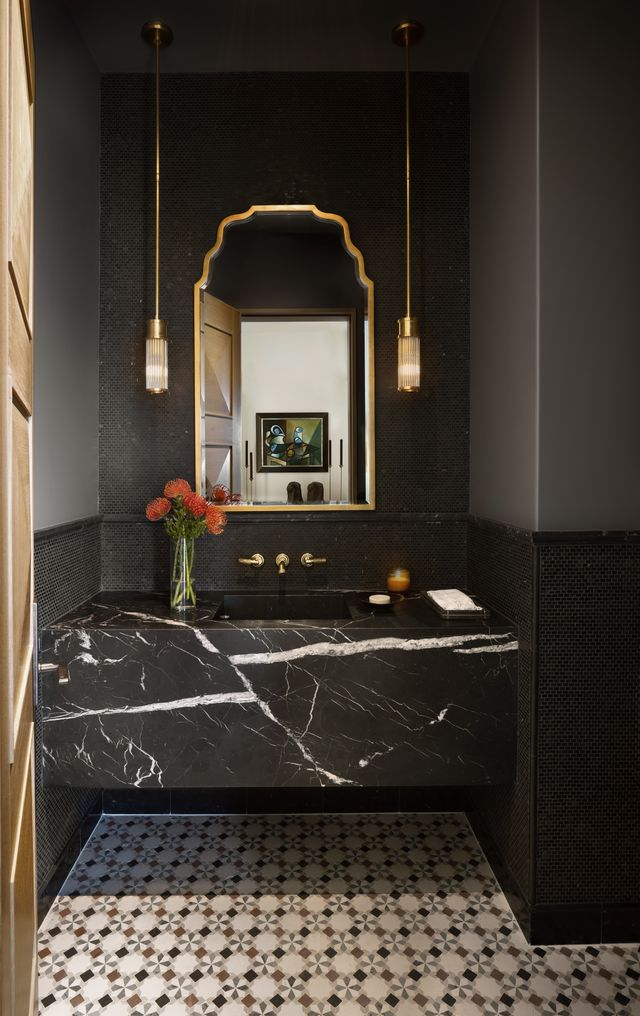
LPC: My favorite type of space to design is the powder room. I think of it as the jewel box of the house. Because it is small, I feel comfortable using luxurious stone on the floor and walls, incorporating an integrated stone sink with wall-mounted faucets. I love adding satin brass fixtures to give the space a sense of jewelry-like elegance. It is one of the few spaces every guest sees, and I want them to feel a sense of luxury when they enter.
AJ: What is the most important element in interior design?
LPC: I believe the most important element in interior design is creating spaces that combine durability, elegance, and comfort. Today, there are so many beautiful performance fabrics and durable stone surfaces that allow a home to be both stunning and functional. A well-designed space should exude warmth and sophistication, yet still feel approachable, a place where you can entertain, relax, and even put your feet up without worry. True design balances beauty with livability, so a home feels inviting, rich, and effortlessly comfortable.

AJ: Can you describe a project that you’re particularly proud of?
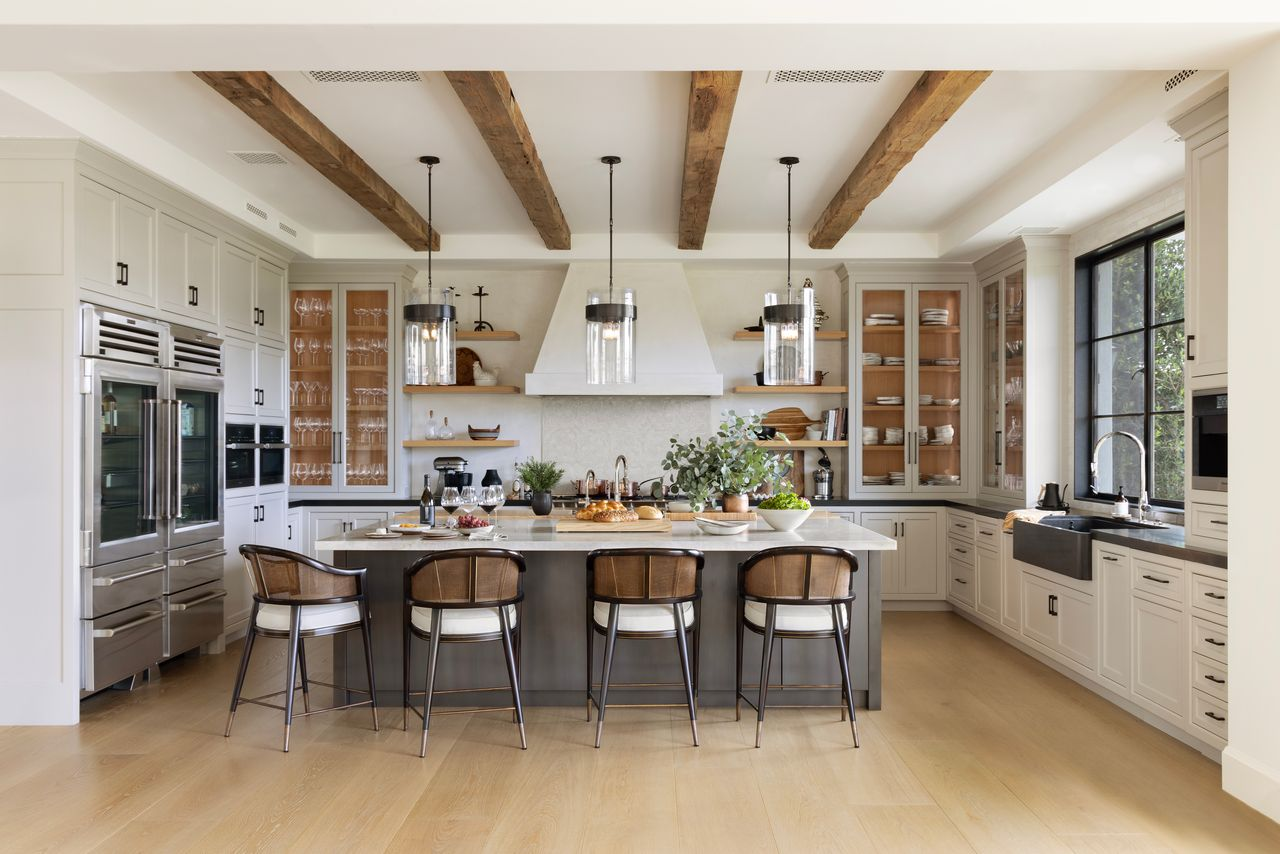
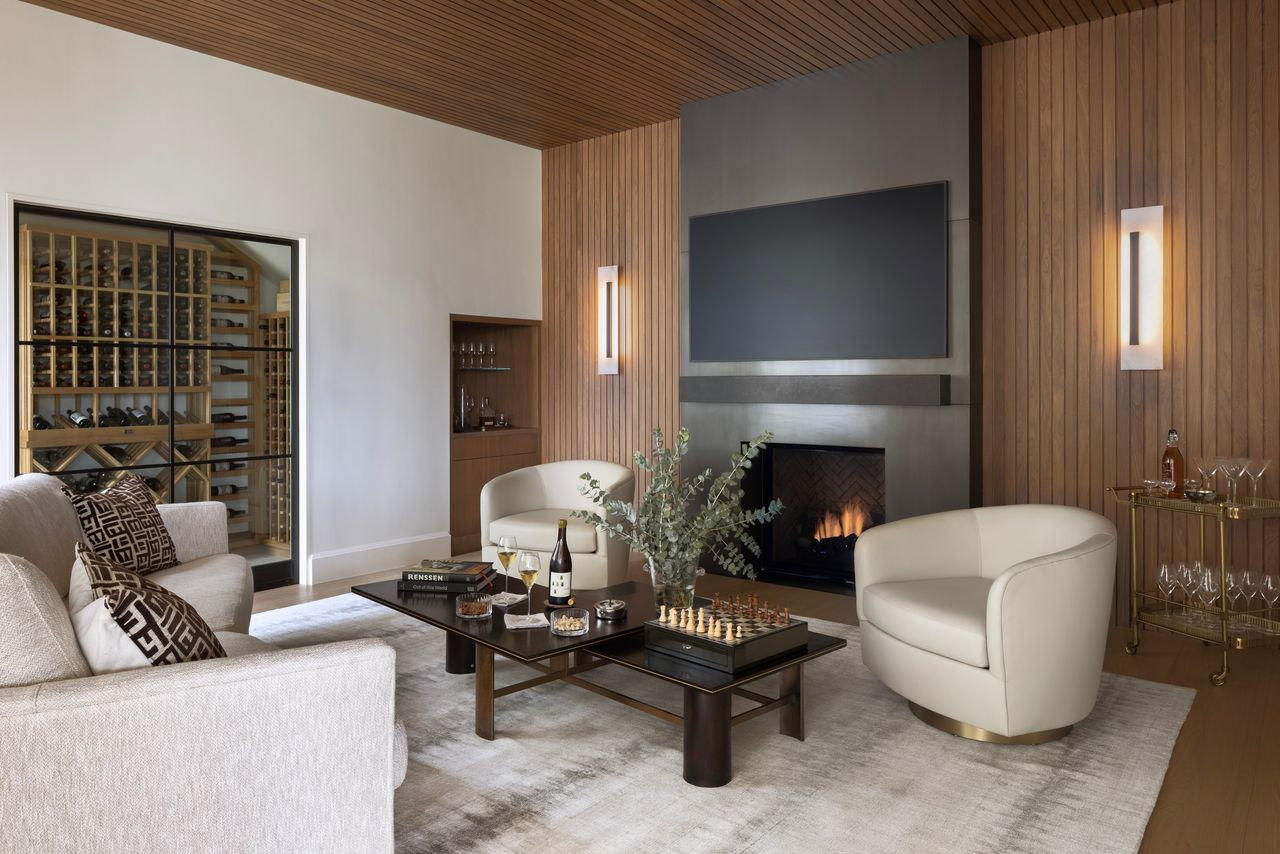
LPC: One project I am especially proud of was for a couple who were empty nesters. We expanded their 3,500-square-foot home by adding an upstairs, transforming it into a 5,500-square-foot, three-bedroom house. Since the clients traveled extensively, we incorporated Mediterranean influences throughout the home, drawing on Andalusian architecture and taking inspiration from Morocco, France, Spain, and Italy. The interiors are layered with rich textures, a mostly neutral palette, and touches of deep green to mirror the outdoors. Stunning steel windows and doors, along with a beautifully coffered ceiling, subtly divide the living and dining areas without closing them off. The family room features walnut paneling with three-dimensional details on the walls and ceiling, defining the space while maintaining flow. Bronze accents on the fireplace are echoed on the island cabinets, paired with black stone sinks in both the kitchen and island for a unique, unexpected touch.
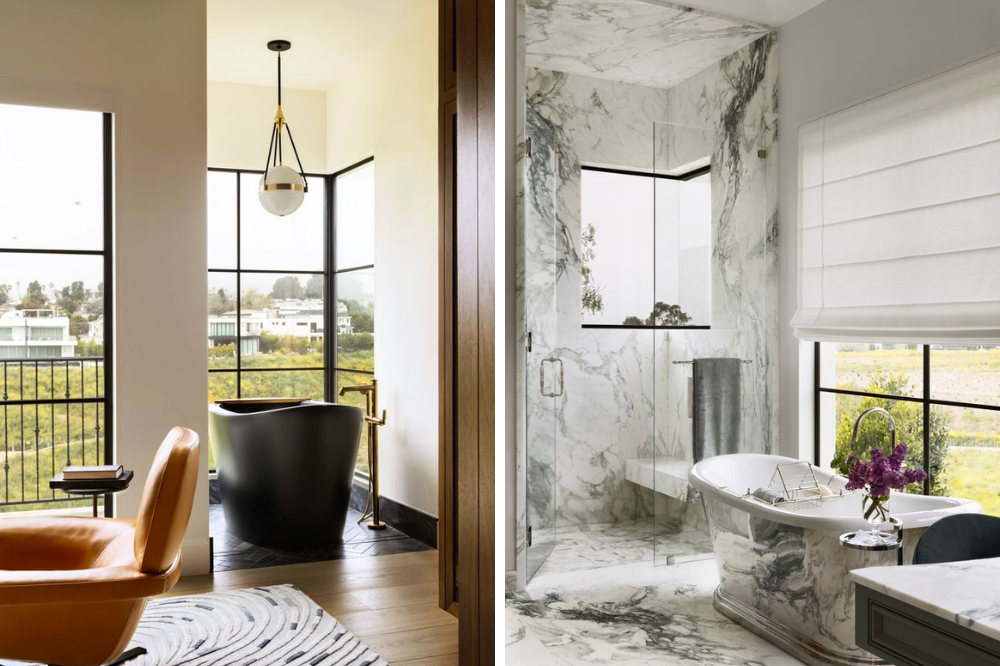
The primary bathrooms were custom-designed for both his and hers. His became a combination of bathroom, closet, and “man cave” overlooking the canyon, complete with a soaking tub and a Minotti chair. Her bathroom features marble with green veining, reflecting the lush canyon landscape. The powder room incorporates an integrated marble sink and mosaic details, bringing a sense of European elegance.
This project was particularly rewarding because every detail, from textures and materials to lighting, was intentionally curated to create a home that is both functional and deeply personal.
Like what you see? Get it first with a subscription to aspire design and home magazine.