



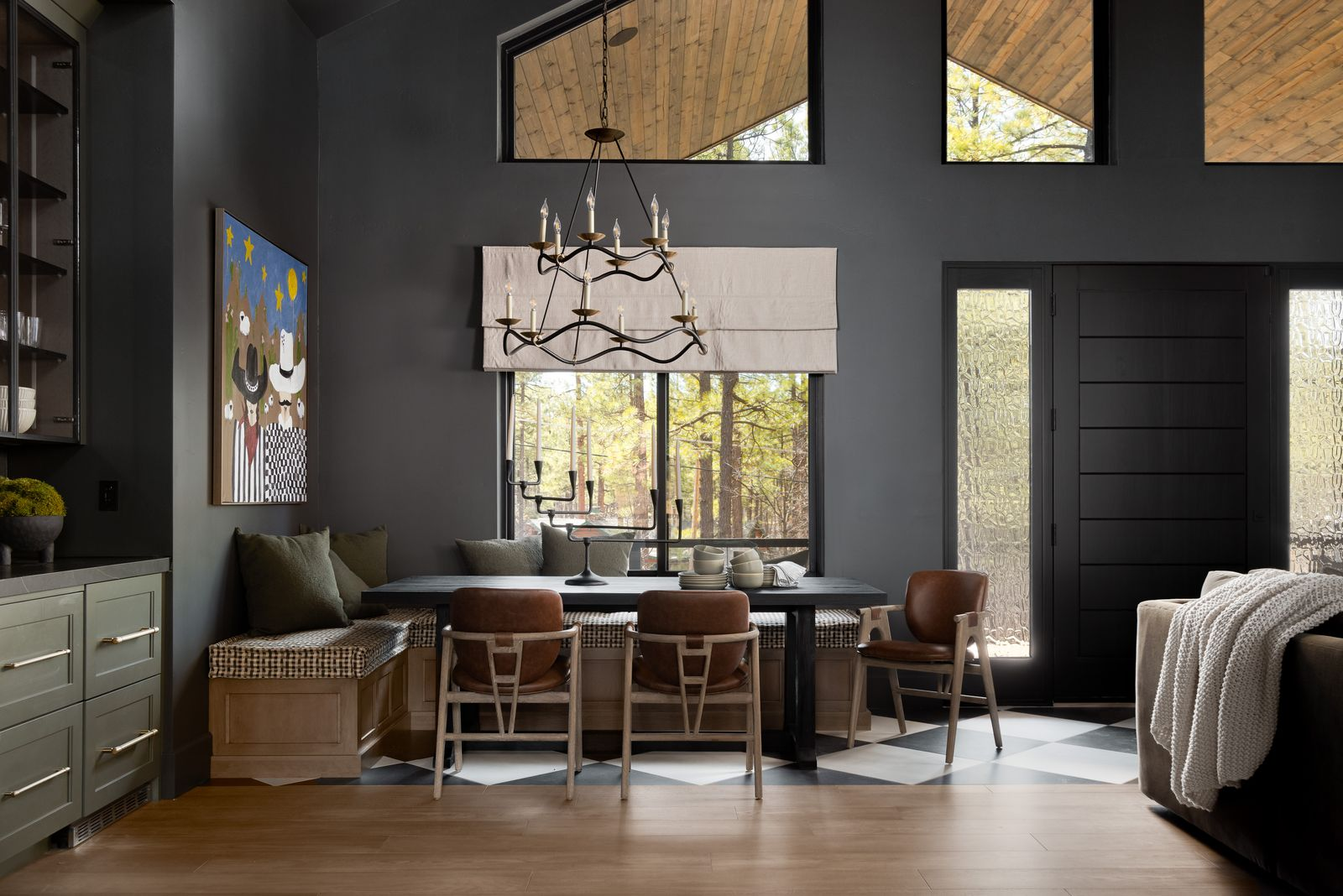
In this dining corner, a sculptural chandelier introduces movement overhead, contrasting the disciplined lines of the millwork and banquette below.
Andrew Joseph: How do you approach a new design project?
Britany Simon: I start by listening. Every home has its own rhythm, and every client has their own story. I ask questions that go beyond style: How do they want to live? What makes them feel at ease? Favorite vacation location and why? Once I have that narrative, I begin weaving together color, form, texture, and function. I don’t design to get the perfect photo or before and after shot… I design for people.
AJ: What is the most important element in a successful interior design?
BS: Connection. A space should connect… connect with the people who live in it, with its surroundings, and with the purpose it serves. Without that emotional throughline, it’s just decoration.

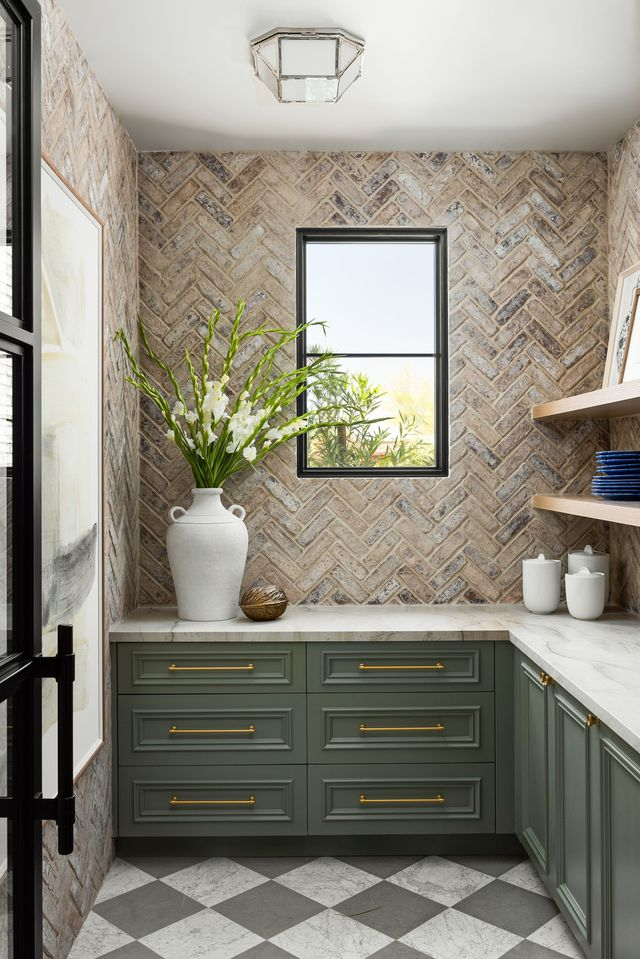
Conceived as a jewel-box moment, this pantry layers herringbone brick against tailored sage cabinetry, grounded by marble and a classic checkerboard floor that nods quietly to European style.
AJ: What’s the best piece of advice you’ve received as a designer?
BS: Don’t be afraid to push your clients. Sometimes your role is to show them something they didn’t even know they could love. We include a “wild card” option in almost every space of a design presentation. I think it’s important to show them something outside of their comfort zone or outside of what you KNOW they would like.
AJ: How do you stay creative and inspired?
BS: By staying curious. I look for beauty everywhere. Travel, architecture, a shadow pattern on the sidewalk, a fashion editorial, or the color of my daughter’s lip gloss. Creativity multiplies when you give it room to roam.
AJ: How do you stay up to date on the latest technology in design?
BS: We’re constantly testing tools. We are always trying to stay on the cutting edge of visualization software and project management platforms to offer a better and more efficient process for our clients.

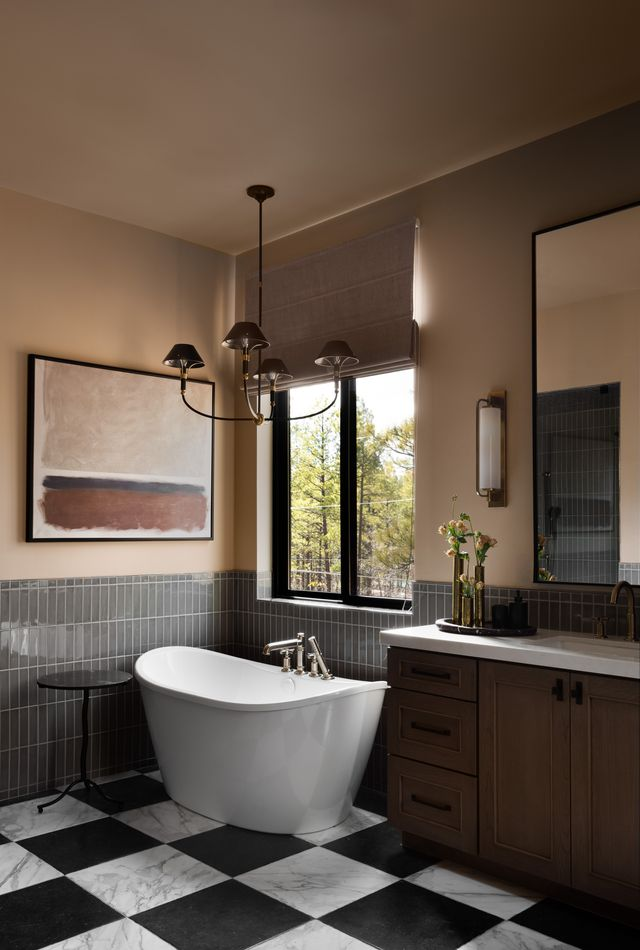
A sculptural freestanding tub grounds this room, framed by a vertically tiled wainscot that lends quiet dimension without ornamentation.
AJ: What is the most important skill for a successful designer?
BS: Adaptability. The ability to pivot, problem-solve, and remain creative no matter the constraint.
AJ: How do you approach designing for a specific mood or atmosphere?
BS: I translate feeling into form. A moody retreat gets richer palettes and low lighting; a joyful kitchen gets natural light and energetic textiles. Design is emotional storytelling.
AJ: What is your favorite design-related quote?
BS: “Luxury is in the details.” It’s our studio mantra, and it shows up in everything we do.
Like what you see? Get it first with a subscription to aspire design and home magazine.