




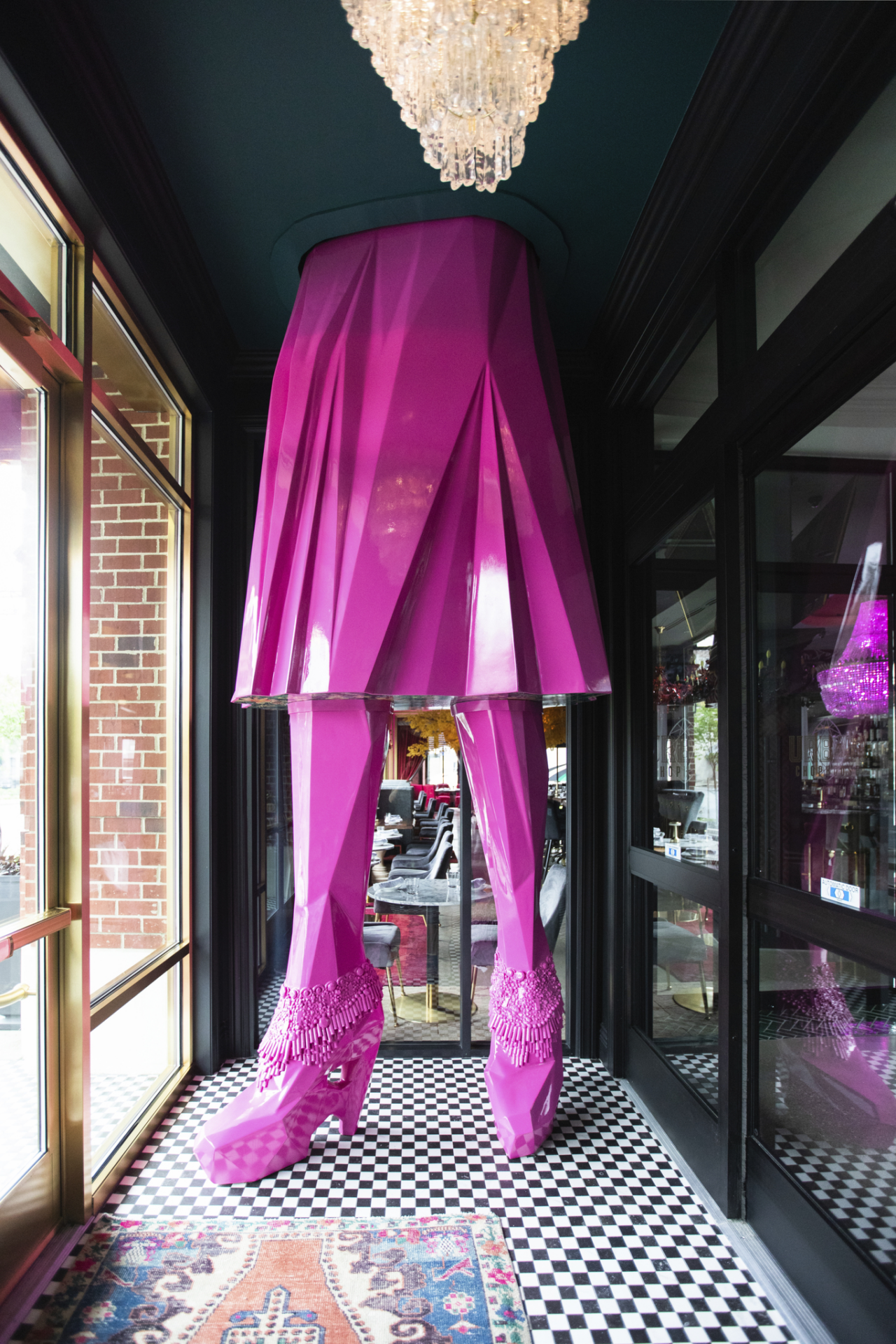
This entrance leans all the way into maximalism, using a larger-than-life pink sculpture, black trim, checkerboard flooring, and a crystal chandelier to create an unforgettable first impression.
AJ: How do you approach designing for different types of clients?
CS: We start with four distinctive, core client personas. That framework shapes everything. How we speak, how we present and pitch, how we listen, and how we guide decisions.
We worked with a consultant to build a proprietary model that helps us understand how different clients process information and emotion. Some clients need logic first. Others need to feel it in their bodies before they can say yes. Neither is right nor wrong. Our job is to meet people where they are, how they think and reflect back to them the things that they want but sometimes can’t even articulate.
This framework is woven into our team’s onboarding and reinforced throughout the client experience. It allows us to stay consistent as a brand while still being really personalized. When clients feel understood, trust follows. And when trust is present, the design can be bolder, more expressive, and more meaningful.
AJ: What is your favorite design trend from the past?
CS: Maximalism. Always. It was. It is. And it will be.
Layers, story, texture, contrast, emotion. Maximalism gives people permission to show up fully in their spaces. To surround themselves with objects that carry memory, beauty, and intention. It’s not about excess for the sake of excess. It’s about richness, because life is layered. I feel strongly that our homes should be too.

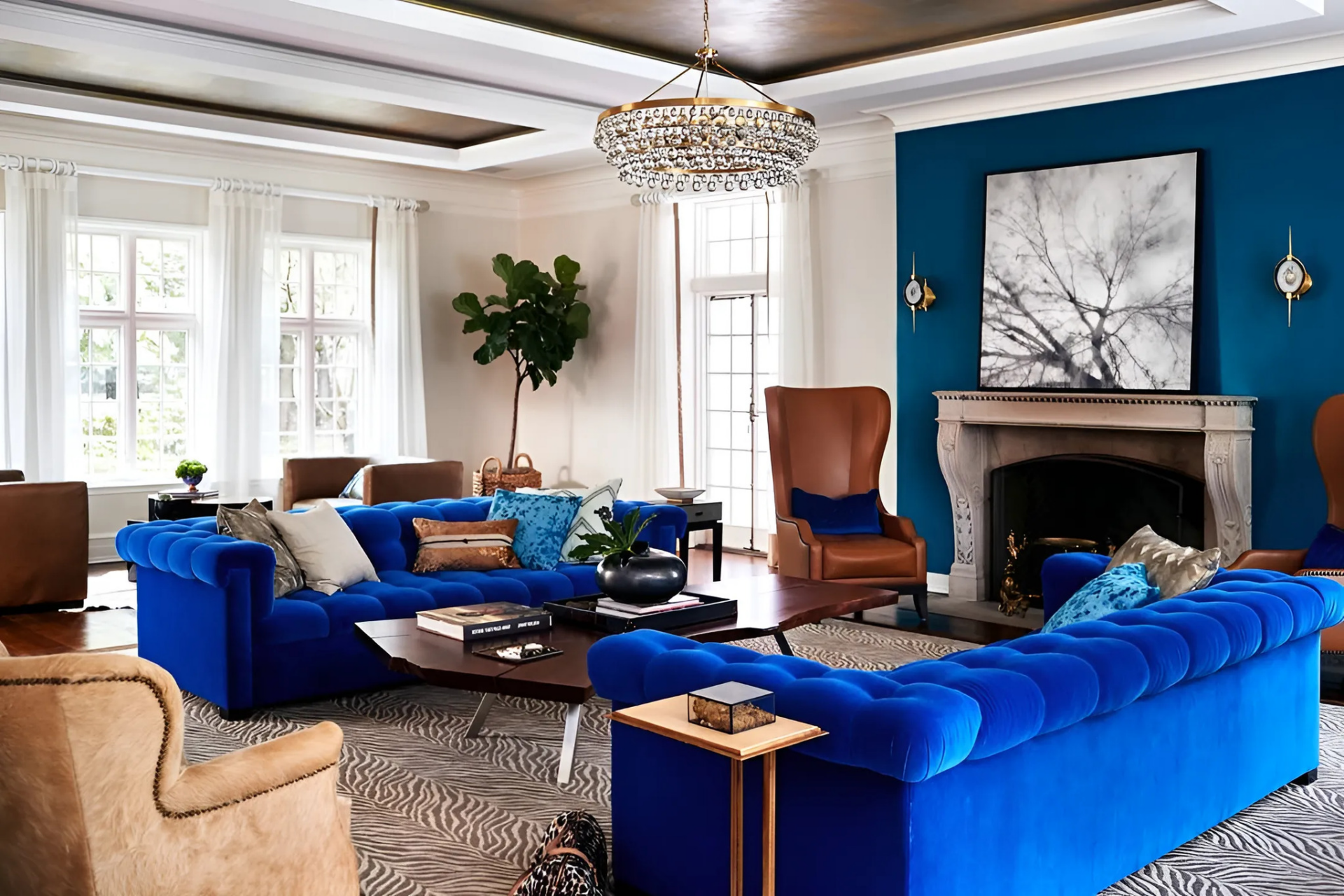
This eclectic living room gets its spark from electric blue tufted sofas, bringing bold personality to a space framed by classic architecture.
AJ: What is your favorite type of furniture to design?
CS: Custom case goods, without question. That’s where our creativity really comes alive. Whenever Crimson has the opportunity to design custom furniture, the team absolutely nails it. Those moments have sparked a long-term vision I’m excited about and keep sketching out in my mind: creating a proprietary line of French Art Deco–inspired casegoods that would be exclusive to Crimson and available through our showroom.
I’m especially drawn to sculptural pieces. Tables in particular. I keep coming back to the idea of a black marble round table with a fluid, architectural base. The inspiration comes from French Art Deco from the 1910s through the 1930s, which feels softer and more expressive than its American counterpart. There’s a sensuality and elegance to it that still feels modern.
That’s the kind of work I want more of. Pieces that feel timeless, intentional, and unmistakably Crimson. Not trends or replicas, but furniture that holds presence and tells a story and becomes part of a family’s legacy.
AJ: What’s your design pet peeve?
CS: Scale. When it’s off, everything feels wrong. Light fixtures that are too small. Furniture that doesn’t relate to the room. And then there’s the other extreme. Spaces that are so overthought and so perfectly coordinated that they feel lifeless.
Design should be fun! It should have tension and contrast. Break the rules. Mix things that aren’t supposed to go together. The best rooms don’t impress you; they simply embrace you. They make you feel beautiful, like you belong there, like you don’t want to leave. They enhance who you already are and let you be your best version of yourself.
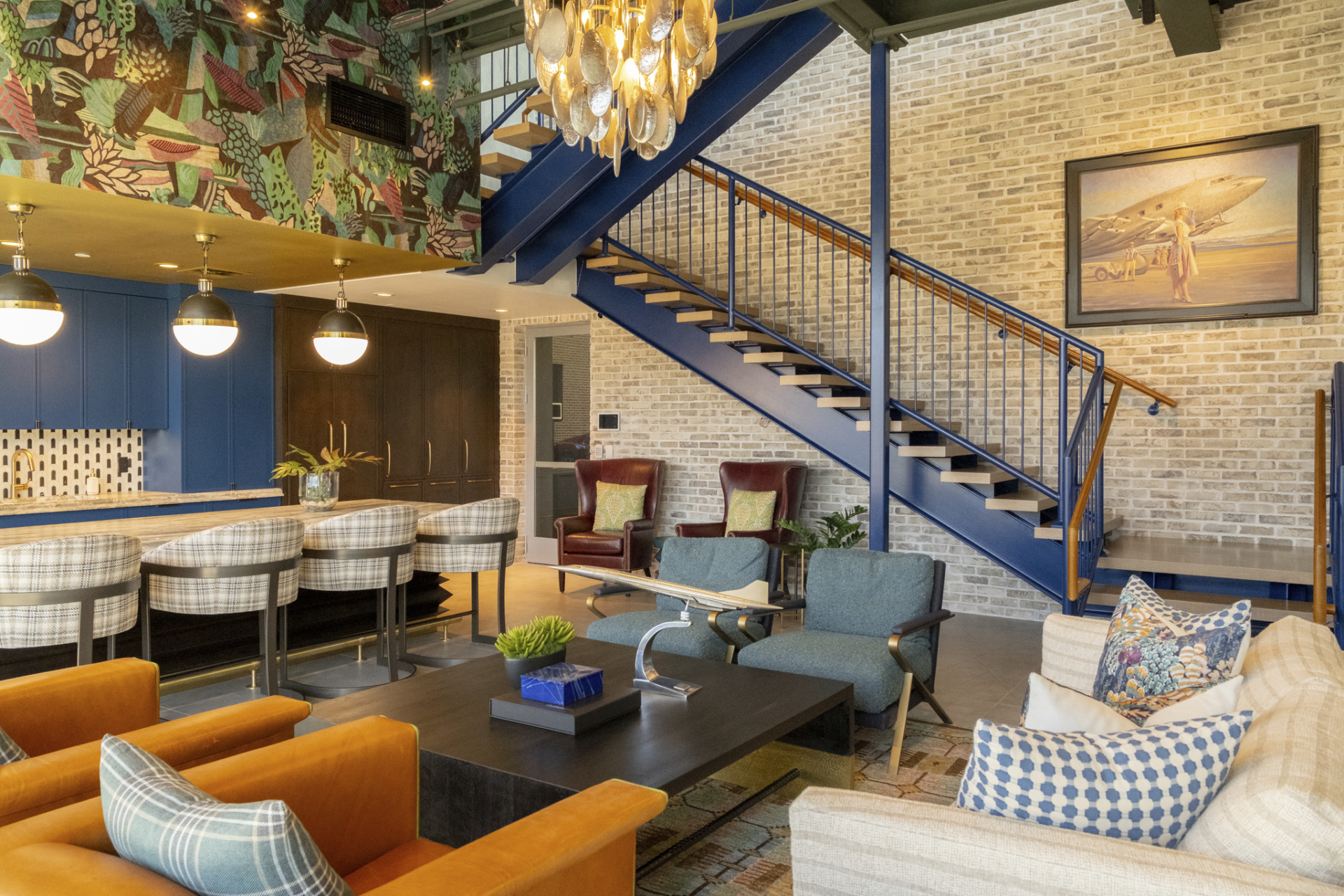
Every detail in this private aviation lounge feels considered, from the cobalt stair structure and patterned wallcovering, to the tailored bar seating and layered material palette.
Andrew Joseph: Can you describe a project that you’re particularly proud of?
Cheryl Stauffer: One project I’m especially proud of is the airplane hangar we designed and installed in 2025 for a family in Scottsdale. This project was meaningful on a few levels. First, my husband, Luiss, and I worked on it together. Long before he became president of Crimson, one of his personal goals was to design for aviation. Not just adjacent spaces, but environments built specifically for airplanes (or the planes themselves!). In a very real way, this project became a quiet act of manifestation.
What we created wasn’t a standard hangar. It’s a highly considered environment that serves as both a functional home for an aircraft and a deeply personal extension of the family’s lifestyle, used beyond flight hours. A place to gather, to admire a thoughtfully curated collection of cars, the private jet, and to experience craftsmanship at a human scale.
I’m proud of this project because it reflects what Crimson stands for. Designing with intention. Creating spaces that are personal, elevated, and rooted in the lives of the people who use them. And doing it with clients who value design as a long-term investment, not a trend. Already, we’re seeing lots more opportunities for additional spaces like this for the private aviation world, because who says a plane should live inside a boring warehouse?
AJ: Best advice you’d give your teenage self?
CS: Feel the fear and do it anyway. Take bigger risks. Question the scarcity mindset sooner. I would learn to shift into an abundant mindset that would have saved me years of operating from fear instead of trust.
There’s also a deeper lesson I wish I’d learned earlier, and that’s around redefining the idea of excellence. Letting go of perfectionism. Quieting the mental chatter. When you stop equating failure with your worth, delegation gets easier, leadership gets clearer, and life feels lighter. That’s when real growth happens.
Like what you see? Get it first with a subscription to aspire design and home magazine.