
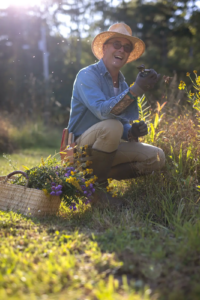
 Jean-Marc Flack is the founder of Hortulus Animae, a boutique landscape design studio based in New York’s Hudson Valley. Through his work, he unites artistic vision with ecological sensitivity to create landscapes that feel both luxurious and profoundly alive. Jean-Marc approaches each project as a living artwork, shaped through a thoughtful dialogue between expressive planting, refined structure, and the unique character of a site. His design sensibility balances exuberant, plant-led softness with architectural clarity, resulting in landscapes that are immersive, memorable, and ecologically meaningful. Deeply committed to site-specific design, Jean-Marc grounds his process in close study of architecture, topography, hydrology, and existing ecology. Each decision is made with long-term beauty, biodiversity, and resilience in mind. A hallmark of his work is its attention to seasonal experience, with landscapes that reveal shifting color, texture, and structure throughout the year. Founded in 2014, Hortulus Animae reflects Jean-Marc’s refined eye for composition and craft, informed by two decades in the fashion industry prior to establishing his design practice. Learn more about landscape design and Jean-Marc’s style in today’s Designer Friday.
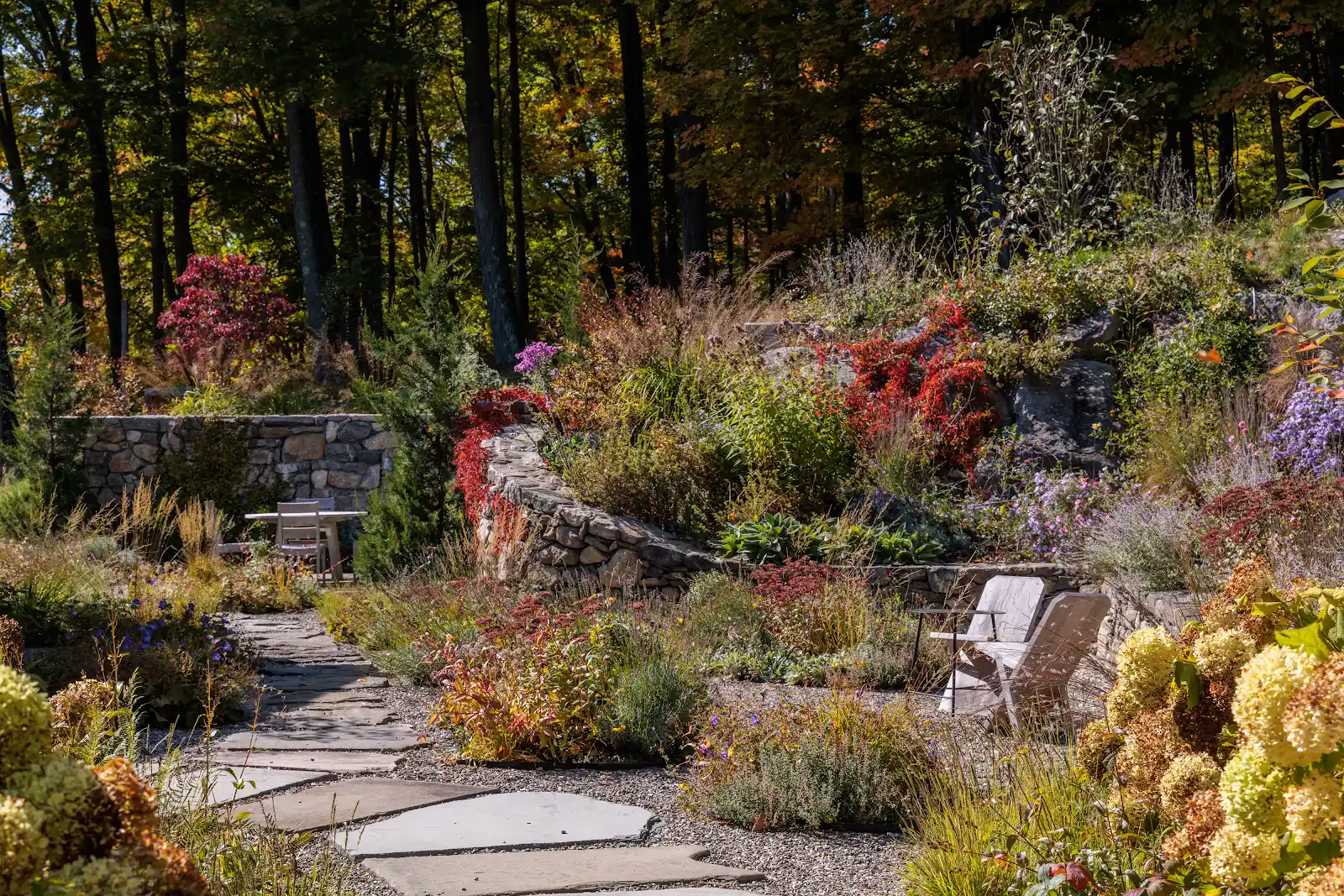
Terraced stone walls work with the natural grade of this site, creating distinct planting pockets while preserving the garden’s loose, meadow-like character. Photo by Alon Koppel
Andrew Joseph: What inspired you to become a designer?
Jean-Marc Flack: I began gardening on my Manhattan terrace while working as an executive in the fashion industry. What started as a budding interest quickly became an obsession — collecting plants, studying their habits, composing combinations that felt both structured and wild.
Gardening became a counterpoint to corporate life. It was immersive, sensual, and deeply restorative. The healing, meditative qualities of tending to living systems sustained me personally — and ultimately led me to leave fashion and devote myself fully to landscape design.
AJ: Can you describe your design philosophy in three words?
JMF: Mindfully Controlled Chaos.
AJ: How do you approach a new design project?
JMF: Slowly and methodically. Every project begins with listening — to the land and to the client. Environmental resource mapping is foundational to my process. I want to understand how the site already functions. I conduct a detailed site inventory, studying soil, light, hydrology, topography, and existing vegetation alongside the rhythms of my clients’ daily lives. It takes time to peel back these layers and allow a concept to crystallize.
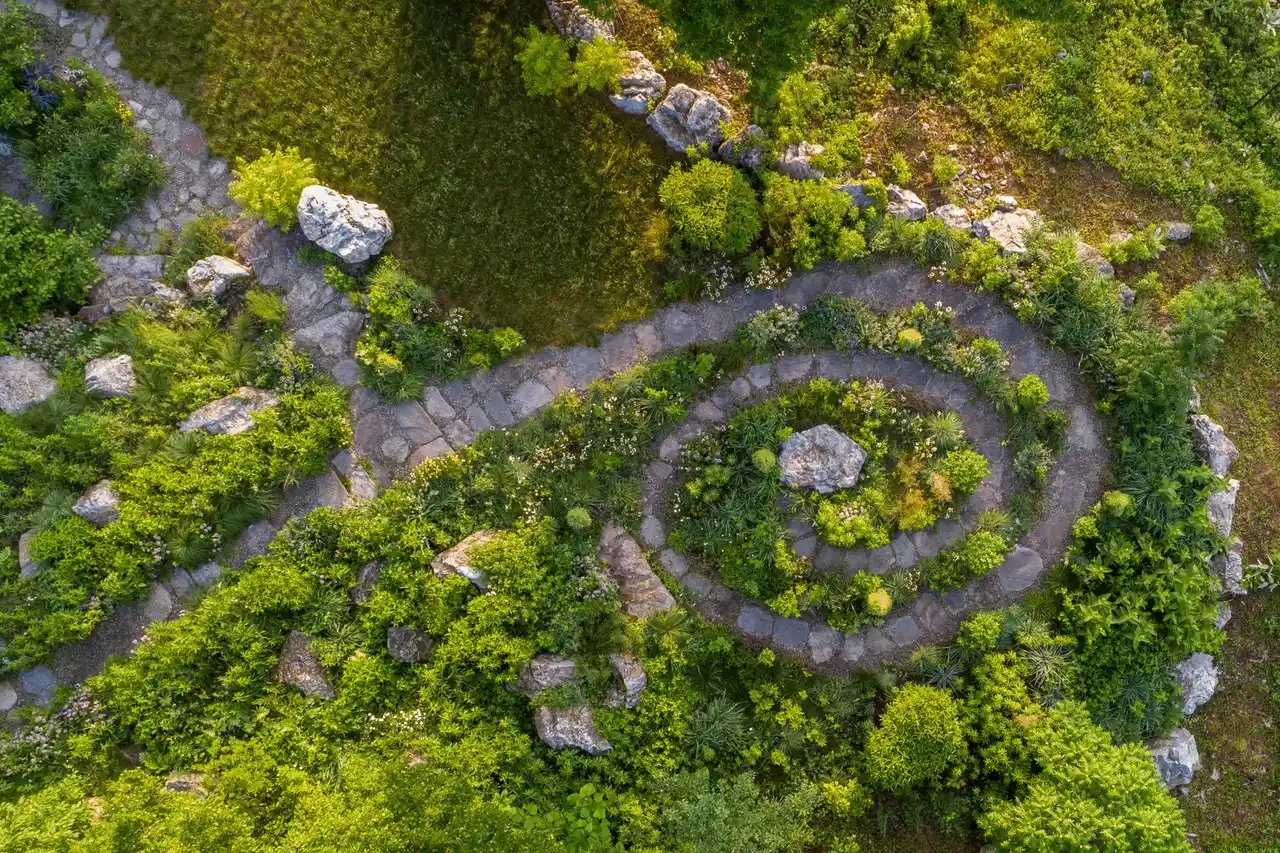
A spiraling stone path organizes the planting into a sculptural composition, with boulders, groundcovers, and flowering perennials reinforcing the garden’s naturalistic character. Photo by Alon Koppel
AJ: Can you describe a project you’re particularly proud of?
JMF: The Rambunctious Garden (pictured above). Early in my career, I was fortunate to work with clients who gave me near carte blanche. Their trust allowed me to design a landscape rooted in local plant communities shaped by the site’s microclimates.
I planted over 5,000 native perennials and shrubs in generous drifts and encouraged them to self-seed and migrate. Rather than tightly controlling every outcome, the garden found its own equilibrium. The landscape continues to evolve, growing more complex and expressive each year.
AJ: Can you tell us about a specific moment in your career that made you feel accomplished?
JMF: The day the owners of The Rambunctious Garden sent me videos of their granddaughter running and laughing through the meadow. Landscape design unfolds over years. Seeing a garden not simply installed, but inhabited and loved across generations was profoundly moving.
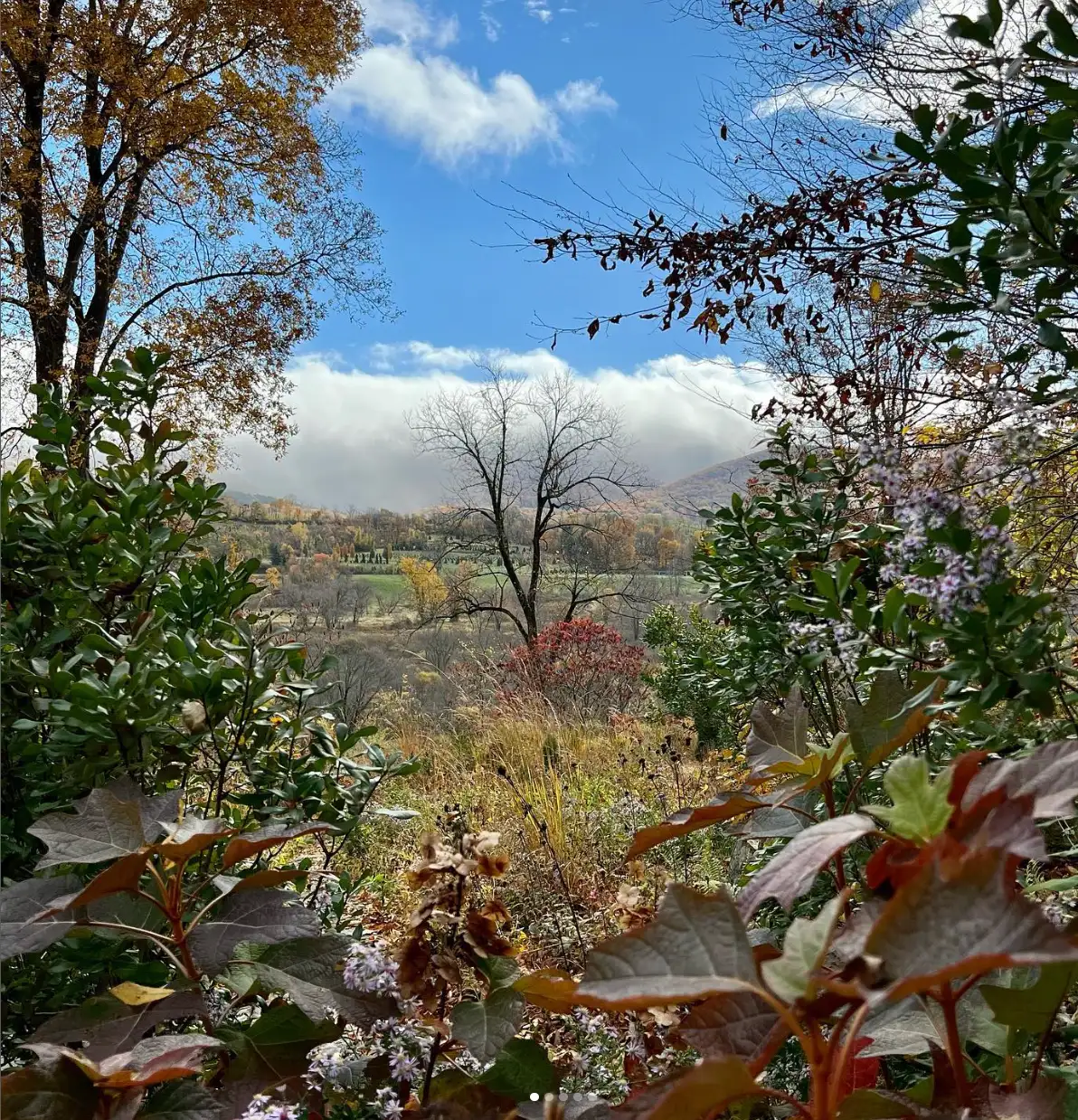
A carefully preserved view corridor opens through the mature canopy, turning the surrounding valley and mountains into this garden’s most compelling focal point.
AJ: How do you incorporate sustainability into your designs?
JMF: Sustainability is not an add-on — it is the framework. I prioritize regionally native plants and locally sourced materials, disturb the land as little as possible, and maintain a no-chemical approach. I integrate water-wise strategies such as rainwater catchment systems and permeable hardscape solutions whenever possible.
AJ: What would your dream project or dream client be right now?
JMF: I find myself drawn to two very different — yet related — scenarios. One would be rehabilitating a post-industrial site, restoring ecological vitality to land that has been depleted. The other would be reimagining a historic Hudson Valley estate garden using native plant communities.
AJ: Style (or design) icon and why?
JMF: Andy Goldsworthy has been a hero of mine for many years. His site-specific practice captures the essential ephemerality of nature, embracing decay and impermanence through interventions made from found natural materials. He is collaborating with time. That sensibility deeply resonates with the way I approach landscape design.
Like what you see? Get it first with a subscription to aspire design and home magazine.