





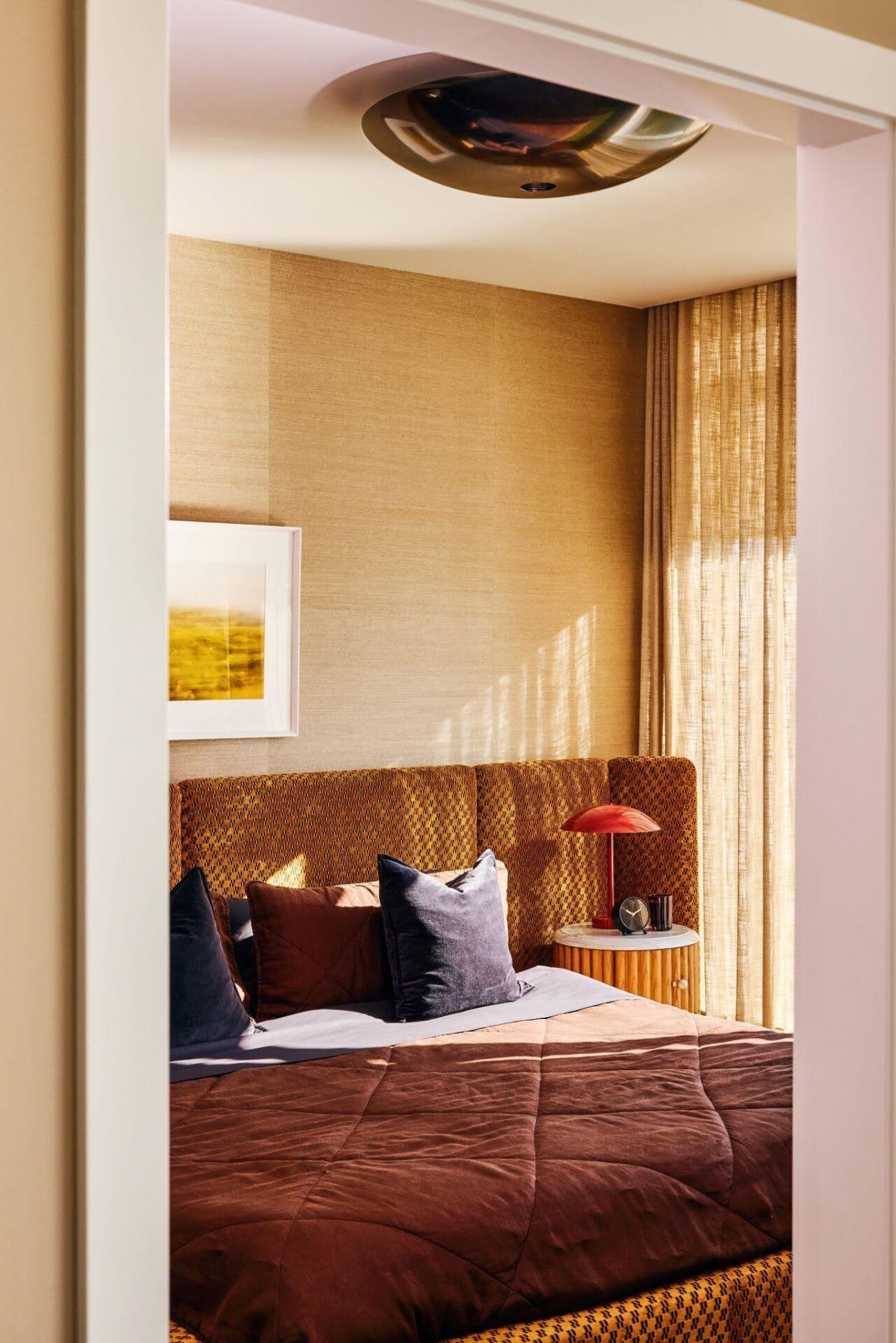
Sunlight through the sheer drapery adds a soft, cinematic layer to this room, highlighting the grasscloth walls and warm upholstery.
Andrew Joseph: What inspired you to become a designer?
Karin Bohn: My dad. Growing up, I watched him constantly building and tinkering — working in the garage, constructing the log house we grew up in, and even building river boats for remote hunting trips. Although he was a doctor, he often said that if he could do it over again, he would become an architect.
That environment gave me an early appreciation for construction and how things are made. I always knew I wanted a creative career and the freedom to build something of my own. I launched my design practice shortly after graduating from design school (advice I now tell aspiring designers not to follow), and nearly 20 years later, I haven’t looked back.
AJ: Can you describe your design philosophy in three words?
KB: Concept-forward. Bespoke. Soulful.

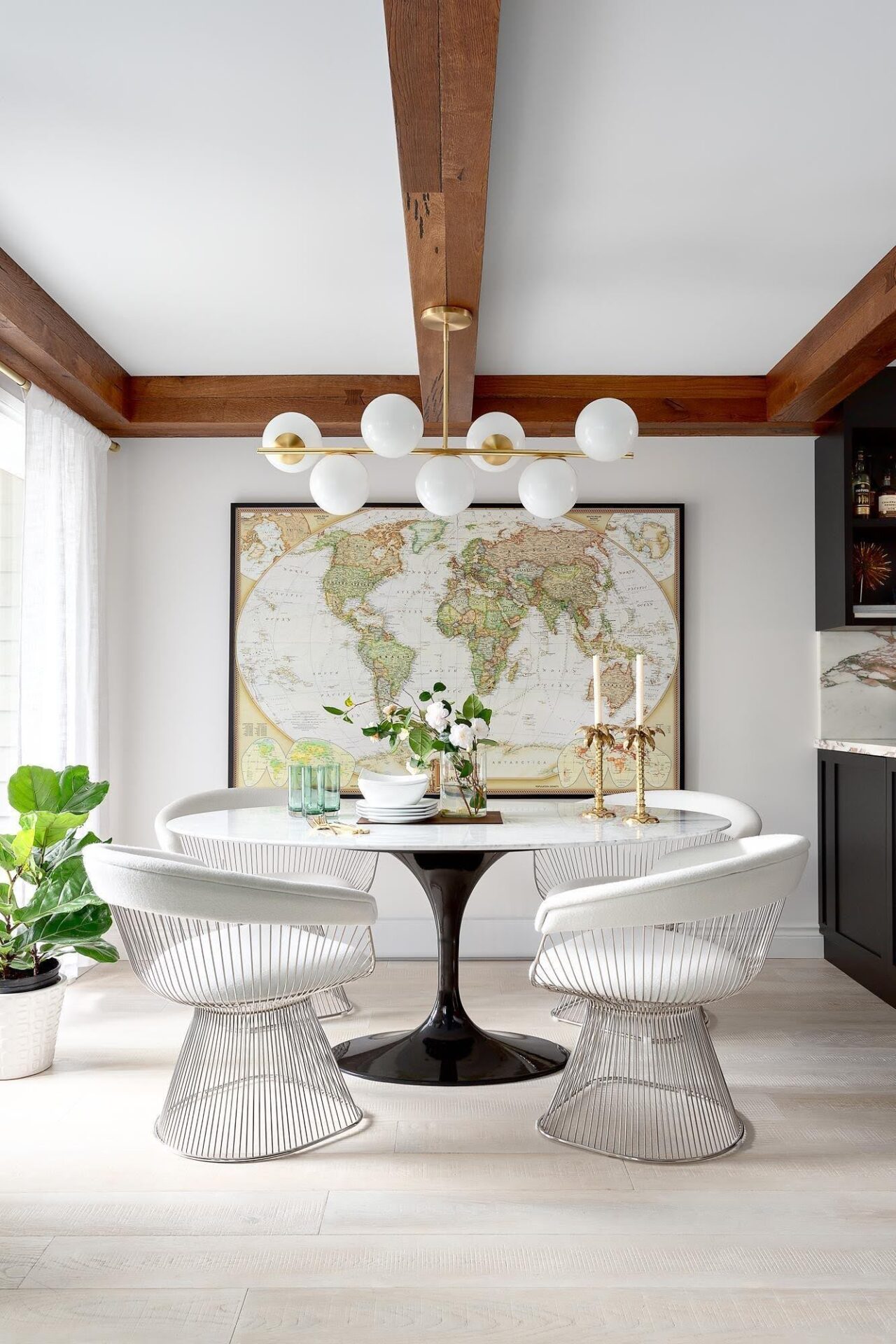
An oversized map brings personality to the back wall, while a streamlined table and wire chairs keep this space feeling fresh and uncluttered.
AJ: What is your favorite design tool to use?
KB: My favorite design tool might sound unexpected, but it’s paper, scissors, and tape. At our studio, we take a very analogue, tactile approach to developing concepts. While we absolutely use digital tools and online research, our design process is highly collaborative and hands-on. We’re constantly printing plans, imagery, and sketches — cutting, layering, and taping elements directly onto drawings. The entire team is involved, working around a table rather than sitting alone behind screens.
There’s something incredibly powerful about physically manipulating ideas. Using our hands, seeing scale in real time, and engaging with materials allows the design to evolve in a more intuitive, creative way. That human, tactile process consistently leads to richer, more thoughtful spaces than what can happen on a flat screen alone.
AJ: If you weren’t a designer, what would you be and why?
KB: If I weren’t a designer, I would be working in the wellness space — likely supporting people through their healing journeys, spiritual growth, and deeper self-connection. I’m deeply drawn to transformative inner work and the idea of holding space for others as they navigate meaningful change.
In many ways, that calling already shows up in my design practice. Whether through space or through wellness, the intention is the same: to support healing, presence, and a more conscious way of living. At its core, I see healing and design as deeply connected. Both are about creating environments — internal or external — that support transformation. When we heal ourselves, that healing ripples outward, ultimately contributing to the well-being of the planet.
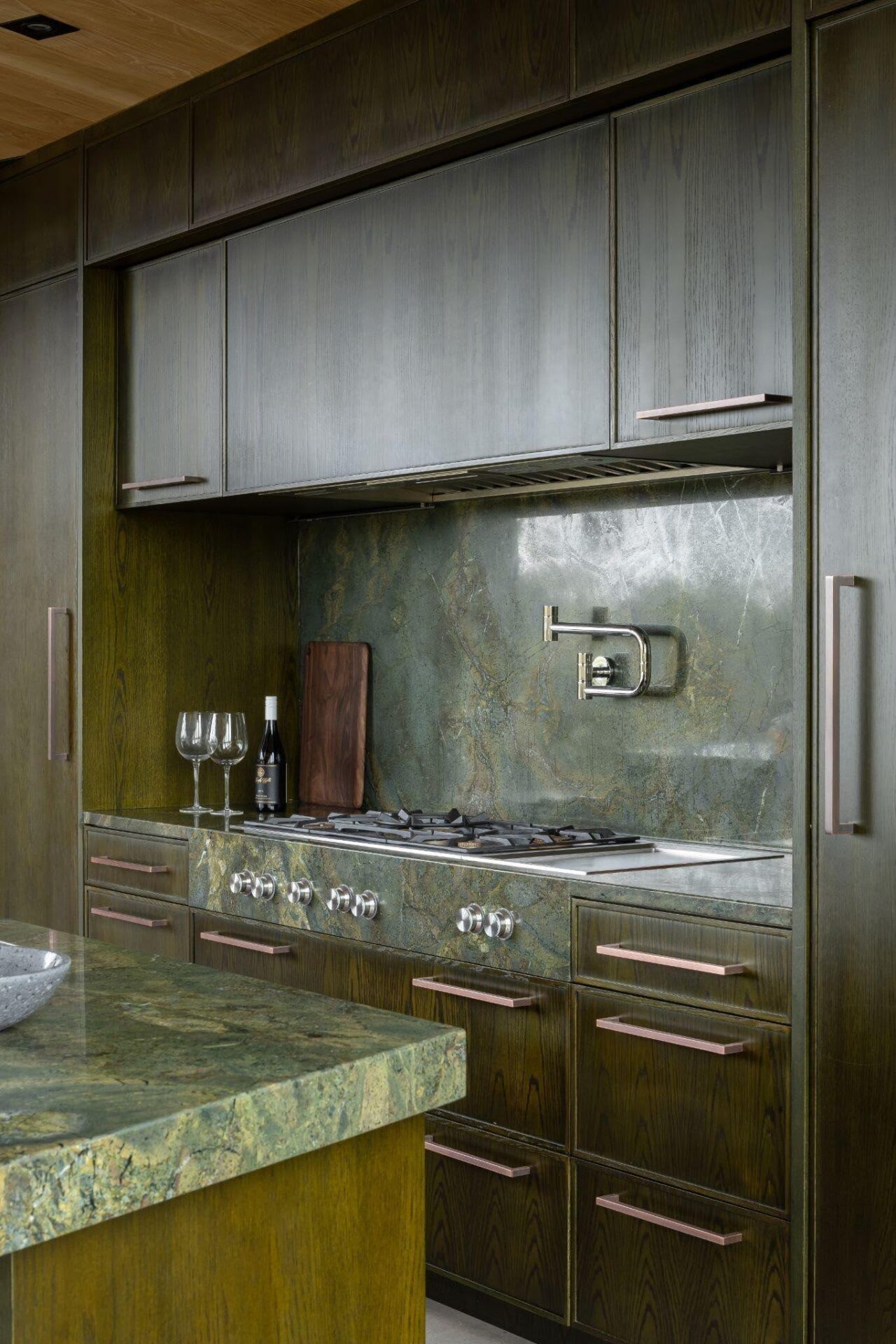
Deep green wood cabinetry and stone slabs create a fully immersive kitchen moment, with brass-toned hardware adding a subtle hit of warmth.
AJ: What would your dream project or dream client be right now?
KB: Designing a beautifully curated retreat center — one that feels both deeply restorative and quietly luxurious. I would love to be involved in every aspect of the experience, from the arrival sequence and entry moments to the guest rooms, spa, and wellness facilities.
This would include spaces like a steam room, sauna, cold plunge, and a Himalayan salt meditation area, as well as a dedicated yoga or ceremonial space. The goal would be to create an environment that supports healing, self-discovery, and mindfulness, while still feeling chic, considered, and boutique — never clinical or overly spiritual. A project where design, wellness, and intention come together in a meaningful way would truly be a dream.
AJ: What is your favorite aspect of your job?
KB: I love the precision of what we do. At times, I feel like an artistic mad scientist. Interior design and construction are exacting disciplines — sometimes a quarter of an inch can completely change an outcome — and that level of detail really suits my personality.
I have high standards and a strong sense of clarity about what works, and this profession celebrates that. It’s demanding and relentless at times, but also deeply satisfying. There’s nothing better than seeing a highly considered space come together exactly as intended.
Like what you see? Get it first with a subscription to aspire design and home magazine.