




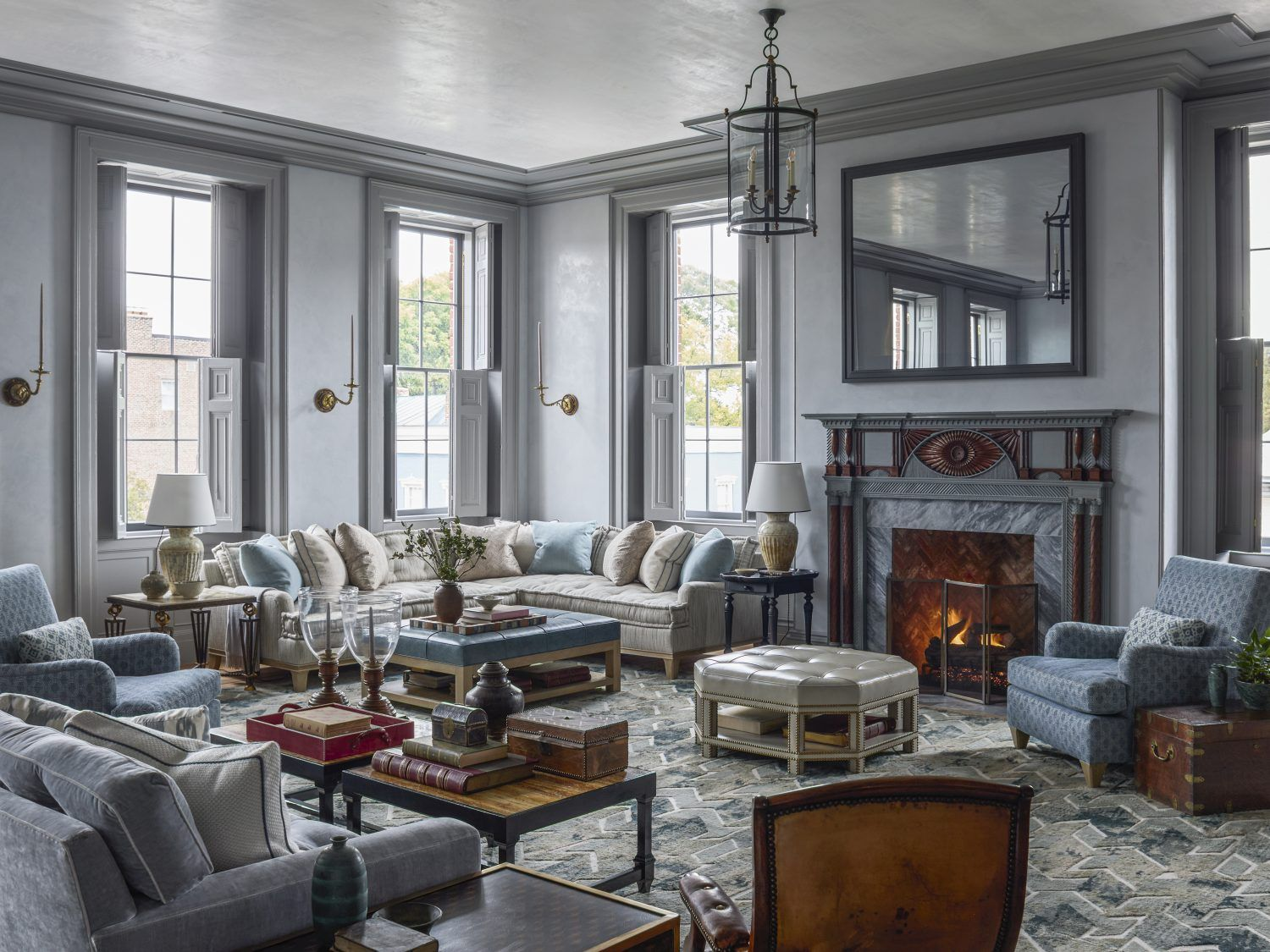
A stately mantel, lantern pendant, and shuttered windows nod to Georgian influence, while the loose, layered seating arrangement keeps this room from feeling overly ceremonial.
Andrew Joseph: What inspired you to become a designer?
Michael Patrick: I came by this naturally, as my mother and father are and were both Architects. They met at the Architecture School at Auburn, after my mom decided to switch from studying the flute at Newcomb. At age 19, she hadn’t met anyone she wanted to marry, so she thought she had better study something she could make a living doing in case she never did! She met my dad, and they began a great adventure together and a 68-year marriage that lasted until my father passed away in 2024. They married before she finished at Auburn, so I remember when I was 9 years old sitting beside her desk at the School of Architecture at the University of Tennessee, Knoxville, watching her make cool models while completing her graduate degree in Architecture. I followed her to two firms in Dallas. She was as precise as a straight edge, and my dad drew loose soft-pencil sketches, so I got it from both sides. Of course, they taught me to see architecture and design everywhere we went, including travel abroad, and walking through the houses they designed.
AJ: What is one thing no one knows about you?
MP: There are a few things: I am Canadian by birthplace (Toronto), and part Native American, of the Choctaw Nation. I grew up with maple leaves and moccasins! I also love to play guitar, dance tango and west coast swing, and sing. Sometimes I wonder what a career in one of those fields might have looked like!
AJ: How do you stay creative and inspired?
MP: I don’t really have any option – being creative comes much more naturally than anything else! However, I am energized by visits to museums to see great artwork, and by frequent travel to see wonderful cities and buildings. I sketch by hand everything I can, and am sure that it enters into everything I do.
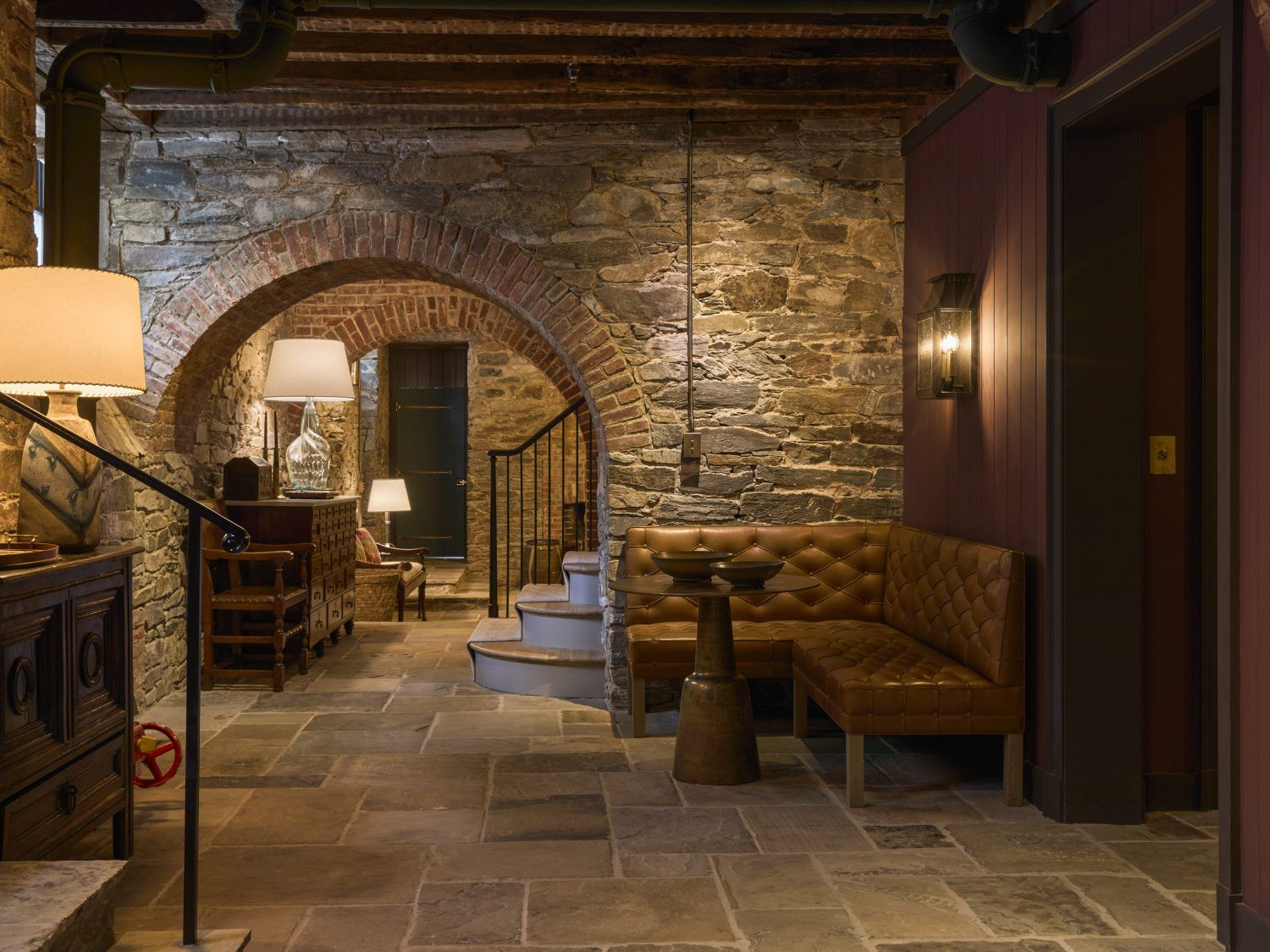
A cellar-like palette of stone, brick, and dark wood gives this space old-world presence, while the tufted banquette keeps the room feeling tailored and usable.
AJ: What is your favorite aspect of your job?
MP: The most peaceful and joyful moments of my life, when time stands still, are when I am sketching buildings out “in the wild.” Luckily, this is part of my job, insofar as educating myself to see and understand beautiful compositions is critical to doing good work. Also, especially when I was younger, sitting on a stone and sketching, or even sitting at a bar and sketching in a notebook, always attracts people to look and start a conversation.
AJ: How do you balance functionality and aesthetics in your designs?
MP: I run as hard as I can at both and only feel successful when both are working well. This sometimes takes a lot of time and research… how do you get a highly secure and access-controlled door that looks just like a simple traditional door handle, for example? The world isn’t set up for this, so you have to be creative and push the envelope.
AJ: How do you incorporate client feedback into your designs?
MP: For me, “client feedback,” starting with their initial ideas and program, IS the design. There isn’t really a design without the client’s input, or that doesn’t incorporate their character. In rare cases, feedback is, to be honest, uninformed, and we know that what they are asking for will not work out well. Then, we have to find ways to direct them to something they will be happy with when it is built. But for the most part, the feedback our clients give us is the backbone of the design.

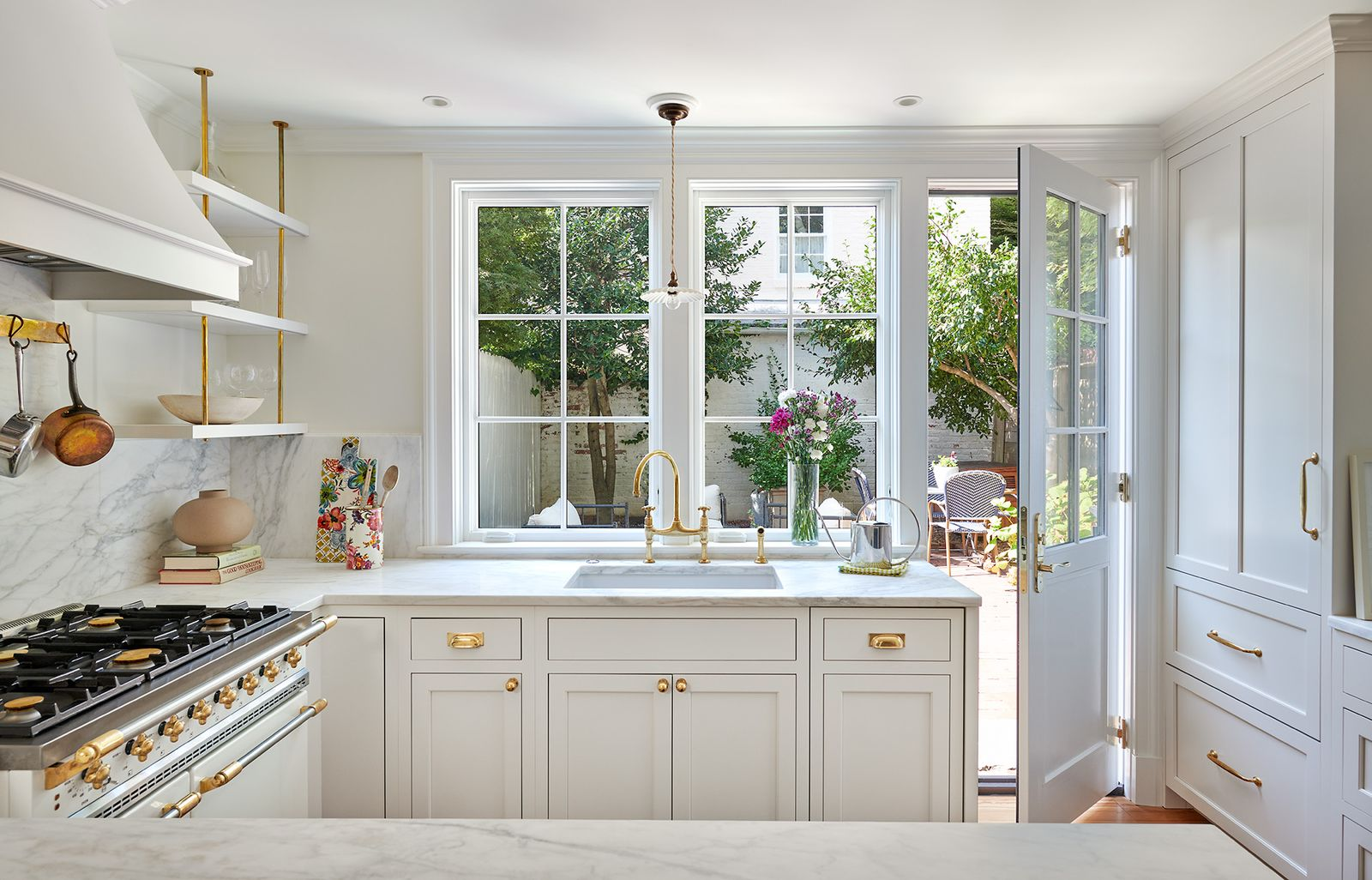
A restrained palette of white cabinetry, marble, and brass allows the garden beyond the windows to become this kitchen’s most vivid design element.
AJ: How do you stay organized while working on multiple projects?
MP: This is an important issue. As a principal at a flourishing firm, my partners and I are indeed responsible for multiple projects at a time. Most importantly, we have great teams led by excellent project managers, so as long as we can keep issues and next steps flowing to them, and stay ahead of them with what they need to keep moving, everything is good. I have personally tried numerous platforms to keep my own thoughts organized – not always easy because things to do and try are always coming up! Right now, the very simple Notes app is proving to be a practical way to jot down things to do on my phone, for example, and have them appear instantly on my iPad, office work computer and home work computer, so wherever I am, the list is current.
AJ: What is the most important skill for a successful designer?
MP: Listening and observing, which is another side of the same thing. Yes, you have to be able to organize and compose space and detail elements in a room, and keep the water out and let light in, but if you aren’t listening to your clients and observing and responding to the context you are building in, you won’t get anywhere good.
AJ: How do you stay up to date on the latest technology in design?
MP: I’ve never been willing to become obsolete, even when many people of my generation are out of touch with how work is done these days. I sketch with an Apple Pencil on my iPad every day – combining the best of the hand touch with the ability to manipulate, save and distribute images on a portable platform. Like everyone, I am trying AI in various situations. I’m quite worried about what it will do to humanity, but we need to be able to use and manage it. It hallucinates and lies, so you have to be mature enough to know when to question what you receive, but I am blown away by the potential for it to be a kind of thought partner, helping to organize and bring to light ways of proceeding. I can still draw in AutoCAD, SketchUp and Revit, and will pitch in to help the team as needed. We are sometimes using VR goggles now so our clients can walk around inside models of our designs. We are not bleeding edge at the firm, but we know the tools and can use them.
Like what you see? Get it first with a subscription to aspire design and home magazine.