
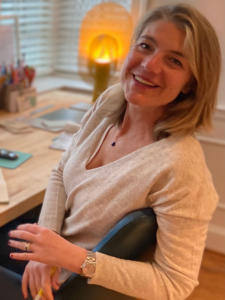
 Pascale de Fouchier is the founder and principal of Pascale de Fouchier Interiors, a French-American interior design studio based in the United States with residential projects across the U.S. and Europe. Born in Paris and trained in architecture, her work is grounded in an architectural approach to interiors, informed by a cross-cultural background and a collaborative design process. The studio specializes in renovations and new construction, creating homes guided by proportion, material integrity, and long-term coherence. Pascale’s work has been featured in design and lifestyle publications, and in 2025 she co-wrote Un Amour de Famille, a literary exploration of family, memory, and relationships, published in France. Across her practice, she is drawn to spaces that engage the senses and support the realities of everyday life. Today’s Designer Friday features Pacale de Fouchier and her unique design style.
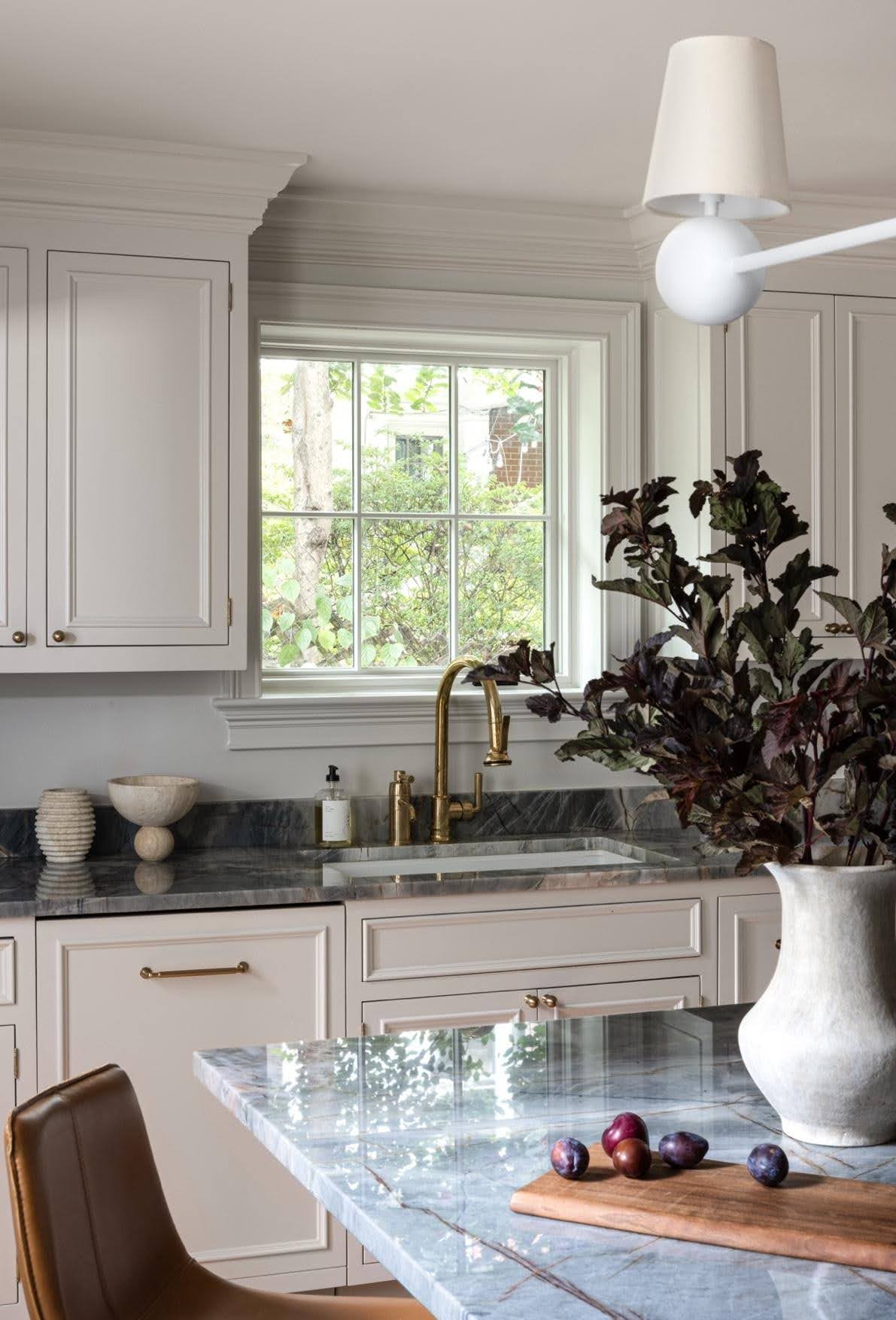
This kitchen pairs inset cabinetry and substantial crown molding with blue-gray veined stone, while brass hardware and a bridge faucet add contrast against the light millwork.
Andrew Joseph: What inspired you to become a designer?
Pascale de Fouchier: I’ve always noticed spaces before people noticed me — how light falls at the end of the day, how a chair invites you to sit, how a room can either calm you or quietly drain you. Growing up between cultures sharpened that awareness, and growing up with an architect for a father meant wandering through studios and job sites felt normal. I learned early to read plans, volumes, and materials almost intuitively. Design became my way of translating emotion, memory, and rhythm into something you can actually live in — spaces that support daily life while carrying meaning and depth.
AJ: Can you describe your design philosophy in three words?
PDF: Thoughtful. Honest. Enduring. I believe in creating spaces that are intentional and layered, designed to be lived in and made to endure beyond trends. Materials, proportions, and layouts should feel sincere rather than performative, and flexible enough to adapt as life changes. A home should evolve naturally with the people who inhabit it.
AJ: How do you approach a new design project?
PDF: I start with curiosity — and time. I take the time to feel and grasp every aspect of how a family lives: how they move through their day, what they love, what they tolerate, and what quietly disrupts their comfort. Every house is tied to a family, and every family to its house; each has a story to reveal and enhance. From there, the design becomes a dialogue between architecture, function, and atmosphere — shaped gradually, and never reduced to a fixed aesthetic imposed from the outside.
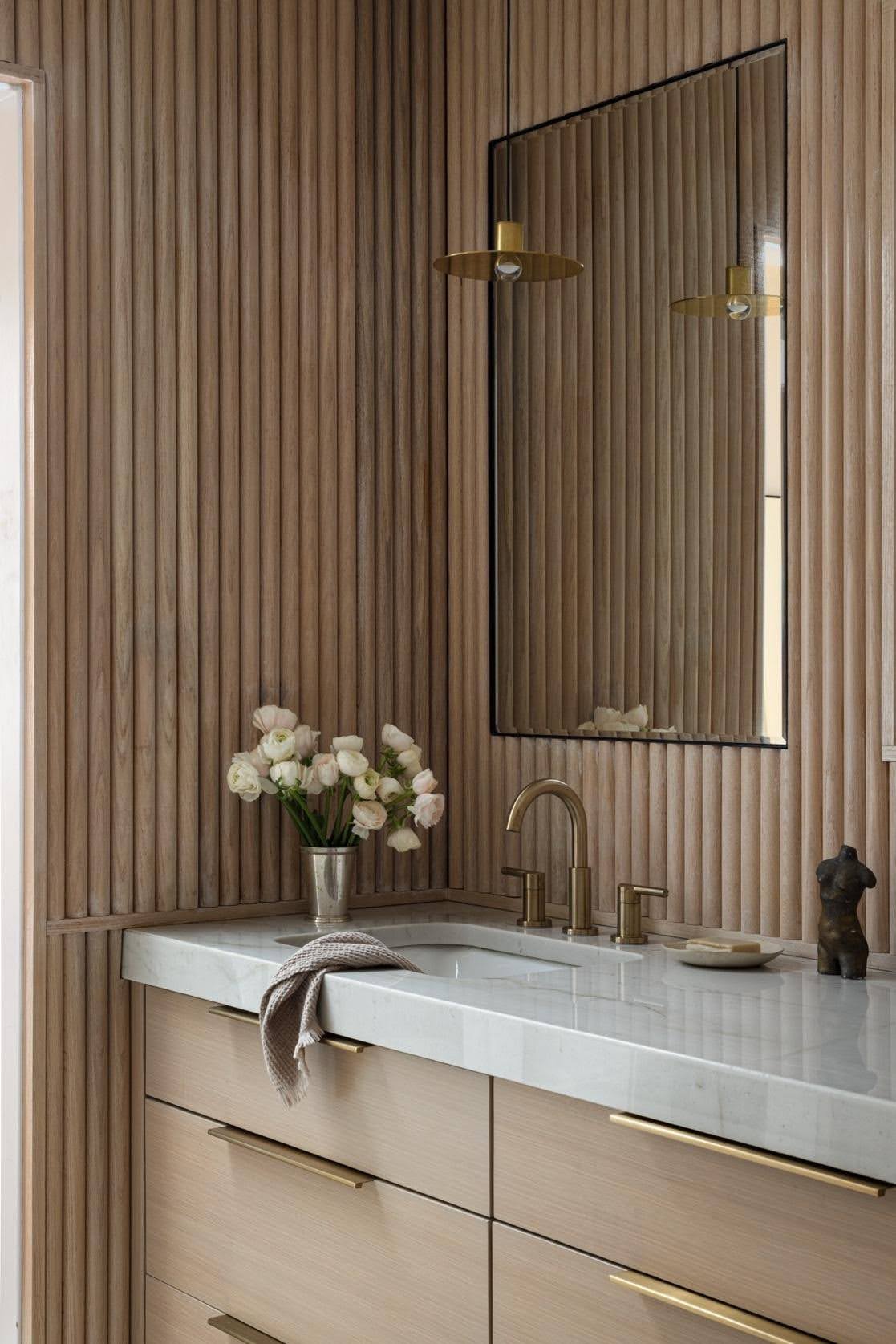
A thick stone counter visually anchors the vanity, while the pale wood drawers and brass hardware keep the lower half of the room light and minimal.
AJ: What is the most important element in a successful interior design?
PDF: Clarity. A successful design responds to a family’s way of living, leaves room for life to evolve, and pays homage to the bones of the house — so the space feels effortless, grounded, and true. When circulation, proportions, and materials are clear, a home feels calm and intuitive, and living in it becomes second nature.
AJ: Can you describe a project that you’re particularly proud of?
PDF: I’m proud of every project — there are no small ones, only different stories to tell. That said, one that stands out is the first new construction I worked on after launching PdFI in the U.S. It required learning the nuances of a new market, new systems, and new ways of working, while translating my European sensibility into an American context. Seeing that home come together — and realizing it set the foundation for how I practice here — made it especially meaningful.
AJ: How do you stay creative and inspired?
PDF: I travel, in every sense of the word — discovering new colors, techniques, foods, and places, but also observing how people live elsewhere. I’m equally intentional about making room for quiet. Stepping back resets my eye and sharpens my instincts. Together, these experiences build an internal library of impressions that I draw from over time.
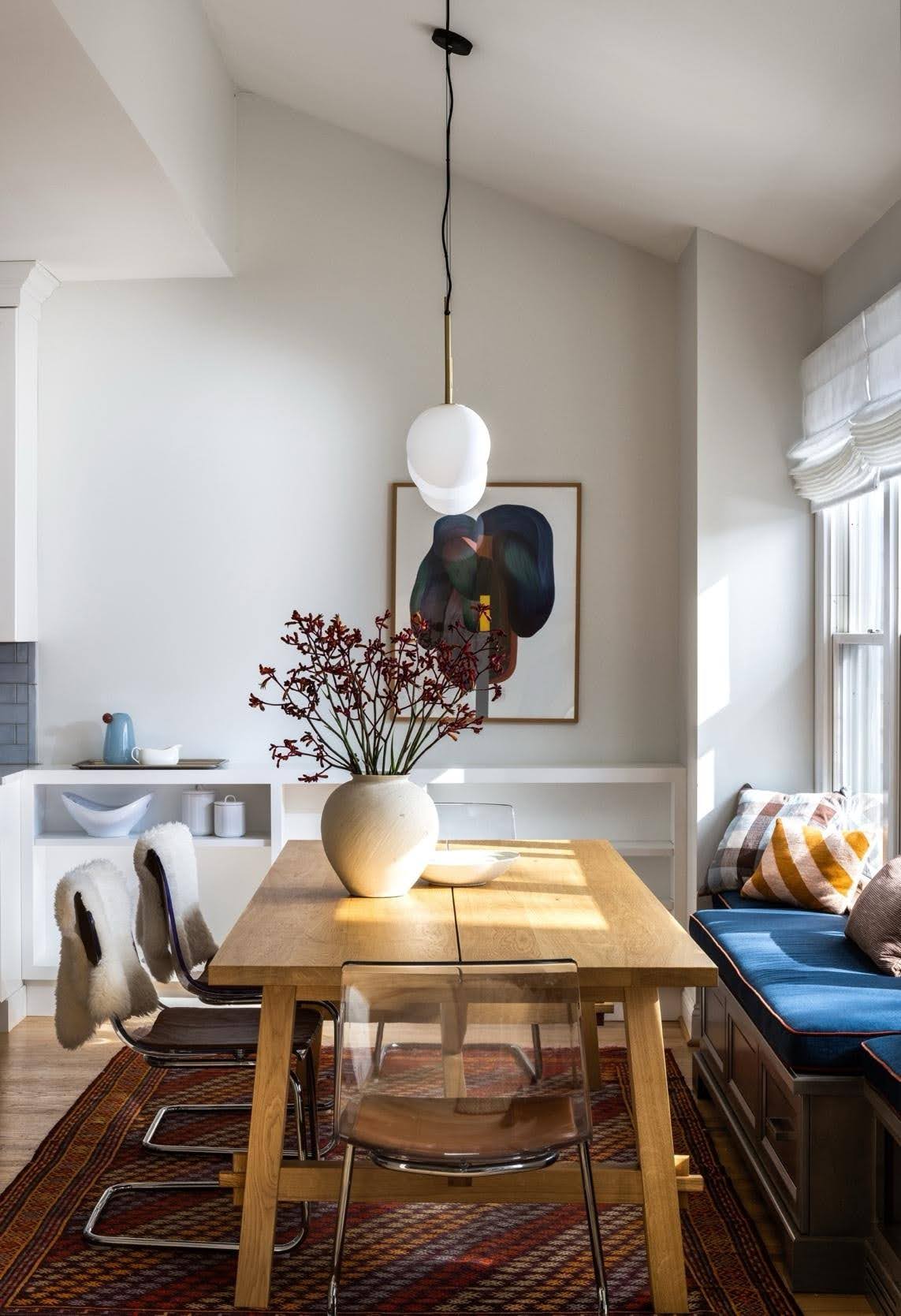
This dining area balances modern and vintage-adjacent elements through a clean-lined architectural shell, a classic trestle-base table, expressive textile layering, and seating that mixes transparency, chrome, and soft upholstery.
AJ: How do you balance functionality and aesthetics in your designs?
PDF: I begin with function because it supports daily life. Circulation, storage, light, and use create the foundation of a home. Once those elements feel right, the aesthetic can unfold naturally — refined with care, never forced. For me, beauty comes from spaces that work quietly and feel easy to live in.
AJ: What would your dream project or dream client be right now?
PDF: A house on the water in a warm climate, where architecture frames daily life and inside and outside are in constant conversation — somewhere in the South of France or Europe, the Caribbean, Mexico, or Big Sur. A place shaped by volumes, openings, and materials, where draperies catch the breeze and the view becomes the wallpaper. It would be a home designed for slower mornings, shared meals that stretch into the evening, bare feet moving in and out all day, and materials that age beautifully with sun and heat. Designing a house like this means returning to my core expertise: beginning with architecture and working with climate, landscape, and proportion so movement, flexibility, and ease are built into the structure itself — allowing the house to support presence rather than schedules.
Photography by Jenn Verrier.
Styling by Kristi Hunter.
Like what you see? Get it first with a subscription to aspire design and home magazine.