





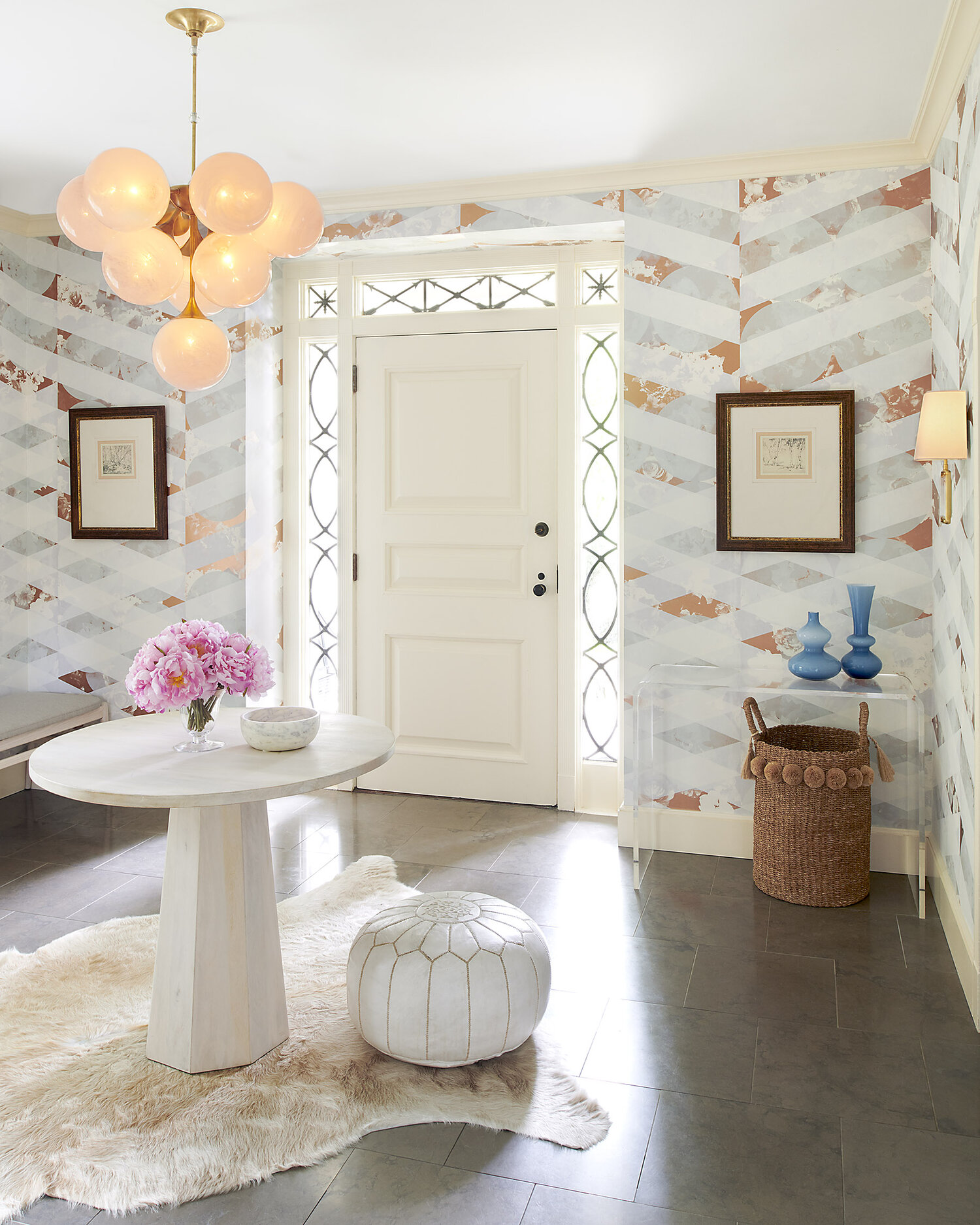
The Cristol Tiered Chandelier sets the mood for this welcoming entryway, blending modern elegance with a touch of whimsy. Photo by Rebecca McAlpin.
Andrew Joseph: What inspired you to become a designer?
Phoebe Schuh: Becoming a designer was, for me, a very organic process that unfolded in my late teens and early twenties. My early inspiration started in a cave in Belize. In college I double-majored in Anthropology and Fine Arts (Painting), which gave me the opportunity to spend three summers working as an archaeological illustrator in the Mayan caves there. I loved the adventure of it, the intricate detail of the work itself, and above all, learning about the people that lived, ate, slept, prayed, and celebrated in these spaces. After college I focused my life on art, as both a painter and a gallerist, where I had the opportunity eventually to place important art in people’s homes. Once I got a taste for that, I realized that I would be much happier if I could play a role in designing the entire space that the art was hanging in, rather than just doing my best with all of the decisions that had already been made. So, I went back to school for interior design. Twenty years later I’m inspired every day.
AJ: Can you describe your design philosophy in three words?
PS: Function, Flow, Form.

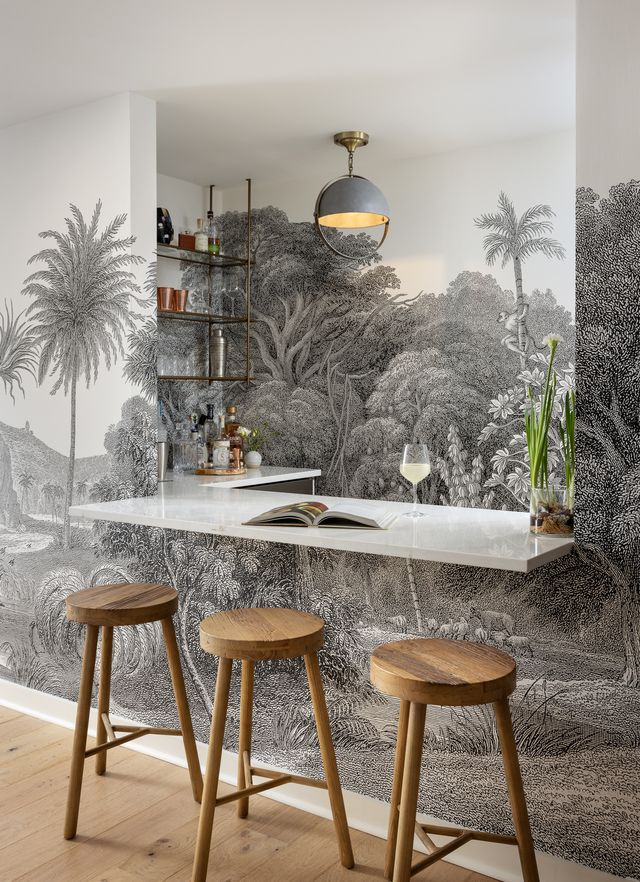
A jungle mural from Rebel Walls sets the scene at this home bar. A white marble countertop stands out between the mural and the natural wooden stools add to the earthy charm.
AJ: How do you approach a new design project?
PS: Establishing trust. I know that sounds kind of hokey, but we firmly believe that it is nearly impossible to design successfully without it. Our clients need to trust us, in order to let us into the most sacred spaces in their lives. We need to trust them to be honest with us about how they actually live, and to let go and let us be their expert with only their success in mind. Builders need to trust that we are designing with execution top of mind, that we understand how critical their project sequencing is, and that we will deliver clear information and consistent support as the project develops. We need to trust that builders will look to us for important collaboration as challenges arise (which they interesting do). Vendors, artists, artisans, skilled tradespeople … the list goes on and on, and when you have a good team you know that everyone is pouring their heart and sweat and intellect into every action and every decision. That kind of commitment is only possible when everyone can trust each other.
AJ: How do you incorporate sustainability into your designs?
PS: Vintage, baby.
AJ: Style (or design) icon and why?
PS: Simon Doonan. He’s funny, swanky, endlessly positive and incredibly creative.

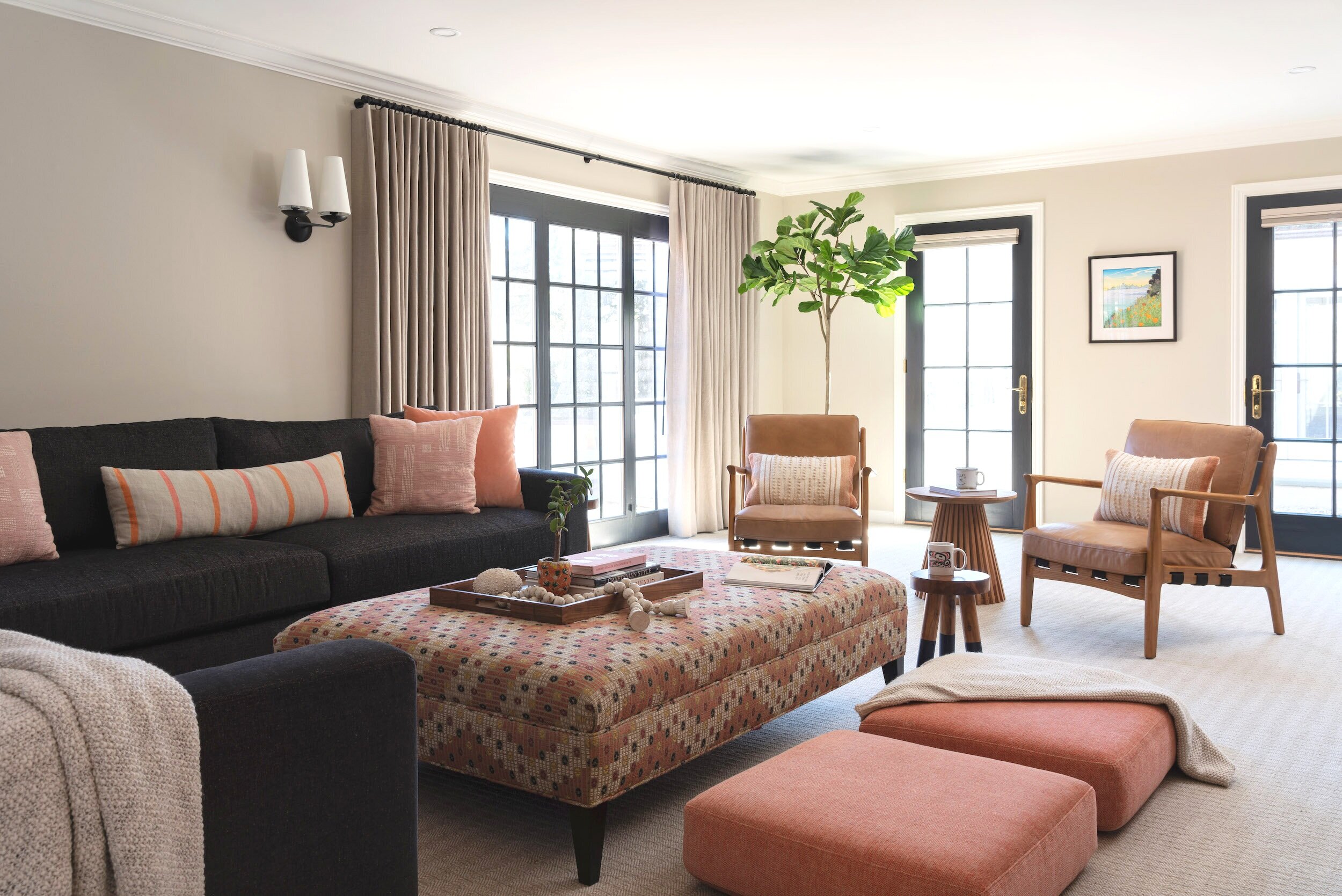
Often known as the jewelry for the home, these throw pillows complete the room, tying together the entire space. The color palette of the ottoman complements the hues of the throw pillows, creating a cohesive and inviting atmosphere.
AJ: Best advice you’d give your teenage self?
PS: Go as far away as you can, and form your own opinions!
AJ: What is your favorite design tool to use?
PS: A felt pen! As a studio we put a premium on being experts at 3D modeling and we have developed a visual language and style for our renderings that I am obsessed with. But I have a team of super talents that use those tools. For me, I like my felt pens for sketching, redlining, listing, scratching out, and reimagining … can’t have enough of them lying around!
AJ: How do you approach designing for different types of clients?
PS: I always start with “Do you like to entertain?” This answers a lot of questions …
AJ: What was the last book you read and how did it inspire you?
PS: Studio Ashby’s new book. I love everything they are doing.
Like what you see? Get it first with a subscription to aspire design and home magazine.