




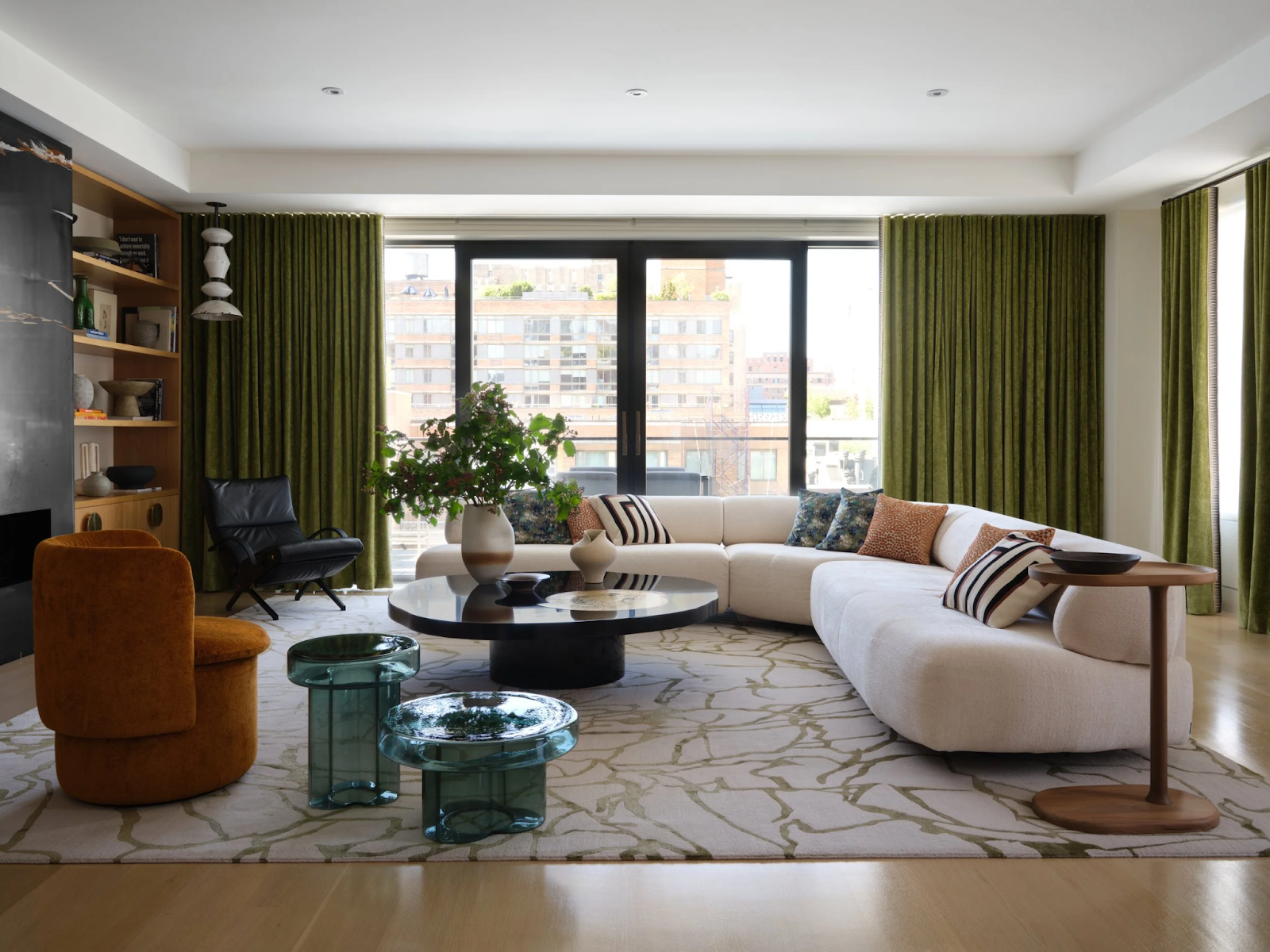
This living room blends sculptural and cozy elements with a curved white sectional, moss-green drapery and patterned pillows for warmth. Glass nesting tables and a graphic rug introduce a playful, modern edge.
Andrew Joseph: What inspired you to become a designer?
Susan Petrie: After years of working in marketing/PR for fashion and lifestyle magazines, I felt the need to immerse myself in a field that used more of my naturally creative energy. As a new mother, I shifted gears and enrolled in Parsons School of Design, got some solid internships with talented design firms, and humbly started a new career in interiors. I never looked back.
AJ: Can you describe your design philosophy in three words?
SP: Can I use four words? Chic. Colorful. Functional. Personal.
AJ: How do you approach a new design project?
SP: After meeting with a potential client and making sure it is the right fit, I ask many questions about their lifestyle, needs/wants, goals and likes/dislikes. I like to be transparent about my design process, and after our initial site meeting, I always ask clients for images that they love — anything from a color they adore, an abstract image that brings them joy, or an aspirational interior shot. It’s a collaborative process that culminates in a mood board presentation. We discuss it further, edit and correct.

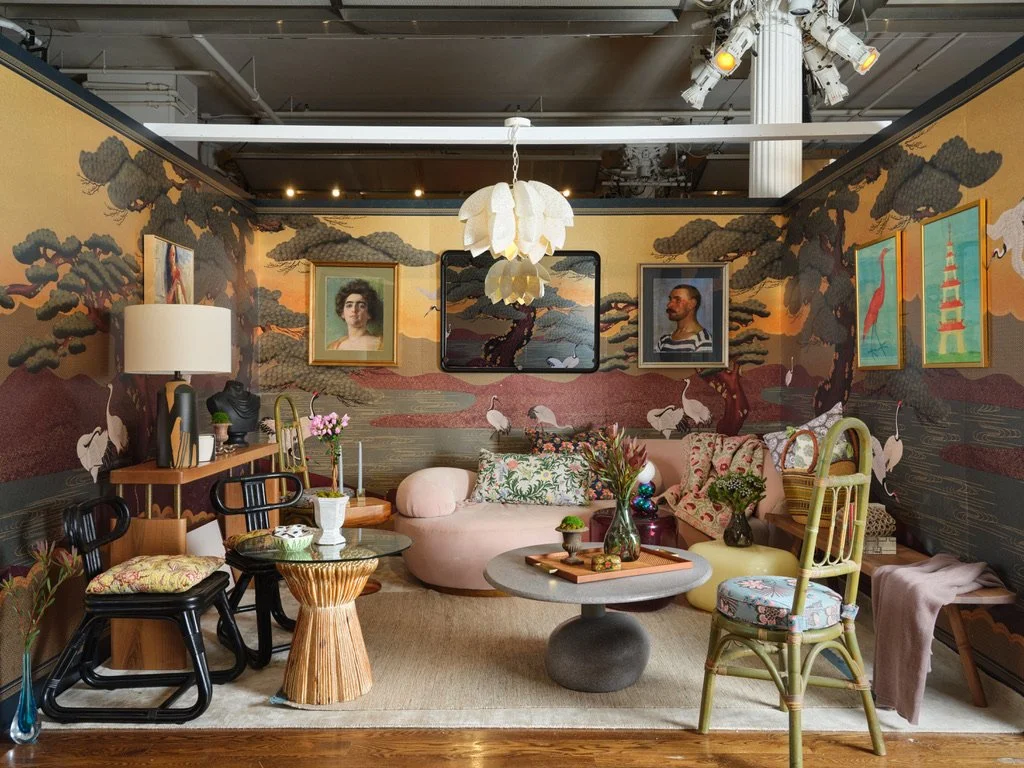
Designed for Design on a Dime 2025, this jewel-box room blends colorful art, rich textures and global influences into a vibrant retreat.
AJ: What is the most challenging project you’ve worked on and how did you overcome it?
SP: I am drawn to a good challenge, as my job is to always come up with a solution! However, when COVID hit, I was working with a lovely couple who had just purchased a pied-à-terre in Gramercy Park, New York. Everything had shut down, and my family moved to Park City, Utah, for a few months while my clients were living between Texas and North Carolina. The entire design was done remotely through Zoom, FedEx and many phone calls. It turned out to be one of my favorite projects, as I loved staying busy and finding ways around things that are out of my control.
AJ: What was the last book you read and how did it inspire you?
SP: I am currently reading Dare to Lead by Brené Brown. I love Brené, and her research and stories on how to cultivate excellent leadership and choosing courage over comfort help me be a better boss and designer.
AJ: Can you tell us about a specific moment in your career that made you feel accomplished?
SP: The 20th Anniversary of Design on a Dime! When James Huniford asked me to participate, I enthusiastically said yes, as I love Housing Works and have been an attendee for years. I was so touched by the generosity of the vendors who donated so many gorgeous pieces and, while at the mercy of not choosing donations, I was very happy with the way my vignette turned out. I loved being surrounded by my design peers and making friends with new talent — all for a wonderful cause.

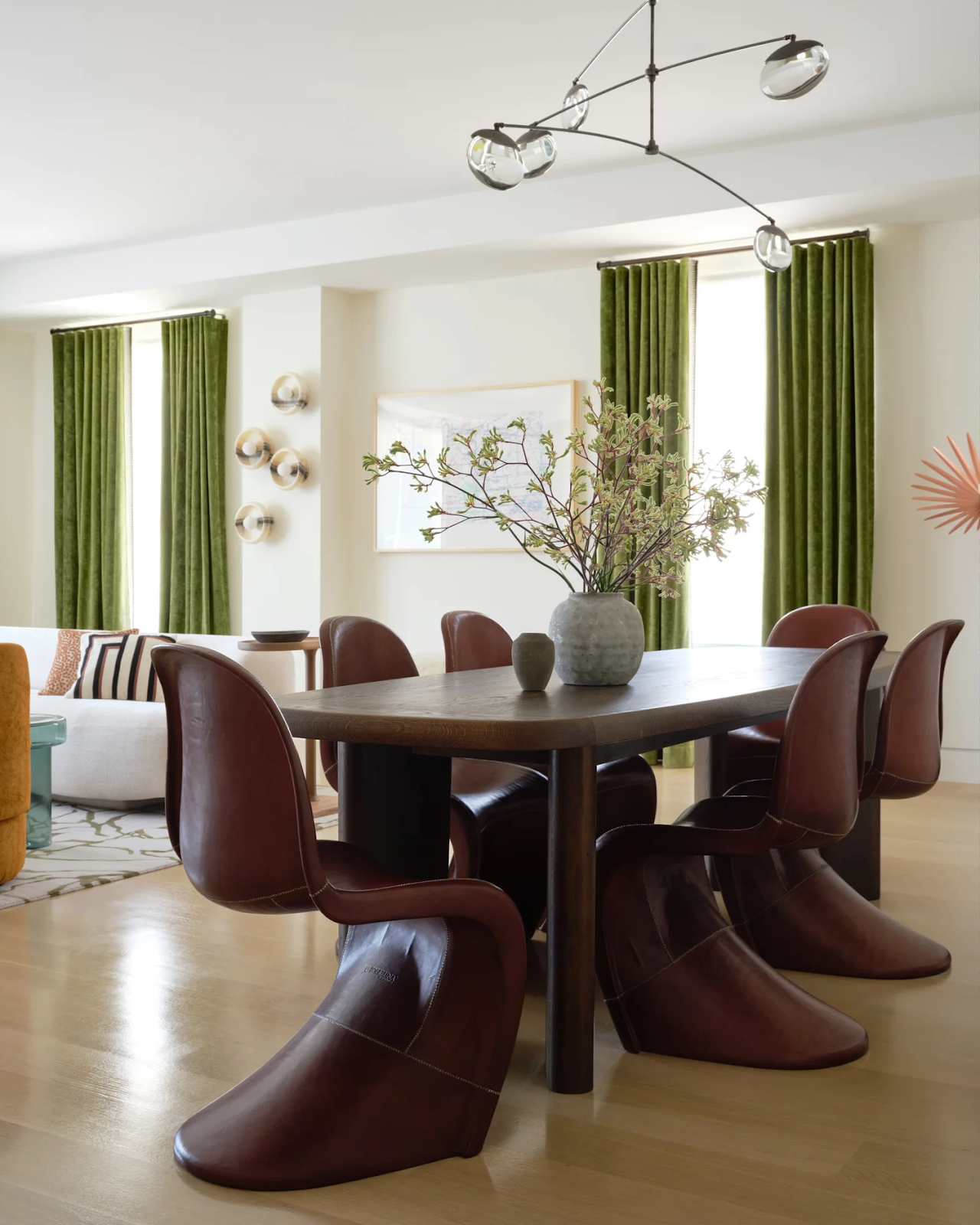
Saddle-stitched and stance-like, these chairs bring an equestrian edge to an otherwise serene dining room.
AJ: How do you incorporate art into your designs?
SP: Many of my clients have existing art that they want to keep. Some design is built around the art, and some art often comes when the design is complete. When I object to certain art, it usually isn’t a struggle after the design is complete, as the space takes on a new life that is craving art that complements it.
AJ: What’s the weirdest thing a client has ever asked you?
SP: To design a living room with a massive disco ball that drops down for dancing with family and friends (I told them I would do it only if I am invited to the parties!).
AJ: What would your dream project or dream client be right now?
SP: Given that I have done beach homes and city dwellings, I would love to do a mountain house that breaks the norms.
AJ: What’s a new hobby/skill that you have learned recently?
SP: Mahjong — it’s not just for little old ladies anymore! It’s social, addictive and requires my full attention.
Like what you see? Get it first with a subscription to aspire design and home magazine.