




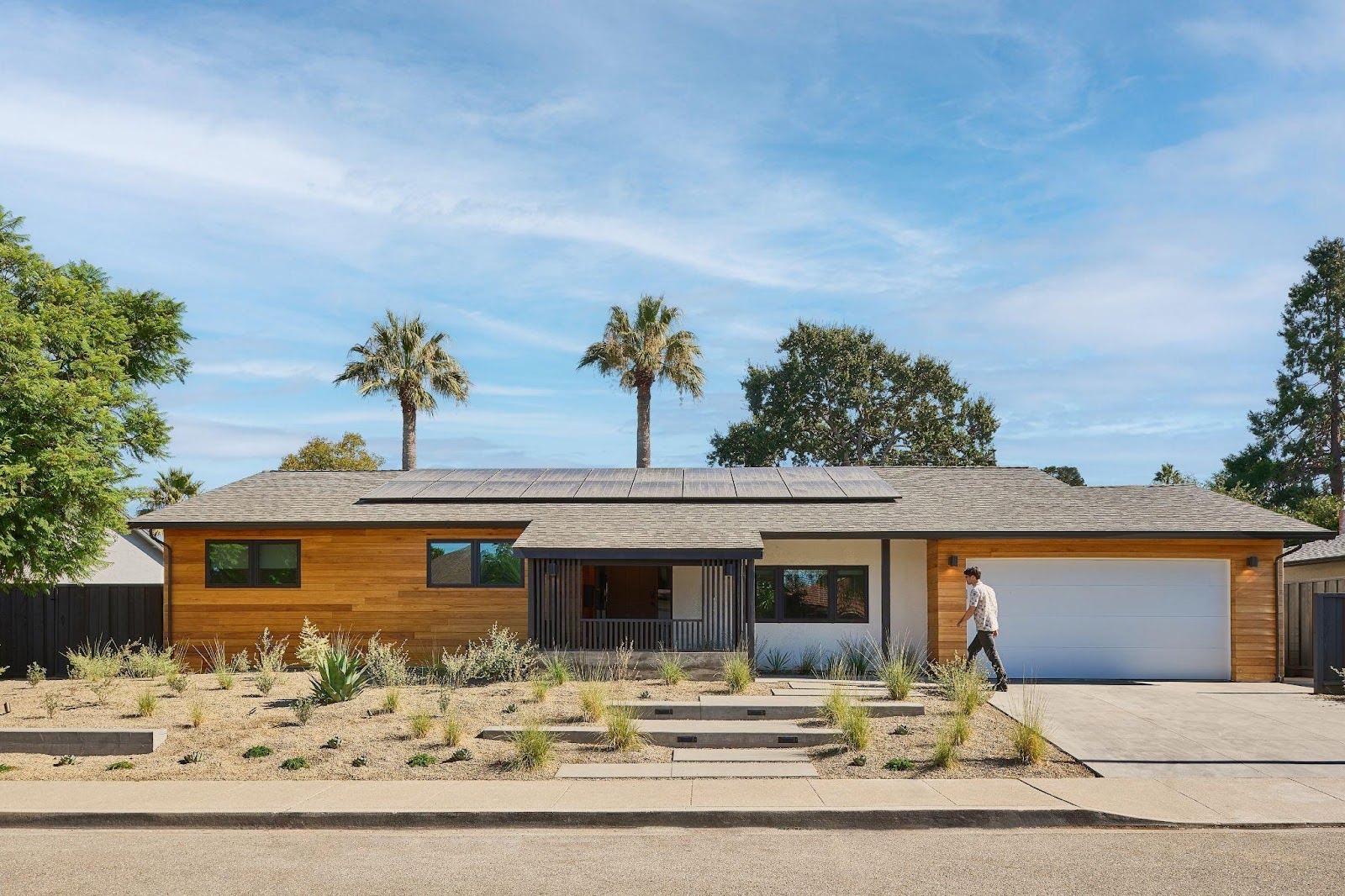
This modernized 1950s ranch home blends midcentury charm with contemporary sustainability
Andrew Joseph: Can you describe your design philosophy in three words?
Tyler Kobick: Modern, craft, storytelling.
AJ: What is the most challenging project you’ve worked on, and how did you overcome it?
TK: The most challenging project was an educational and wellness campus. I am still the Project Architect for said campus, nestled in the mountains of West Virginia (funny enough, this is where I also met my wife). The site included two performance centers, housing, an elevator, and classrooms near a creek. This experience was a pivotal moment in my career—transitioning the design leadership from my mentor to myself. This included a significant shift in loyalties and required a new approach to a 310-acre master plan. The client was a large international nonprofit. We built a five-story concrete podium in a county that may have never had one before. Located deep in the mountains, we faced challenges in fabrication and integrating city engineering standards with local labor capabilities. The project required advanced technology and design elements from city-based structural engineers. The isolated location down a one-lane mountain road also made sourcing materials and skilled labor difficult, with workers coming from as far away as Washington, D.C. or from the coal mines in West Virginia (2.5 hours West of the site).

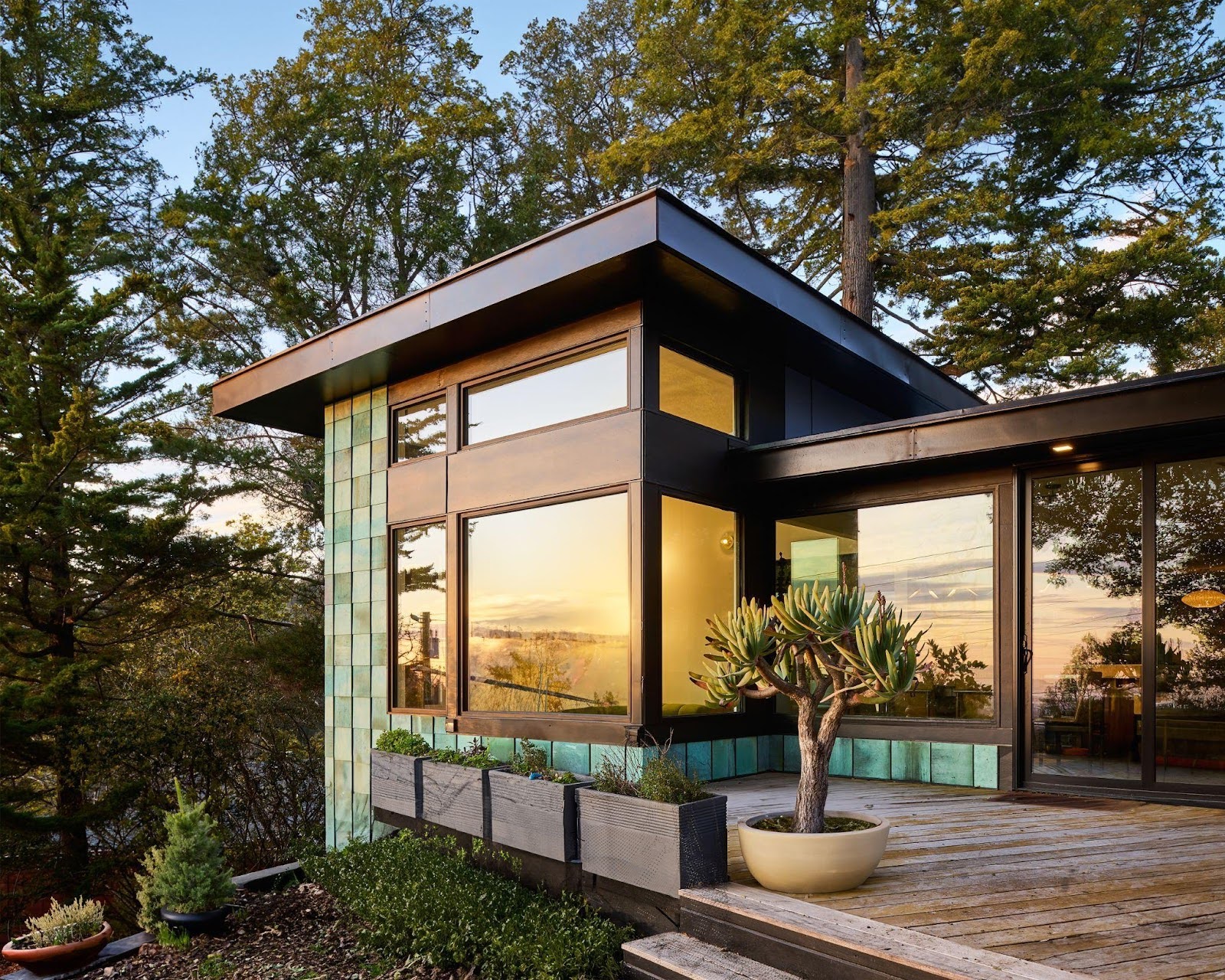
This Oakland Hills home showcases a striking mix of modern and midcentury design, featuring clerestory windows, reclaimed copper shingles, and an expansive deck that blurs the line between indoor and outdoor living.
AJ: What’s the best piece of advice you’ve received as a designer?
TK: James Hubbell, who comes from an artist background, taught me that one of the most important things architects can do is consider the bench with the same interest as a building. We often overlook how a human being interacts with the space around it. It’s vital to think about how our designs tell a story and not forget the simple things we tend to skip over in everyday life—the extraordinary within the ordinary.
AJ: How do you stay creative and inspired?
TK: I find inspiration in the talented young people around me. Taking on a mentor role helps keep that dynamic from becoming one-sided; hearing new voices is essential for creativity.
AJ: Can you tell us about a specific moment in your career that made you feel accomplished?
TK: In 2018, we bought an office building in the Broadway-Valdez District of Oakland. This was a significant milestone, especially for a design-build firm. The area was once filled with mechanic shops and we found our place in a garage built in 1918. Creating our own space, a storefront for architecture in the San Francisco Bay Area helped me better understand our role in the community and the changing urban environment.
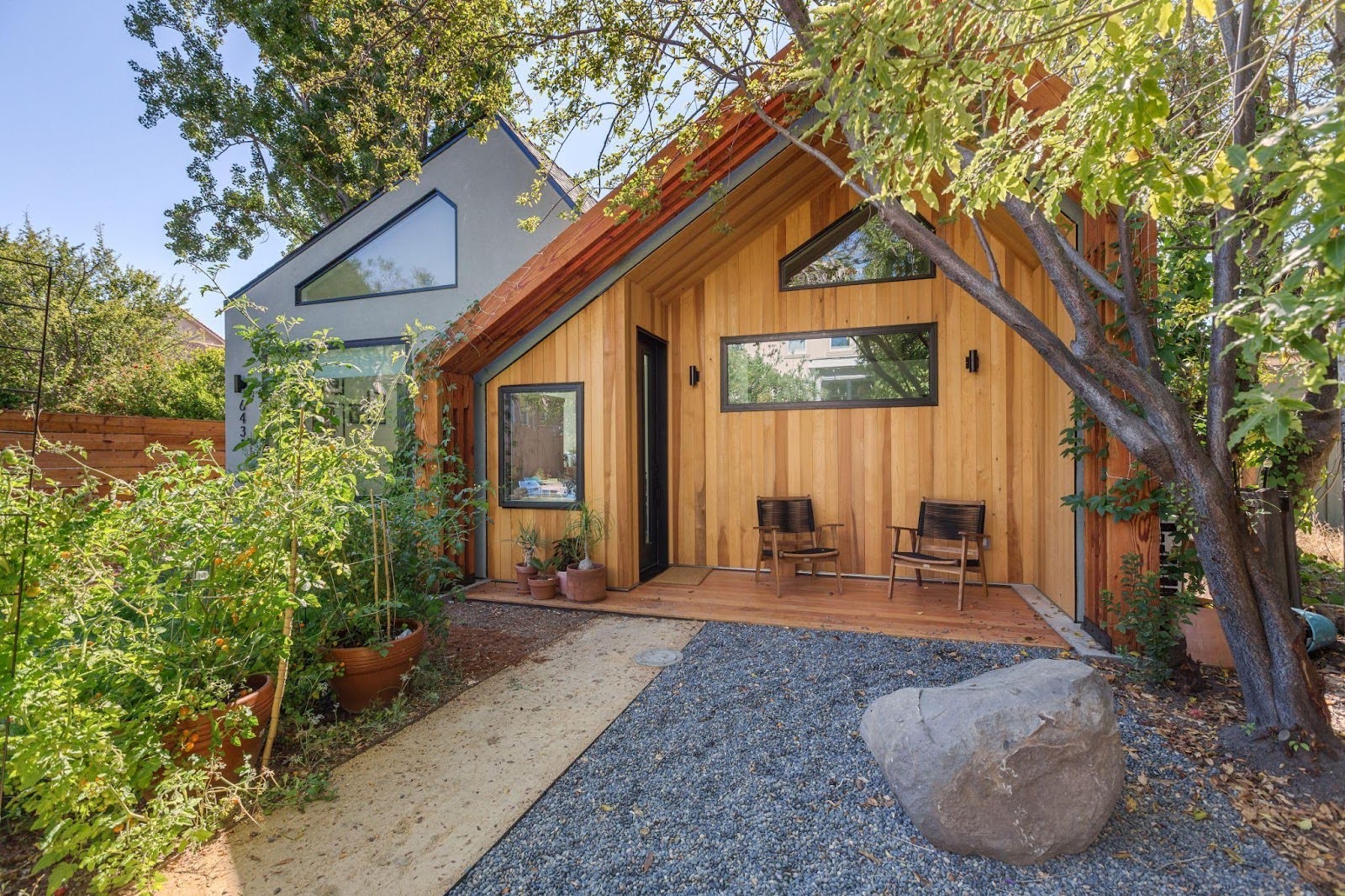
This thoughtfully designed Oakland ADU blends into its surroundings with a warm cedar facade, a cozy covered porch, and angular rooflines that maximize natural light while supporting sustainable features like rainwater capture and solar energy.
AJ: If you weren’t a designer, what would you be and why?
TK: I’m not sure I could do anything else, but perhaps city government could be a possibility, especially considering that I currently sit on a mayor’s advisory board for development in Oakland and the Board of Directors for the AIA East Bay. I also could’ve been a rewilding biologist, focusing on rethinking our role in nature and reintroducing long-extinct species back into their natural habitat. I believe it’s important to embrace a humble relationship with nature, recognizing that natural spaces are also vital to our human experience.
AJ: What’s the best advice you’d give your teenage self?
TK: I would tell my teenage self to embrace my ten-year-old self and be okay with him. My ten-year-old self was driven and engaged in constant drawing, designing forts, and nature adventures that led me to who I am today. Embracing that inner child enthusiasm gives space to creativity and rethinking.
Like what you see? Get it first with a subscription to aspire design and home magazine.