


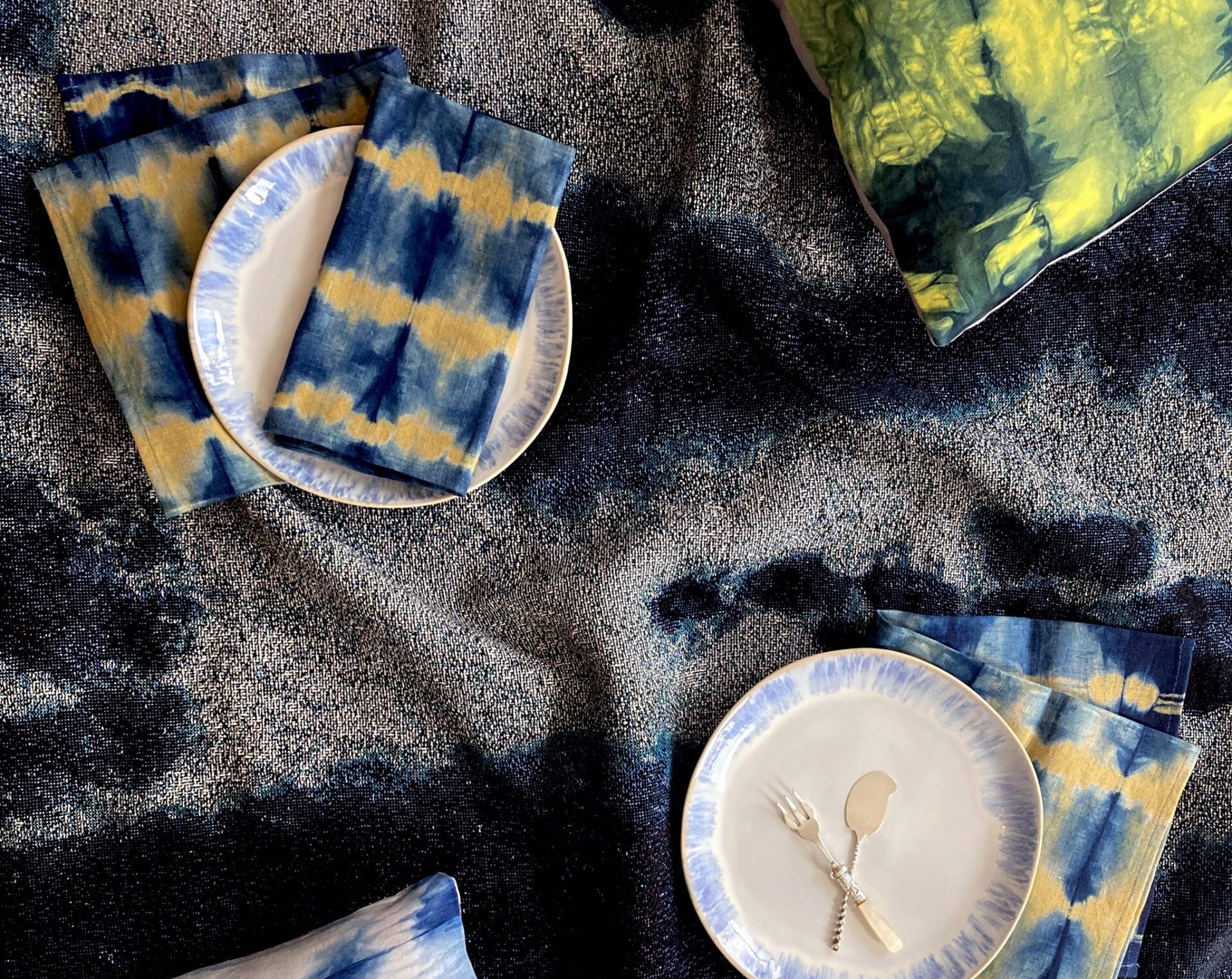
DesignHER is a platform that celebrates the vision, craftsmanship, and innovation of women in design. By curating stories from leading female designers, artisans, and creatives, our latest series, in collaboration with Women Create, offers an intimate look at the diverse paths these women take to shape their industries and their own businesses. Through thoughtful interviews and features, the platform illuminates the artistry and technical mastery that define their work, while exploring the deeper narratives of creativity, resilience, and leadership. DesignHER honors the unique perspectives of women, fostering a community where design excellence and empowerment intersect to inspire the next generation of trailblazers.



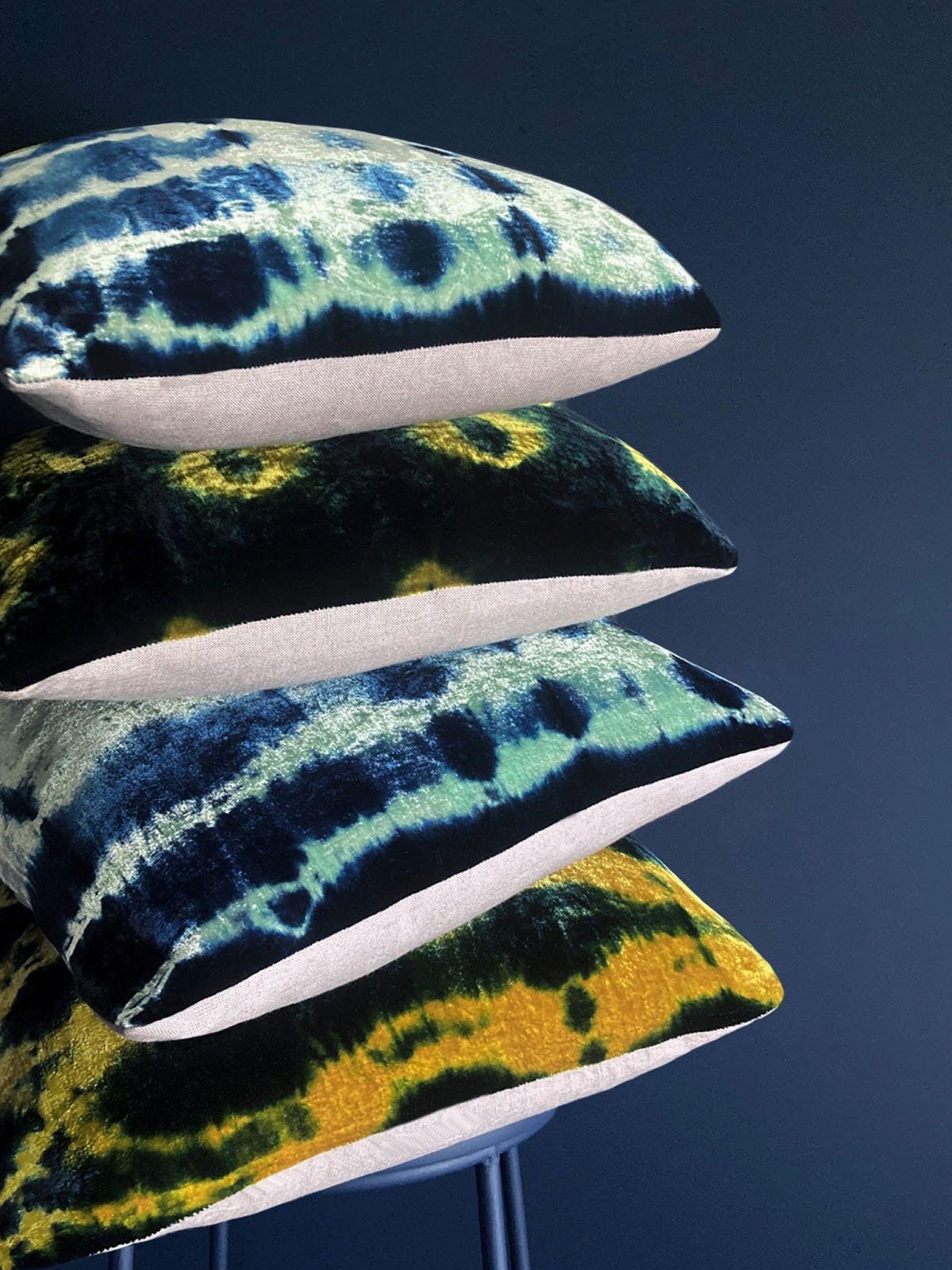
Jacqueline Rousseau’s pillows layer painterly dye work with a couture sensibility, transforming simple forms into tactile works of art.
Can you talk about a female-focused initiative or collaboration that you’ve been a part of?
I’ve been a member of the Female Design Council since 2022. The FDC is a professional membership network and advocacy organization for women in design, architecture and the applied arts. Being a part of this community of women has been really impactful. As a designer and founder, I work alone most of the time; having a community of intelligent and creative women to tap for advice, collaboration and sharing projects has been incredible. It’s very encouraging to be part of a community that leads with generosity and support of other women.
Can you tell us a bit about your background and how you got started in your craft?
Before I started Rousseau, I was a womenswear designer for over 10 years. I started my design career in London, where I studied fashion design at the London College of Fashion. I chose LCF because of the emphasis on developing technical skills as a designer, including pattern-cutting and sewing. I have always loved fabric and color, and as a womenswear designer, those elements were a huge part of my design process. As the years went on, I realized how much I was drawn to surface pattern design, including hand dyeing and hand printing. My brand was born out of my desire to work with textiles, namely hand dyeing, full time. My work throughout my career has always had a handcrafted touch, and now the philosophy of my core collection is that each piece is hand-dyed in my NYC studio.
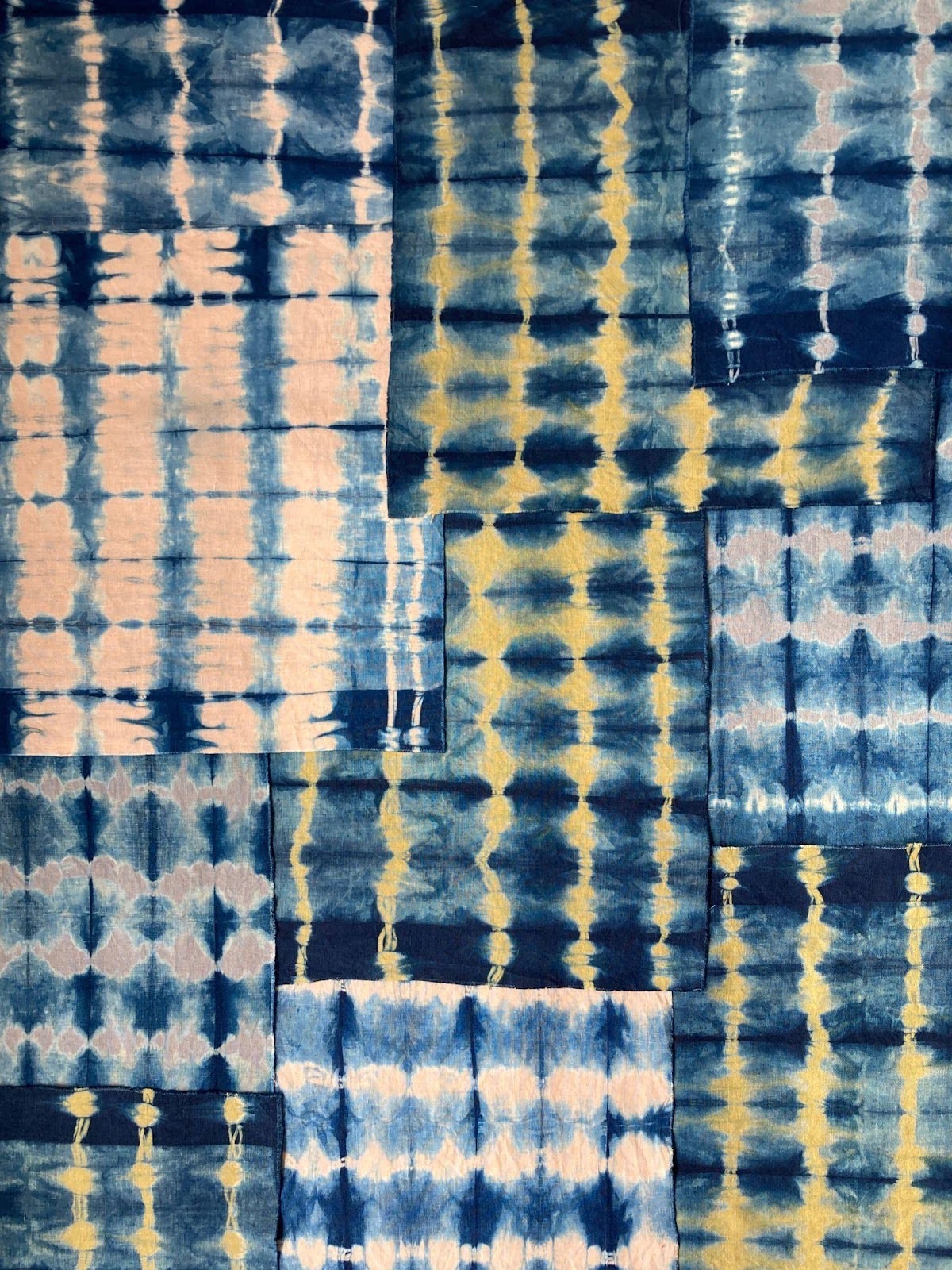
Hand-dyed napkins that make every table setting feel special.
How do you stay motivated and inspired in your work?
I believe it’s a romantic notion to think that inspiration is the only portal to a worthwhile body of work. As an artist and designer, I have to be very disciplined to create, even on the days I’m not feeling inspired. Exploring different media is a practice that I employ to get ideas moving. I primarily work with textiles and dye, but turning to paper and dye or embroidery floss on canvas can open up pathways to new ideas and new color combinations. It’s a matter of training myself daily to do the work, the flow state inevitably follows, and that’s magic. That’s where I feel really excited about the work and it’s deeply fulfilling. I rejoice on the days when the ideas are flowing abundantly! However, on quieter creative days, I trust the process.
How do you ensure sustainability and ethical practices in your craft?
Starting my own line was also about being able to make decisions that aligned with my values. That means small batch textiles, hand dyed, locally sourced and produced. A core philosophy, as I developed my line, was to design a collection that keeps evolving, rather than starting with a clean slate every season. I only make a few pieces of new designs, and make more once items sell out. This allows me to add colors and fabrics that work beautifully with pieces that already exist in the line, with very little waste.
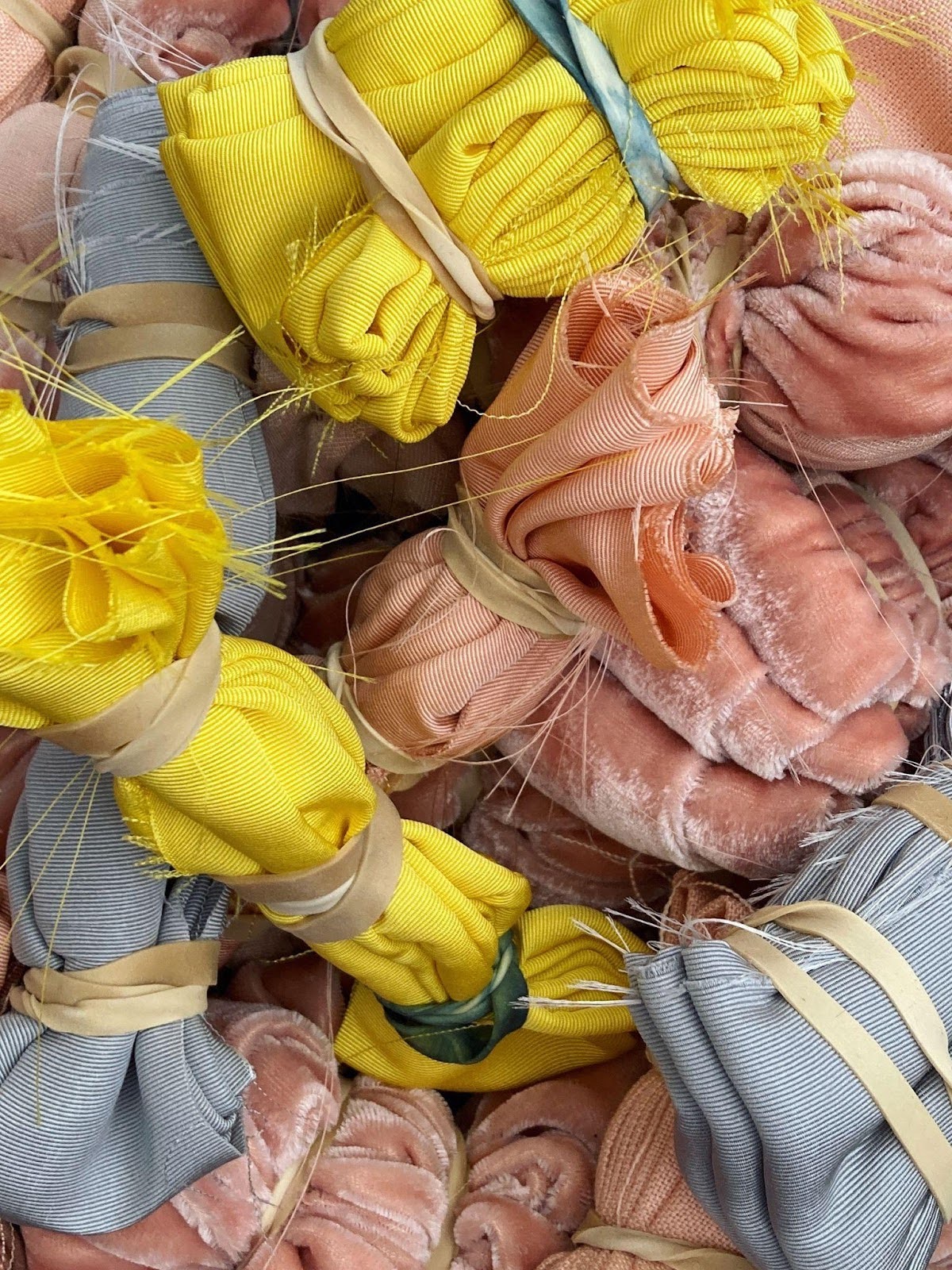
Bundles of fabric waiting to reveal their magic in the dye bath.
What role does storytelling play in your art, and how do you weave your personal narrative into your pieces?
New York City is home, and my dye work is largely inspired by the sky above NYC. I look out for cloud patterns and watch the changing light throughout the day. These shapes and colors inform how I apply dye to the fabric and how I create fold patterns for the shibori pieces. New York has such dynamic light, perhaps it’s another facet of the energy of the city. When I look at the sky, I feel invigorated, especially when it’s a type of cloud I don’t see often; or when it’s a particularly dramatic play of light.
How do you navigate the commercial aspects of your craft while maintaining artistic integrity?
My brand started with the indigo-dyed velvet pillows. This is the foundation of my line, and the handcrafted nature of these pieces is the soul of what I do. Expanding my line to include collections that translate my dye work into printed and woven goods has allowed me to offer my designs in larger formats. For these collections, I have sourced patterns from my own dye library and digitally translated these designs into a collection of jacquard woven throws, and most recently, pigment-printed linen by the yard. It’s been very exciting to create large-scale designs based on my dye work. I have carefully selected my production partners for these collections, based in the U.S. and producing beautiful small-batch products.
“A longing for excitement can be satisfied without external means within oneself: For creating is the most intense excitement one can come to know.” – Anni Albers
What are the most important values or principles that guide your work?
I value high quality in design. For me, that means slow fashion, intentional design, very little waste. High quality means luxury, elevating the product through every step of the design process. That starts with the fabric. Before I launched my brand, I spent months comparing swatches to find a silk velvet in the perfect shade of rose pink, with a luxe handfeel. Once that fabric was in place, I decided on the other core colors for my line: silver gray, gold ochre, and jade green. Each fabric panel that is dyed becomes a pillow, a table runner, or a napkin. All of the hand-dyed pieces are produced in New York City.
What’s your favorite part of the creative process, and why?
While I enjoy all aspects of designing, seeing an idea come to life through the dye process is very rewarding. Every time! Hand dyeing involves a lot of preparation, cutting and folding the fabric, mixing the dye(s), setting the dye. I am meticulous in the prep so that I can be creative in the process. It’s deeply satisfying to unwrap the indigo bundles at the end of a dye batch. With each dye session, I reserve a few panels to test out new folds or new fabrics. And each fabric quality responds differently to the dye. Silk velvet is very fluid and soft, the dye lines ripple across the surface. Silk faille has more body and structure, the resulting patterns are tighter lines and shapes. And linen is somewhere in between, the fabric softens in the dye and the resulting lines are like watercolor, substantial while still being soft. I feel exhilarated every time I get into the flow state while I am hand-dyeing textiles.
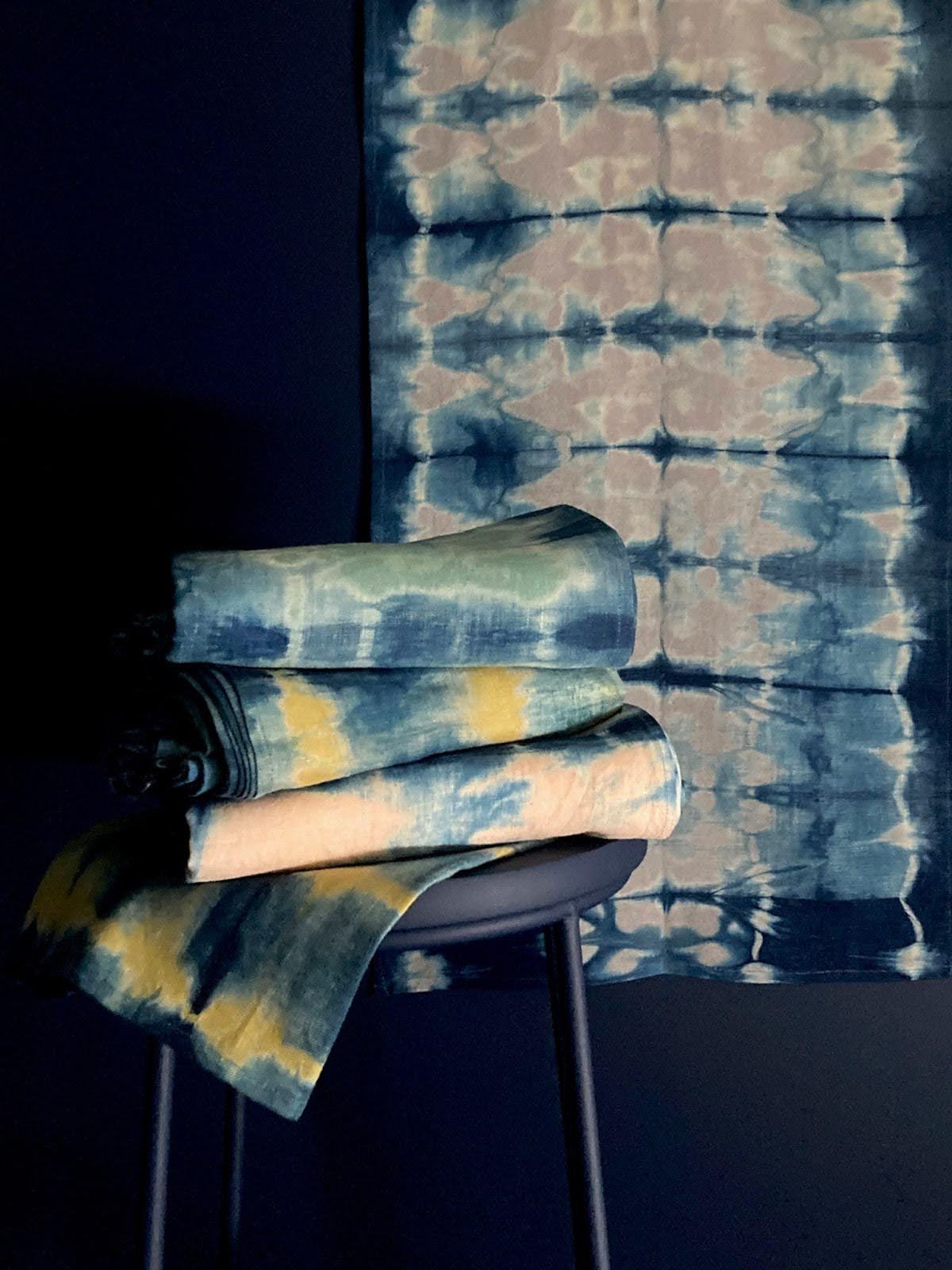
With her linens, Rousseau invites pattern to unfold slowly, echoing the unpredictability of clouds and the poetry of dye meeting fabric.
How do you balance staying true to traditional techniques while also innovating?
I learned the art of shibori through a class at the Textile Arts Center in NYC. Beginning my journey into shibori and indigo dye with a reverence for the craft has deeply influenced how I approach my designs. Having the foundation of how to prepare and fold the fabric allowed me to develop my own methods for my line. Traditional shibori uses white cotton with indigo dye, resulting in crisp geometric patterns. When I was starting my brand, the first decision I made was to use colorful base fabrics, and never white. The inkblot pattern of my pieces is intentional, I designed fold patterns that create fluid lines of dye across the fabric, resulting in a painterly quality. I’ve found that being educated in the traditional methods gave me a foundation of knowledge that has allowed me to be innovative and bring something new to shibori dye.
Like what you see? Get it first with a subscription to aspire design and home magazine.