


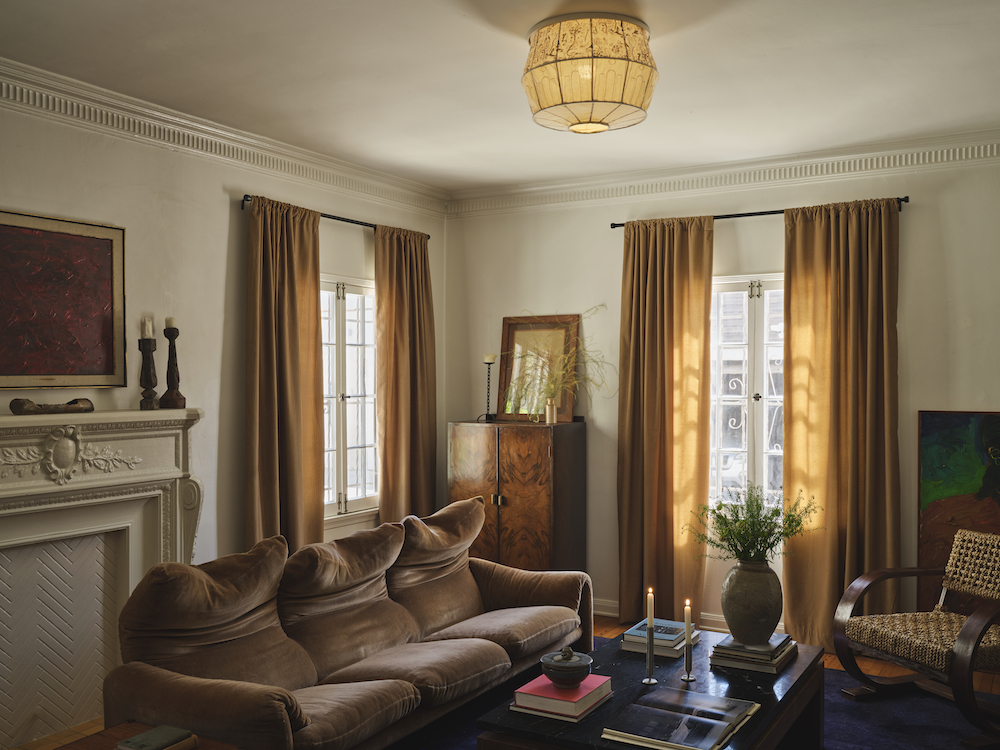
DesignHER is a platform that celebrates the vision, craftsmanship, and innovation of women in design. By curating stories from leading female designers, artisans, and creatives, our latest series, in collaboration with Women Create, offers an intimate look at the diverse paths these women take to shape their industries and their own businesses. Through thoughtful interviews and features, the platform illuminates the artistry and technical mastery that define their work, while exploring the deeper narratives of creativity, resilience, and leadership. DesignHER honors the unique perspectives of women, fostering a community where design excellence and empowerment intersect to inspire the next generation of trailblazers.
Lori Smyth is the founder of Tulip, a revolutionary lighting brand launched in 2023 to solve a common design dilemma: why is overhead lighting so harsh? With a background in residential development and design, Lori combined her expertise with a passion for creating warm, inviting spaces. She developed Tulip as an affordable, renter-friendly solution to unattractive ceiling fixtures — offering a colorful range of cotton shades that are easy to install and thoughtfully crafted with sustainability in mind. Under her leadership, Tulip has grown into a brand that values mood-enhancing design, environmental responsibility, and everyday joy in the home. Learn more about Lori and her shades in today’s DesignHer.


The Caledonia Drum features Xavier Donnelly’s hand-drawn “Caledonia” print, inspired by sunny days on his grandmother’s Vermont farm.
aspire design and home: Can you tell us a bit about your background and how you got started in your craft?
Lori Smyth: After my dad retired from professional football, my parents moved back to their hometown in the Sacramento Valley. They bought a Victorian farmhouse from the late 1800s, surrounded by almond orchards, in a small farm town. My dad took up farming, and my mom, who was a high school English teacher, had a deep love for interior design. She was always thrifting, painting, and sewing, and I grew up watching her creativity in action, though I never really thought I had that same spark.
I spent my childhood dancing, playing sports, and sewing my own clothes, but interior design didn’t really cross my mind until I started fixing up my own homes. That’s when I realized a little bit of my mom’s creativity had rubbed off on me — I had a vision, and it just worked. In college, I studied dance, then geology, but ultimately graduated with a business degree (thanks to my mom’s insistence — she was right). Understanding basic business practices has been a huge help throughout my career.
I bought my first home to flip in Santa Barbara in my mid-30s, and that turned into a passion I pursued both there and in Austin, Texas. In 2022, I decided to retire from home building and pivoted to launching Tulip, which officially debuted in October 2023.
adh: How do you think being a woman has influenced your approach to design and creativity?
LS: For the last 25 years, I’ve been remodeling and building homes, always aiming to balance masculine and feminine elements in every space. If a room leans too masculine, it might look interesting, but it doesn’t feel inviting. On the flip side, if it’s too feminine, it can feel ungrounded and overly sweet. I believe my success in design and building comes from approaching creativity from both perspectives. The result is usually not only visually appealing but also makes you feel good in the space.
Bringing a feminine touch has helped me create interiors that feel a little sexy. A friend once told me he wanted to have sex in every room of one of my projects—which, in my book, was a win! When working on Tulip, I made sure that balance carried through. The softness of the fabrics brings the feminine, while the structure of the shapes represents the masculine.


The Gem Scarlet Shade pairs fiery red with soft natural tones for a bold, joyful statement. Inspired by poolside nostalgia and playful sophistication, it sets the mood and sparks conversation.
adh: Can you share an example of a project where your perspective as a woman played a significant role in the outcome?
LS: When I was building homes, being a woman in a male-dominated industry, I always tried to bring a touch of sex appeal — femininity — to every project, which I noticed was often missing in the work of my male counterparts. The main way I did that was through lighting, and that’s where my obsession with it began. Many builders don’t consider how lighting affects the way we feel in a space. They often over-light with too many recessed cans and ceiling lights because they’re cheap and easy to install. But for me, lighting has always been about creating mood and atmosphere, not just illumination.
adh: Have you faced any particular challenges in your industry because you are a woman? How have you overcome them?
LS: As I mentioned, being a woman in the residential construction industry was challenging. Many construction workers weren’t used to having a female boss, and there was quite a bit of disrespect. At first, I tried the “I’m just a girl, I don’t know what I’m doing, and I could really use your help” approach to get things done, like putting in a window correctly. It kind of worked, but I quickly got tired of playing that role. I became frustrated and shifted to a more aggressive “You’re going to do what I want” attitude, but that wasn’t healthy for anyone involved, including myself.
Eventually, I found my balance, confidently leading with both feminine and masculine energy. I stopped worrying about how they felt and focused on being calm and clear in my leadership. I’m not sure if it changed their perspective, but it definitely helped me stay grounded.
Working on Tulip has been such a different experience, as I’m working mostly with women now. I don’t want to bash men — it’s not about that. Our culture has long rewarded misogynistic behavior, but I believe we’re witnessing a shift as we collectively heal and move away from those outdated norms.
adh: Can you discuss any artists or designers who have influenced your work?
LS: There are so many artists that I am inspired by but the one woman who I became obsessed with in my youth and who made me think outside the box was the sculptor Beatrice Wood. I am mesmerized not only by her art but by how she lived her life. She had a rebellious creativity that I admire. I love her quote “I owe it all to art books, chocolates, and young men.” She swears that these things helped her live freely until she passed in 1998 at the age of 105 surrounded by art, chocolate and young men. She did it her way and was fearless in all of her pursuits. As I get older, I am hoping a little bit of Beatrice will come inhabit my body.
“Creativity is seeing what others see and thinking what no one else ever thought.” – Albert Einstein.
adh: How do you manage work-life balance, especially in an industry that demands both creativity and business acumen?
LS: I have to schedule my down time or it won’t happen. I don’t think I ever mentally take a break but I do my best to move my body and get into nature several times a week to keep my sanity. I meditate a few times a week and that has been a game changer as far as a reset to stress.
adh: How do you stay connected with your audience and customers?
LS: Paying attention to our audience and community is a high priority for us. We make sure we are listening and responding immediately. We receive a lot of DM’s on social media as well as several emails a week and a quick response time is a high priority. We have made a few mistakes with production and what we found is that if we are honest and take care of the issues customers are having, most everyone is incredibly understanding and kind.
adh: What impact do you hope your work has on those who experience it?
LS: My entire goal of this project was to help people feel better in their space. Lighting affects our nervous system and can help us feel relaxed and lower or stress if it’s done correctly. So many people don’t have the option of changing their lighting and I wanted to solve this. Ultimately, I set out to make a well designed, and accessible and adaptable way to change the way you feel in your space and from what I can tell from all of the reviews we have received, we are doing that. It actually makes me emotional.

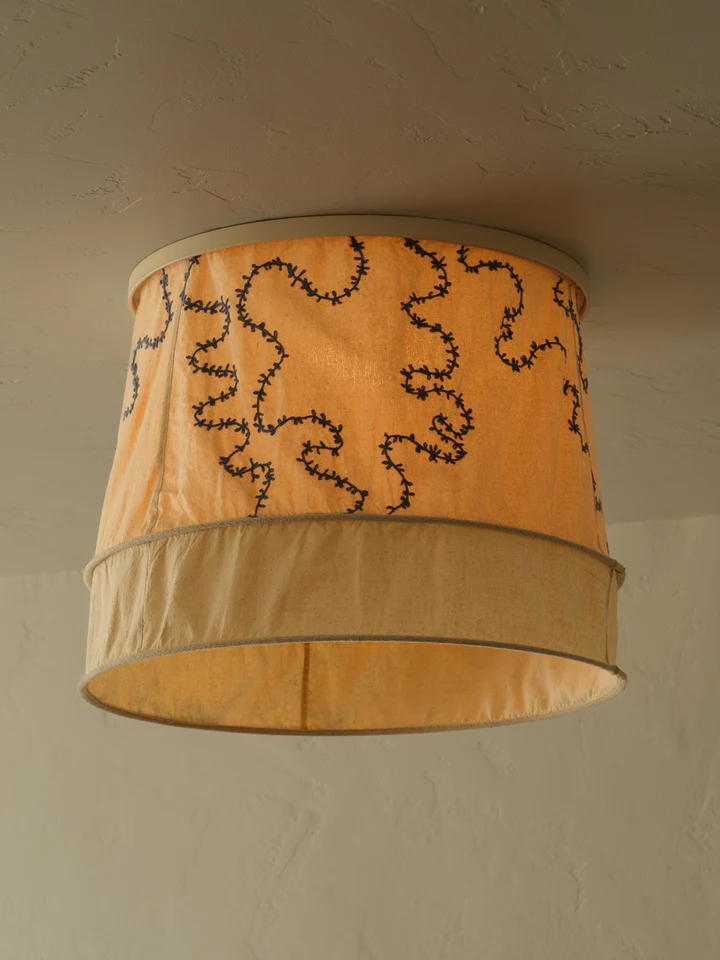
The Lamp Vine #9 adds hand-embroidered lavender vines to a classic lamp. Part of the Eva Joan Collection, it’s one of 30 unique, handcrafted pieces blending Tulip’s craft with Joan’s artistry.
adh: What are the most important values or principles that guide your work?
LS: Watching our natural world is the most valuable guide for me in leading Tulip. There is a rhythm to nature and when you are in that rhythm, everything just flows. My goal is to translate that by supporting our company’s natural rhythm. The capitalistic systems that we sometimes aspire to are about going as fast as you can and growing as big as you can but that can feel contrary to the health of a company and of the people who make up the company. When I realize I am out of rhythm it is always because I have let some fear of the future enter my thinking and I start making decisions from fear that aren’t the right decisions. At the end of the day, If we are making a quality product that solves a problem and are doing it with integrity and taste, I truly believe that the natural rhythm of the business will carry us along.
adh: What’s your favorite part of the creative process, and why?
LS: Watching the evolution of a product that starts in your head and ends up on the ceiling of someone and then having them tell you how much it has changed how they feel about their space is the ultimate reward of creativity for me.
adh: How do you handle creative blocks or periods of low inspiration?
LS: Travel. If I stay in one place for too long I get a little stagnant and my creativity dulls.
Like what you see? Get it first with a subscription to aspire design and home magazine.