

DesignHER is a platform that celebrates the vision, craftsmanship, and innovation of women in design. By curating stories from leading female designers, artisans, and creatives, our latest series, in collaboration with Women Create, offers an intimate look at the diverse paths these women take to shape their industries and their own businesses. Through thoughtful interviews and features, the platform illuminates the artistry and technical mastery that define their work, while exploring the deeper narratives of creativity, resilience, and leadership. DesignHER honors the unique perspectives of women, fostering a community where design excellence and empowerment intersect to inspire the next generation of trailblazers.
Malene Barnett is an award-winning multidisciplinary artist and textile surface designer and the founder of the Black Artists + Designers Guild, a global platform and community of independent Black makers. Malene’s art reflects her African Caribbean heritage, building on her ancestral legacy of mark-making as a visual identity, and has been exhibited at galleries and museums throughout the United States. Her art and design work has also been featured in major publications such as The New York Times, Architectural Digest, and Elle Decor. Malene is a Fulbrighter, gives talks nationally, and publishes work raising awareness of Caribbean makers and ceramic art traditions of the Black diaspora. When she’s not traveling the world researching Black diasporic aesthetics, Malene resides in Brooklyn, New York. See Malene’s art in today’s DesignHer feature.
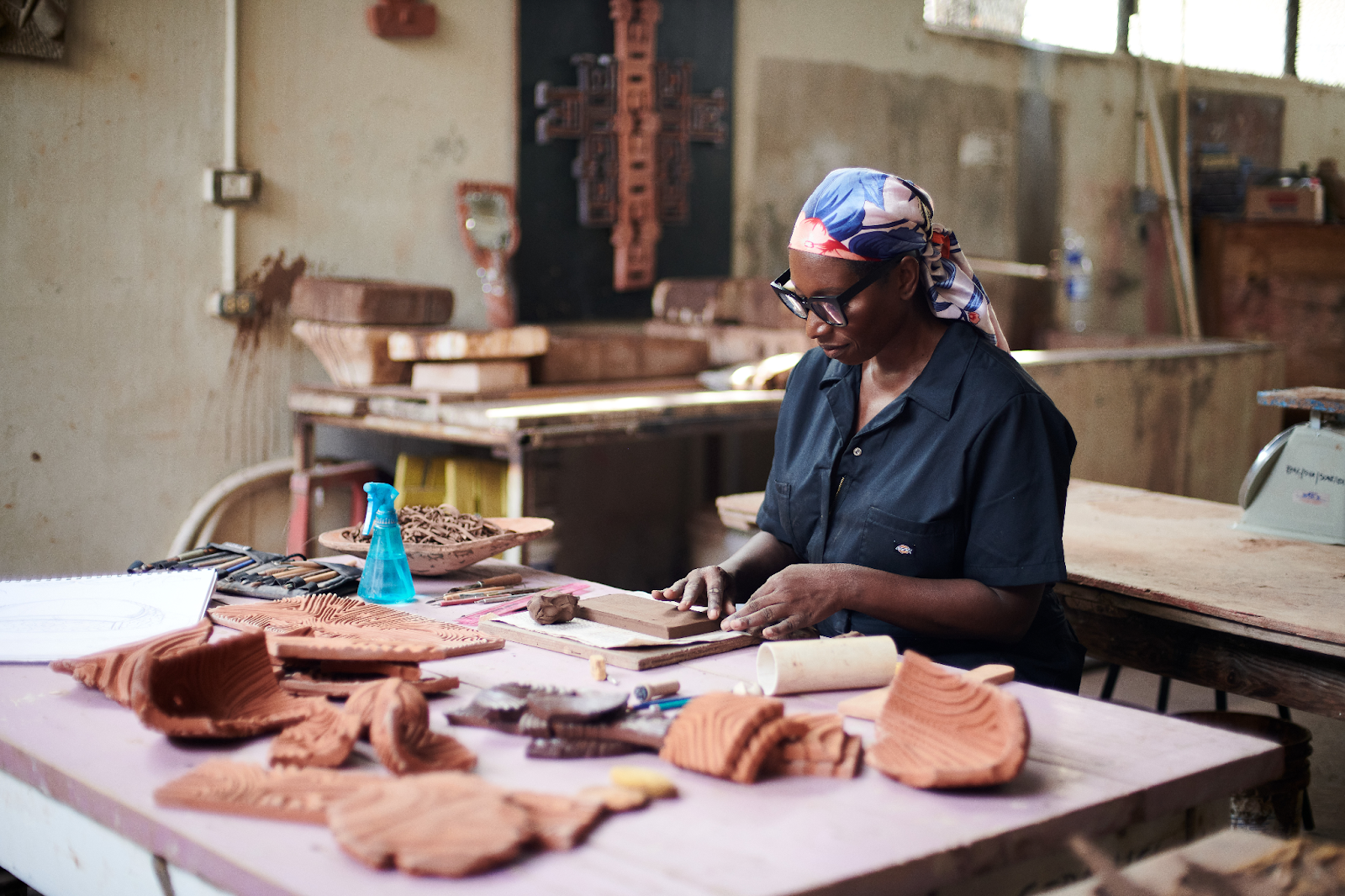

adh: How has your personal journey as a woman shaped the stories you tell through your creations?
Malene Barnett: My journey as a Black woman deeply informs the stories I tell through my art and my book, Crafted Kinship. The book is a tribute to Caribbean makers, strongly emphasizing Black women, who form the majority of its featured creators. It delves into the creative practices of many Black women whose work embodies resilience, innovation, and cultural pride. My maternal grandmother, a pillar of strength in my family, inspires much of my creative narrative, and her legacy is reflected in both my ceramics and the stories within Crafted Kinship. Through this book, I celebrate the invaluable contributions of Black women, highlighting how their artistry connects past, present, and future and how their creativity is a powerful tool for storytelling, cultural preservation, and transformation.
adh: How do you see the future of women in the artisanal craft industry?
MB: I envision a future where women are more widely recognized as leaders in the artisanal craft industry. Women have always been central to this work, though their contributions have often been overlooked or undervalued. I believe we’re in a transformative time where women in craft are reclaiming recognition and taking up more space. This shift isn’t just about visibility; it’s about acknowledging the emotional labor, technical expertise, and cultural storytelling that women bring to artisanal crafts. This future honors and celebrates women’s unique contributions to the creative arts with reverence for the generational knowledge they carry and pass forward.

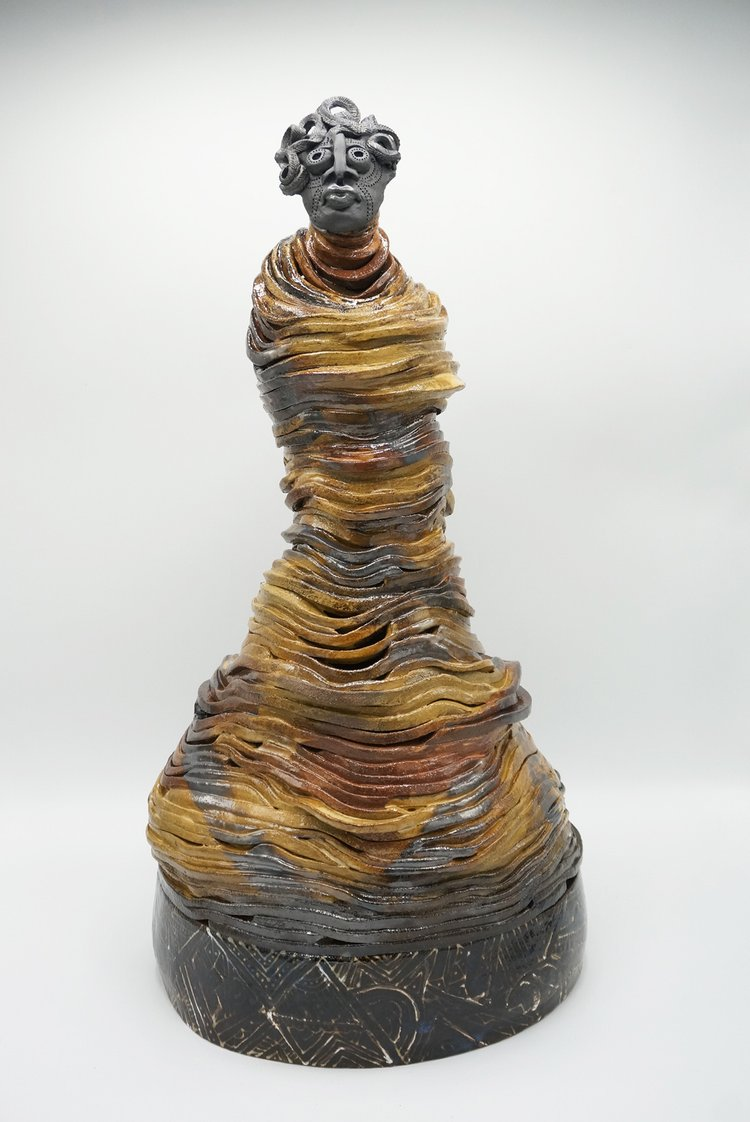
“Hope” | The Redemption collection critiques social relevance and inequality through hand-built sculptures inspired by Yoruba traditions, the Gele headwrap, and life’s uncertainties, featuring bold, organic patterns that reference Adire textile techniques.
adh: How do you stay motivated and inspired in your work?
MB: I stay motivated by my commitment to learning as much as possible about the Black experience. There’s an incredible depth to uncover within Black histories, cultures, and traditions, particularly those shaped by migration and diaspora. Each discovery fuels my creative drive, compelling me to explore further and find ways to share this knowledge through my art. Knowing there is always more to uncover keeps me focused, inspired, and curious.
“You can’t sit around and wait for somebody to say who you are. You need to write it and paint it and do it.” – Faith Ringgold
adh: Are there any particular themes or messages you aim to convey through your art?
MB: My work is deeply inspired by the African American experience viewed through a Caribbean Diaspora lens. I explore clay and textile histories within the diaspora, connecting my creations to my heritage. Migration is a recurring theme; it shapes my artistic narratives and my understanding of resilience, adaptability, and belonging. Through these themes, I strive to create a bridge between past and present, honoring ancestral knowledge and celebrating the enduring spirit of the diaspora.

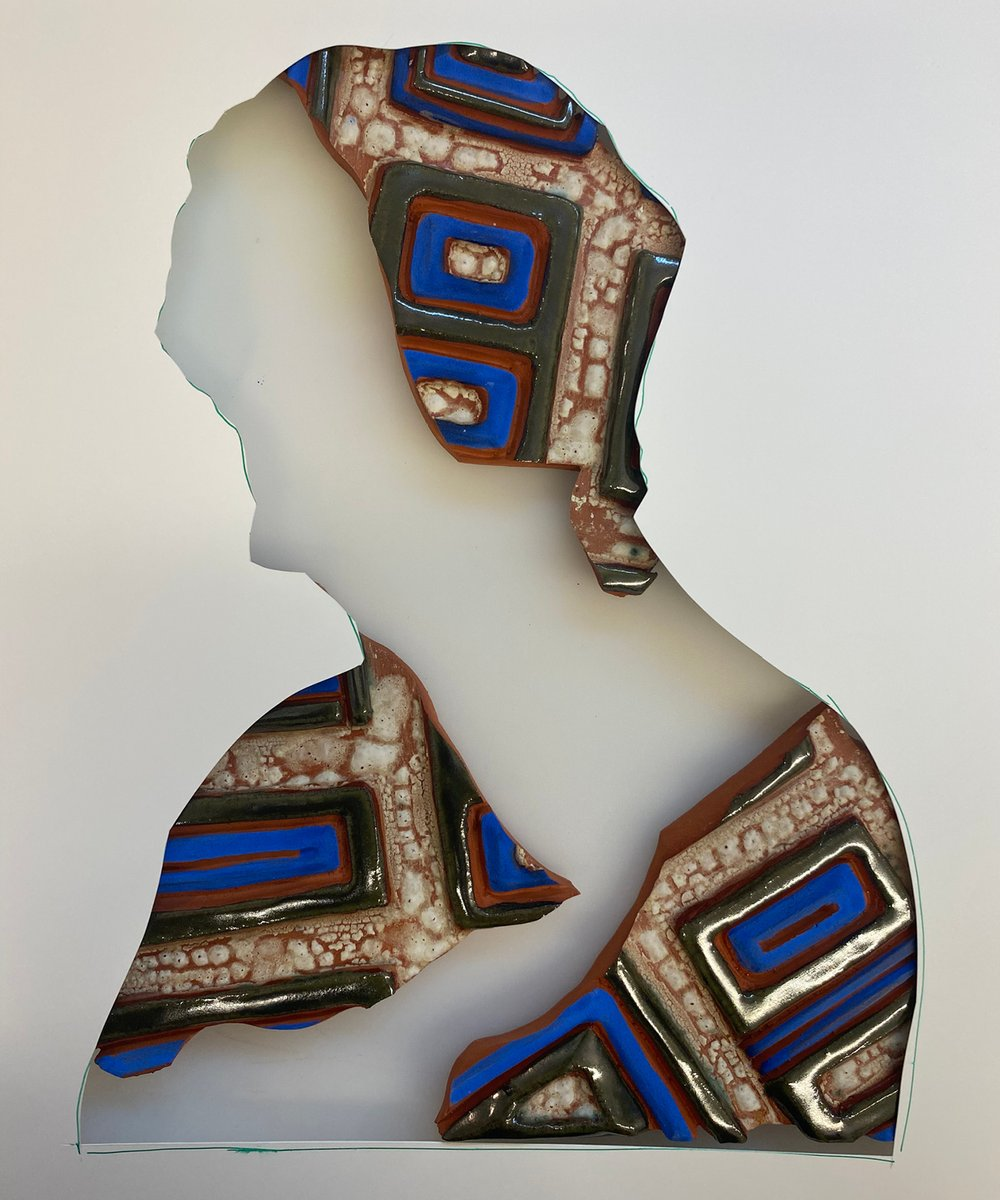
“Mom” | Dreaming of America is a series of fragment portraits exploring the unknown, invisible hardships, beauty, and joy experienced by Caribbean immigrants before and after migration.
adh: What has been the most rewarding aspect of your career in high-end artisanal crafts?
MB: One of the most rewarding aspects of my career is having the opportunity to create work that resonates with a broad audience. Artisanal craft is deeply intimate, and seeing others connect to my work’s stories, symbols, and themes is incredibly fulfilling. Contributing pieces that become part of others’ lives is meaningful, sparking dialogue, reflection, and connection to shared cultural experiences.
adh: How do you integrate your cultural heritage into your designs?
MB: I draw heavily on African traditional making processes, tracing how these techniques and aesthetics have evolved throughout the diaspora. This connection to heritage is a cornerstone of my work. By engaging with these craft histories, I integrate ancestral knowledge, reinterpreting it through my perspective and experiences. My pieces honor these traditional practices while also adapting them to reflect contemporary diasporic narratives, weaving together past and present.

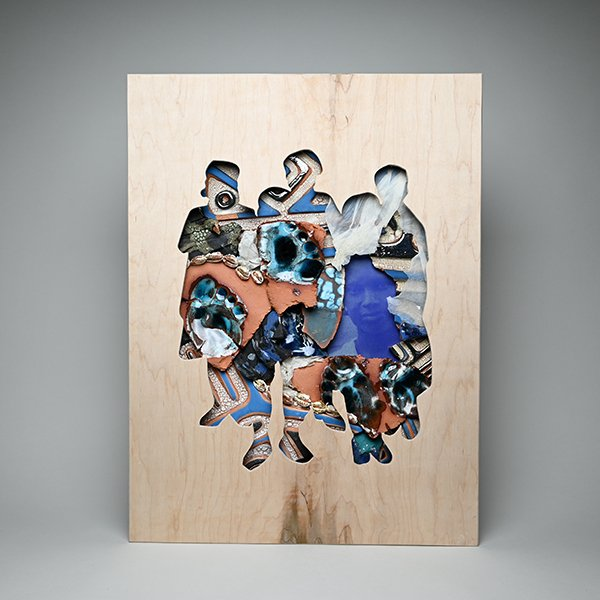
“Family” | What’s Left Behind II is a series of work that honors the souls of the named and nameless, offering gifts to ancestors and investing in Black archival futures through community objects, documentation, and care.
adh: What’s your favorite part of the creative process, and why?
MB: My favorite part of the creative process is the research and experimentation phase. Delving into histories, techniques, and cultural narratives fuels my creative vision. Working with materials in new ways allows me to discover unexpected textures, forms, and expressions that deepen my connection to the piece. It’s a time of exploration and discovery, where I find new layers of meaning that will eventually come to life in the final work. This phase excites me because it involves uncovering something new while grounding my work in research, tradition, and innovation.
aspire design and home: What advice would you give to other women looking to enter the field of high-end artisanal crafts?
MB: My advice to women entering the artisanal craft field is to stay true to your voice, no matter what external pressures you may feel. Artisanal craft is profoundly personal and can become even more powerful when you infuse it with authenticity and purpose. I encourage women to make meaningful and essential work, trusting that their unique perspective is their strength. Embrace the process as much as the outcome — often, the journey of creation reveals as much about our identities as the final piece does. The craft process is inherently filled with discovery, patience, and resilience; these elements will fuel and shape the stories you tell.
Like what you see? Get it first with a subscription to aspire design and home magazine.