


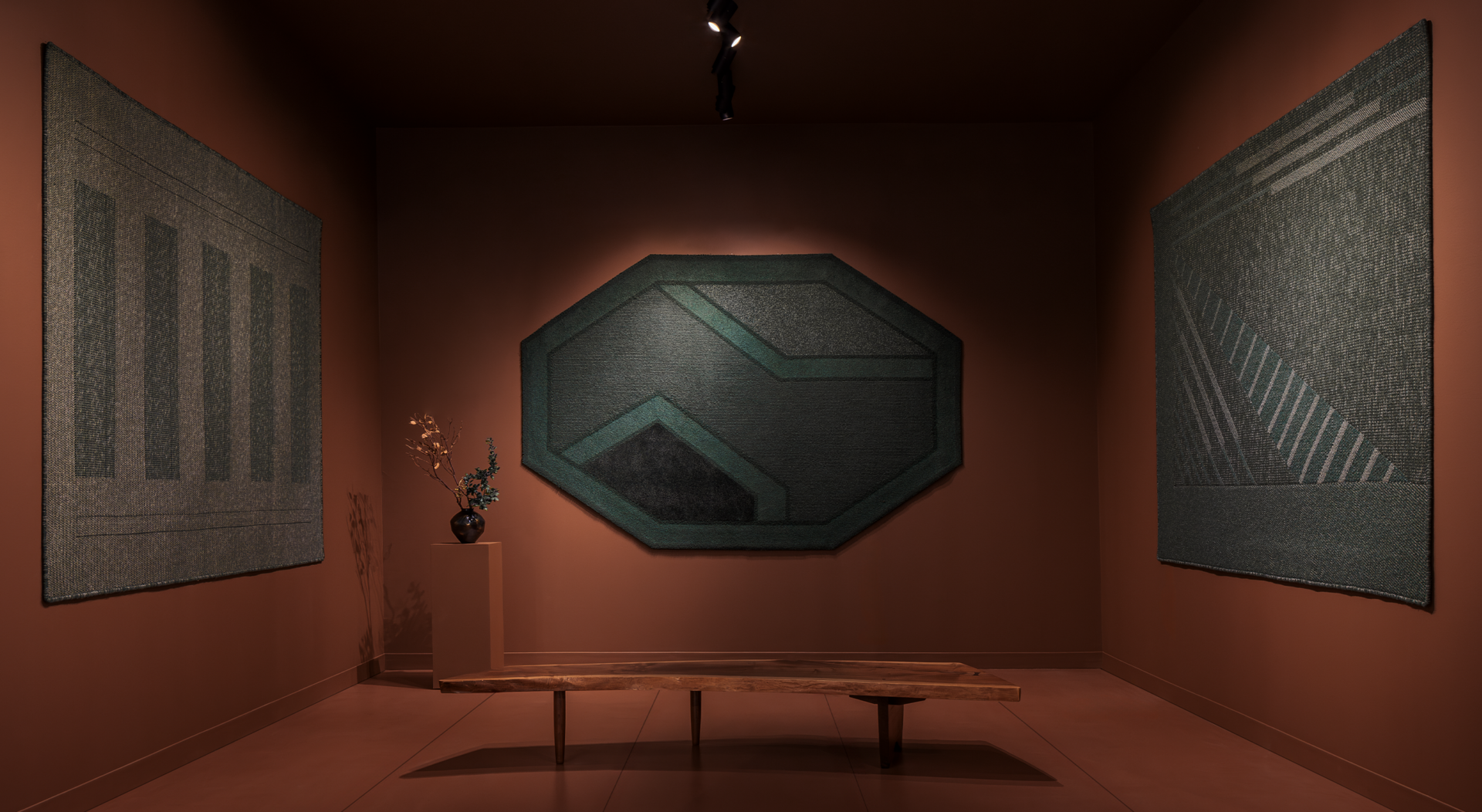
DesignHER is a platform that celebrates the vision, craftsmanship, and innovation of women in design. By curating stories from leading female designers, artisans, and creatives, our latest series, in collaboration with Women Create, offers an intimate look at the diverse paths these women take to shape their industries and their own businesses. Through thoughtful interviews and features, the platform illuminates the artistry and technical mastery that define their work, while exploring the deeper narratives of creativity, resilience, and leadership. DesignHER honors the unique perspectives of women, fostering a community where design excellence and empowerment intersect to inspire the next generation of trailblazers.
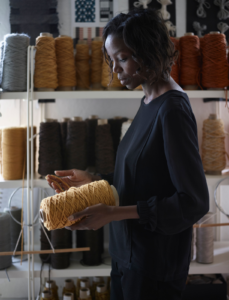

aspire design and home: Please tell us a bit about your background and how you got started in your craft.
Sylvie Johnson: My background in art began when I was a young child — not through textiles, but through the poems and literature I would read and explore — storytelling and constructing written words into poems or prose mirror textile art.
Each thread sings a different sound, each piece orchestrating grand designs of emotion, memory, beauty, and the experience of being human. It’s like merging letters, words, and sentences to tell a story.
Despite the physical differences between the mediums, the core elements in creating literature, textiles, or any art are similar and inspire my overall craft. I chose textile art as my primary discipline because the history of its materials and techniques resonates with what I love about art.
It reminds me of the technical approach, discipline, and structure required to create something great. It is an obsession, and I welcome it. I can make my own poems through textiles.

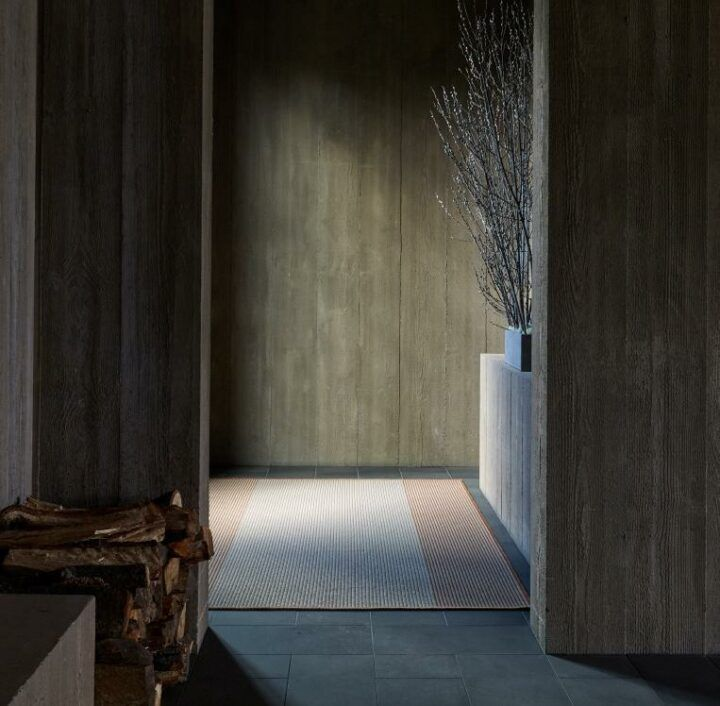
The Arrastra rug is inspired by subtle and nuanced beauty in nature.
adh: What role does experimentation play in your creative process?
SJ: In Atelier, I use what I know about textiles and art, and from there, I add elements that I like — such as where I want to go, how people feel and how the people I work with mature and develop. I draw processes inspired by the techniques and crafts practiced throughout history.
I experiment by observing other cultures and artists and reinterpreting their craft and traditional methods. I explore mechanical looms and traditional dobby weaves and adjust how I incorporate the yarns I make. Whether it’s the speed and rhythm of the machine or the type of dyes I use, I imagine what I would create and see where my vision and the final result meet. I will continue this motion until I find a process that reflects my artistic goal.
Experimentation is like math; I plug materials into a process that will lead to a conclusion. It combines my knowledge about art and textiles and includes new elements from ideas I like to express. It is based on feelings that link to people.
adh: How do you balance the traditional aspects of your craft with contemporary trends?
SJ: You cannot start from scratch or be an avant-garde without knowing what existed before you. It’s difficult to be innovative without a point of reference. Everything we do is linked to history and lived moments.
Therefore, when I approach my work, I pull specific elements from history, the present and the presumed future and try to communicate ideas that reach multiple perspectives. I want to make timeless work that celebrates art as a vehicle of knowledge and culture and empowers curiosity in others.
The link between the traditional and the contemporary is that you need to live in your own time and be aware of what’s going on around you, of course, but you also need to foster a deep understanding of what was before you.
Now, I am creating things in 2025 that can be seen decades in the future but are connected to the past. They are connected to neolithic, prehistoric pieces, to the Renaissance, to modern art, to architecture. They hold in them, because I hold in me, this knowledge and appreciation of the history of humankind from past to present.

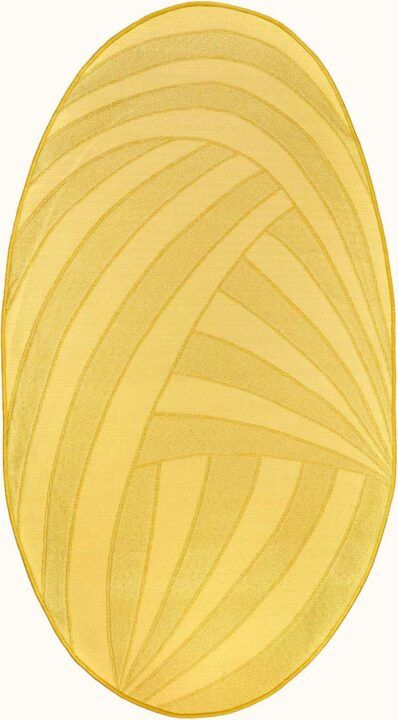
An oval rug that forms a textural cocoon, Chrysalis pays tribute to the rich cultural heritage of the ancient Silk Road, with layers of mohair, linen, twisted wool, and alpaca merino wool.
adh: What advice would you give to your younger self at the start of your journey in this industry?
SJ: I would continue to tell myself to work hard, have perseverance and endurance, practice my craft, study, and be curious. Curiosity is so essential. I devote an hour daily to learning something new, being curious and studying a subject, whether observing nature, reading about a specific painter or sculpture, or learning gardening or cooking techniques.
But a new piece of advice I would give myself is to have more fun. My obsession with various subjects might impact how I experience joy in the craft of making, and I want to make sure that my learning ability continues to be fun and joyful.
I would also encourage myself to be more active and participate in sports.
“To see takes time.” – Georgia O’Keeffe
adh: How do you think your work has evolved over the years, and what factors have driven that evolution?
SJ: The evolution of my work started to expand when I became more unapologetic in my craft and art. I wanted to focus on textiles and tell the world that it is a discipline on par with every other artistic medium.
When I started my own company in 2003, I wanted to make textile art reflecting the various artists who inspired me. My work began as minimal, with simple shapes and materials. Although they looked nice, and I had clients collecting my pieces, I wanted more.
The number of times I heard people look at modern art, like the works by Lucio Fontana’s cut paintings, and say, “I can do that.” It is very upsetting because these artists are exploring concepts many have not taken the initiative to do.
When I compare my work, however, I want to develop further and make something more than just simple to look at. I wanted something for people to experience and not have the impression that they could replicate my expressions.
My work evolved with more complexity – from the yarns I twist to how they are inserted into the warp to creating a rhythm with the pattern and the interplay of shadow. I would highlight the warp in some areas while other parts are trimmed, looped, tufted, or the rug is shaped. The technique in my work became more sophisticated from where I started. I created the motifs and shapes that combined all the knowledge I gained in the textile discipline and reinterpreted it.
To approach yarn and to make something exquisite evokes a feeling of effortlessness, almost like breathing, but the process comes from many hours of labor, research, and hard work.

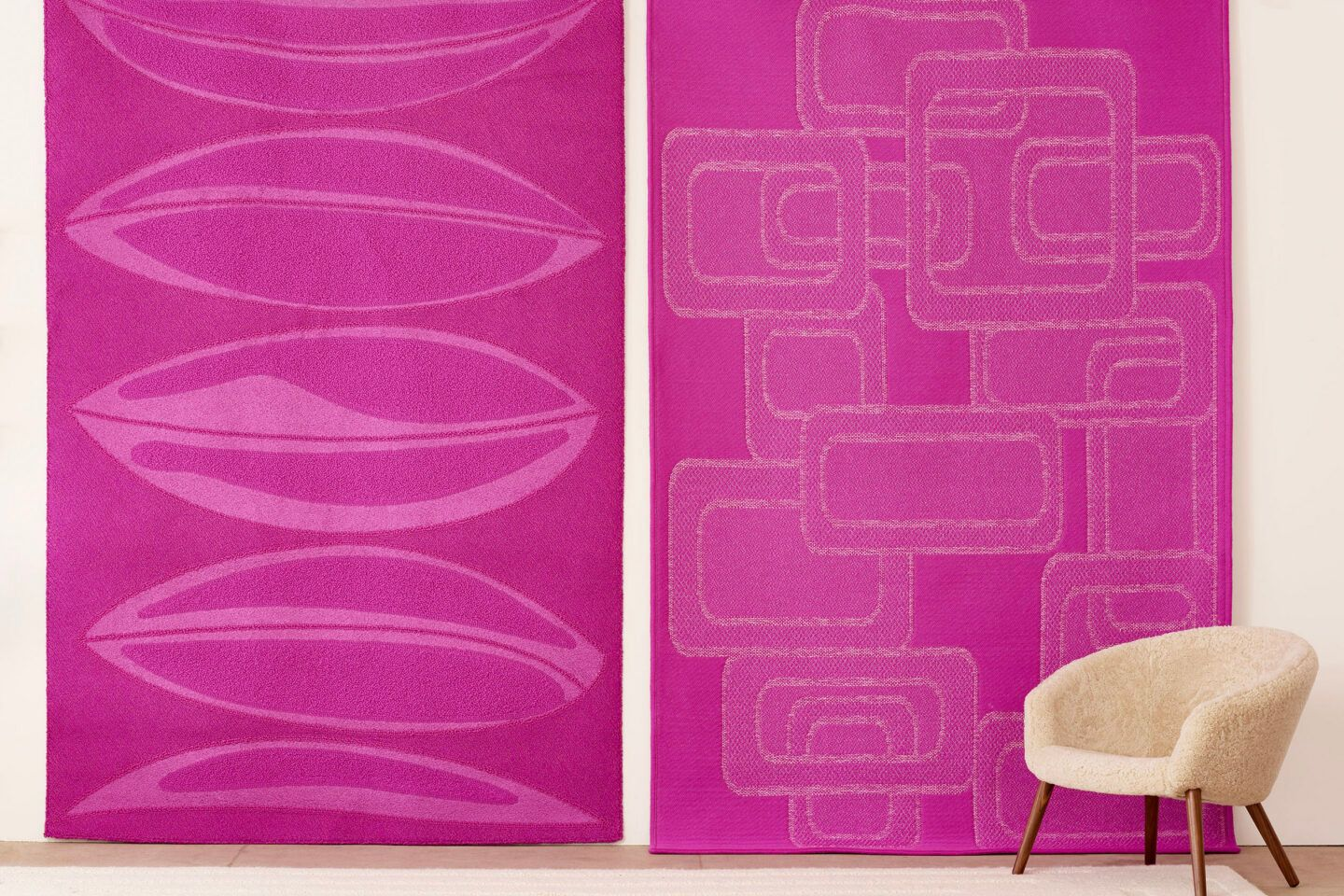
Inspired by the mirrored sculptures of Anish Kapoor, Convex showcases the balance of yarns and color to create a textural motif.
adh: What impact do you hope your work has on those who experience it?
SJ: Cultivating knowledge is fundamental and the backbone of everything. It stems from listening to others and the stories they have to share. I want to share my memories and relationship with nature and art and reinterpret them with the compositions and textiles I make.
I want to form connections through humble materials and transcend people’s preconceived notions about rugs and textiles. Textiles as art. I strive to make works that allow people to reflect, ponder, and discover something beyond what they see in my work and feel and capture the nuance that I try to convey through light, shadow, and topography. I want people to create a moment to experience my work through their senses.
Like what you see? Get it first with a subscription to aspire design and home magazine.