



Project Details:
Interior Designer: Donald MacDonald, Donald MacDonald Interior Design
Architect: Geddes Ulinskas, Geddes Ulinskas Architecture
Home Builder: Nathan Charles, Norman Charles Construction
Location: San Francisco, CA
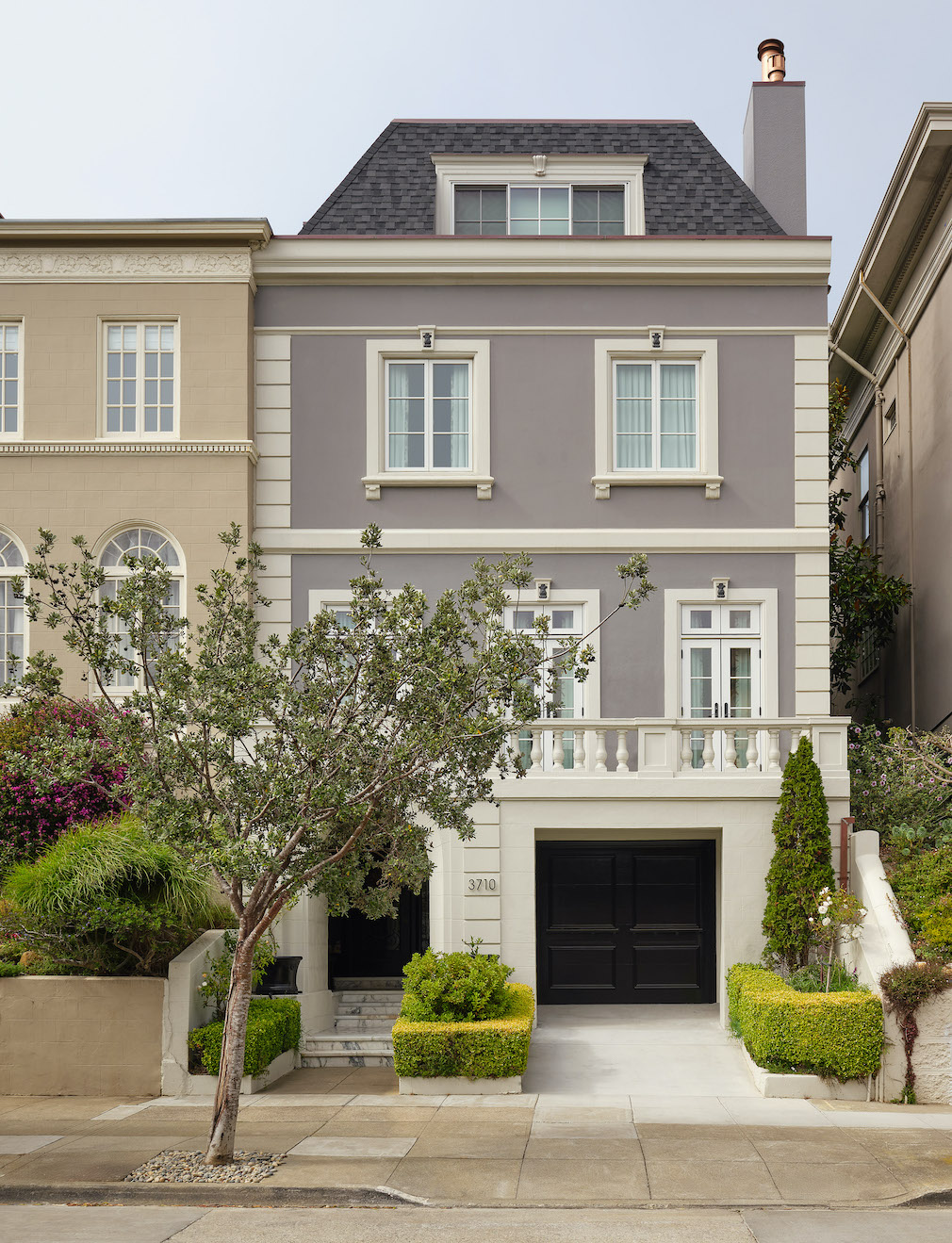
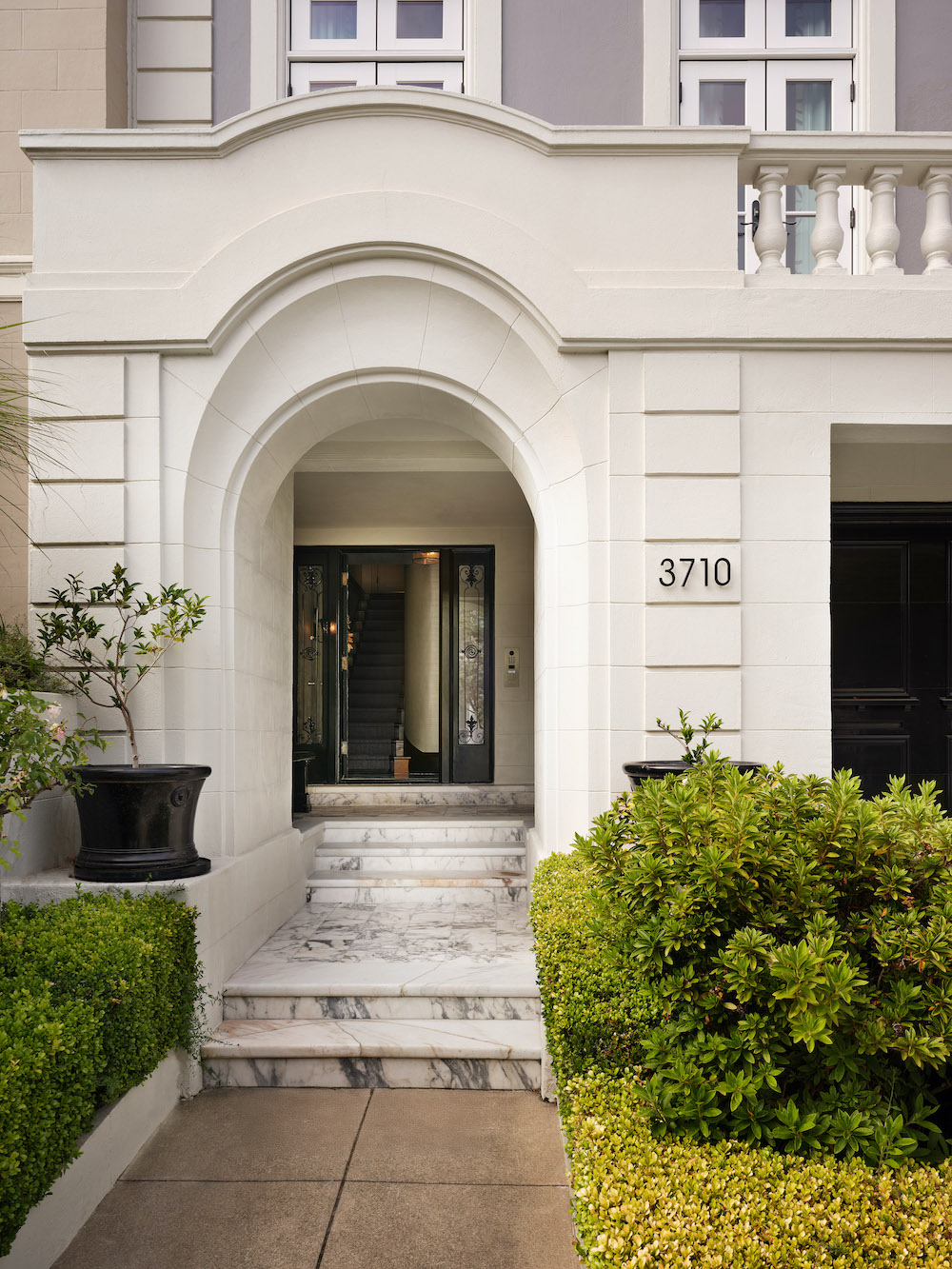
The charm of a historic San Francisco Victorian is indisputable — elegant moldings, intricate architectural details and elevated materials all evoke romantic design notions. Then there are the other realities that accompany a house of that age: drafts, aging electrical systems and a fragmented layout. This tug-of-war between beauty and practicality is what one young family took on when they purchased an 1896 home in the city’s Presidio Heights neighborhood.
“They wanted to maintain the integrity of the San Francisco Victorian but give it a little bit of a modern facelift,” explains builder Nathan Charles, who, along with designer Donald MacDonald and architect Geddes Ulinskas, was brought on to help the owners achieve their vision. From the outset, the work was planned in two phases: first, reworking the existing rooms and, a few years later, expanding into the unfinished attic.
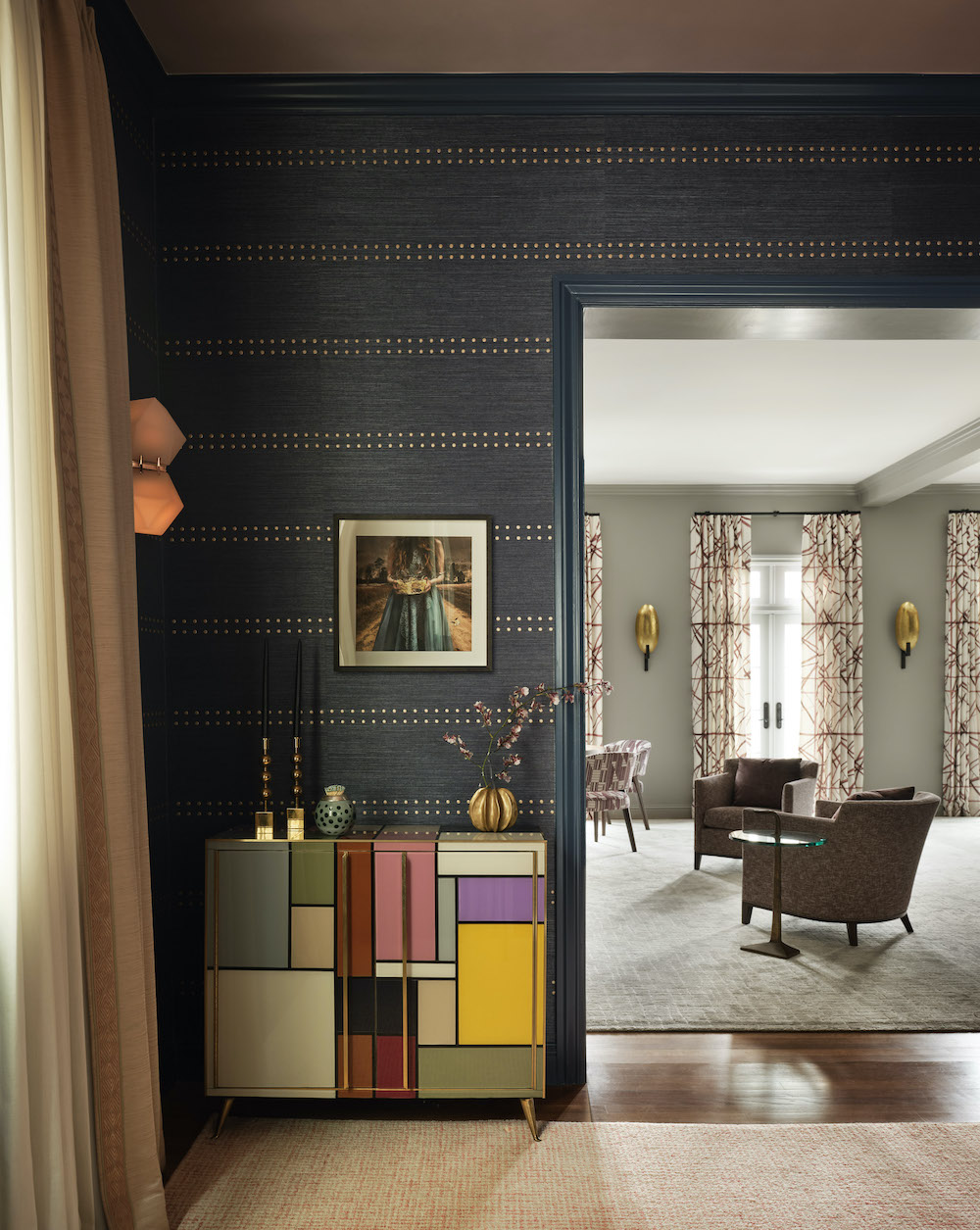
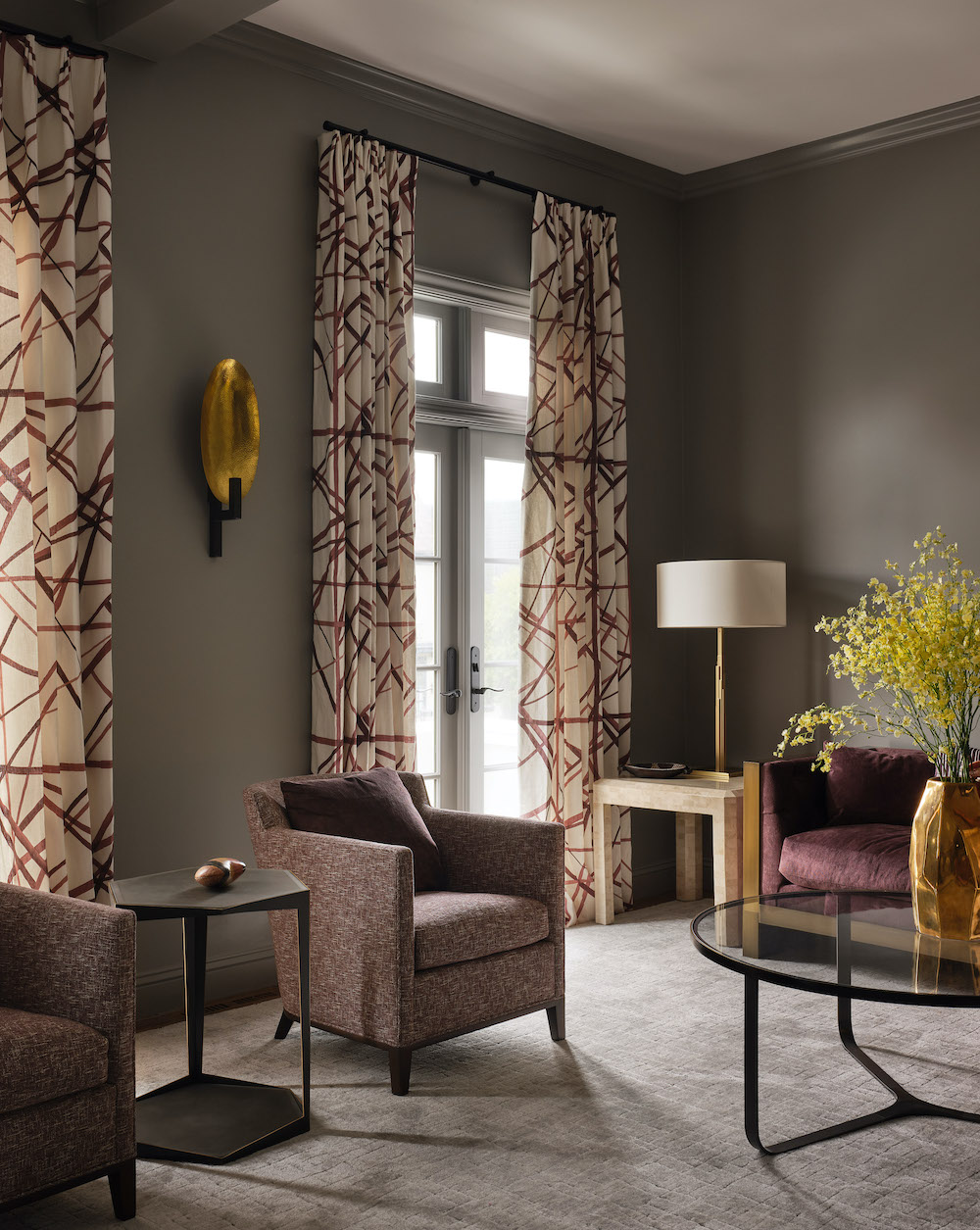
The initial phase focused on how the house functioned and blending the owners’ modern leanings with the historic character. The home’s formal rooms were elegant but disconnected, and the dining room lacked natural light. So, Ulinskas widened the openings between the main living space to allow daylight to move through the interior. The kitchen, he notes, occupies a crucial position in the plan, becoming “the hinge point between the formal rooms and the more relaxed family spaces.”
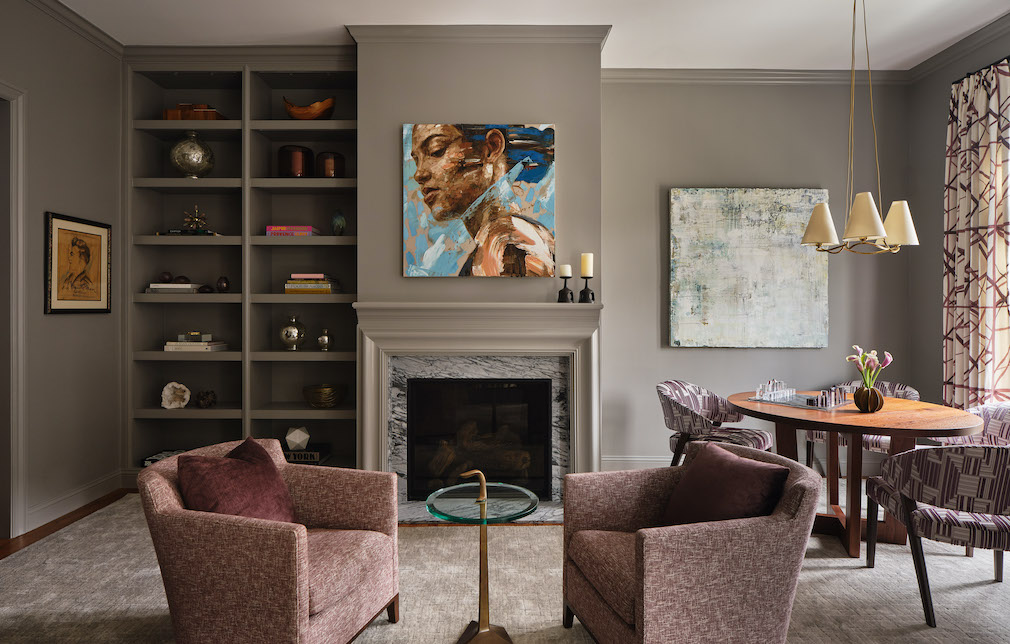

With the architecture clarified, MacDonald layered furnishings to encourage everyday use. In the living room, seating arrangements create multiple zones: a conversational grouping near the restored fireplace, a quieter corner for reading and a game table positioned to capture the southern light from three French doors. Custom rugs define the L-shaped room while keeping the original wood floors visible. Decorative lighting — Herve Van Der Straeten sconces from Ralph Pucci, a vintage pendant, Jonathan Browning Studio table lamps and upgraded architectural lighting — adds warmth to the historic envelope while highlighting artwork and built-ins.
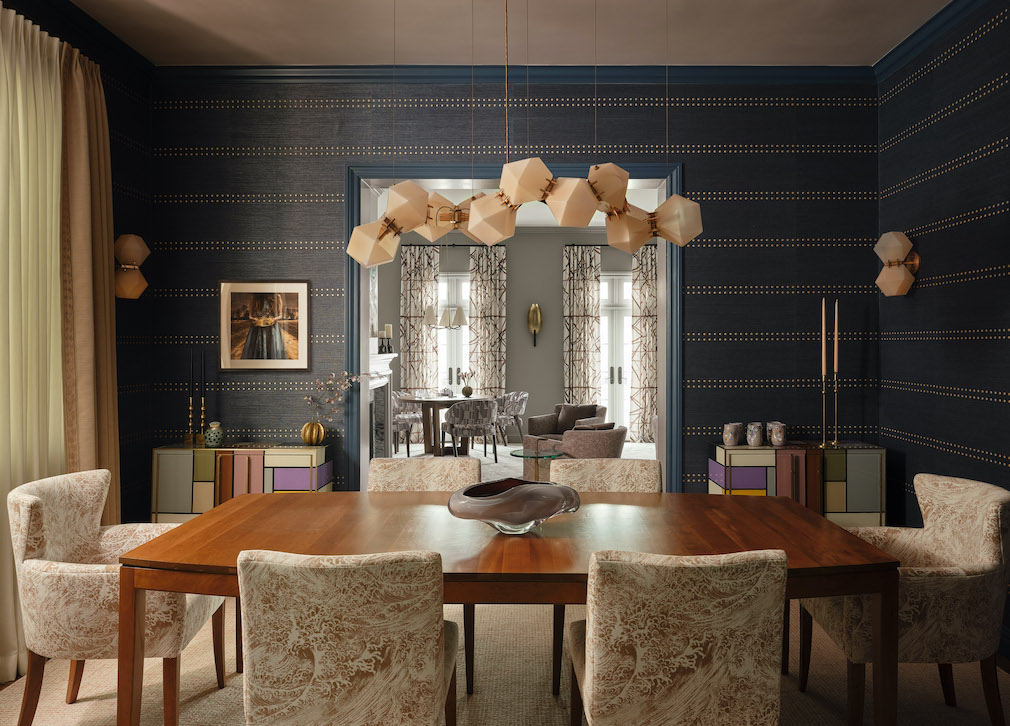

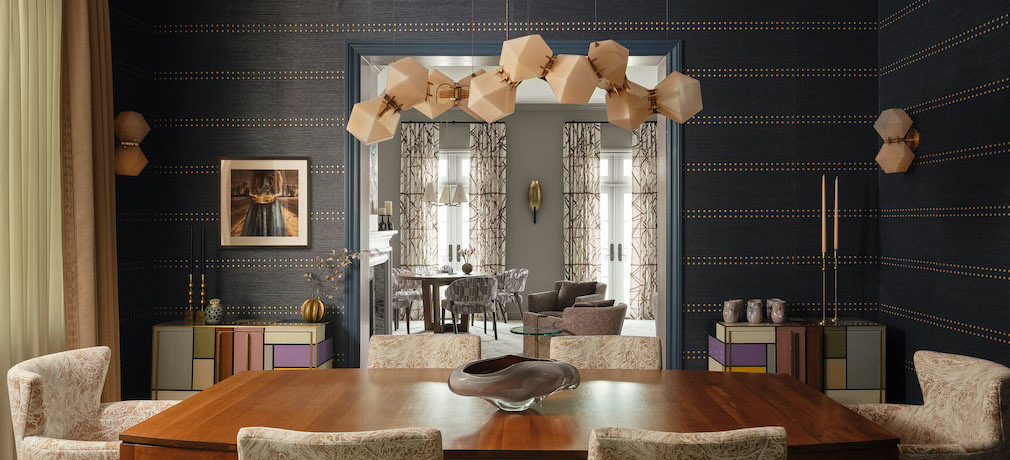
The dining room pairs traditional architecture with contemporary detailing. A custom Philip Jeffries wallcovering with rose-gold rivets wraps the room, while the homeowners’ refinished Stickley table anchors the space. Reupholstered dining chairs introduce soft color, and a metallic pink ceiling finish subtly reflects light across the moldings, transforming what was once a dark room into a focal gathering space.
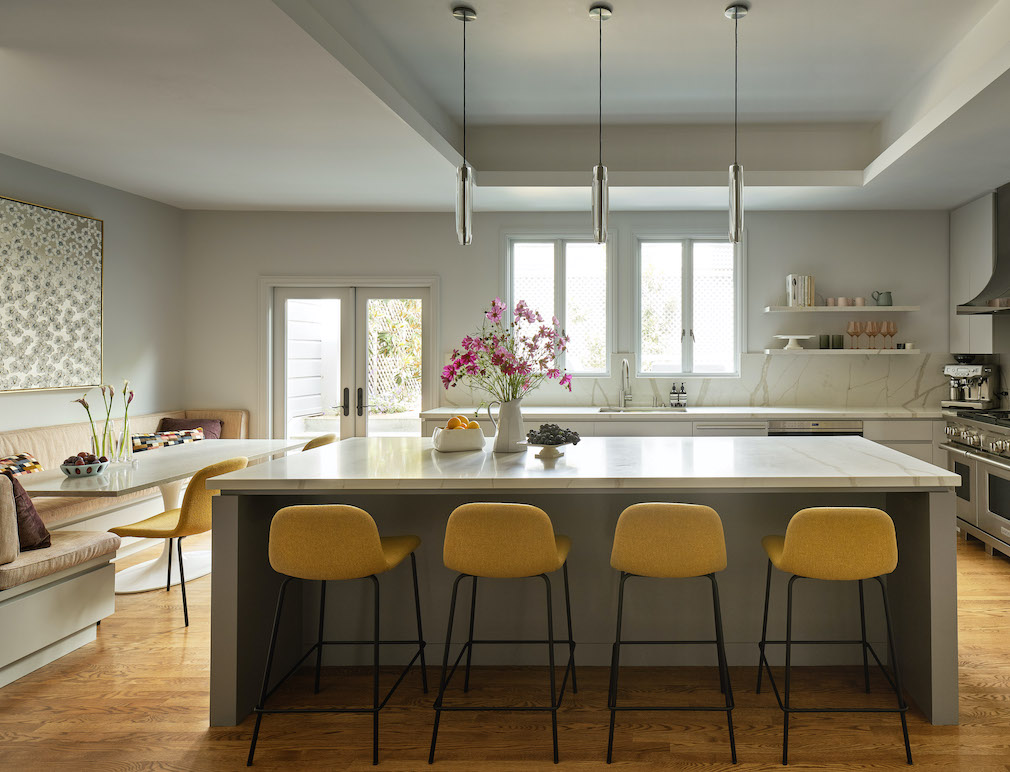

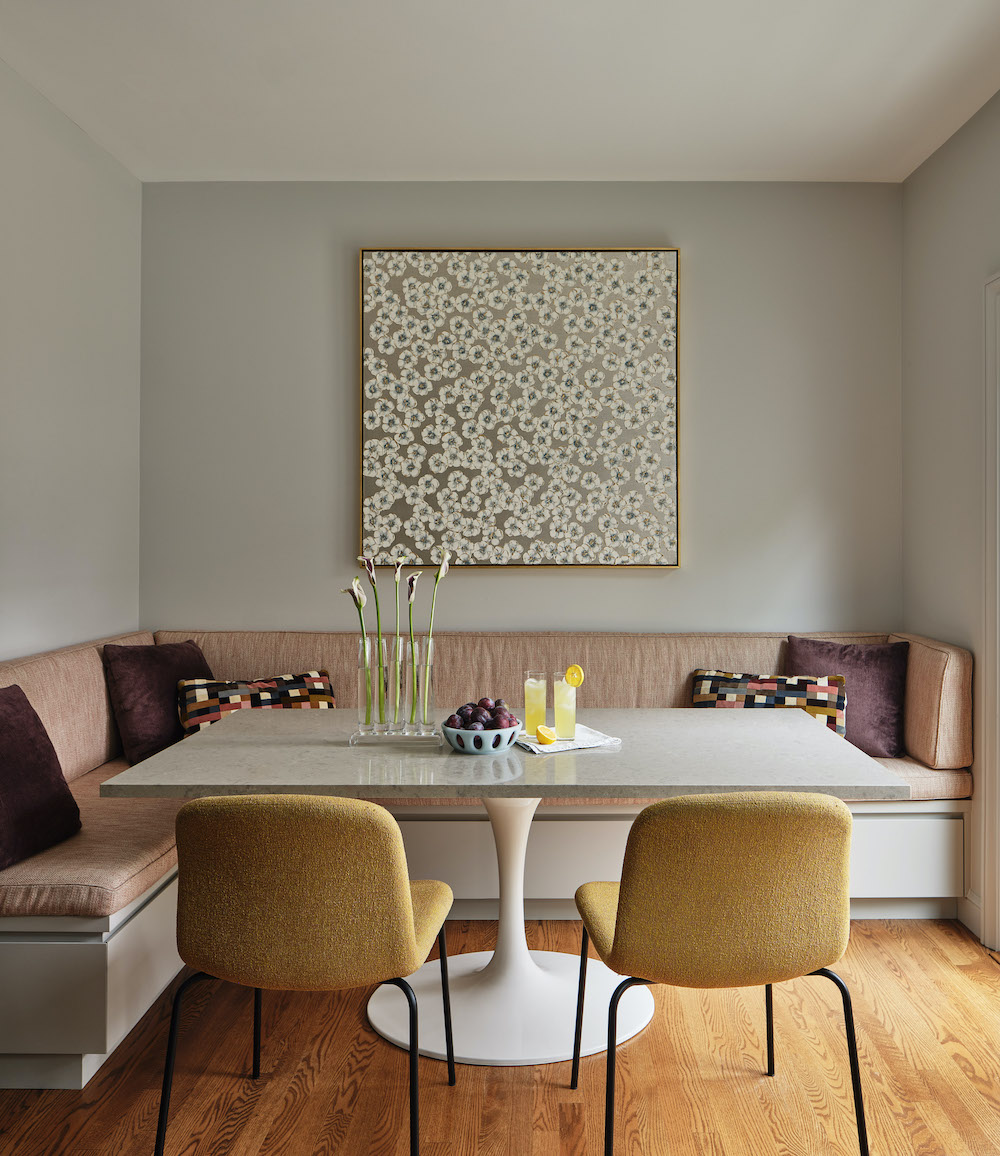
Because the homeowners cook frequently, the kitchen became central to the renovation. Cabinetry was designed around carefully programmed storage, with banks of drawers replacing upper cabinets along one wall. Quartz countertops were selected for durability — allowing enthusiastic cooking without worry — while a coordinating stone slab tops a custom table in the room’s breakfast area. Rather than delicate finishes, MacDonald emphasized practicality, explaining that the family wanted spaces that were “durable but beautiful.”
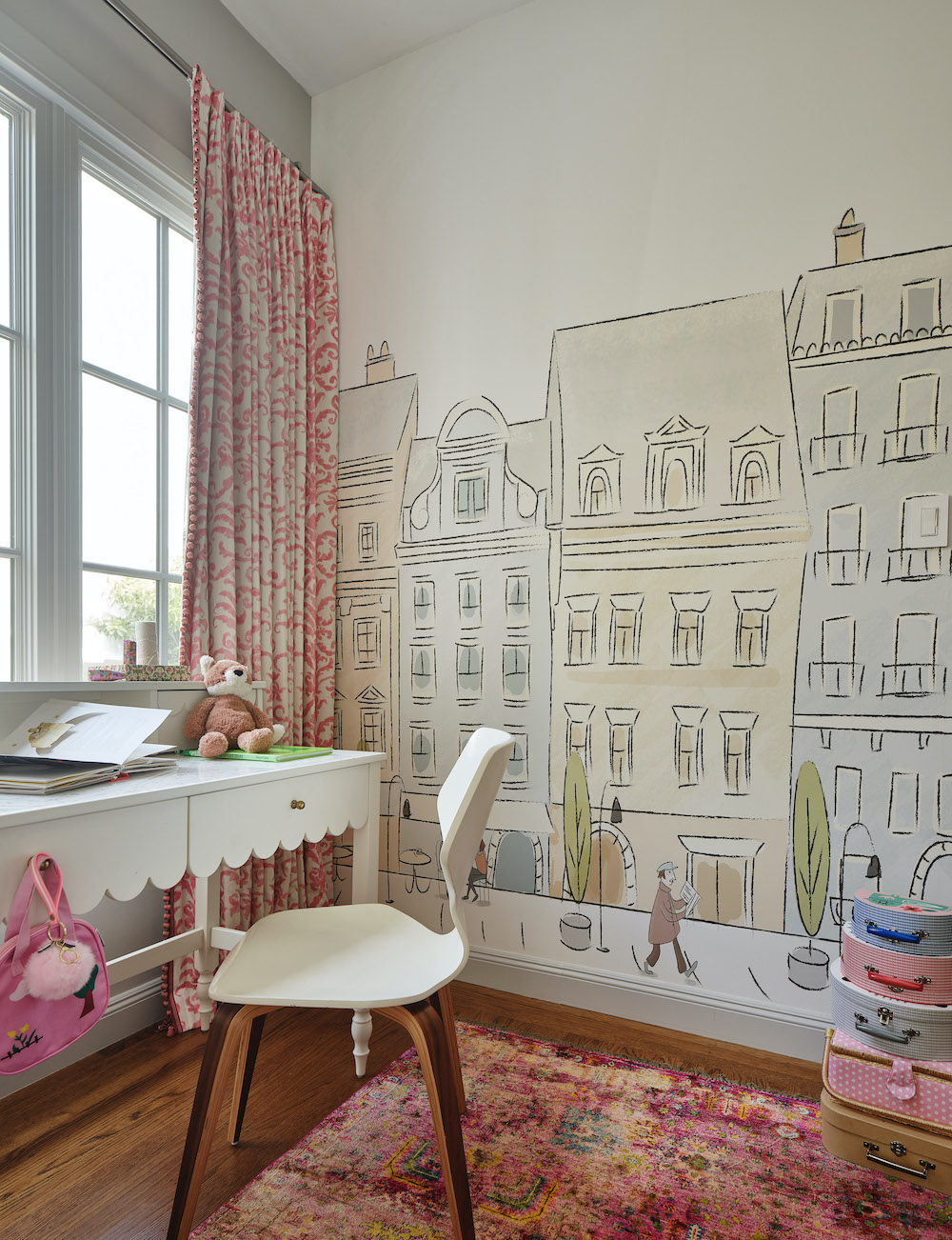
Upstairs, private rooms follow the same philosophy. The primary suite retains its original moldings but softens them with monochromatic paint finishes in varying sheens. A large-scale Phillip Jeffries mural behind the bed adds visual interest without clutter, while the daughter’s bedroom introduces playful Anewall wallpaper depicting a Parisian street scene.
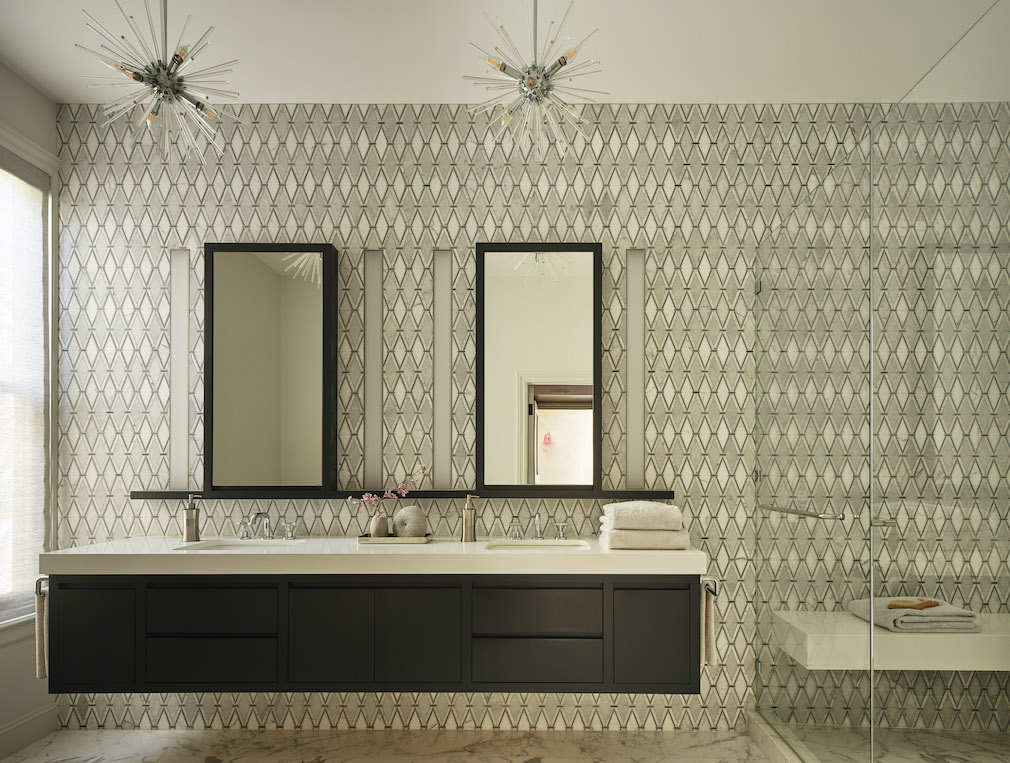

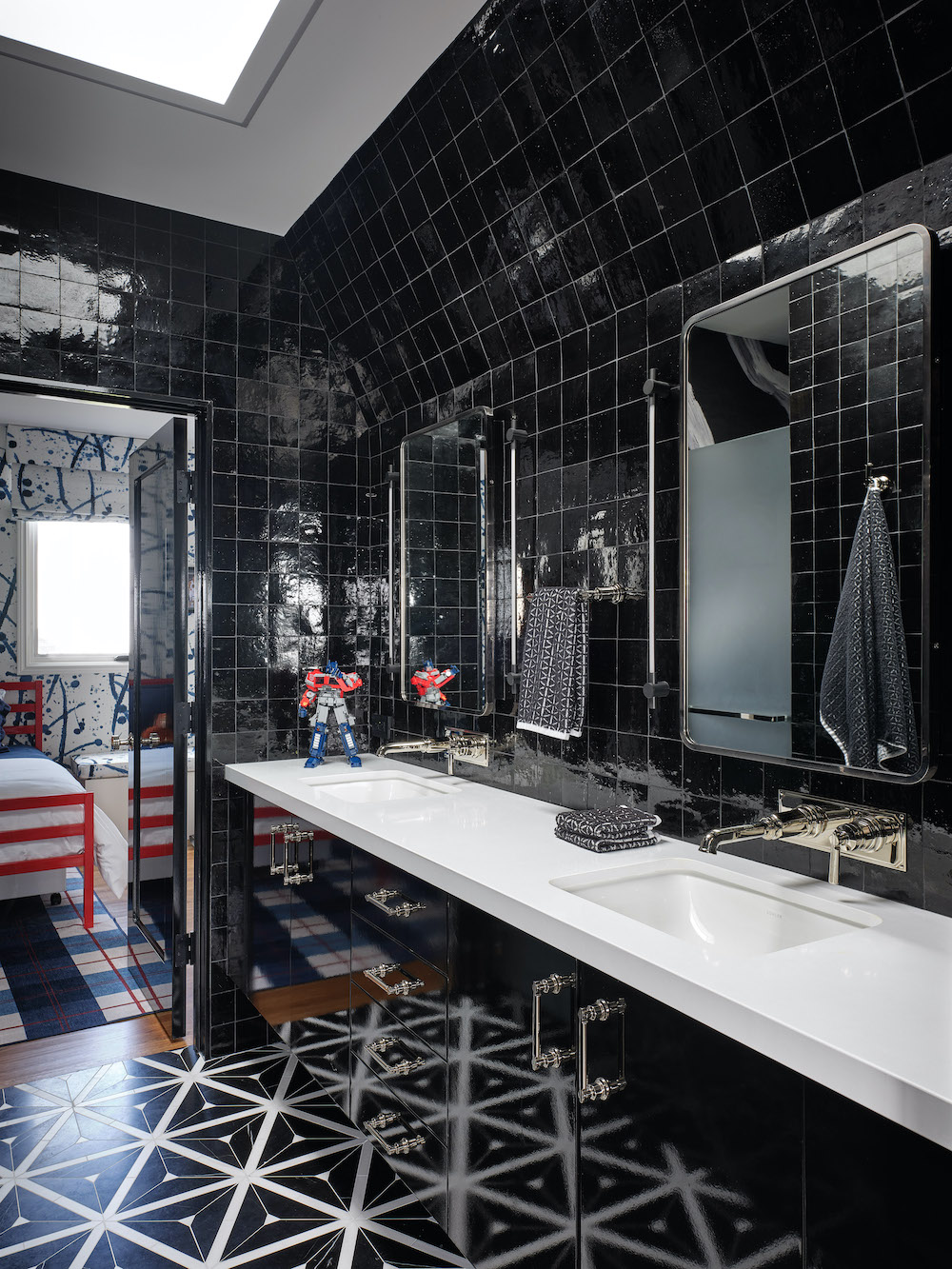
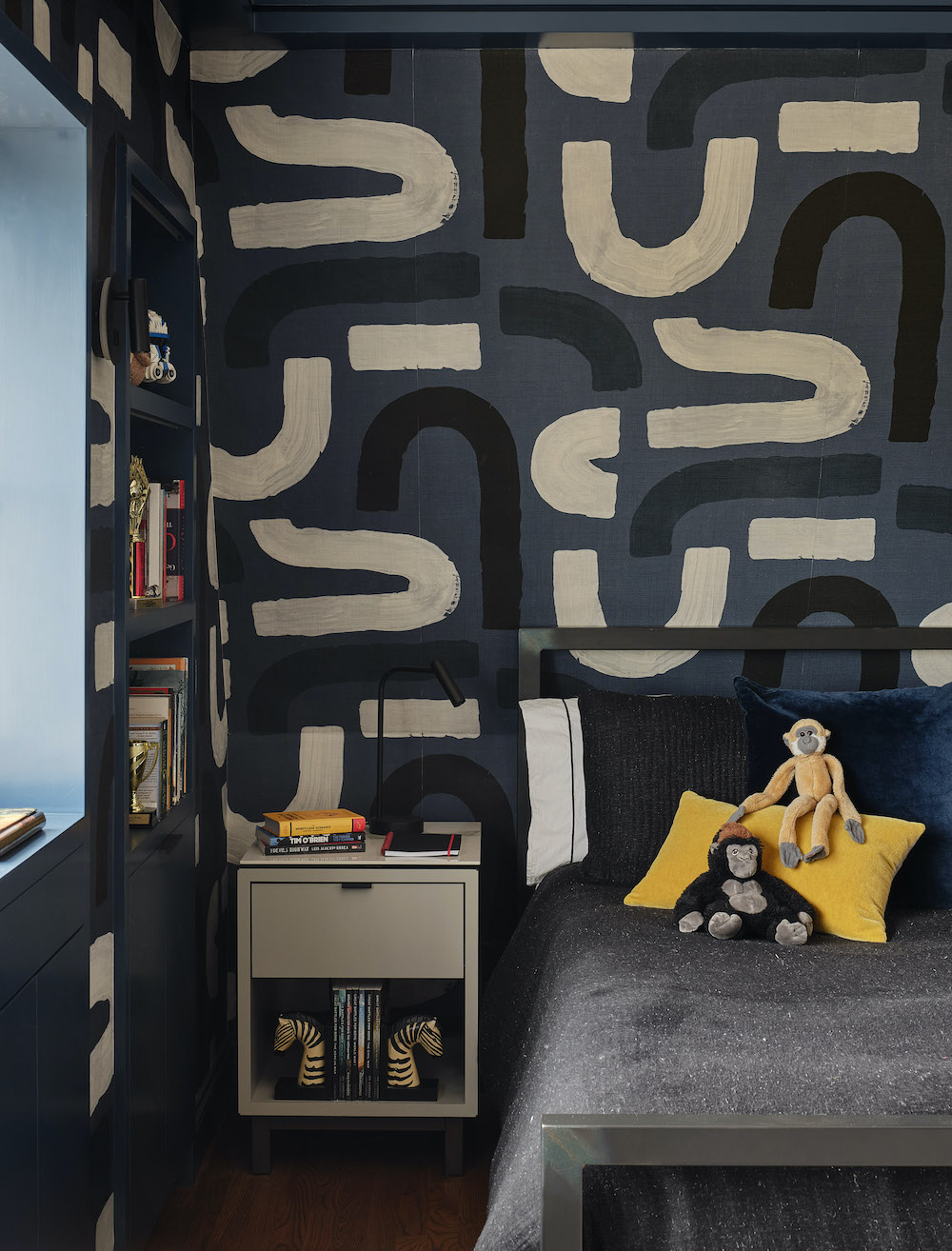
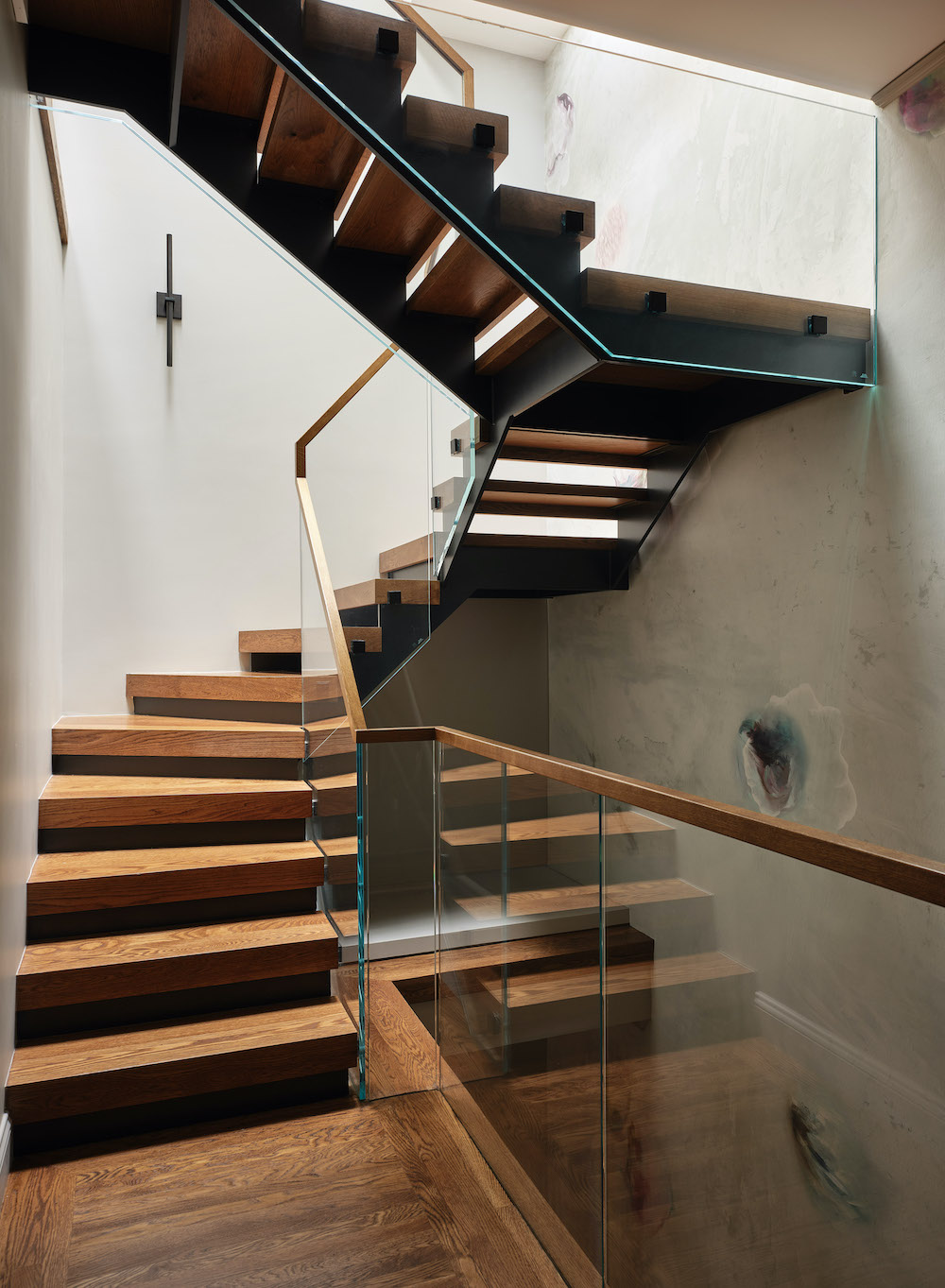
A few years after the first phase — just as planned — the team returned to complete the second stage. The unfinished attic beneath the mansard roof became bedrooms and a shared bath for the couple’s sons. A sculptural stair with a glass railing brings daylight from a skylight down into the house. “The staircase was designed to pull as much light down into the house as possible,” Ulinskas explains.
Today, the house functions as a unified whole. Formal rooms host holidays, the kitchen anchors everyday routines and the upper floor gives the children independence as they grow. More than a restoration, the project reconciles past and present—a historic home adapted for contemporary living. “It functions for a family, but still feels elegant,” muses MacDonald. “Everything is harmonious and coherent.”
Photography by R. Brad Knipstein.
Like what you see? Get it first with a subscription to aspire design and home magazine.