

HAMISH BROWN | Robatayaki is definitely not new; it’s an incredibly old Japanese cooking technique that originated from fishermen of the northern coastal waters who would cook the fish directly on their boats with different charcoals. It is now a widely used form of charcoal grilling across Japan. At INKO NITO, we’ve taken that traditional concept and adapted it to work in a modern restaurant by adding more layers, allowing us to cook using many different techniques and create amazing flavors from the charcoal.

Is it hard to incorporate it into a restaurant space?
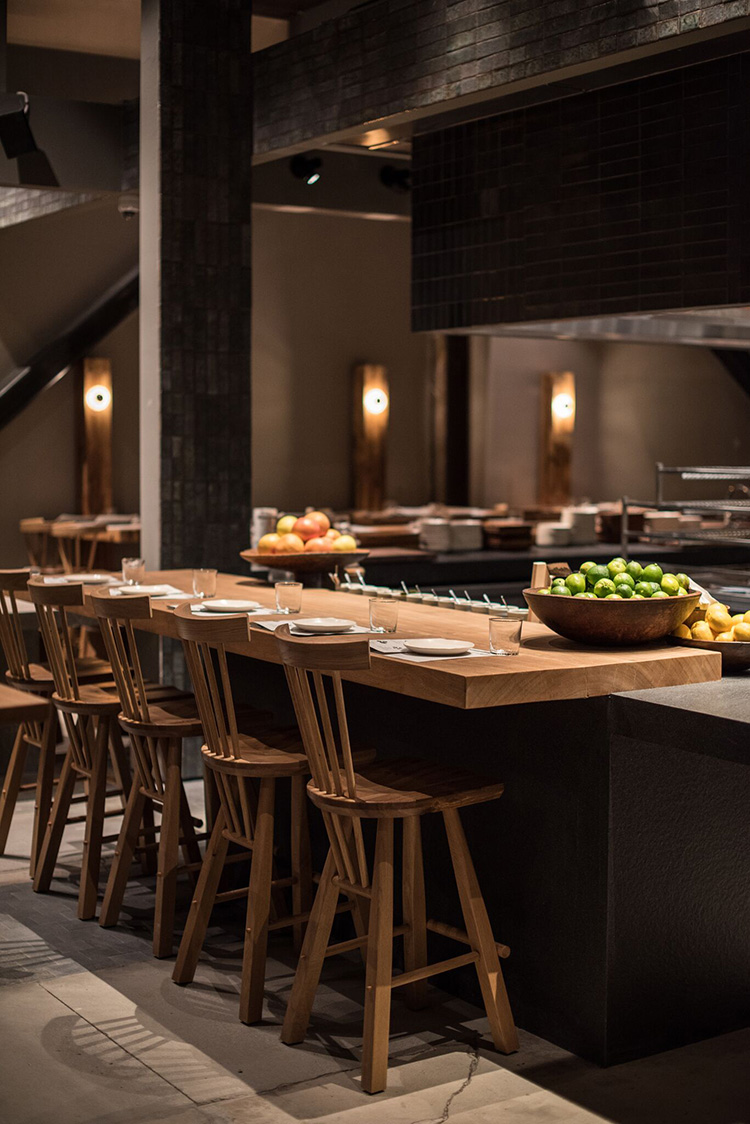
The robata grill itself is always in the center of the restaurant at INKO NITO. While finding a location that has the space to accommodate this layout as well as fitting all of the counter seating around it for our guests can be somewhat challenging, the result is exceptional – the robata has become the beating heart of INKO NITO.
As mentioned, the robatayaki cooking technique is very traditional, but at INKO NITO we like to incorporate modern and unexpected elements into the mix to create our dishes. This may come from using cuts like bone marrow or yellowtail or ingredients from elsewhere in the world – we draw a lot of inspiration from Korean flavors as well.

Does it incorporate sustainable materials?
We’re always looking to incorporate sustainability into our concepts wherever possible, in both large and small ways. One of the more fun elements we’ve adopted for INKO NITO is the use of recyclable chopsticks called Cropsticks.
What was Studio MAI’s task in planning the design?
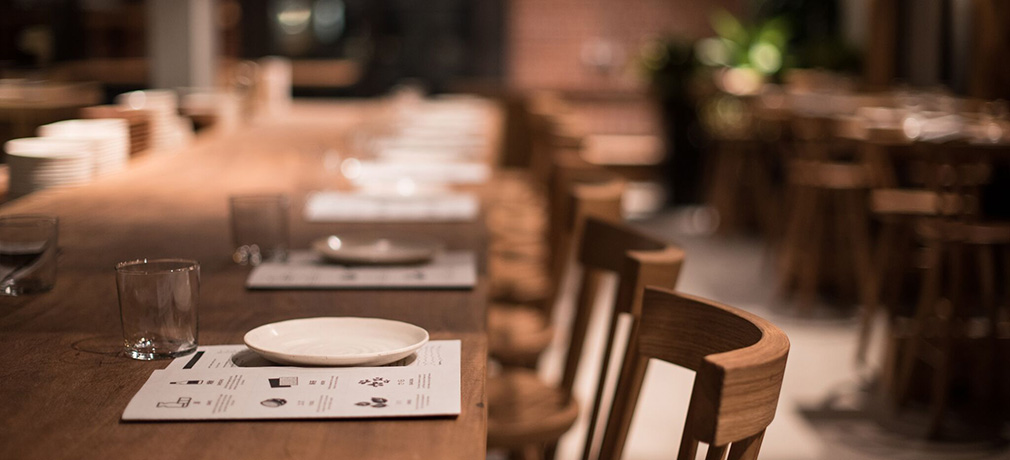
The task for our design team was to create a social space with the robata grill being the central focus. We wanted the design to reflect a relaxed environment with a Californian twist and market elements so that there are always exciting visuals for guests to see wherever they may be seated in the space.

This is one of our creations, called Nigaki. It is essentially a cross between nigiri and maki rolls. The seaweed, or nori, is traditionally used to make maki rolls.

Please describe pod seating. Looks like pretty wood.
Pod seating for us is more of an activation than the seating itself; these are designated areas within INKO NITO for guests to have dynamic and fantastic experiences.

It was important for us that the space had a natural feel and the incorporation of plants brings a casual feel to the restaurant; to maintain them, we have a program in place along with grow lights, so our plants are well taken care of.

When are the most popular times to get a table in the L.A. location?
Wednesday to Saturday nights are the busiest right now in the restaurant. We’ve just begun lunch for the weekend as well and that is proving extremely popular with guests and locals, too.
Speaking of that, what are the tables made of?
The tables are made of a mixture of wood, marble and stone.
The design is intended to recreate the lively energy of a street market dining experience. How?
When you visit a lively street market, it has an energetic, bustling vibe. There are smells and sounds from stalls where people are cooking directly in front of you. While INKO NITO cannot create that feeling, we use it more as inspiration. We’re dedicated to creating an environment where guests feel that energy when they visit, enjoying the smells, sounds and tastes while enjoying a fantastic meal.
What is the address for this L.A. restaurant? When will the second L.A. location open?
The Arts District restaurant opened in L.A. in December 2017 and is at 225-227 S. Garey Street. Our newest opening will be along West 3rd in L.A.. And our London restaurant in the Soho Central neighborhood opened in May 2018.
Like what you see? Get it first with a subscription to ASPIRE DESIGN AND HOME magazine.