
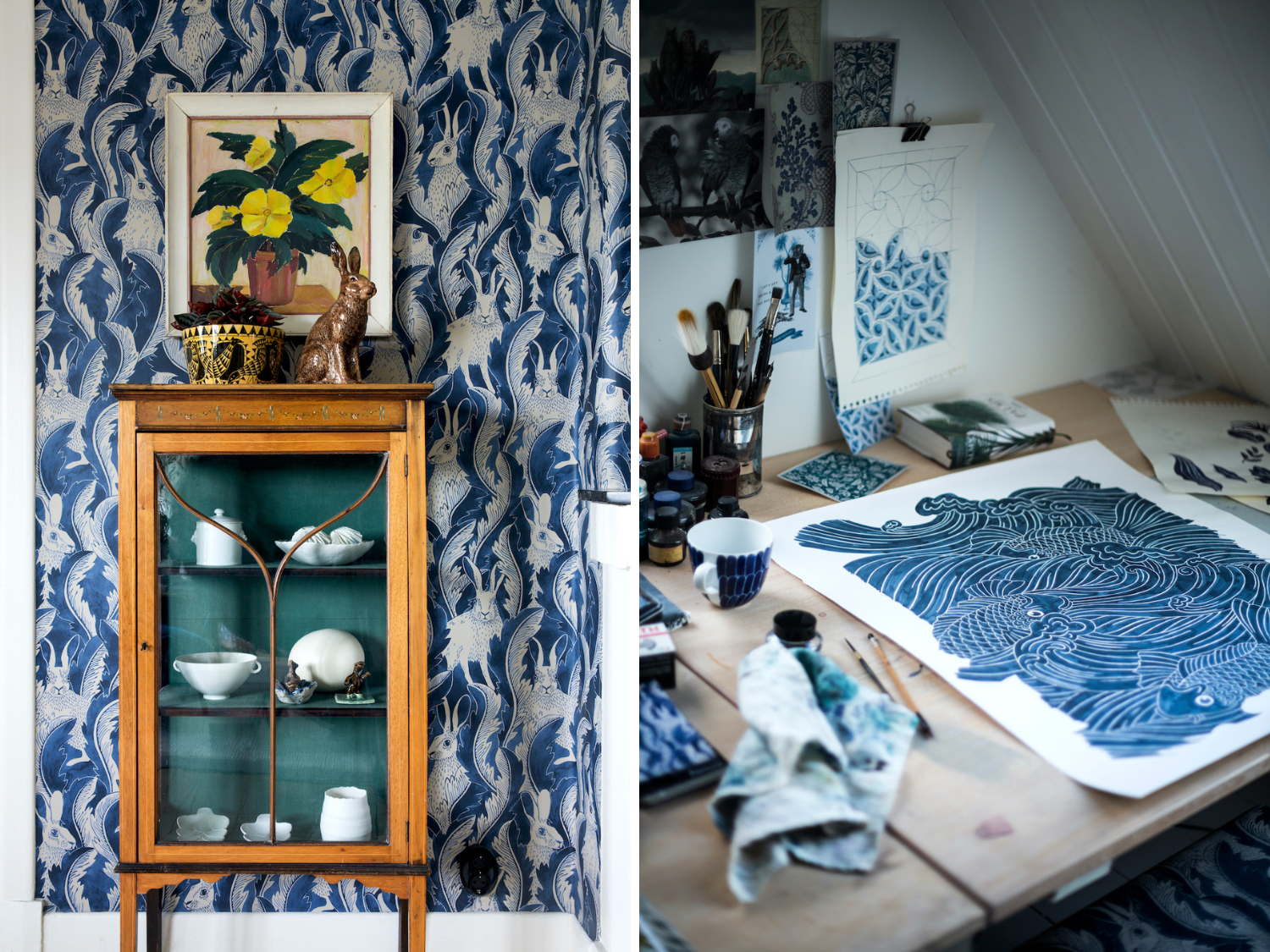
A light touch. Maximalists shudder at the thought, of course. And for period-interiors purists, it’s not always an option. But for many people, a light touch is ideal in design. Yet there’s a big difference between a light touch and an unfinished look, between subtle intervention and utter disregard. It’s a look not always easy to describe, but when you see it, you know it. And in Emma von Brömssen’s home near the sea in a suburb southwest of Gothenburg, Sweden, you can feel it.
Cofounder with Daniel Långelid of the wallpaper company Långelid/von Brömssen, she and her husband, Edward, acquired the property thirteen years ago and over time, have transformed the 1920s fisherman’s cottage into a comfortable family home. “The house is white, quite tall and built of wood,” explains von Brömssen. “The fishermen always painted their homes white, partly so that the houses could be seen from the sea, making it easier for them to find their way home in bad weather, and partly because white paint was the cheapest to use. We have chosen to renovate the house in the 1920s style.”
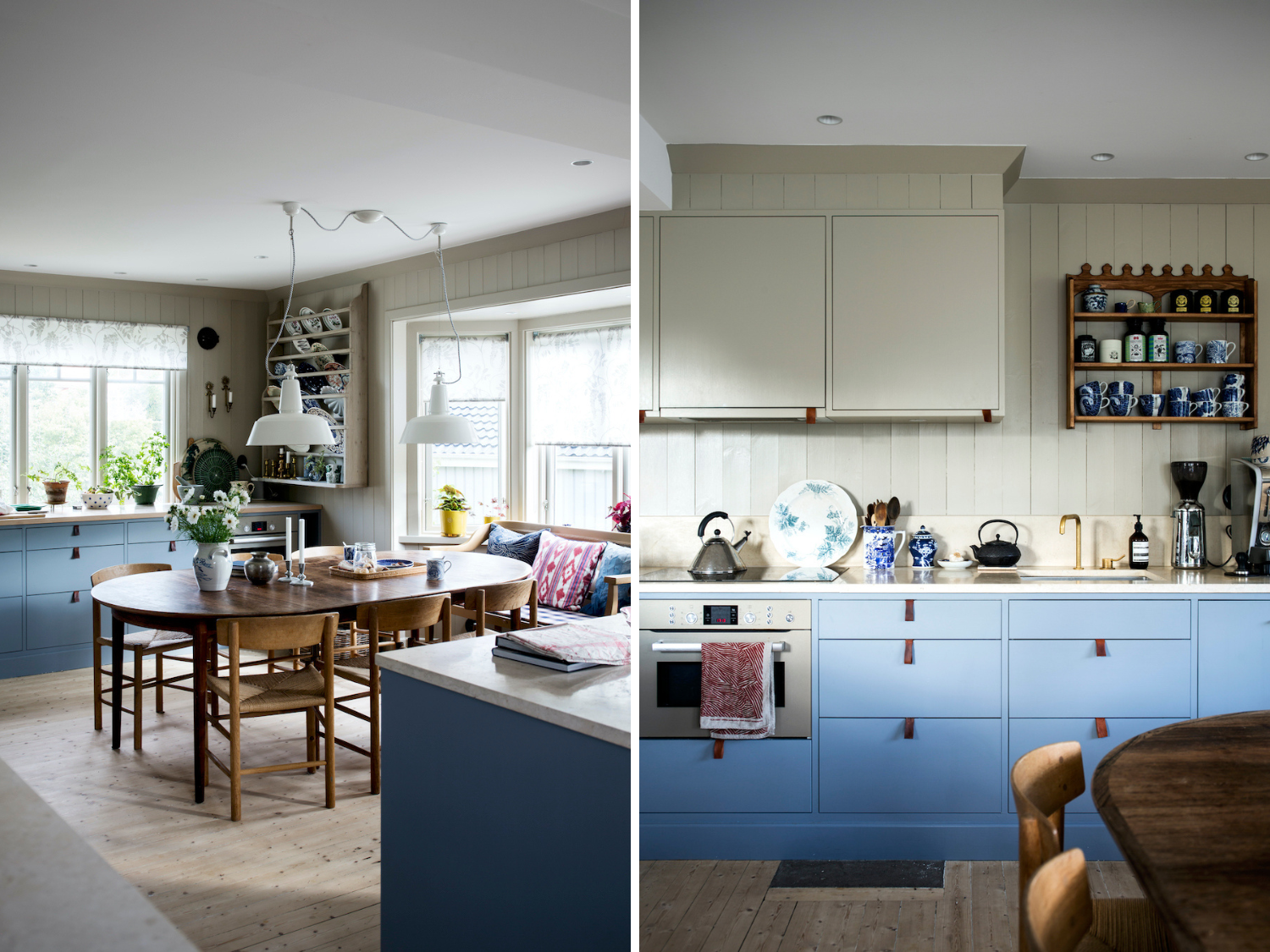
Despite its humble origins, the house, which was converted to a two-family residence years ago, was graced with beautiful spruce floors, attractive moldings, and fine doors. “However,” notes von Brömssen, “the owners before us had somewhat ruined the house by replacing many windows with large modern ones that didn’t match the era.” In addition to correcting such missteps (with windows she designed herself ), she reworked the home’s layout, removing the unnecessary second kitchen and installing a nice big one with blue cabinetry, enlarging the upstairs bathroom and making sure her three sons each had their own room. The third-floor attic, with its steeply pitched roof, became her studio. “Since the house was previously a two-family home with two entrances, we converted the one at the back of the house into a double door with paneled windows that we painted in English red,” shares von Brömssen. “I had seen this in a photo that my great-grandmother had of her house in the 1940s, and I thought it looked so beautiful.”
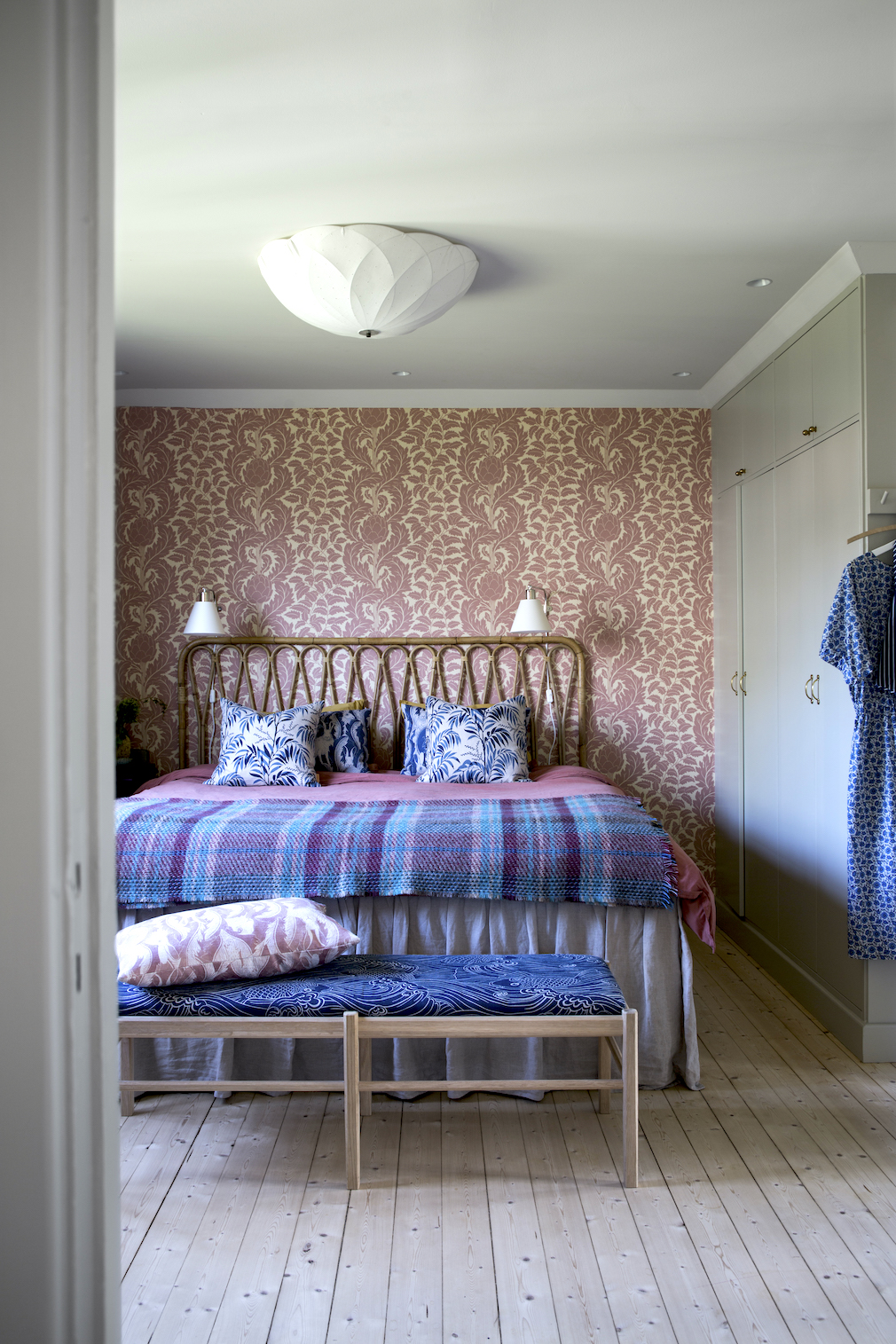
An unstudied simplicity pervades the home von Brömssen has created. Old furniture rules – sourced online and from secondhand stores – and the walls are covered in her own designs, which begin as paintings. “Then I use the computer as a tool for coloring and retouching,” she relates. “Good things happen in a slow process.”
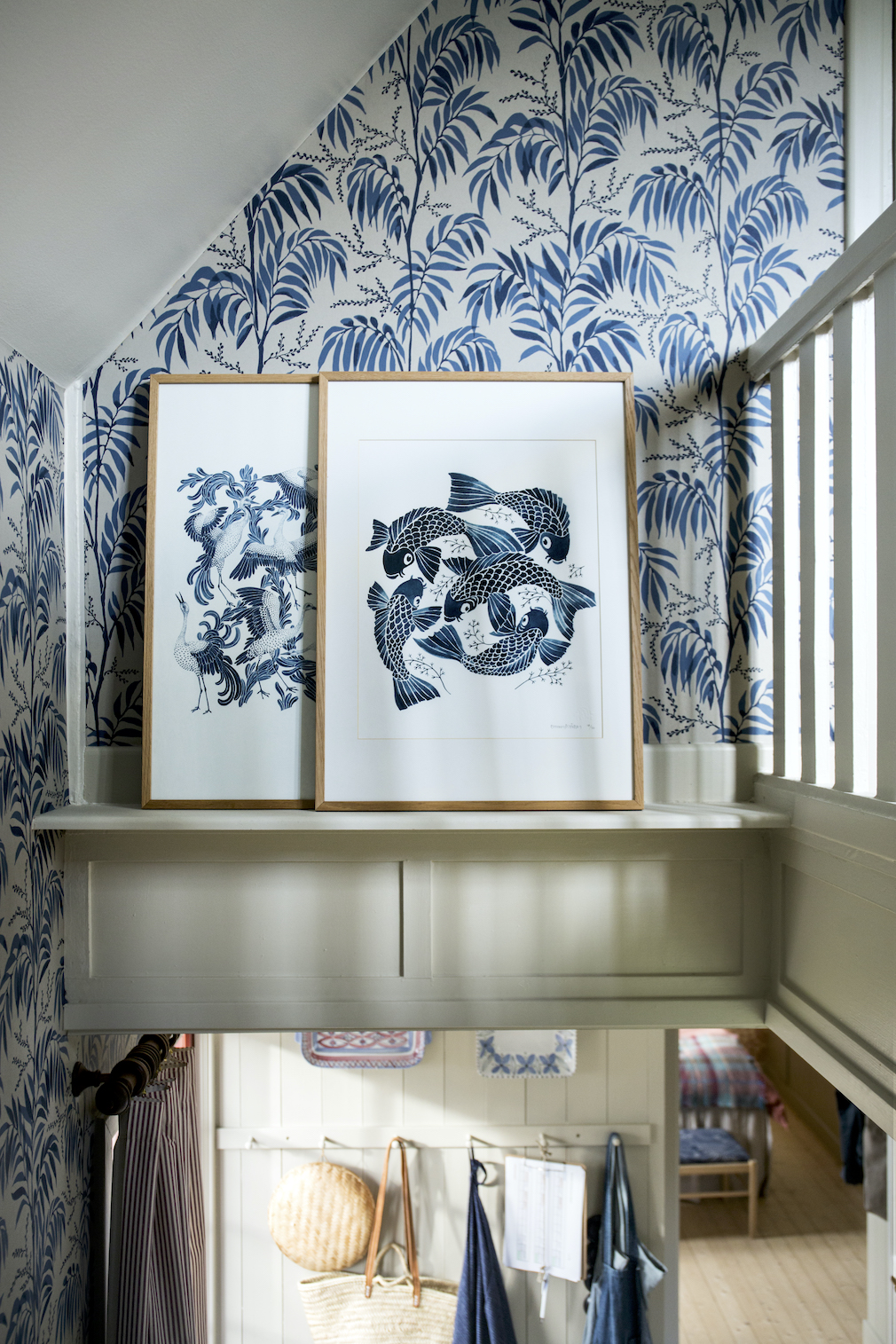
Musing on the source of her motifs, von Brömssen expresses, “My parents always took me out into nature, and during summer vacations, we stayed at our summer house on an island. Our home here has become a canvas for testing my designs and experimenting with different patterns and color combinations.”
Photography by Johan Sellén.
Styling by Gill Renlund.
Like what you see? Get it first with a subscription to aspire design and home magazine.