


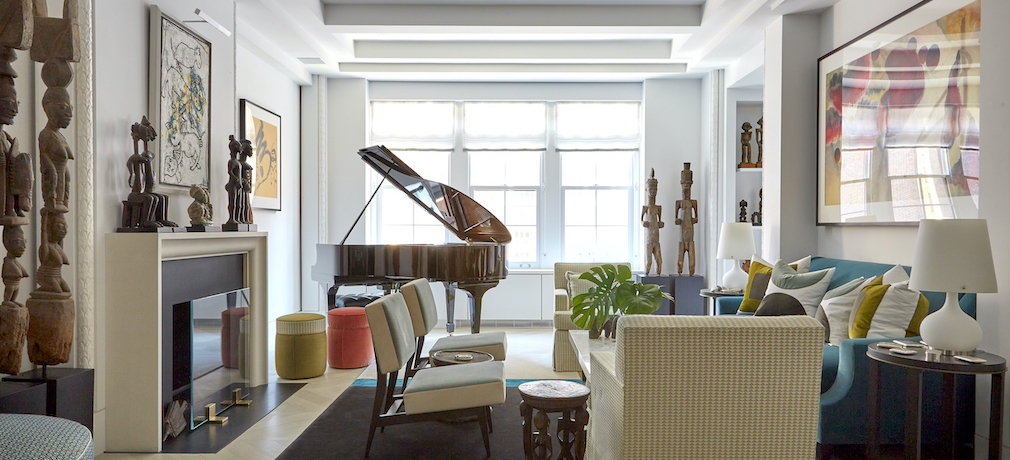


For some collectors, the hunt and acquisition are what it’s all about. Think of Charles Foster Kane and his warehouse of crated treasures. But most real-world individuals want to live with what they love, to see their things as they open their eyes in the morning and settle down contentedly amid them at the end of the day. Of course, for the true collector, that’s sometimes easier said than done. A home is not a gallery, after all, and displaying art and objects in livable spaces can take a little doing.
Commissioned to revitalize a prewar Manhattan apartment for a couple enthralled by African art, architect Enda Donagher took inspiration from Robert Adam and John Russell Pope to create restrained, classically articulated interiors that are both a fitting frame for the homeowners’ collection and a relaxed environment for daily life. Aside from the plaster colonnettes that define the wall bays and openings between primary rooms, architectural detail is kept to a minimum. The wide-plank floors are white oak with a custom blond finish that was developed on site and set in a chevron pattern.
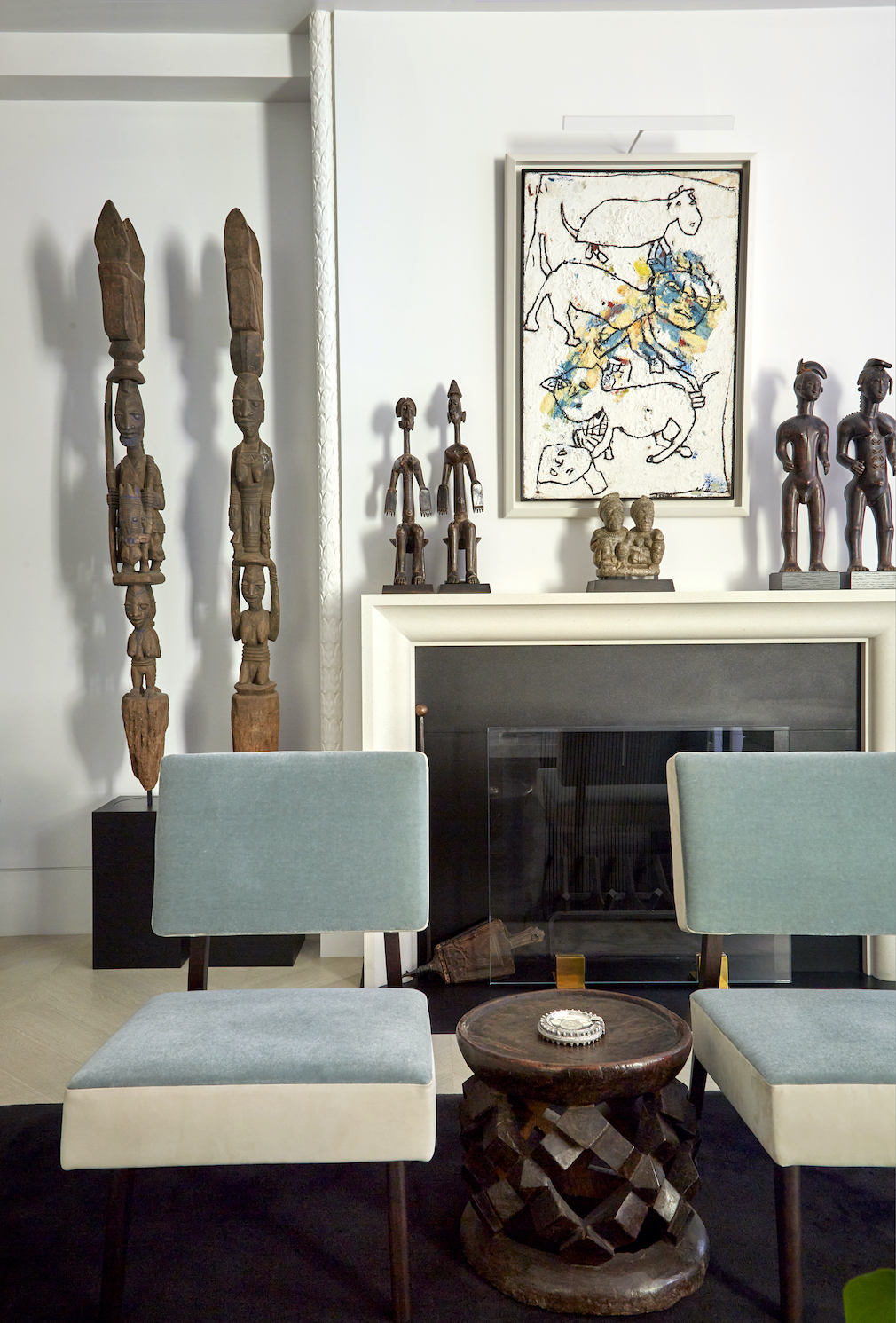

Working with the client’s decorator, Verdella Caracciolo, and his own longtime collaborator, Elizabeth Martell, Donagher took a truly curatorial approach. “From day one, we agreed that for this extensive portfolio of sculpture to make sense in a residential setting, it needed to be corralled into a series of collections. Drawing on my background in luxury retail design, I saw the opportunity to create several locations of intense, focused display, with sculptures arranged formally, which would then be softened and balanced by a smaller amount of sculpture displayed either on furniture or on specially designed pedestals for large pieces.”
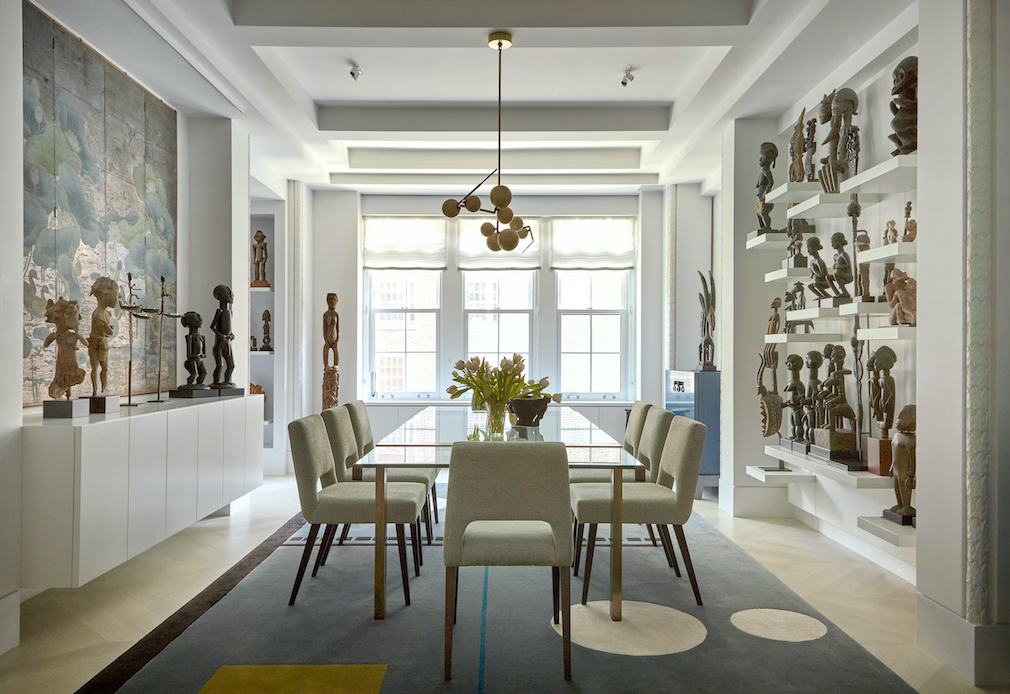

In addition to establishing a complementary relationship between the massing and the scale of the furniture and the incisive aspect of the largely figurative sculpture, Donagher worked to create sight lines that allow the art to read clearly in the space. The original single opening between the living room and dining room — which was on axis with the living room fireplace — was replaced with a pair of openings that allow the eye to wander the room rather than focus immediately on the hearth. “Additionally,” notes Donagher, “the wall separating the two rooms was thickened considerably. This allowed us to create four areas for display in the jambs as you pass between the two rooms.” In the dining room, a wide central bay houses a staggered, floor-to-ceiling panoply of shelves for display, while alcoves on each side contain a striking blue cabinet from Promemoria, topped by a single piece of sculpture. “Areas of high-density display are compelling and generate excitement,” suggests Donagher, “while a small number of individual pieces on furniture and pedestals feels residential.”
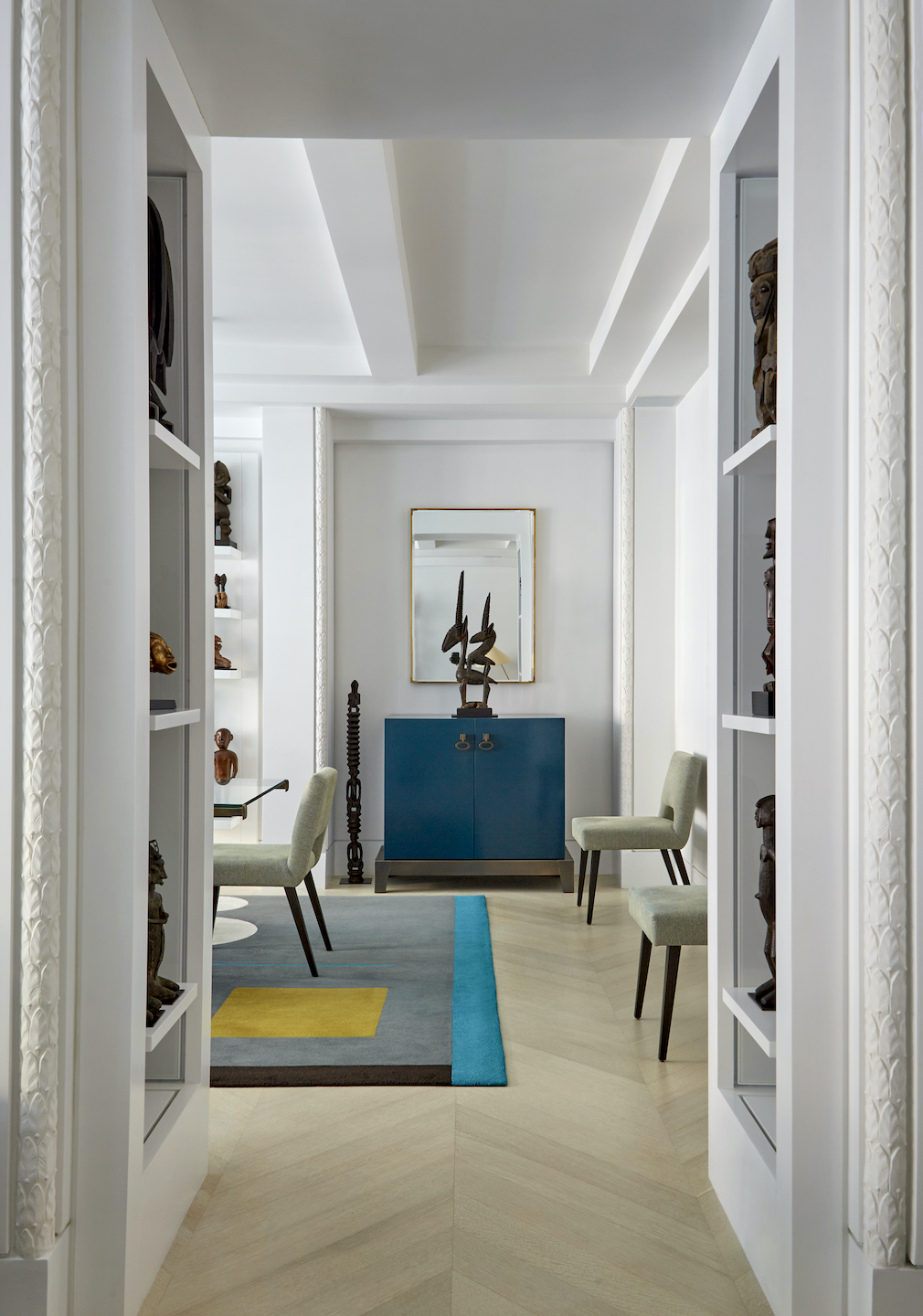

No doubt about it. This home is very much populated with an array of striking pieces. But there is something almost structural about the presence of these figures. They create space as much as they adorn it. They inhabit it, but they do not own it.
Photography by Mark Roskams.
Architecture by Enda Donagher.
For more like this be sure to check out the art-driven approach in this South African home.
Like what you see? Get it first with a subscription to aspire design and home magazine.