



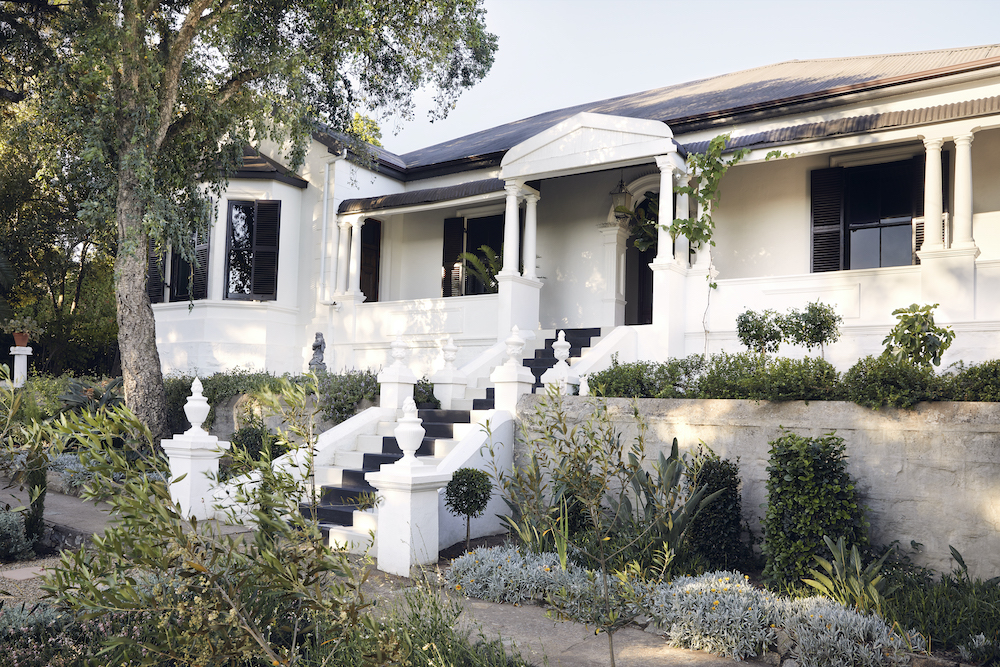
The rambling property of Etienne Hanekom takes up an entire residential block in the historic farming town of Malmesbury, an hour west of Cape Town.
The house of Etienne Hanekom’s dreams was a moldering Victorian relic when he first found it. And that’s exactly what piqued the savvy interior designer’s interest in it.
“There was a wonderful feeling of glamorous decay to her,” he describes of the grande dame that languished proudly on a ridge overlooking the historic farming town of Malmesbury, an hour west of Cape Town.
Originally built in 1850 when the area was an affluent destination popular for its healing hot springs, the generously proportioned four-bedroom house enjoyed a genteel existence. But rapid industrialization siphoned the old-world charm out of the town, while the ignominious positioning of a busy arterial road right in front of the house instantly devalued its enviable location. It seemed doomed to suffer a fate of idle deterioration. That is, until Hanekom stepped in.
“I’d been keeping an eye on her, as I frequently used to drive past on my way to visit my parents,” he explains. On an impulse, he decided to stop and have a closer look, only to discover that the rambling 2500-square-meter property took up an entire residential block and contained a number of unused outhouses. And the main house still retained its original metal-pressed ceiling tiles, timber floorboards and shutters, cast-iron fireplaces and the deep front porch so particular to the era.
“I was overwhelmed by the enormity of the task at hand,” he admits. “I realized buying it would be less of a renovation project and more of a lifetime’s commitment to restoring the house to its former grandeur.”
But it was a commitment Hanekom felt willing to make, and three years later, the dame is once more looking grand and relishing in her fashionable makeover and armoire of new finery.
For the designer, the slow but steady transformation process has been all-consuming, especially as most of it took place during lockdown.

First, he renovated a small one-bedroom bolt-hole in the old wagon house, where he could retreat to after a hard day’s labor. Then he threw himself wholeheartedly into remodeling the main house, handling all the planning, designing, demolishing, sanding, sealing and painting himself. “It was a great way to save money and also switch off from the chaos of the world outside. Plus the dust tasted great,” he laughs.
His starting point was to reconfigure the layout of the U-shaped house so that the outer façade and front garden act as a protective buffer to the road, while the interior living, working and dining spaces open up and flow out to the back courtyard.
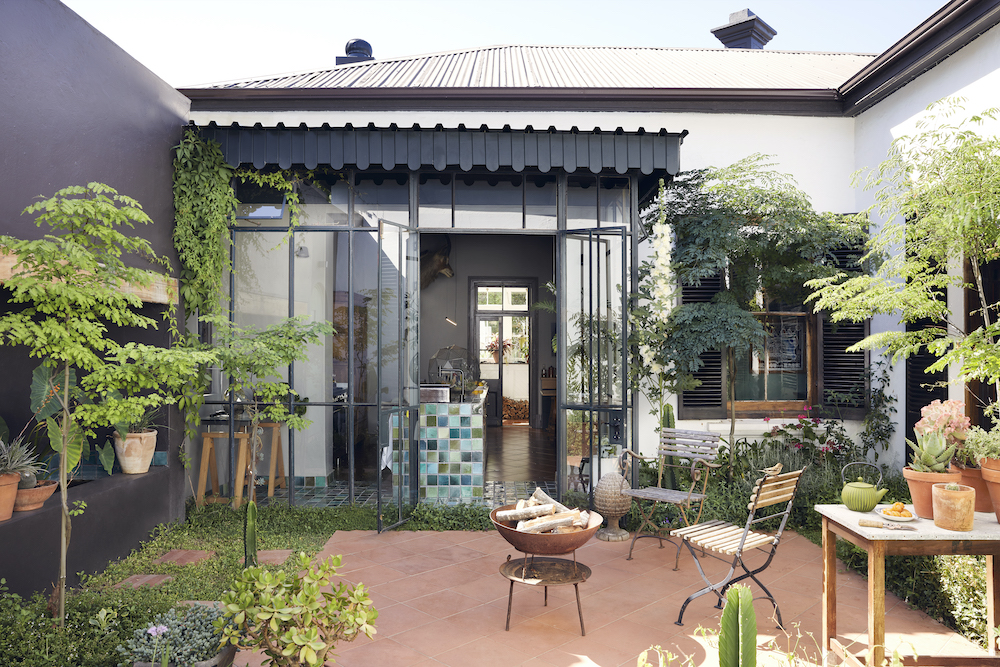
Hanekom then ripped off the courtyard’s roof to let in light and installed a custom-made steel bay window through to the kitchen. Today, a burbling water feature dampens any residual road noise, while a growing forest of delicate leopard trees, and what Hanekom describes as a “silly mix” of shrubs and creepers, create the tranquil heart of the home.
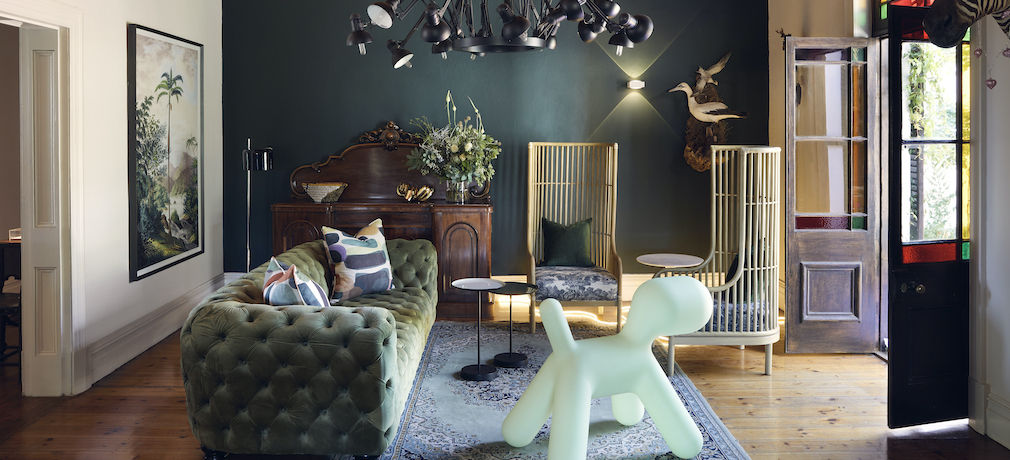
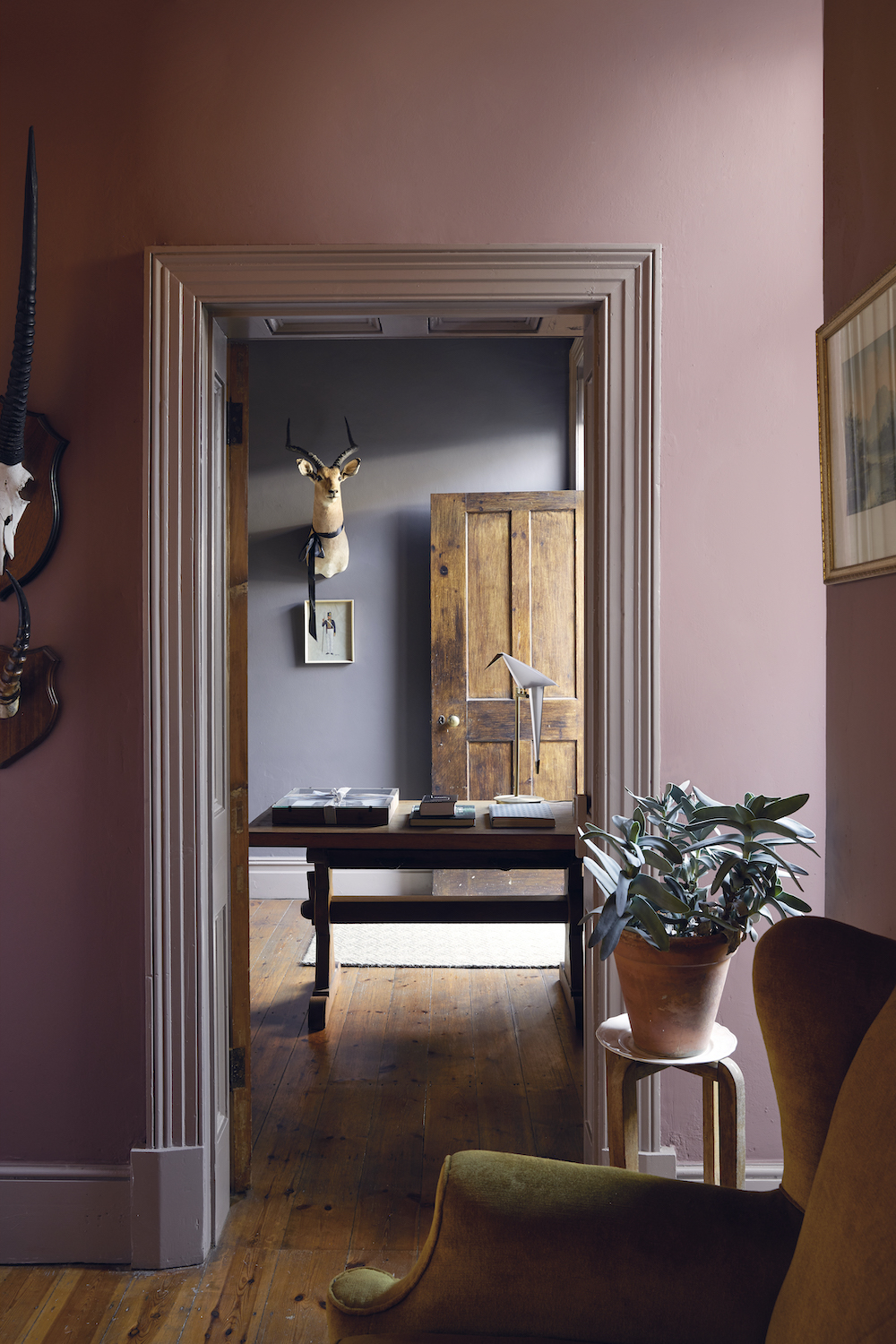
Inside, an irreverent mishmash of designer pieces, salvaged fixtures, taxidermy, art, greenery and vintage collectibles cohabit peacefully against a muted backdrop of walls painted in dirty shades of green and pink. At every turn, it’s evident that Hanekom has used color, design and his personal connection to the house to create inviting spaces.
“I usually like bright colors,” notes Hanekom. “But here, I chose to mix special custom shades that work like shadows. I didn’t follow any particular mandate; I just did what felt right in the moment.” This intuitive approach has paid off as each hue sets a specific tone for every room in the house.
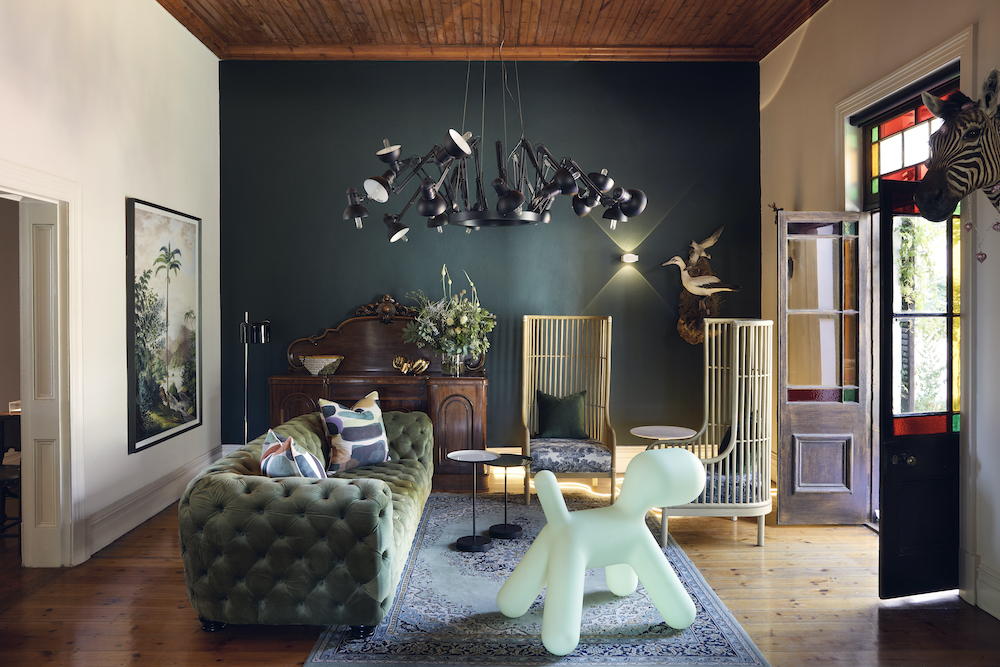
Take the living room, for example, where Hanekom painted one feature wall an almost black shade of green. The darkness absorbs the warm glow of the spider-like ceiling lamp, creating a convivial cocoon conducive to long hours of lounging. In the study, he painted every wall a shade of burnt-cinnamon pink to harmonize with the rich golden tones of the Oregon pine floors and ceilings. Apart from housing his vast collection of décor magazines and a treasure trove of well-worn books, this space also provides a secluded nook where he can quietly work or catch up on admin.


One of his favorite rooms in the house, however, is the primary bedroom, which he painted a soothing sage green because, as he puts it, “the heat can be unforgiving here in summer, and I wanted to feel cool and alive.”

The kitchen, in particular, resonates with this intention: a tan leather couch invites one to recline lazily before a large, farm-style fireplace, which Hanekom has clad in decorative blue-and-white plates. Rows of bottled peaches and pears jostle for space on a wooden shelf above the fridge, while pink tiles and a ceramic rabbit head add a light-hearted cheerfulness unusual in a utilitarian space like the scullery.

Outside, Hanekom has already started rethinking the rest of the property. An open-air bar and lounge have been erected beside the swimming pool — a welcome haven on hot summer days for Hanekom’s friends and family, who love to visit over weekends. He’s also converted one of the outhouses into a workshop where he can happily make a mess or while away hours tinkering on his vintage Mercedes SL.
Other projects on his to-do list include creating a wine cellar, cinema room and steam room, but he readily admits that these are “one day” ideas that will come to fruition as or when his schedule and finances allow.
“I’ve put so much of myself, emotionally, into this house that it’s been good to renovate slowly. That way I don’t rush changes I may later regret.”
Photography by Elsa Young.
For more from Etienne Hanekom, be sure to check out the expansive Cape Town apartment he renovated with Sumien Brink.
Like what you see? Get it first with a subscription to aspire design and home magazine.