
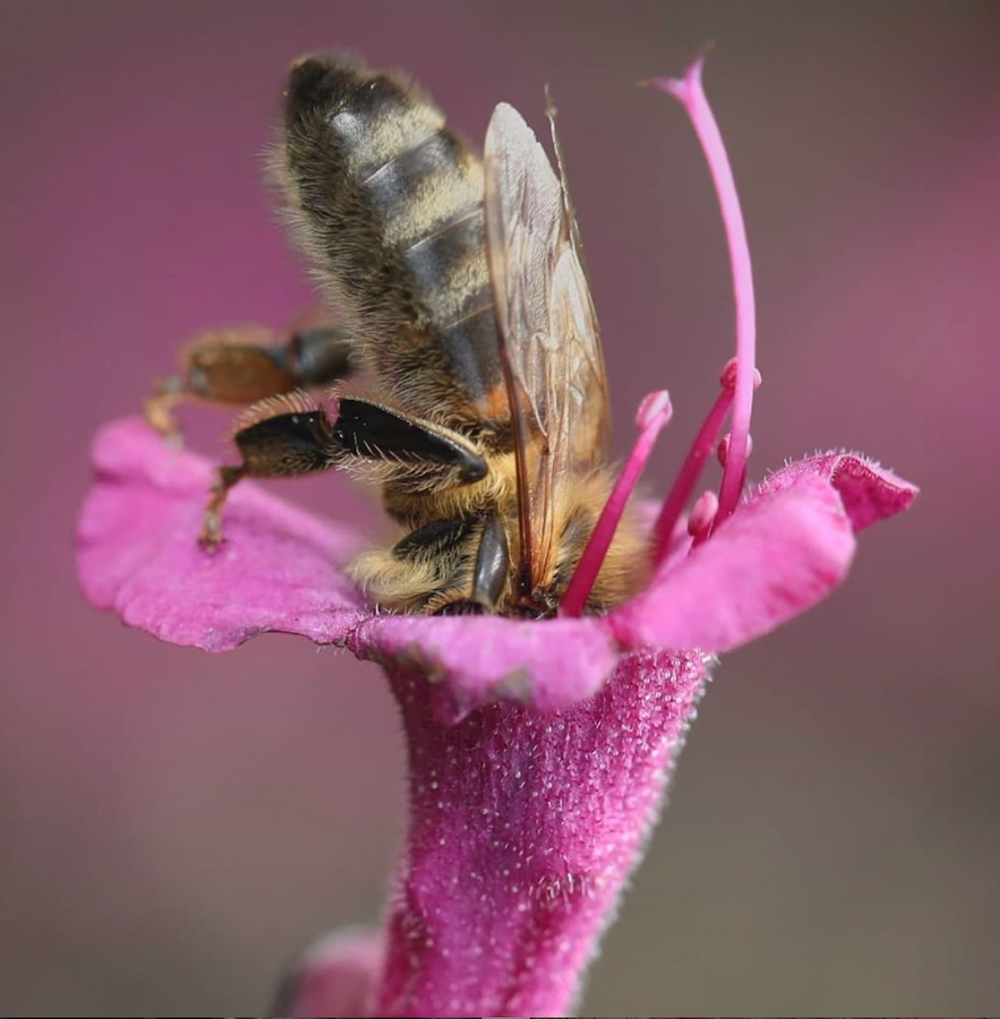
A new paper just released in PNAS Nexus, published by Oxford University Press, indicates that chemicals used in agriculture, like fertilizers and pesticides, can change the way bees ‘see’ a flower and that this reduces the number of bees visiting a flower.
We all know what that means, don’t we?
As the report says, flowers produce a diverse range of cues and attractants to insects that promote feeding and pollination. Turns out that bees use color, sun, and magnetic fields to navigate the landscape.
On a smaller scale, they use cues like flower odor and color, but also humidity and electric fields to identify plants. Farmers apply mixtures of chemicals, in particular fertilizers, on plants routinely using large-scale spray applications. The widespread use of chemicals in agriculture and horticulture is a substantial source of pollution and has been linked to reductions in bee population size and diversity.
But homeowners need to be also conscious of this problem.
The report also adds while researchers have long recognized that many of these chemicals are toxic, they know little about how agrochemicals affect the immediate interaction between plants and pollinators. Spray applications can change the properties of flowers in several ways. Many agricultural chemicals carry an electric charge designed to adhere to plants. Thus, spray applications can potentially change the electric fields surrounding a flower.
Read about the full method of research at flowerpowerdaily.com.
A big question is thus whether agrochemical application can distort floral cues and modify behavior in pollinators like bees.
OTHER EVIDENCE OF BEES DECLINE
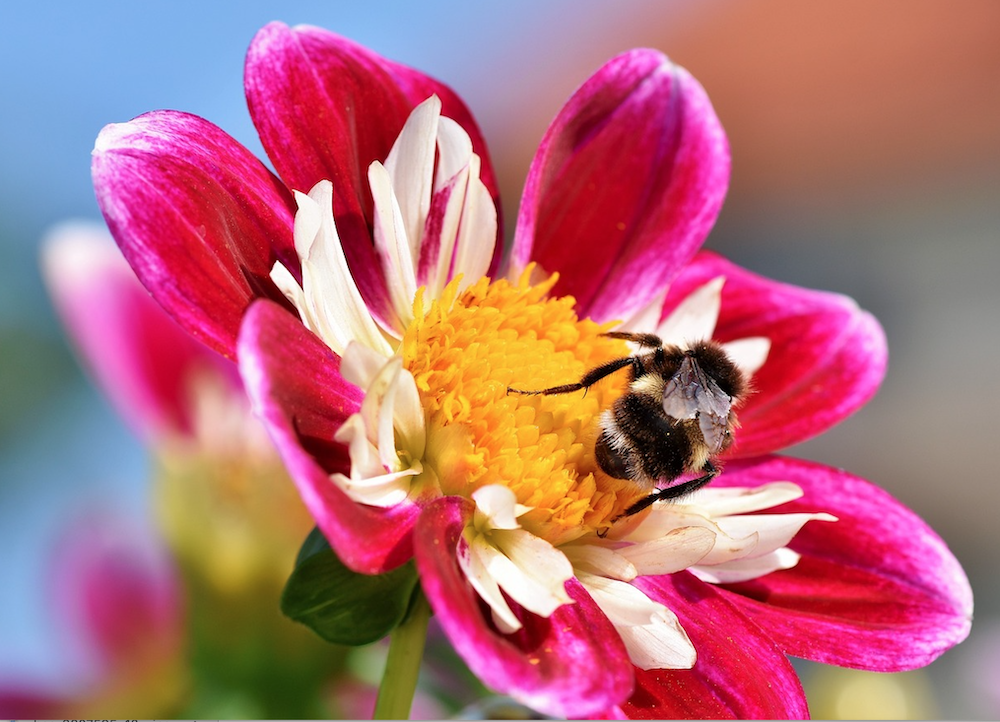
As we’ve reported, the Center for Biological Diversity worried that the American bumblebee — a vital pollinator of wildflowers and crops across North America — has completely vanished from eight U.S. states — Maine, New Hampshire, Rhode Island, Vermont, Idaho, North Dakota, Oregon and Wyoming — and in New York state, the species has experienced a population decline of 99%. In 19 other states across the Southeast and Midwest, populations have dropped by more than 50%.
According to Live Science, efforts are now moving ahead for bees to be an endangered species. An Albany Law school group called Bombus Pollinator Association of Law Students worked with the CBD to raise awareness and concern about pesticides and the impact of climate change.
“The American bumblebee was once the most common bumblebee species in North America, but without immediate action to protect it under the ESA, it will continue its alarming decline towards extinction,” the petition authors wrote.
Over the last two decades, the American bumble bee population has decreased by 89% across the U.S. New York had a decline of 99% and they disappeared from the northern part of Illinois which has seen a 74% decrease in population since 2004, the petition said. Bees are vital to so much and should be protected. In fact, researchers are using bees for cancer cures as well.

REMEDIES
The fact that fertilizers affect pollinator behavior by interfering with the way an organism perceives its physical environment is an issue to ponder. This new research offers a new perspective on how human-made chemicals disturb the natural environment. It also emphasizes the importance of considering the seemingly hidden senses that are used by insects to understand and learn about their environment.
After all, there are over 4,000 species of bees, ranging from the world’s smallest bee- the 2mm long fairy bee – found in the desert southwest, to the large carpenter bees that reach 40mm long.
Therefore, it is another reason to be conscious and aware of the choices one makes in the garden. First start with the flowers you plant. Great ones include the following: zinnias, sunflowers, calendula, verbena, alyssum, bee balm, purple coneflower, black-eyed Susan (Rudbeckia), goldenrod, and the powerhouse Joe-pye weed.
You can make a difference not only by planting flowers that attract bees – but also by the fertilizers used with those flowers to ensure pollination.
Always good to have a “B” plan since it’s where most of life happens.
A version of this story originally appeared on FlowerPowerDaily.com.
Jill Brooke is a former CNN correspondent, Post columnist and editor-in-chief of Avenue and Travel Savvy magazine. She is an author and the editorial director of FPD, and a contributing digital editor of aspire design and home magazine.
Like what you see? Get it first with a subscription to aspire design and home magazine.