


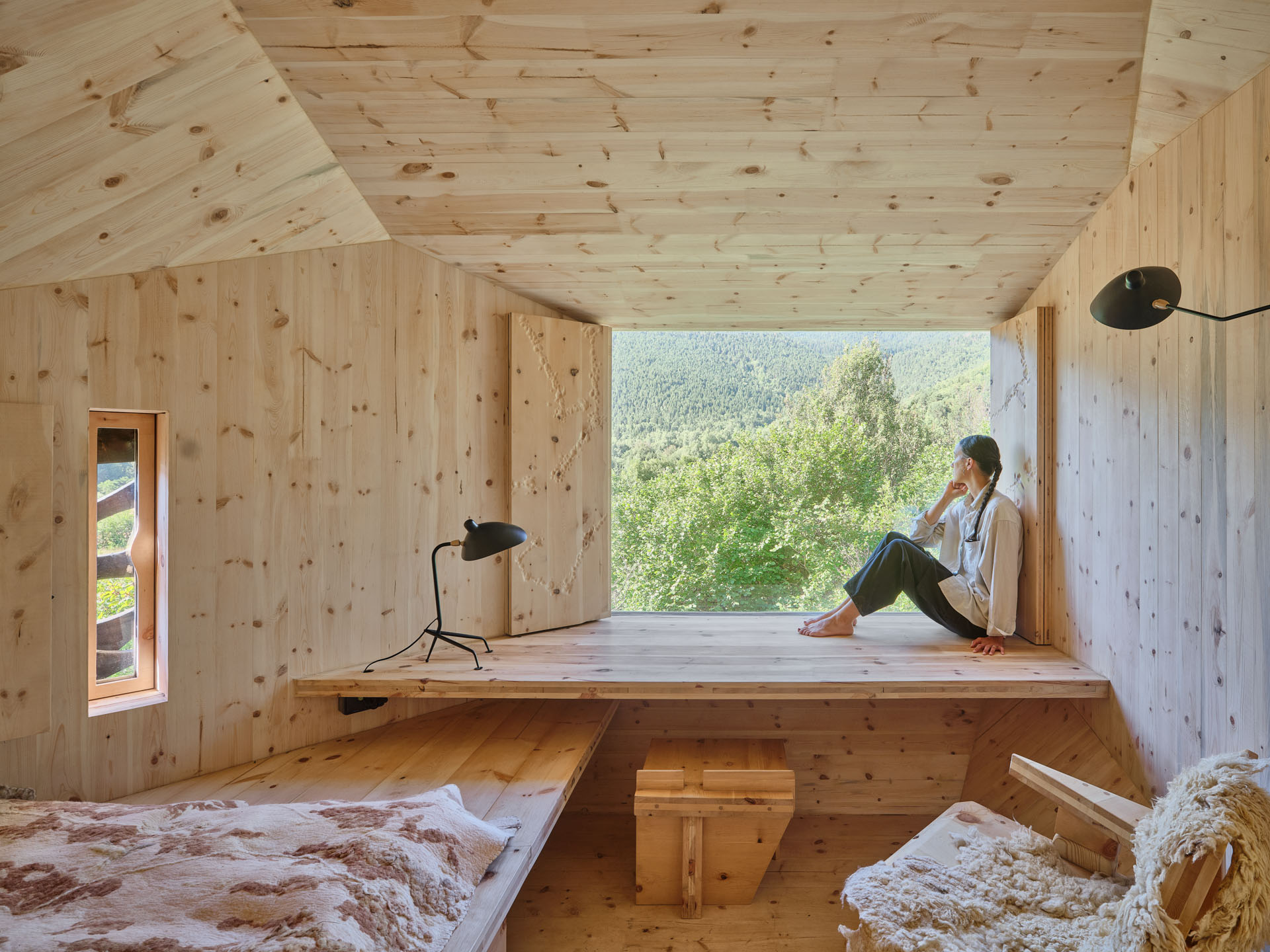
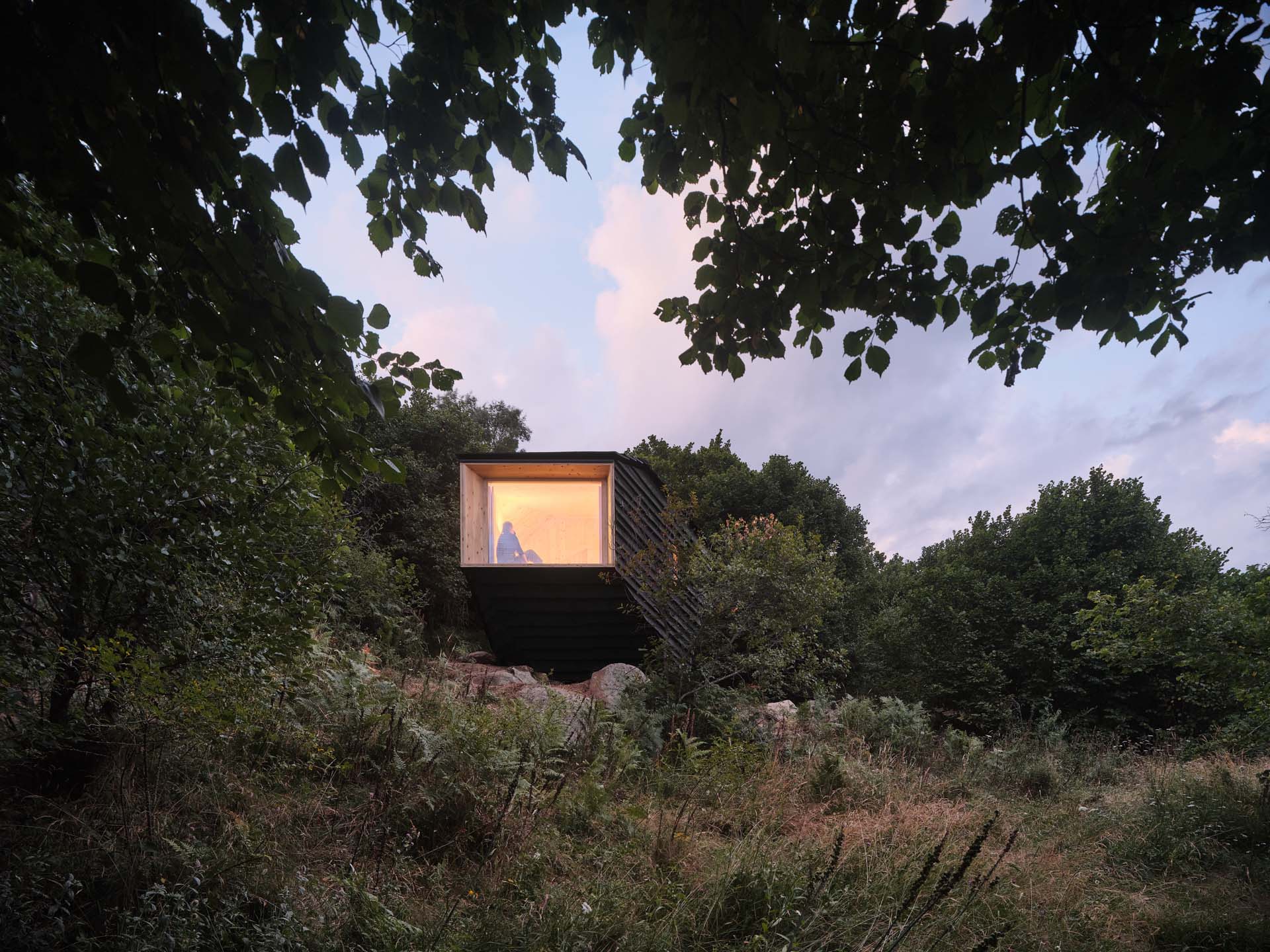
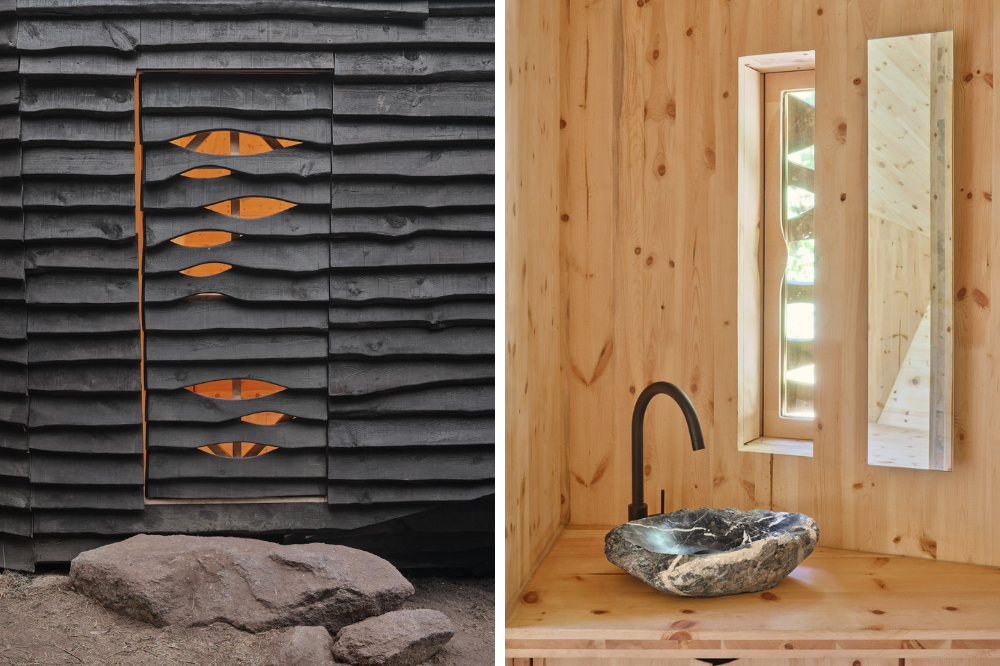
Forestone is an eco-friendly cabin that’s the brainchild of graduate students from Spain’s Institute for Advanced Architecture of Catalonia (IAAC) who led the unique plan and construction of this prototype. A cooperative nexus of student-led design, digital fabrication, local craftsmanship and regenerative forestry, Forestone is an innovative paradigm for sustainable architecture. Set atop a slope surrounded by the dramatic Pyrenees Mountains, a compact 160-square-foot layout offers enough temporary space for two to work, sleep and bathe. The exterior’s boulder-like contours reflect rocky views, while the charred wood façade establishes a direct dialogue with fire prevention, a critical issue in the Pyrenean forests. Vicente Guallart, founder and principal of Guallart Architects, explains the thoughtful design and building process.

How did the IAAC students collaborate on this environmentally-focused shelter?
Vicente Guallart: Different proposals were explored in parallel, and through this process, the students gradually converged on the idea of the cabin as a rock produced by the forest — a Forestone — able to resonate with the surrounding landscape of the Pyrenees.
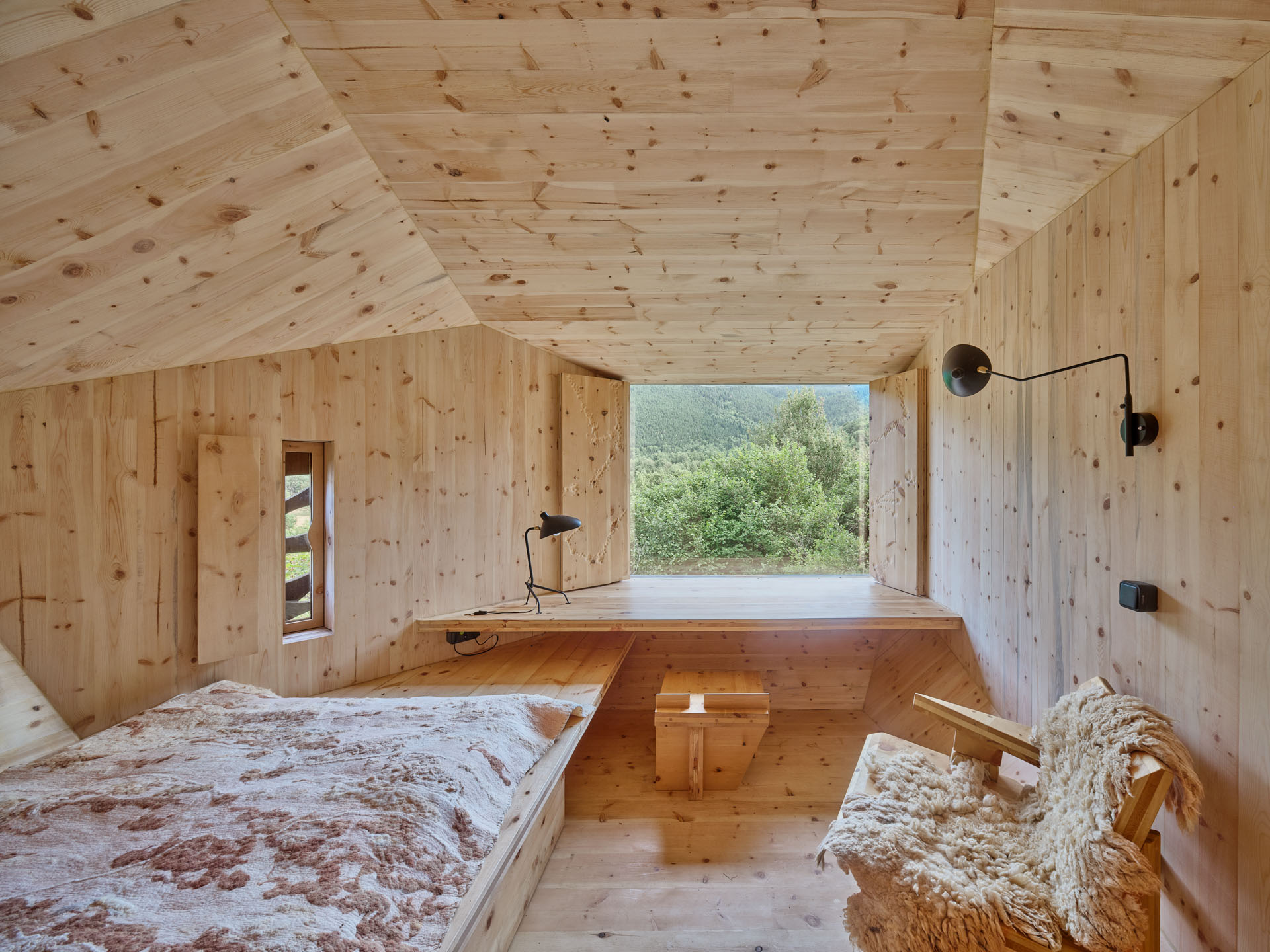
Which eco-friendly design elements were used inside?
VG: All the furniture — bed, seating, storage and washbasin counter — was custom-designed and built by the students. Local sheep’s wool, collected with nearby farmers and transformed into felt, is used for blankets, rugs and textiles. The washbasin is carved from a stone found in the surrounding landscape, reinforcing the idea that architecture can be shaped directly from local materials and knowledge.

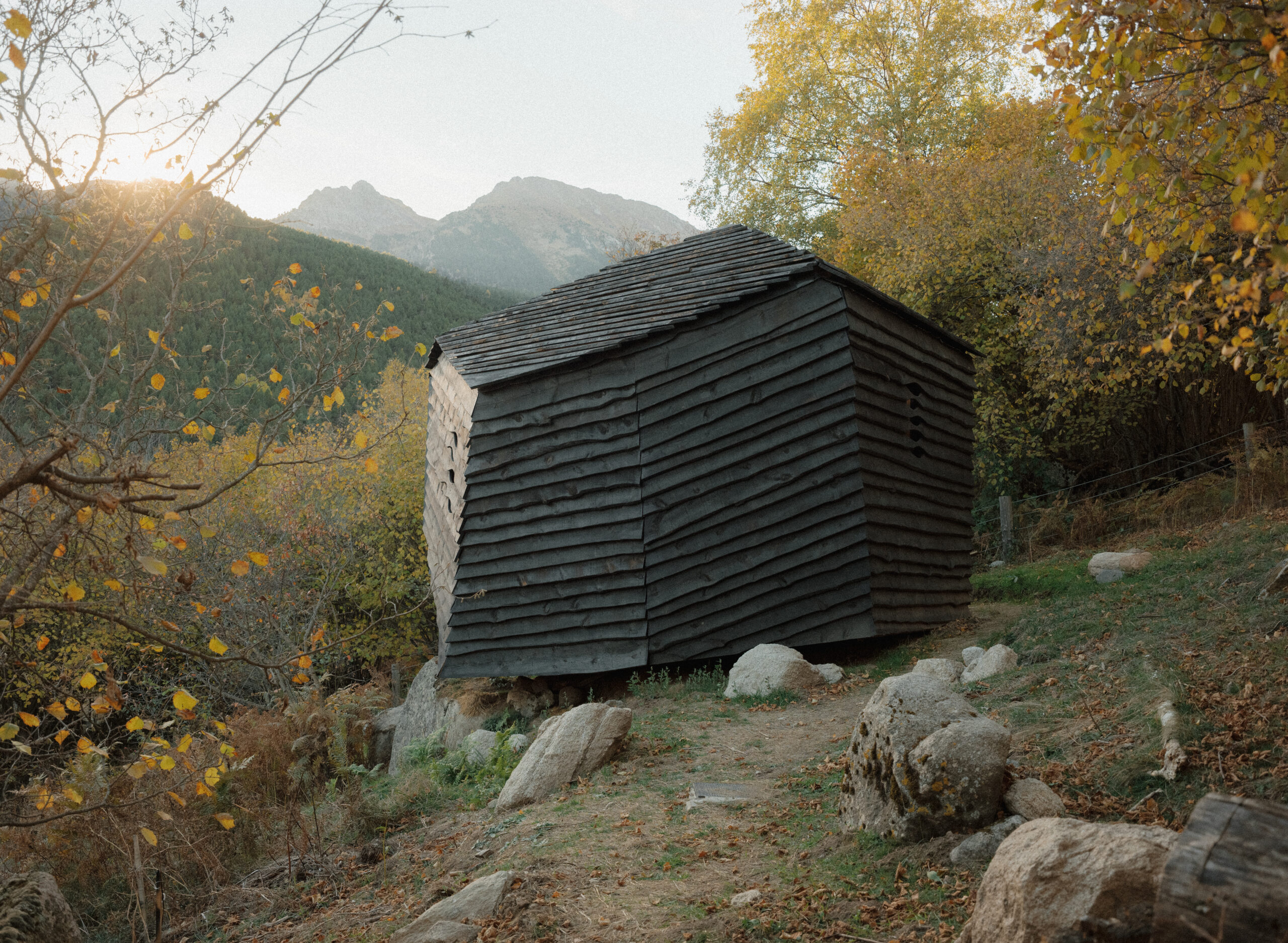
Photo by Alexander Herbig
How will the cabin be used in the future?
VG: Forestone is open to guests at MónNatura Pirineus nature center and functions as an external room, separated from the main building. Visitors can stay in the cabin and experience first-hand its relationship with the landscape, materials and climate. At the same time, it remains an educational and demonstrative project, showing how similar cabins could be replicated or adapted in other forest contexts using local timber and low-impact construction systems.

How would you sum up the overall philosophy of this shelter?
VG: Forestone is not just a cabin, it is a statement about how we can rethink building in sensitive territories. For me, it represents how architecture can act as a bridge between ecological responsibility and contemporary design, while training new generations to build differently.
Photography by Adria Goula unless otherwise noted.
Like what you see? Get it first with a subscription to aspire design and home magazine.